3 Things to Cut From Your Writing 

I believe that within each writer there is an editor, a source of self-criticism that can take our work to the next level with a simple re-read and a dash of red pen. Of course, self-editing is not the end of the line when it comes to polishing your writing (workshopping and seeking a third-party editor is invaluable) but you can do a lot for your story, poem, or script by simply cleaning it up yourself.

At sentence-level (looking at each word and how it functions within the sentence it forms) you can usually cut, condense, or re-word to enrich your writing. There are many things that you could focus on when self-editing at sentence-level (from tone and voice to word-choice and vocabulary) but without even delving too deeply you can tighten and intensify your style.

But before you email your writing to a friend, or send off your submission to an agent, take the time to focus on the following to wake up your inner-editor:

Cut adverbs

This may sound harsh, but adverbs are lazy. Adverbs work against the idea of ‘show, don’t tell’ by telling the reader that ‘the star shone brightly’ rather than showing that it ‘twinkled and glittered like a lost silver coin’, for example.

There is almost always a way to show an adverb rather than telling it, and sometimes you can just cut them entirely and your writing hasn’t lost anything.

The more adverbs you use, the less interesting and unique your descriptions become. So any time you can show your adverb, or cut it entirely, the more enjoyable your writing becomes to read.

Omit needless words

It was the great Strunk who hammered the following into E.B. White’s brain, and it stands true today. We pack our writing (as we do our speech) with ‘filler’ words, words that don’t add to the sentence but just take up valuable space.

The main culprits to take note of include: really, very, just, so, a lot, pretty much, rather, quite, and sometimes.

Sometimes these words are necessary, but you’ll know when to get rid of them and when to re-write them. Check out this cheat sheet for ideas on how to get around lazy ‘very’ words.

Unnecessary words can also work their way into your writing by means of tautology or repetition. When you’ve said one thing but reiterate it in different words you’re creating unnecessary work for the reader, and using up your word count.

Comb back through your writing and analyse the importance of every word at sentence-level, cutting the ones that are pointless. Be ruthless. This will tighten your sentences and give greater impact and immediacy to your writing.

Avoid clichés

We wouldn’t have them if they weren’t so good. But it’s like flogging a dead horse (see what I did there?). Clichés are used so frequently in our everyday language that it feels natural to slip them into your writing, and you don’t even notice.

They’re often brilliant images or analogies, but when you’ve heard them all your life they become meaningless and dull.

If you find the perfect cliché to sum up your character’s emotions or thoughts, cut it and re-write your own with images that are original and new. Creativity is refreshing, so use it to your advantage to wow your reader with new words in new ways.

***

I hope you find these tips useful. Happy writing!

Via http://writersedit.com/top-3-things-cut-writing/

The 2017 Baileys Prize Winner Is Revealed…

Baileys-Prize-Winner-2017

We’re delighted to announce that this year’s Baileys Women’s Prize for Fiction has been awarded to British author Naomi Alderman with her fourth novel The Power.

At an awards ceremony at the Royal Festival Hall, Southbank Centre, London – hosted by novelist and Prize Co-Founder, Kate Mosse – the 2017 Chair of Judges, Tessa Ross presented the author with the £30,000 prize and the ‘Bessie’, a limited edition bronze figurine. Both are anonymously endowed.

Tessa Ross, 2017 Chair of Judges, said: “The judges and I were thrilled to make this decision. We debated this wonderful shortlist for many hours but kept returning to Naomi Alderman’s brilliantly imagined dystopia – her big ideas and her fantastic imagination.”

Alderman’s win comes just over a decade after her debut novel Disobedience, won the 2006 Orange Award for New Writers. Set up in 2005,to mark the 10th anniversary of the Orange Prize*, the emphasis of the Award was on emerging talent and the evidence of future potential.

“Congratulations to Naomi Alderman – her winning novel The Power is a wonderful example of the exceptional writing the Prize champions, ” commented SylSaller, ChiefMarketingOfficer, Diageo“Baileys is enormously proud to partner with the Prize who have created an open platform for the sharpest, smartest, most compelling women’s writing in the English language.”

For a chance to win a copy of The Power, Naomi’s incredible Baileys Prize-winning novel, keep an eye on the @BaileysPrize Twitter and Instagram!

Plus read an extract of The Power here >

Via: http://www.womensprizeforfiction.co.uk/

52 Things | Ideas for Writers

n-WRITING-628x314

A couple years ago my friends and I made a list of 52 goals we wanted to accomplish, the equivalent of a bucket list for a year’s worth of achievable things. Most of them were simple goals, but measurable. For instance, you couldn’t just write “read more” as a goal. It had to be quantifiable, like “Read a book a month.” It was fun, but also challenging, both to put the list together and to accomplish all the things I came up with.

So if you want to create a 52 Things list this year, and you’re looking to add some writing goals to your list, here are 52 ideas:

1. Start or join a writing group.

2. Go see three movies based on books you love.

3. Guest post for a blog you read/admire.

4. Get your name in print.

5. Read a banned book during Banned Book Week.

6. Submit a story to a call for submissions for an anthology.

7. Become a blogger.

8. Buy a book for a child or teenager in your life for no reason at all

9. Join an online writing community or a private Facebook group dedicated to a specific genre.

10. Commit to writing a certain number of words per week, or per month.

11. Become a regular content contributor to a website you follow or admire.

12. Attend a local author reading, or two or five or ten.

13. Support your local independent bookstore with a new purchase.

14. Write a book review and put it on your blog. If you don’t have a blog, post it on Facebook.

15. Do one thing that truly champions another writer.

16. Read a book that falls way outside your general area of interest.

17. Post a comment on social media in support of someone you admire.

18. Go to a writers’ conference.

19. Participate in online pitch conferences (like pitch fests on Twitter).

20. Participate in NaNoWriMo in November.

21. Join a literary association.

22. Go on a writing retreat.

23. Get an op-ed placed, or learn how to do it by taking an Op-Ed Project class.

24. Do a 500 Words challenge, where you write 500 words a day for a set number of days, a month or longer. Give it a whirl!

25. Listen to an audio book of a recently published book.

26. Map a book you love. It will teach you a lot to outline a book you’ve read more than once to see how another author thinks about structure, scenes, and narrative arc.

27. Read your work out loud, either at an open mic night or at a literary event.

28. Take an online class.

29. Find a number of authors you love on Facebook or Twitter and follow them.

30. Follow literary agents on Facebook and Twitter if you’re interested in developing agent relationships.

31. Gift yourself a weekend away somewhere nice to brainstorm or write, or to just be with your own thoughts.

32. Do a literary pilgrimage to see a site where a favourite author lived or wrote about, or, if you’re a memoirist, perhaps take a pilgrimage into your own past – to your childhood home, or the setting of your memoir.

33. Visit a printing press.

34. Write and publish an e-book. These can be as short as 25 or 30 pages (single stories or essays) and they can get your work on the map.

35. Enter your work into a contest. You have nothing to lose!

36. Tell your friends and family about your literary ambitions. It’s okay to dream big!

37. Set up a separate bank account for your writing pursuits. Pay yourself a small sum a month for your writing, or when you get paid to publish. Start to think of your writing as a business.

38. Attend an in-person writing class.

39. Map out a timeline for your book, or for your next book. Consider when would be a reasonable publication date for your book and write it down. Post it somewhere where you can see it to hold that date as a goal.

40. Create a book cover for your book-in-progress. Nothing brings a book to life like making it real, even if it’s just a collage or a vision that serves as the basis of what you want the book to look like some day.

41. Commit to a certain number of blog posts a month — one, two, four — and stick to it for the whole year.

42. If you don’t already have a website, start one. If you have a website you know needs a facelift, commit to giving it one.

43. Write a fan letter to your favourite author. These letters are amazing displays of gratitude and appreciation. It’s also good karma.

44. Create a vision board for your book. This is different than a book cover concept. It’s a collage of images and/or words that inspire you, and that can keep you motivated and disciplined with your writing goals.

45. Memorise a poem.

46. Get involved with a local library event.

47. Create a family reading night once a week.

48. Set up a book donation site at your workplace during the holidays.

49. Make a list of your top 10 favourite books in your own genre and reread two of them.

50. Get a logo made. Yes, the brand of you — as a writer — needs a logo.

51. Write an affirmation statement that expresses all your strengths as a writer. Remind yourself why you write and allow yourself an opportunity to truly give yourself a compliment.

52. Do something that shows your commitment to writing – plant something or buy yourself a house plant; get a piece of “writing” jewelry; or create or purchase something that’s meaningful to you that you see every day as a reminder to yourself about the meaning writing holds in your life.

Via: http://m.huffpost.com/us/entry/6396948

Do You Know Your Book Genre?

There can be many reasons why a book fails to grab readers, and while this post concentrates mostly on the technical aspects and marketing side of publishing rather than the actual writing process, the choice of book genre can have major implications on both writing and marketing.

Writers often start writing a novel without giving their end product much thought, so when finished, it may sometimes be difficult to find a precise category or book genre for the book when it comes time to publish.

So here is a useful guide which explains with absolute clarity what the major genres represent, and what readers expect from each genre:

Mystery 

Often begins with the crime as the inciting incident (murder, theft, etc.), and the plot involves the protagonist uncovering the party responsible by the end. The crime has already happened and thus your goal in plotting is to drive toward the Big Boss Battle, the unveiling of the real culprit.

Mysteries have a lot more leeway to develop characters simply because, if you choose, they can be slower in pacing because the crime has already happened. Mysteries run roughly  75-100,000 words. Mysteries on the cozy side that are often in a series commonly are shorter. 60,000-ish. I’d recommend that you consult the Mystery Writers of America of more information.

Thriller/Suspense 

Generally involves trying to stop some bad thing from happening at the end. Thrillers have broad consequences if the protagonist fails i.e. the terrorists will launch a nuclear weapon and destroy Washington D.C.

Suspense novels have smaller/more intimate consequences. i.e. The serial killer will keep butchering young blonde co-eds. It is easy to see how thriller, suspense and mystery are kissing cousins and keep company. The key here is that there is a ticking clock and some disastrous event will happen if the protagonist fails.

So when plotting, all actions are geared to prevention of the horrible thing at the end. Thrillers can run 90-100,000 words (loosely) and sometimes a little longer. Why? Because some thrillers need to do world-building. Most of us have never been on a nuclear sub, so Tom Clancy had to recreate it for us in The Hunt for Red October (Clancy invented a sub-class of thriller known as the techno-thriller).

Pick up the pacing and you can have a Mystery-Suspense. Think Silence of the Lambs. A murder happens at the beginning, and the goal is to uncover the identity of the serial killer Buffalo Bill (mystery), but what makes this mystery-suspense is the presence of a ticking clock. Not only is the body count rising the longer Buffalo Bill remains free, but a senator’s daughter is next on Bill’s butcher block.

When plotting, there will often be a crime (murder) at the beginning, but the plot involves a rising “body count” and a perpetrator who must be stopped before an even bigger crime can occur (Big Boss Battle). These stories are plot-driven. Characters often do not have enough down-time to make sweeping inner arc changes like in a literary piece.

Pick up the pacing and raise the stakes and you have a Mystery-Thriller. Think Killing Floor by Lee Childs. The book begins with a murder of two unidentified people at a warehouse, but if the killers are not found, what the killers are trying to cover up will have global consequences. And I am not telling you what those consequences are because it would ruin the book… 😀

When plotting, again, there is often a crime at the beginning with rising stakes, and the protagonist must stop a world-changing event from happening (Big Boss Battle). The focus of your plot will be solving the mystery and stopping the bad guy.

For more information on this genre, consult the International Thriller Writers site.

Romance

Guy and girl have to end up together in the end is the only point I will make on this. Romance is all about making the reader believe that love is good and grand and still exists in this crazy world. The hero cannot be your Big Boss Trouble Maker. Yes, the guy will likely be a scene antagonist, but that is different.

Romance, however, is very complex and I cannot do it justice in this short blurb. If you desire to write romance, I highly recommend you go to the Romance Writers of America site for more information. This is one of the most amazing writing organizations around and a great investment in a successful romance-writing career.

Word count will depend on the type of romance you desire to write. Again, look to RWA for guidance because there are SO many categories of romance that it could make a book.

Literary Fiction

Is character driven. The importance is placed on the inner change, and the plot is the mechanism for driving that change. Literary fiction has more emphasis on prose, symbol and motif. The events that happen must drive an inner transformation.

Pulitzer Prize-winning book, The Road is a good example. The world has been destroyed and only a few humans have survived. The question isn’t whether the man and the boy will survive as much as it is about how they will survive. Will they endure with their humanity in tact? Or will they resort to being animals? Thus, the goal in The Road is less about boy and man completing their journey to the ocean, and more about how they make it. Can they carry the torch of humanity?

When plotting for the literary fiction, one needs to consider plot-points for the inner changes occurring. There need to be cross-roads of choice. One choice ends the story. The character failed to change. The other path leads closer to the end. The darkest moment is when that character faces that inner weakness at its strongest, yet triumphs.

For instance, in The Road, there are multiple times the man and boy face literally starving to death. Will they resort to cannibalism as many other have? Or will they press on and hope? Word count can vary, but you should be safe with 60-85,000 words (The Road was technically a novella).

Note: Literary fiction is not a free pass to avoid plotting. There still needs to be an overall plot problem that forces the change. People generally don’t wake up one day and just decide to change. There needs to be an outside driving force, a Big Boss Troublemaker, and a tangible physical goal. Again, in The Road, the man and boy have a tangible goal of getting to the ocean.

The only difference in literary fiction and genre fiction is that plot arc is now subordinate to character arc. In commercial genre fiction the plot generally takes precedence. In Silence of the Lambs catching Buffalo Bill is top on the priority list. Character evolution is secondary. In literary fiction these two arcs reverse. The character growth and change is of primary importance and plot is merely the vehicle to get them to change.

For instance, in Joy Luck Club, June’s impending trip to China is what brings the women together and what forces each of them to change the patterns of the past. The trip is irrelevant save for two purposes: 1) bringing the women together to face their demons and 2) when June actually makes the trip to China to meet her mother’s twin sisters (the lost babies) we know the change has occurred and the chains of the past have been loosed.

Fantasy and Science Fiction

Will involve some degree of world-building and extraordinary events, creatures, locations. In plotting, world-building is an essential additional step. How much world-building is necessary will depend on what sub-class of fantasy or sci-fi you’re writing. Word count will also be affected. The more world-building, the longer your book will be. Some books, especially in high-fantasy can run as long as 150,000 words and are often serialised.

In regular fantasy, we will generally have a singular protagonist. In high fantasy, the various parties each become protagonists. Think Game of Thrones or Lord of the Rings.

Consult the Science Fiction and Fantasy Writers of America for more information.

Horror

This is another genre that breaks down into many sub-classifications and runs the gambit. It can be as simple as a basic Monster in the House story where the protagonist’s main goal is SERE-Survive Evade, Rescue, and Escape. The protagonist has only one goal: survive. These books tend to be on the shorter side, roughly 60,000 words.

Horror, however can blend with fantasy and require all kinds of complex world-building. Clive Barker’s Hellraiser is a good example. Stephen King’s horror often relies heavily on the psychological and there is weighty focus on an inner change/arc. For instance, The Shining chronicles Jack’s descent into madness and how his family deals with his change and ultimately tries to escape the very literal Monster in the House.

Horror will most always involve a Monster in the House scenario. It is just that the definitions of “monster” and “house” are mutable. Word count is contingent upon what type of horror you are writing. Again, I recommend you consult the experts, so here is a link to the Horror Writers Association

Young Adult

I won’t talk long about YA, since YA beaks into so many subcategories. Often YA will follow the rules of the parent genre (i.e. YA thrillers still have a ticking clock, fast pacing and high stakes just like regular thrillers). The differences, however, is that YA generally will have a younger protagonist (most often a teenager) and will address special challenges particular to a younger age group.

For instance, in Veronica Roth’s Divergent, Tris is taking on a very real political battle between factions. But the plot also involves her evolving from child to adult, how she defines her identity aside from Mom and Dad and forging a new romantic relationship with Four. These are all prototypical struggles for someone in that age group.

So there you have it. A quick guide to book genre’s, which I hope has made things a little clearer for you. Picking a genre is actually quite liberating. Each genre has unique guideposts and expectations, and, once you gain a clear view of these, then plotting becomes far easier and much faster. You will understand the critical elements that must be in place – ticking clock, inner arc, world-building – before you begin. This will save loads of time not only in writing, but in revision. I hope you found it useful.

Best of luck x
Via https://www.justpublishingadvice.com/do-you-know-your-book-genre/

Embrace the Art of Editing

Art-of-Editing-1

When I write, I write alone.

This statement is true for most people who take on a creative pursuit such as being an author. In fact, solitude is often the key to finding ‘the flow’ or ‘the zone’ or whatever you like to call the wonderful state where words pour onto the page bringing ideas to life. But when the story reaches its conclusion, or creative flow eludes you, being alone can become simply, lonely. That loneliness can create a space where self-doubt grows, making it even harder to keep trying.

When you finally send your work out into the world, perhaps to an agent or a professional editor, you can be forgiven for being a little apprehensive whilst awaiting a response. After all, you are sending out your darlings to be judged.

However, hearing someone’s thoughts and opinions about your work will help you see your writing in a new light. There’s always the risk of getting too close to a story, whether it’s fact or fiction. The people, good or bad, and the drama can come to affect you so deeply that objectivity becomes difficult. You begin writing from the heart rather than your head, so removing yourself enough to know what to cut can be near impossible.

In the case of fiction, it is rare when an author is not emotionally involved. We create characters from our imaginations, giving them life, hopes, dreams and obstacles to overcome. So similarly, when it comes time to edit, one of the hardest things to do is ‘kill our darlings’ – as it should be!

Editors can be objective. Whether we are talking about journalism or fiction, they are not emotionally invested like the author. Their job is to take a clinical look at the piece. They are experienced wordsmiths who can examine word placement, flow, character, plot, structure and the basics of spelling and grammar in order to give constructive feedback.

Having at times been both an editor and writer I have learnt a very important lesson; editing is essential, regardless of the form of writing and it is something we need to learn to embrace. There are horror stories about bad editors who do more harm than good, so as an author it is always your job to maintain the integrity of a story or article. However, also remember good editors have just one goal in mind – to make your writing the very best it can be.

The key is not to take feedback too personally, something often easier said than done. Not all editors are gentle and sometimes they point out things you don’t want to hear, but all feedback will teach you something.

While it can be confronting to open yourself up for criticism, editors also help give you confidence in your creation by making sure the story essentials are all clear and in place. So if you’re lonely or struggling, find an editor and don’t give up.

Things to remember:

  • See feedback as an opportunity to improve
  • Don’t be precious or defensive – if you really don’t agree, don’t make the changes
  • Keep an open mind
  • Enjoy the process of sharing your work
  • Be brave

Finishing a writing project, big or small, is an achievement that should not be understated. Many writers work around day jobs, family and dozens of other life obstacles. So keep writing and embrace editing, you never know where you might end up.

Read the original article here: http://writersedit.com/embracing-art-editing/

Punctuation Problems for Writers

Punctuation

Punctuation is usually the most ignored grammar aspect when it comes to writing. Yet, it might make you look really unprofessional in the eyes of your readers. In some cases, they may just fail to understand you well. Learn the most crucial punctuation mistakes and take all the necessary steps to avoid them.

1. Oh that comma

The use of commas adds necessary breaks into the text. Without commas, it would be difficult to choose an appropriate intonation and divide the sentences into logical parts. You can either miss them where they are necessary or put too many of them into the text.

Solution: Read your sentence out loud and pay attention to those places where you make pauses. Don’t put commas after “but” or “and” if the second sentence doesn’t have a subject. If you see your sentence is too long and overloaded with commas, try replacing some of them with periods and making two or even three sentences out of one.

2. It’s or Its

Inappropriate use of any of these forms is quite widespread in writing today. Though being seemingly similar, they have absolutely different meanings, and their misuse can affect the entire sentence. This is actually one of the most popular mistakes that even experienced writers can accidentally make.

Solution: It stands for it is or it has while its is used when you are referring to a possessive form of something. Always read your text upon writing. It will help you spot even those mistakes you’ve been confident you’ve avoided.

3. Confusion with apostrophes

The use of apostrophes can often be a problem, especially for non-native language speakers. Even if you remember to put an apostrophe whenever you need to create a possessive form, some issues are still unclear when you do it.

Solution: It’s their’s – apostrophe shouldn’t be used here. Be careful when the noun that is used before another noun serves as an adjectival label (e.g. writers conference). In this case, no apostrophe is required either. When we need to create a possessive form out of plurals, keep in mind that they already end in s and the apostrophe has to be placed at the end of the word (e.g. babies’ beds).

4. Too many exclamation marks

Do you really think you will grab more attention if you use exclamation marks all over the text? It will only make your text annoying. By the excessive use of exclamation marks, I mean either using them after each sentence or using three or more marks in a row.

Solution: Remember: if you add more exclamation marks than necessary, it won’t make your information more meaningful. Leave them for some really impressive facts or details. Don’t make your readers bored with them. In addition, your text will look visually unattractive if it’s overcrowded with exclamation marks.

5. Hyphen or Dash

The misuse of dashes and hyphens in a text is quite widespread among writers. And that’s not just because of not understanding the difference. It’s mainly because of some keyboard limitations when you work in certain text editors.

Solution: Hyphen (short line) is used to bridge two or more related words (e.g. face-to-face). Dash (long line) is used to describe things in detail or show a better explanation of something. Very often, it’s possible to see a dash shown as “–” (two hyphens). Make sure you use it as “–“ to look more professional.

6. Misuse of quotation marks

The excessive use of quotation marks in a text is quite common. They are often used to emphasize certain parts of the sentence and make them look visually stronger. When nothing is quoted, neither single nor double marks are relevant.

Solution: As the name suggests, we should use the quotation marks only when we quote someone’s words. When you really need to emphasize something, consider using italic or bold font, or even write it in a different color. One more important detail about the quotation marks is their combination with the commas, periods, exclamation and question marks. All the punctuation marks should be put inside the quotation marks.

7. Colons and semi-colons

These are sometimes mistakenly used interchangeably in the text or used where starting a new sentence would be much better.

Solution: Colons are used in a text to introduce one or more items. However, try not to use colons when the list follows the verb (e.g., I want tea, breakfast, and water). They are also used when you are listing items one per line or when two independent clauses are used, and one of them explains another one (e.g., He got what he deserved: he really worked hard to get this promotion).

8. One more comma problem

While sometimes you just need your common sense to feel when commas are required, in the majority of cases, you will still have to rely on the rules to make sure you use commas where necessary.

Solution: All the introductory words (Moreover, In addition, However) are separated with a comma. When you need to specify some unessential information in the text, you’d better separate it with commas too. You should also use it before a direct quotation.

9. Inappropriate punctuation of Latin abbreviations

Latin abbreviations are used quite frequently in the text. However, some of them can sometimes be misused or punctuated incorrectly.

Solution:

  • etc. means so on. If it’s put at the end of the sentence, one more period is not required.
  • e.g. means for example. It’s followed by a comma.
  • i.e. means that is, in essence. It is followed by a comma as well.

10. Punctuation of bulleted lists

Bulleted lists make it easier to present information and list things. They are used so frequently that it’s necessary to know how to punctuate them properly.

Solution: If one bullet covers a full sentence, use periods at the end of each. Use no punctuation marks after single words or phrases. However, the last item in the list will be followed by a period. Do not use semi-colons to separate the list items.

Read the original article here: https://www.justpublishingadvice.com/10-top-punctuation-problems-for-writers/

Is A Pseudonym Right For You?

pen-name-right

In the past the use of a pseudonym (or pen name) has been common practice for many reasons. It’s been a particularly popular choice among authors who change genres, are concerned about their privacy, or want to mask their gender. While some authors have been known to make great use of pseudonyms, it’s all about when to use them, and when to not. In this age of digital abundance, it could be argued that pseudonyms offer little use to most authors. This is especially the case when authors choose to use a pseudonym for the wrong reasons…

If you are an emerging writer and you have ‘nothing to hide’, you probably don’t need to use a pseudonym. In fact opting to use one is likely to place more strain on yourself and your publisher, as it requires you to register the name for copyright purposes and requires consistent application of the name when you’re submitting works to publish. Editor and writer Moira Allen has some great information on the logistics of using a pseudonym that you can find on her site ‘Writing World‘. If you have found success as an author however, there are a few good reasons to adopt a pseudonym.

When a Pseudonym’s right for you

You need to keep your worlds separate

Do you need to keep your personal and professional lives separate? If you answered yes to this question, using a pseudonym could be a good idea. Privacy is a lot harder to maintain in the electronic world, but if you’re careful, it’s possible to hide your true identity from your readers. Separating your personal life from your work life can be particularly relevant for writers of certain genres. Are you an erotica writer that teaches primary school by day? Or do you work for a government department that won’t allow you to publish under your real name? These are the sorts of situations when you’re likely to benefit from using a pseudonym.

You’re switching genres

Once you’re an established writer you may decide you want to switch genres. Let’s say you’re a romance author who wants to mimic the style of authors like George R.R. Martin and explore the world of fantasy; it’s common practice to use a pseudonym in these situations. J.D. Robb is a good example of this. He managed to stay masked as a new science fiction writer for a staggering six years before coming out as Nora Roberts, a popular romance author. Even since her revelation Nora Roberts still publishes her sci-fi novels under J.D. Robb. Using a different names for different genres can keep your readers from getting confused and allows them to stick to the reading the genre they want.

When not to use a pseudonym

Sadly many authors make the mistake of using a pseudonym for the wrong reasons, or don’t acknowledge how difficult it is to juggle a pseudonym and your real name. An author on Mindy Klasky’s blog cited her difficulty with maintaining her pseudonyms:

“I tried to juggle two pen names before I was published – one for erotic romance, one for mainstream. That meant I was three people in public. It was waaaaay too confusing for me; I never knew how to refer to myself at conferences. Fortunately, only the erotic romance took off, and I could drop the other pen name before people even really knew it existed.”

When you want reader’s to identify with you

People associate the name with the writing it accompanies, not the other way around. The truth of the matter is that people are more likely to identify with your work if they can identify with you as an author, readers like having that link between them and the person that wrote the book they’re obsessing over. Think about it, every time you read a book that you really love, the first thing you do is Google the author; you want to know who they are and what they do, more importantly you want to know if they have any other books that you can fall in love with. Next thing you know, you’re buying all their books and recommending them to all your friends. Writing anonymously can take away that link between reader and author.

You want to protect yourself legally

Another common mistake writers make is thinking using a pen name can protect them against defamation or writing about real people. This is definitely not the case. A pseudonym will never protect you against legal repercussions. Your pen name is a flimsy cover for what’s underneath; the exterior doesn’t change the interior. One way or another the people you write about will find out who you are and that’s bound to get messy. The only real way to avoid legal ramifications is to keep your subjects informed and always seek their permission.

***

Deciding whether or not you should use a pen name can be tricky, the best way to decide is to weigh up the pro’s and con’s that are relevant to you and your circumstances, and consider how using a pseudonym could benefit you.

Good luck!

Via: https://writersedit.com/pseudonym-right-for-you/

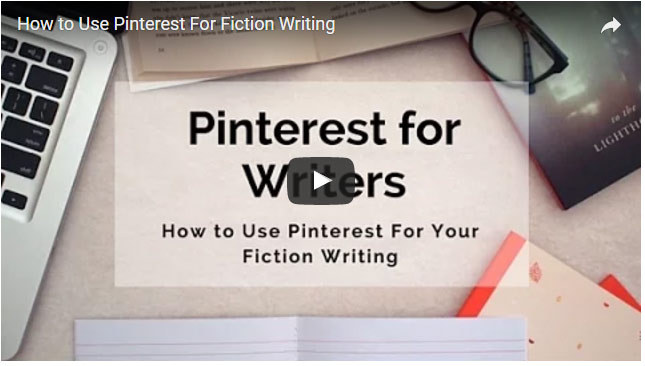
Video: How Authors Can Use Pinterest For Fiction Writing & Novels

Pinterest-video

Further to yesterday’s post about researching your novel, here is a link to a useful video from Writer’s Edit, in which Founding Editor Helen Scheuerer talks about how she used Pinterest to organise visual aids for the second novel in her fantasy series.

“It’s something I never really considered before… But now I don’t think I’ll do another book without it. I’ve created boards for different characters, settings and costuming. Any big element in my book, I have a board for it.”

To watch the video follow the link here: https://writersedit.com/video-how-authors-can-use-pinterest-for-fiction-writing-novels/

Happy researching!