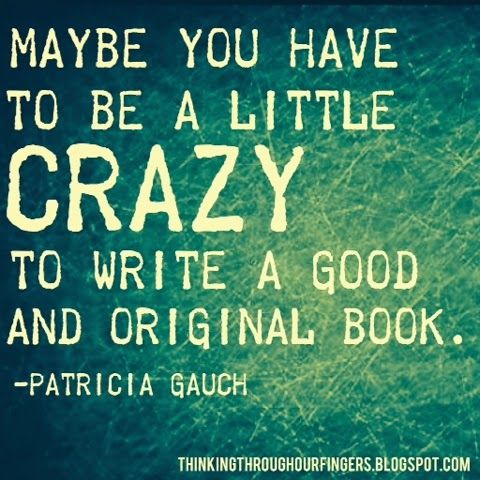
Happy Sunday, and happy writing!
#sundaywritingquotes
Happy Sunday, and happy writing!
#sundaywritingquotes

If you’ve found yourself in the midst of a difficult season, what can you do to keep moving forward with your writing? Here are 3 ways to keep writing through adversity:
Consider what exactly is going on in your life and understand the time demands that come from it. Maybe you’re getting married and the planning is time consuming… but you’ve got this novel you just don’t want to let go of for a few months. Getting married is quite different than being stuck in a hospital for the better part of five months, and your time restrictions are going to be different. Whatever your tough situation, think about what you want to achieve. Maybe you can only spare ten minutes a day to write a few paragraphs. But hey, it’s a start!
This is where you look at where you want to take your writing career, and realistically try to figure out how to keep writing and stay on track. Do you want an agent, a publishing deal, etc. Because all of that is going to require a time commitment. Working on your goals, and figure out how those work alongside the other needs and commitments you have in your life.
There are loads of positive things you can be doing to keep your head in the game. Read, listen to podcasts, or check out blog posts from other writers – to name but a few.
There are a lot of great writing podcasts out there:
When adversity strikes, you don’t have to let your writing fall by the wayside. But it will if you let it. However, you can not only continue on with your goals in the face of harrowing times, you can amaze others with your work ethic. The tenacity to push through is something almost everyone will admire. It’s also a really good feeling as a writer.
If you can get through adverse times and figure out how to keep writing, you’ll find it that much easier to carve out time on days when you’re not in the middle of a trial.
***
Read the full article here: https://www.helpingwritersbecomeauthors.com/how-to-keep-writing/

The word “twist” exerts a strange power over crime fiction addicts like me. Publishers know this all too well, which is why the promise of a twist is often used to advertise books that don’t have twists at all. “You’ll never see the breathtaking twist coming!” screams the press release. Well, no, you won’t, because it doesn’t exist. And so many people think a brilliant resolution is the same thing as a twist. It isn’t. Agatha Christie’s Murder on the Orient Express offers the most impressive puzzle solution in all of detective fiction. But, however ingenious and surprising, it’s not a twist ending.
So what is a bona fide twist? In my view, it has to be something that overturns or negates an already drawn conclusion or a firmly entrenched and reasonable assumption (Orient Express overturns an unreasonable assumption on the part of the reader, which is why I wouldn’t call it a twist).
Writing a twist isn’t an exact science, but part of what makes the brilliant ones so attractive in fiction is that feeling of having everything you thought you knew reversed, inverted or demolished; the fictional equivalent of being on a rollercoaster that suddenly turns upside down, leaving everything looking and feeling very different for the rest of the ride. And the new picture created by the shake-up of the twist has to be one that makes sense and is not risible. For example, if you find out at the end of the novel that the murderer is not the person whose fingerprints were on the knife, but rather his long-dead second cousin who developed marvellous fingerprint-forging technology unknown to science or the reader – that’s not a twist, it’s a travesty.
It’s going to be very hard to do this without spoilers, but I will try. In my opinion, these are 10 excellent examples of novels with genuine twists:
1. My Sister’s Keeper by Jodi Picoult
A moving, complex moral-dilemma story about a girl who takes her family to court in order to win the right to refuse a life-saving bone marrow transplant to her dying sister. What’s great about the twist is that you were neither waiting nor hoping for it – the story feels totally satisfying and complete without it – and yet when it arrives, you realise that there was a carefully and subtly carved space all throughout the novel for that perfect twist to fit into.
2. Rebecca by Daphne Du Maurier
A psychological suspense classic about a woman who marries a man she adores, only to discover that he, his home and his staff are apparently still obsessed by his far more charismatic first wife, to whom our heroine fears she can never measure up. Without revealing anything that’s gone before to be a lie, the twist changes the meaning of everything we’ve seen so far and provides the novel with an exemplary and memorable resolution.
3. Jane Eyre by Charlotte Brontë
Not all superb twists need to come at the end. There’s a twist in the middle of this classic novel that takes it to another level of passion, intrigue and excitement. There are hints before the big reveal, but not even the most imaginative reader would dare to imagine the truth. Twists in the middles of stories rather than at their ends tend to say: “And what do we all think now?” rather than, “So THIS is what we’re supposed to think!” – and this one does that brilliantly.
4. Before I Go to Sleep by SJ Watson
An unputdownable novel about a woman who loses her memory every night as she sleeps, and wakes each next morning remembering nothing. The author expertly leads the reader to assume that there is a binary choice in terms of who and what to suspect, and then reveals at the last moment that there is a third and even more terrifying possibility…
5. We Need to Talk About Kevin by Lionel Shriver
You can tell when a twist is brilliant, because copycats spring up all over. The twist at the end of Lionel Shriver’s masterpiece about a school shooting and a difficult mother-son relationship is one that literally takes your breath away. I’ve read two novels since that have copied and pasted Shriver’s twist as if it hadn’t been done before (or perhaps they simply hadn’t read Kevin!). Either way, neither of the copycats used the twist with Shriver’s panache.
6. Innocent Blood by PD James
I know I don’t have to choose a No 1 – this is, after all, a top 10 – but this novel contains my favourite twist in all of crime fiction. Halfway through this story of an adopted young woman determined to trace her biological parents, there is a twist that made me leap up off my sun-lounger and yell at random holiday makers that they needed to read this book urgently. I won’t say any more – just, please, read it.
7. Shutter Island by Dennis Lehane
This novel about a US Marshal trapped on an island, trying to find an escaped murderer in a sanatorium, has a twist of such audacity, I’m not sure I’d have dared, but I’m very glad Lehane did. It’s so bold and all-encompassing, it’s perfect.
8. Gone Girl by Gillian Flynn
This brilliant thriller contains a meta-twist, devised and inflicted by a central character within the novel rather than by the author herself. It’s a middle-twist rather than an end-twist, and the character responsible spends much of the novel afterward boasting about it. It works exceptionally well.
9. The Secret House of Death by Ruth Rendell
A brilliant crime novel by one of the UK’s finest crime writers, in which the murder itself is the twist. You won’t understand what I mean by that – so you must read the book! The last line, which underscores how profoundly the reader has been fooled, sent a shiver down my spine.
10. Behind Closed Doors by BA Paris
I’m not sure all readers would recognise that this is a twist-based story, but it is. It twists our expectations of the entire psychological thriller genre. The novel begins as a portrait of a marriage in which the wife seems to be a little nervous around her husband… What could possibly be going on? Is he abusive? Does she have a guilty secret? I liked this novel from the start, but a few chapters in, one of the main characters provides information that’s so startling, it shakes up all of the reader’s expectations about the genre they think they’re reading, making the rest of the story all the more exciting.
So there you have it – I hope these have whetted your appetite. If you haven’t yet read them, add them to your TBR pile immediately! Happy reading 🙂
Via: https://amp.theguardian.com/books/2017/aug/16/top-10-twists-in-fiction

If you are a writer, just like with anything, you have probably picked up some bad habits. These habits can be hard to break, and eliminating them all together can take anywhere between 72 hours to more than 21 days. Some long-lasting habits built up over time are even ingrained at our neural level, meaning they can even determine our behaviour or outlook on life.
But this is also the perfect reason to break a bad habit, so you can make room for more successful productive ones. Here are 9 such bad habits, which might be holding you back, and if so, you should try to break them:
Most of us are guilty of this one. Never rely on the whimsical character of your inspiration, it will not always be on tap to get you through. Sometimes you have to lock yourself in a room and force yourself to write.
The thing about plans is that if you can promise yourself to follow it without yielding to excuses, you might actually get some writing done. Here are three ways you can make yourself stick to your writing plan:
Procrastination and postponing your writing goals to fulfill other minor errands is another mistake. Often these can appear like writing – researching writing, blogging about writing, social media on writing – but none of this is actually writing.
Believe that you are good enough and you can do it. Turn off the internet, put your phone on silent and just write. I accept this is challenging, but once you get going it can also be very rewarding.
We all tend to sit and think about our novels – inspiration might hit you at the oddest of times, when you are nowhere near your laptop/computer. However, unless you make notes – in a notebook, on your phone, on a scrap of paper – all that over thinking is just wasted. By the time you sit down it will be gone, or have changed shape. So try to introduce a better habit of carrying around a notebook (or similar) instead.
When your mind is already dried out, you shouldn’t expect anything special to come out. Sleep deprivation can result in chronic fatigue and even severe depression. When writing a book you should allow yourself from 7 to 9 hours of sleep each day.
This might sound like a good idea, but it isn’t. Feedback is great, you should get feedback, but only after you’ve finished your first draft completely. Otherwise you might end up completely changing the book, only to find it worked better before, or you have to change it again anyway.
Whilst I think it is a great idea to have somewhere that is solely for you and your writing to help you get into that space easier, limiting yourself to just that space may mean you have trouble writing anywhere else. It is good to be flexible, so that if you find yourself somewhere new you can still pen a few words without having a breakdown. It’s a useful writer skill to have.
Even if you have several ideas for different novels, I recommend you keep a separate notebook or folder somewhere for these ideas, but don’t get too drawn into it without finishing what you are working on first. Dividing your attention between several story-lines can confuse you and make the process of finishing one of these books very hard.
When you are writing a book, it can be very tempting to dive into it and ignore everybody. However, this is not always a good thing, as it can make you feel very lonely and isolated. We need our friends and family for support in those moments when we are not writing, so don’t lock yourself away – take the odd break and chat, laugh, get things off your chest. It will improve your writing time no end.
You’re in the zone. You don’t have time to eat. You snatch a quick fatty unhealthy snack and keep going. Does this sound like you? Me too! However, this can be counter productive because not fuelling yourself properly means your creative brain won’t be functioning to its highest capacity, and drinking enough water is also key for that process. Allow yourself a half hour break, eat something nutritious and make sure you have a big bottle of water to hand. Then let those creative juices flow!
***
Based on: https://www.justpublishingadvice.com/nine-bad-writing-habits-that-you-should-break/

Characters come in many forms, and not all of them are happy protagonists who light up a room. Antagonists, villains, and grumpies may not be the most likeable characters but they’re still important to the story.
I was recently procrastinating writing a chapter from the perspective of my novel’s antagonist, purely because he was someone I wouldn’t get along with in real life. But once I started writing through their eyes I saw all their motivations and reasoning, and realised they weren’t so bad.
This writing prompt is about seeing through new perspectives and creating complex characters.
Create a Villain
Come up with a character that is so opposite to you that you couldn’t stand them if they were in the room with you. Give them beliefs that would get you into a heated debate, give them personality traits that would make you cringe, and a lifestyle that would make you sick. Go all out with this, and create the most horrible person that you can imagine.
Learn to Like Them
Jump into your character’s mind (this can be easier said than done) and find something about your character that gives a reason as to why they’re so villainous.
We all have experiences that shape us, so determine what life-changing experiences your character went through. Try and see how they justify their actions, and why they are perfectly reasonable from their perspective.
You might not necessarily ‘like’ them by the end of it, but you’ll certainly understand them much better.
Happy writing!
Via: https://writersedit.com/fiction-writing/writing-prompts
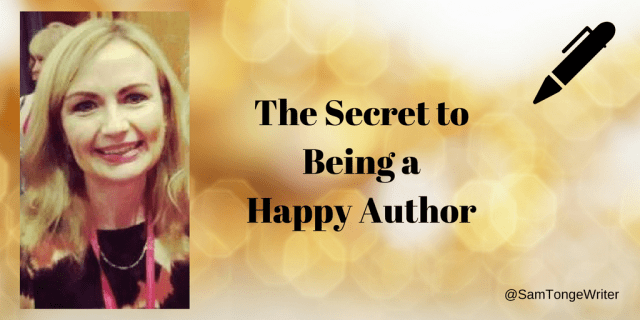
I read this lovely post by Sam Tonge, and wanted to share it here – as it is very good and grounded advice. Something all writers and authors need to take on board.
It’s a tough business, publishing. I recall, years ago, a successful author warning a group of aspiring writers (me amongst them) to be careful what they wished for – that getting published didn’t solve all your problems. In fact, it brings a different set. And I can certainly confirm this. Don’t get me wrong, I love my job and consider myself very lucky to be doing it – but signing that deal means that instead of suffering submission rejections you are faced with a whole new gamut of challenges, such as tight deadlines, bad reviews, disappointing sales…these things happen to all authors and can come as a shock after finally achieving your dream.
It pays to bear in mind that most dreams are unrealistic – the getting published bit isn’t, but it’s what we subconsciously attach to that aspiration. Your view of “getting published” might be that… you earn loads of money. Buy a big house and fancy car. Gain respect from everyone you meet. Suddenly become irresistible to the object of your affection. Never feel depressed again. End up on the Booker List. Stand on the red carpet next to George Clooney. Fit into that size ten dress. Prove to everyone who ever doubted you that their view of you was incorrect.
IT IS UNREASONABLE TO EXPECT ANY OF THESE THINGS TO HAPPEN AS A DIRECT RESULT OF FINALLY GETTING YOUR BOOK OUT THERE!
So how can us writers hold onto our happiness during such a roller coaster career?
Over the last year I’ve learn a lot from Buddhism. One of its tenets is that unhappiness comes from being attached to either good or bad things. What helps is realising that nothing is permanent. If we can do that, our life will achieve a sense of balance.
Take my 2015 bestseller Game of Scones. It reached #5 in the Kindle chart and stayed in the Top Ten for a good length of time. It won an award. Many readers loved the story. I was finally on my way to “making it” I whooped! I attached myself to that success and expected it to continue.
That was my mistake. The next book didn’t do badly, but didn’t do as well. I felt I’d failed. I attached myself to those feelings of disappointment and wondered if I’d ever have a bestseller again.
As it turned out I did and last year Breakfast Under a Cornish Sun got to #8. However, these days I have a different perspective. I don’t become attached to the peaks or the troughs. And I have zero expectations when a book is released. I write it the best I can, with love and heart, and I promote it at the outset… but then I let it go and get on with my next project. What will be will be. There are SO MANY reasons why a book does or doesn’t do well: the publisher’s strategy, the cover, title, price, the timing of its release, the other books around at that moment… I find that if I distance myself from my successes and see them for what they are – transitory events – it gives me a much more balanced view of my career.
Remember, the path to misery is littered with expectations and senses of entitlement!
And all of this can be applied to life. Physical looks, our own and loved ones’ personalities, domestic circumstances, financial earnings, our state of health … be aware that everything is impermanent and in a constant state of flux. This makes it easier to accept your situation when the status quo changes – which it will.
By all means enjoy your highs. You have worked hard. You deserve them. And lick your wounds during the lows. But remember – neither is permanent. Work hard and keep submitting manuscripts and you will get a deal. Keep writing and learning more about your craft and those good reviews and sales rankings will once again appear. Finding working with your current publisher/editor/agent difficult? One way or another that situation won’t last forever.
In my experience, keeping detached and enjoying the good moments simply for what they are (without further expectations), and realising the bad moments will eventually pass… THAT – in writing and in life – is the secret to happiness.
Via: http://samanthatonge.co.uk/news-and-blog/the-secret-to-being-a-happy-author/

As readers, we have all flipped through books for various reasons. Maybe you like that new book smell, or maybe, you are a librarian and flipping through books is an everyday process. When it comes to collection development, we must constantly assess our library’s collection and make important decisions about properly weeding material to keep our collections current. The last thing you need is to house a book highlighting MS-DOS when most computers are running Windows 10. That’s a disservice to patrons and it just shows a lack of respect for the profession (I have known some of these lazy librarians).
While flipping through thousands of books over the years, librarian’s have found some very weird things hidden in between the pages. Some of the things found have not been shockers but others have been weird. Before you ask: yes, condoms have been found inside books. Don’t people use wallets and purses anymore? Anyway, here are some librarian insights of the weirdest things they have found inside books. They range from the not too weird to complete NSFW moments:
“I once opened a book and found a tin can lid inside. I did not want to cut myself so I walked the book over to the trash can and slid the lid off the book to dispose of it. I thought it was some kind of brujeria (witchcraft)!”
“One time I found $100 in 20s. It was quite a large amount of money to be hidden in a book. I located the patron who last checked out the book and after some questioning, I verified he was indeed the one who left the $100 behind.”
“As I was going through book donations, I noticed one book had a large amount of papers sticking out of it. I pulled the papers out and after reading through some of them, I quickly realized they were either sexual letters written to a woman or someone was working on some serious erotica for a future book. The details were pretty graphic so I had to toss them in the trash pretty quickly.”
“A patron returned some damaged books in our book drop once. The books had been chewed on by a dog and as I was flipping through the pages to verify the extent of the damage, hairs (possibly pubic, possibly from the dog) fell out of the book onto my lap. I just about puked on myself. I ran to the bathroom to wash my hands about 10 times before I felt like I got the nastiness off of me.”
“One time I opened a donated book and there was a letter in there from a woman to a family thanking them for helping her learn to play music. The letter was very old so I decided to research the name of the woman who wrote the letter. It turns out she became a famous musician! I thought it was the coolest thing. I am tempted to reach out to her to let her know I found her letter.”
“A coworker and I were checking in books at the circulation desk when we noticed one book looked odd. The pages were spaced apart in a weird way. Upon further inspection, we noticed there was hair taped to multiple pages throughout the book. It was gross and creepy so we decided to discard that book right then and there.”
“All I can say is I have found unmentionables that include condoms (wrapped and unwrapped), tampons and other nasty things.”
I have to say that finding weird and nasty things inside books is not an every day occurrence for librarians but it does happen. I admit that I have multiple hand sanitizers in my desk drawer and I use them often if handling library books. I mean, I don’t know where some of those books have been! What are some weird things you have found in books?
***
Via: https://bookriot.com/2017/08/15/things-librarians-find-in-books/

Happy Sunday, and happy writing!
#sundaywritingquotes

An interesting article – I wonder if it still rings true?
Book review website Goodreads has uncovered a sharp gender divide in reading preferences, with analysis of 40,000 of its members finding that they leaned almost entirely towards selecting books by writers of their own sex.
2014 has been dubbed “the year of reading women” after a campaign by the author Joanna Walsh took off in January, but Goodreads’ data showed that male authors accounted for 90% of men’s 50 most-read titles this year. Before female writers rush to find a new male pseudonym, however, the converse is also true: according to Goodreads, “of the 50 books published in 2014 that were most read by women, 45 are by women, and five are by men”. And one of those men was Robert Galbraith, or JK Rowling.
“Ultimately, when it comes to the most popular 2014 books on Goodreads we are still sticking to our own sex,” says the reading website, as it laid out its investigation into the reading habits of 40,000 of its most active readers in 2014: 20,000 men and 20,000 women.
The analysis also found that in the first year of publication, 80% of a female author’s audience will be women, compared to 50% of a male author’s audience. But while women appear more open to reading books by both male and female authors, they like books by women more – and so do men. “On average, women rated books by women 4 out of 5 and books by men 3.8 out of 5. Surprise! Men like women authors more, too – on average men rated books by women 3.9 out of 5 and books by men 3.8 out of five,” said Goodreads.
Goodreads was prompted to perform its survey after “the #readwomen movement inspired us to take a closer look at where readers fall along gender lines”, it said in a blog laying out the results. #readwomen was kicked off by Walsh at the start of the year, asking readers to expand their literary horizons in the wake of statistics from US women in the arts organisation Vida showing a vast imbalance in the numbers of women reviewed and reviewing in today’s literary press. Walsh said yesterday that, while it was difficult to collect statistics on how many people are reading women writers, “response to #readwomen2014 on Twitter has been enthusiastic, with both men and women, including many ‘professional’ readers (ie reviewers and book bloggers) pledging to expand their reading lists in some self-defined way, whether it’s investigating a new sector of women’s writing (for me, this year, it’s been women in translation), reading 50%, or 100% women writers this year”.
Elizabeth Khuri Chandler, editor-in-chief and co-founder of Goodreads, said that Goodreads’ aim in sharing the data “was to stimulate conversation and self-reflection” and “to create a space for some friendly conversation about the subject”.
“It’s been fascinating to see our members discussing the male author/female author ratio of their own reading. For the most part, people are saying that they don’t set out to read a male author or a female author. It’s all about the book. But when they look at their reading lists, some of them are realising that maybe they might want to deliberately explore some different authors,” she said.
According to Goodreads’ data, men and women read the same number of books in 2014 if books from all publishing years are considered, but women read two times as many books published in 2014 as men.
“There is a caveat to the data we shared,” said Khuri Chandler. “We focused on men and women who are already active readers. So, we can’t say that the data covers all men and women. For our two groups, we learned that the men and women read the same amount of books. We did find, though, that with these active readers, the men did tend to gravitate to reading more male authors. But they did read some female authors too – it wasn’t all male authors. Also, it seems that our group of active male readers read books from a broader range of publishing dates than our group of active female readers. The female readers had more of a preference for the books published in 2014.”
Khuri Chandler added that, looking at the comments from readers about the Goodreads data, “some men said they felt they read more male authors because of the type of books they like to read. They thought that more male authors tended to write in the genres or about the topics that interest them than female authors. We also noticed that most people were unaware of the gender breakdown of the book they were reading. It certainly seems like an untapped area to explore.”
The five most-read books by women that men were reading this year, according to Goodreads, were City of Heavenly Fire by Cassandra Clare, We Were Liars by E Lockhart, Cress by Marissa Meyer, The Storied Life of AJ Fikry by Gabrielle Zevin, and Four by Veronica Roth – a mix of young adult novels, dystopias, and Zevin’s homage to bookshops. The most popular titles by male authors among female readers, meanwhile, were Hollow City by Ransom Riggs and The Blood of Olympus by Rick Riordan, both young adult titles, Anthony Doerr’s historical novel All the Light We Cannot See, Stephen King’s thriller Mr Mercedes – and The Silkworm, by the not-so-male Galbraith.
Walsh repeated a much passed-around quote, in which AM Homes cited another standout woman writer: “As Grace Paley once said to me, ‘Women have always done men the favour of reading their work and men have not returned the favour.”’ This didn’t, at first, seem to be borne out by Goodreads’ infographic, which showed women and men choosing books by their own sex as their favourites, said Walsh.
But she added: “It’s worth bearing in mind that the Vida statistics concentrate on literary fiction, and non-fiction, in which a bias towards books and reviews by men is clear in some publications, whereas the top Goodreads books include many crime, young adult and other titles less likely to be reviewed in the publications Vida covers.”
Via: https://amp.theguardian.com/books/readers-prefer-authors-own-sex
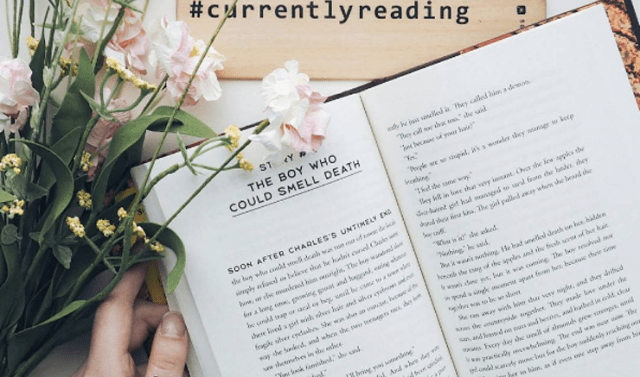
Everyone has a few pet peeves: someone chewing with his or her mouth open, talking on the phone on public transport, letting the dishes pile up in the sink for weeks. But for a book-lover, there’s no greater pet peeve than someone attempting to talk to you while you’re reading. It’s like yanking headphones out of someones ears, or deciding to discuss your drama in the middle of a midnight showing of a brand new movie. In other words: it’s rude.
Sure, someone reading a book may not look like they’re doing all that much. You might think: She’s just sitting there, and she’s just holding a book in her hand — what’s the big deal? What you can’t see is that person’s mind sucked into a completely different world, full of characters and suspenseful plots and so much more. It’s sort of the worst thing to be sucked back out for a conversation that nine times out of ten can wait, at least for a few minutes while I finish up the chapter.
Granted, I understand there are some conversations that can’t wait. I’m a reasonable person, but at the same time, I like my book time. If you take public transport, read while you’re on lunch break, or have a few roommates who don’t grasp the idea of “quiet time”, then you’ve definitely had these 14 thoughts when someone tires to talk to you while in the middle of a really, really good book:
1. “Can you not?”
2. “I wonder if he’ll stop talking to me if I raise the book higher?”
3. “I should’ve put headphones on.”
4. “Did this person forget the whole ‘reading means quiet time’ lesson in Primary School?”
5. “I bet you’re the type of person to talk in a movie theater, too.”
6. “I wonder what would happen if I just respond to this conversation with only the dialogue from this book…?”
7. “Is it rude if I ask him to stop talking? Does this make me a horrible person? Am I the worst listener in the world?” (Technically 3 thoughts, but hey.)
8. “How many shrugs does it take for you to get the hint I’m not interested?”
9. “What did I do to deserve this?”
10. “Pretend to care, pretend to care…”
11. “Nope, I just can’t.”
12. “I’m going to invest in Audio Books from now on.”
13. “I think he’s finally taken the hint — Victory!”
14. “Now I can’t find the sentence where I left off…”
Hopefully this gave you a giggle, and anyone reading it will realise in future not to interrupt – or maybe you can ‘accidentally’ leave it somewhere said person can read this – hint hint!
***

 Writer's Blog