How to Start a Book Club

bookclub article

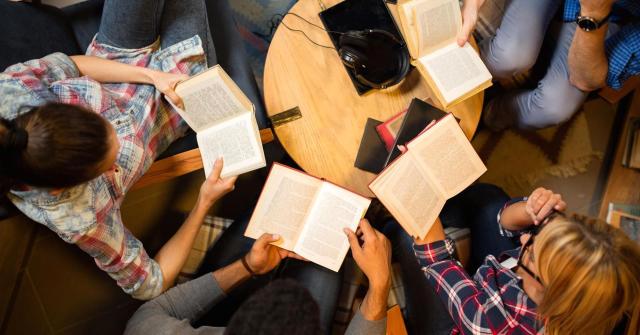
Writers have a tendency to become homebodies, to embrace solitude and focus on writing and reading alone. Reading is, of course, a solitary act; a subjective journey that we take on our own and into ourselves. Reading isolates you from others: you carry the experience of the book within you, but who can you tell? Who will understand?

Reading alone is not only lonely but makes for a narrow-minded view of literature, which is no good if you want to be a successful writer. Writers must read widely and read often, as we’re always told. We need to find new resources, read reviews, take recommendations. Writers must also learn how to pick apart the books they read, to challenge themselves, to see the stories from new perspectives. We need to add a social element to the solitary art of reading.

Maybe we’re shy; maybe we don’t know where to meet other readers like ourselves; maybe we don’t have time for a social life. That’s why you should start (or join) a book club.

Why start one when you could join one?

At the beginning of the year, in that liminal space between old and new, spurred on by talk of New Year’s Resolutions and new experiences, I started a book club. I’d been conscious of becoming more withdrawn and wanted to kickstart my social life again, and what better way to do it than talk about reading (and writing)?

I knew of a few relevant groups but couldn’t bring myself to squeeze into them without knowing anybody. I searched online for local book clubs and found that they were all for casual readers rather than literary or writerly readers, who need to rip texts apart and learn things from them. I also found that a lot of book clubs were held on weekdays or at times I couldn’t fit into my schedule.

There wasn’t anywhere that I felt, as a writer, I could fit in as a reader. There’s no better way to find what you want (and need) than to create it for yourself, and the great thing about starting a book club is that you have freedom to make it exactly what you want it to be.

Decide what you want from it

When I was on the search for a book club I knew what sort of group I would fit into best. I needed like-minded people; people who were not only readers but also writers; people that would understand what I knew but would also expand my knowledge.

To start a book club you need to have direction, and that means knowing what you want the group to be and what you want to get back from it. If you want to explore new writing, start a group that reads only contemporary books and if you want to fangirl over fantasy then focus your group on genre writing.

You can focus your book club on just about anything:

  • Genre (sci-fi and fantasy, realism and literature, poetry)
  • Gender and Age (male, female, young, old)
  • Author (reading the entire works of a single beloved writer)
  • Publication date (ancient, classic, contemporary)
  • Publication country (American writing, African Diaspora, British Isles)
  • Or don’t specify at all and see where it takes you!

Whatever parameters you choose for the reading, also consider certain ‘rules’ for the meetings themselves. Think about possible locations for meetings (local cafes, people’s homes, or purely online?), whether you want mixed genders or a more ‘girls’ night’ or ‘mates’ date’ kind of vibe, and whether you want group members to be super strict with their readings (comprehensive notes necessary) or more casual (haven’t read the whole book? No worries!).

Establishing the expectations for your group early on avoids disagreements, disappointments, and dodgy decision-making. When everyone knows what they’re in for, everyone’s more likely to join for the right reasons and have a great time.

Getting people together

So you’ve got the concept of your book club settled but you’ve got nobody to attend the actual meetings. Depending on whether you want to catch up with new people or friends you already know, your methods of spreading the word about your new group might vary.

A simple post on social media asking for interested parties might be just the thing you need to get a group together.

If you don’t want to throw your net wide open you can tell a few friends, ask them to invite a friend each, and all of a sudden you have a mix of old and new buddies!

Starting afresh? Try starting a group online through a site like Meetup, posting flyers in cafes and bookstores, or talking to local libraries (or universities, or writing centres) about advertising through their channels.

The way you get your group together depends on how many readers you’re expecting to bring together and how comfortable you are with meeting new people. I’m more on the socially awkward side so I posted through Facebook, got a small group of four together, then expanded with friends-of-friends. The important thing to remember is that not everybody will be available for every meeting, so aiming high can sometimes leave you with just the right number.

How to keep organised

It’s not enough to just start a group and get people together. You need to have excellent communication from month to month (or week to week, or whenever your meetings are planned for!). There will be a lot of decisions to make and confirm with everyone in the group, like what the book is, where you’ll meet up, and who can make it on the day.

Facebook groups are ideal for this because everyone can easily comment and make friends fast with a few clicks (on a site you’re no doubt already familiar with). Other apps like Whatsapp are also great for the tech savvy and for reaching out to members who might not have Facebook (yes, they exist!). Swap emails and phone numbers – you never know when they might come in handy.

The best advice I can give is to plan far ahead in time, like a whole month ahead. At the end of your meeting start discussing the next one, and then get in contact with everyone and let them know the details while they’re still buzzing from the fun times they just had.

What I’ve learned from my book club

As someone who ‘runs’ (or at least, is part of) a book club, and has been doing so for a solid eight or nine months now, there are a few things I’ve learned along the way (in addition to all of the above):

  • Come up with questions and topics – this helps to get the conversation going and helps you to think about the chosen book in new analytic ways (which in turn improves your writing!)
  • Be democratic – make sure everyone discusses the book choice and that everyone gets a say, especially if some members are more quiet than others
  • Get feedback – you want people to have a good time, so find out what’s working and what’s not and tweak your meetings to the best they can be
  • Expand your horizons – other people in your group have fantastic ideas, and the whole point of book club is to swap reading experiences; listen to people’s recommendations, try new things, read from new perspectives

Starting a book club was easily one of the brighter initiatives I’ve had this year. I’ve reconnected with old friends, met new people, read (and loved) books I’d never think to pick up. We’ve had deep conversations about feminism and the authority of the writer and we’ve had excited chats about new TV shows and Harry Potter.

Book club became more than just a monthly meeting; all I had to do was put myself out there, without fear of rejection or disappointment, and I’m so glad that I finally did.

***

Article Via https://writersedit.com/fiction-writing/handy-tips-on-how-to-start-a-book-club/

Don’t Underestimate Reader Recommendations | Mads Holmen

Reading people

The web has grown to become the main source of information and discovery for many people, and they depend on it to help build their perception of the world. However, at the same time the amount of information available has exploded.

Just think of Spotify’s 30m music tracks – there’s enough content just there to fill hundreds of human lifetimes. YouTube receives more video in a minute than you could ever watch and Facebook must choose from an average of 2600 relevant posts when you fire up your feed.

So, to manage the constant stream of potential information from overloading us, we all daily interact with recommender systems now. Some well-known examples include Facebook and Instagram’s Feed, Spotify’s Discover Weekly, movie and book recommendations on Netflix and Amazon – but recommenders are everywhere, assisting you to do everything from booking your travel to dating or ordering food.

However, there is one problem. Diversity.

The public discourse has now accepted terms like filter bubbles, echo chambers and fake news, but we’ve still done preciously little to consider the systems design that caused this new trend.

I heard a panelist in Amsterdam last week say that he genuinely believed Facebook and Google could incidentally cause the next global conflict by virtue of creating a more polarized media landscape. They didn’t plan to, but by rewarding attention-grabbing content that drives engagement, these companies have created a perverse incentive structure for content creators.

Ev Williams, the founder of Medium and Twitter, often uses the car crash analogy. The current systems rewards extremes he says. Say you’re driving down the road and see a car crash. Of course, you look. Everyone looks. The internet interprets behavior like this to mean everyone is asking for car crashes, so it tries to supply more of them.

It interprets what we do, as the person we are.

When popularity and engagement drive the publishing industry, we lose sight of what gave the industry its privileged status in society in the first place – trust and human aspiration. So, while it is tempting for businesses to interpret popularity as a signal that people simply want more of that stuff, that would be a mistake. People also want diversity, because it serves a different purpose in our lives – that of our better, future self. In the recommender systems space, we call this problem exploitation vs exploration.

One of the editors on our blog, Sam Lay, wrote beautifully about why diversity is an important counteract to popularity – and why the reason is human aspiration.

“Every Monday my unambitious and unsophisticated musical choices stare me in the face. I can clearly see why Discover Weekly is choosing the songs it does and that’s slightly embarrassing.…My saves, shares and playlist adds on Spotify indicate my aspirational self, the music I would like to be associated with, whilst what I actually listen to often serves a practical purpose or satisfies a guilty pleasure.”

In short, he argues that there is a difference between what our actual self may do in the moment and what future our aspirational self is trying to steer us towards – and that any product that helped him be more of the latter would be worth more to him. Daniel Kahneman calls this the difference between our experiencing self and our remembering self.

The problem is often that aspiration and long-term product satisfaction cannot be measured as easily and immediately as popularity. However, we know from research that users actually tend to be more satisfied with diverse recommendations, i.e. being exposed to a wider variety of content, which can prompt the experience of serendipity — discovering something new when we were not expecting it. Those sorts of discoveries have disproportionate value.

So, if our ugly actual self stares us in the face every time we open Facebook, Instagram and YouTube, the best business opportunity around might be to cater more for our better selves. We know from countless branding studies that aspirational brands can charge a premium on their products and services (think Apple vs Dell), so I see no reason to assume that this shouldn’t be true in the publishing space too.

When speaking to friends about this article, one thing that kept coming back was how bookstores like Foyle’s in London are offering superior value by having diverse staff pick tables and an aspirational store environment. People buy an experience, not just a book. It might feel counter-intutivie when you’re chasing short-term clicks, but that experience will become ever more valuable if it reaches out to our better selves, rather than just re-circulating our current tastes.

***

The original article is here: https://www.thebookseller.com/futurebook/dont-underestimate-readers-when-it-comes-recommendations-642661

How to Handle Criticism of Your Writing

Handling-Criticism-Of-Your-Writing

If you are a writer, you will know that it already takes a brave individual to share themselves in such a vulnerable way. Writing is very personal, and so when a writer’s work is criticised, it feels very personal. Unfortunately, the world is not always that kind. So, here are some tips to help you deal with criticism as a writer:

It’s not personal

As I said above, when someone criticises your writing, it might feel like a personal attack, but it is not. At the end of the day, you need to keep in mind that it is not about you, but rather about the piece of work that you have produced.

Perhaps they don’t fully understand or appreciate what you are saying. Maybe they hold a different opinion, or would have gone about it in a different way. Whatever it is, you can’t please all of the people all of the time, so try not to take it to heart.

If you are feeling brave, engage in a discussion about what it was they didn’t like. Get some in depth feedback, then you can choose what to take on board and what to ignore. And if all else fails, pretend it never happened and move on.

Grow from it

Nobody likes to be criticised because it makes us feel inadequate. The thing is, none of us are perfect, and even the best writers have flaws. Criticism is part of life, and it is better to deal with it early on.

If you feel that the criticism you received is unfair, you can always take on your critic. Try to explain what you meant and where you were coming from. Bear in mind that this isn’t always productive. Sometimes it’s better to just ignore it and move on.

The way we handle other peoples’ negative opinions is going to determine if we grow or stagnate. Perhaps the criticism is an opportunity to improve and get better at your art. There is nothing wrong with getting help if you need it, whether online or asking a friend. All you are doing is improving your writing skills, and no one can criticise you for that.

More than one writing project

As a writer, you probably have more than one project going on at the same time. So if one seems not to be going to plan, put it on the shelf for a while and work on something else.

I am not saying that you should give up on any of your projects, but sometimes it is just one piece of writing that might need more work, and if it’s not going well it might start to get you down. So take a break and do something else you enjoy.

You are not defined by one manuscript or article. You want to make sure that you don’t pour all your energy into one project and let that define you. There is more to you and a lot more that can be done. So even if one of your projects fail, at least you know that you are already working on something else. Keep the faith.

Go with your gut

Sometimes people with no knowledge of writing want to give you their opinions. There comes a time where you have to start believing in your abilities and take these comments with a grain of salt.

Not every negative opinion is correct, and you might just have to leave things as they are. Be careful who you listen to. I would much rather take criticism from people in the industry, than from someone with no writing experience.

That said, even if your editor tells you that your writing is not up to scratch, you need to be willing to fight for what you believe in. There is nothing wrong with you trusting your work above the opinions of others. In fact, that shows that you are evolving and trusting in your skills.

If the criticism is constructive and you agree, go with it. If not, get more information and stick to what your gut is telling you.

Acceptance

There are moments when the criticism you receive is valid, and you just need to accept it. After accepting that you are a human being that makes mistakes, you then need to move on.

This moment does not define who you are or what type of writer you are. As long as you are growing through the process, it is all worth it. Allow yourself to make mistakes and do not beat yourself up about it.

Many writers struggle to get their work published, but they did not let one ‘no’ stop them from pursuing their goals. And every writer gets the odd bad review. You are going to have to grow a tough skin and understand that this is part of the job.

It doesn’t mean that you are a bad writer, but rather that you are still learning and growing. If the critic is correct in what they have to say, or if they have a different opinion, you should just accept it and move right on.

Conclusion

Being a writer is all about discovering who you are through your thoughts and written work. There is no end to this journey, and just like we evolve as people, we evolve in our writing skills.

Using online tools like a grammar checker does not mean that you are not good enough. It simply means that you are using everything available to you in order to learn and succeed.

Hold on to your goals and dreams and do not let one bad comment move you away from the path you are on. There will always be bumps in the road, but you need to get right back up and keep moving forward.

***

Via: https://www.justpublishingadvice.com/how-to-handle-online-criticism-of-your-writing

11 Reasons The Best Relationships Are With Books

a-woman-reading-a-book

Boyfriends come and go, best friends move away, and family drive you crazy…. but books, unlike people, are always reliable. If you’re a true bibliophile, than books will already have a special place in your life. You constantly surround yourself with them, and unlike your romantic partner’s crap, you never get mad when you find them laying around the house. You make sure that no matter where you go, you go together, and you always go to bed holding onto a book. Even if you’re at work or out with friends, you’re mind constantly wanders back to the same thing: books. You just can’t help it, they’re always on your mind and you miss them when you’re apart. Try as you might, but there’s no denying it: books are your true love, and one of the best relationships you have.

No matter how great your girl gang is or how wonderful the new love interest in your life may seem, you can’t escape the truth: your relationship with them will never be the same as your relationship with your books. Not sure if you believe me? Then here are 11 reasons that the best relationships are with books.

1. You Prefer Going to Sleep With A Book Over A Person.

While your partner hogs the blanket and snores in your ear, books never do that to you. Sure, they may leave lines on your face when you fall asleep reading, but can you really blame the books? You’d much prefer waking up to find yourself surrounded in novels than in your partner’s drool.

2. Books Are Always There To Catch Your Tears.

When books make you cry, which they do often, they are also the ones there to catch your tears, and they do it without complaining about how you look when you cry, or telling you to blow your nose.

3. The Bookstore Is Your Regular Date Spot.

If you spend your Friday nights cruising the fiction aisle with a few new books in your arms, then chances are you have a better relationship with books than you do the friends you ditch on weekends to stay home and read. Hey, no judgement here.

4. You Go Everywhere Together.

Whether it’s on the train to work, on vacation, or just out to the bar, you and books go everywhere together. You’d never dream of leaving the house without one, unlike your partner who you don’t mind leaving behind for some alone time with your new novel.

5. They Give You Butterflies In Your Stomach.

From the subtle romance to the hot-and-heavy sex scenes, books always find a way to give you all the good feelings. Can you still say that about the partner who shamelessly burps and farts in your presence? Yeah, I didn’t think so.

6. You Spend A Lot Of Alone Time Together.

You can truly tell if you like someone (okay, something) if you find yourself having a lot of one-on-one time together. In the case of books, there’s plenty of that.

7. Even Though You See More Than One At Once, No One’s Feelings Get Hurt.

Your books understand they aren’t the only one, and unlike your romantic partners, they never get jealous when you’re juggling multiple books at once. They understand your unquenchable need for good storytelling, and they never judge.

8. No Matter How Much You Yell At Your Books, You’re Books Never Yell Back.

You can get as mad at you want at your books for having terrible plot twists or for killing off your favourite characters, but yell as loud as you can, and books will never raise their voice to you. They’re here for you, to let you vent, and isn’t that what we all want in a relationship?

9. You’re Constantly Talking About Them To Friends.

At brunch, when you’re out shopping, or on a girl’s night out, the story is always the same: you cannot shut up about the book you’re reading. Whether you’re friends asked or not, you can’t help but gush over your current selection, and you don’t even care if anyone is listening. You won’t hide your love, no matter how many eye rolls you get.

10. They Are Always There For You At The End Of The Night.

It doesn’t matter where you’ve been, or who with, books are always happy to see you at the end of the night. Because the best relationships are the ones you can count on, always.

11. You Can’t Get Them Off Your Mind.

Whether you’re at work or out with friends or even laying around with your partner, you can’t help but let your mind wander back to the same thing: books. They’re always on your mind. True love? I’d say so.

Via: https://www.bustle.com/articles/11-signs-books-are-the-best-relationships

Man Booker Prize 2017 Goes To George Saunders For Lincoln In The Bardo

man booker george saunders

The American short story writer George Saunders has won the Man Booker prize for his first full-length novel, Lincoln in the Bardo.

The book is based around a real event: the night in 1862 when Abraham Lincoln buried his 11-year-old son Willie in a Washington cemetery. Imagining the boy trapped in the Bardo – a Tibetan Buddhist term for a kind of limbo – Saunders’ novel follows the fellow dead, also trapped in the graveyard and unwilling to accept death, who observe the boy as he desperately waits for his father to return.

Written almost entirely in dialogue, the novel also includes snippets of historical texts, biographies and letters, some of which contradict each other and others that Saunders, 58, created himself. In his review for the Guardian, fellow author Hari Kunzru praised Lincoln in the Bardo as “a tale of great formal daring”, adding: “[It] stands head and shoulders above most contemporary fiction, showing a writer who is expanding his universe outwards, and who clearly has many more pleasures to offer his readers.”

Accepting the prize, athe 58-yearold Texan-born author made an eloquent defence of the importance of culture. “If you haven’t noticed, we live in a strange time, so the question at the heart of the matter is pretty simple,” he said. “Do we respond to fear with exclusion and negative projection and violence? Or do we take that ancient great leap of faith and do our best to respond with love? And with faith in the idea that what seems other is actually not other at all, but just us on a different day.

“In the US we’re hearing a lot about the need to protect culture. Well this tonight is culture, it is international culture, it is compassionate culture, it is activist culture. It is a room full of believers in the word, in beauty and ambiguity and in trying to see the other person’s point of view, even when that is hard.”

The chair of judges, Lola Young, described the novel as “an extraordinary piece of work. Admitting that she initially felt challenged by its layout, which is reminiscent of a screenplay, the Labour peer said she was eventually “captivated” by work which she came to regard as unique.

“The challenge is actually part of its uniqueness. It is almost saying, ‘I dare you to engage with this kind of story, in this kind of way.’ It is incredibly rewarding.

“For us, it really stood out because of its innovation, its very different styling, the way it, almost paradoxically, brought to life these almost dead souls in this other world. There was this juxtaposition of the very personal tragedy of Abraham Lincoln and the death of his very young son next to his public life, as the person who really instigated the American civil war. You’ve got this individual death, very close and personal; you’ve got this much wider issue of the political scenario and the death of hundreds of thousands of young men; and then you’ve got this weird state across the cemetery, with these souls who are not quite ready to be fully dead, as it were, trying to work out some of the things that plagued them during their lives.”

The author of four collections of short stories, two novellas and a long body of journalism, the Texas-born Saunders came to writing relatively late, initially training as a geophysicist. After working as a tech writer, a field in which he was rewarded for brevity, he began writing short stories. His first collection CivilWarLand in Bad Decline was published in 1996. He was awarded a MacArthur Genius grant and a Guggenheim fellowship in 2006, then won the inaugural Folio prize for his story collection, Tenth of December, in 2014.

Saunders is the second American in a row to win the Booker prize, after last year’s winner Paul Beatty. Saunders’ win falls four years after eligibility rules were changed to allow writers of any nationality writing in the English language and published in the UK. There has been fierce criticism of the rule change.

The judges took five hours to come to what Young called a “collegial”, yet unanimous choice. She denied any concerns about Saunders’ nationality, saying: “We don’t look at the nationality of the writer. Honestly it’s not an issue for us. We’re solely concerned with the book, what that book is telling us.”

The books losing out on the prize were 4321 by Paul Auster (US), Elmet by Fiona Mozley (UK), Exit West by Mohsin Hamid (UK-Pakistan), History of Wolves by Emily Fridlund (US) and Autumn by Ali Smith (UK).

With 144 novels submitted for the 2017 prize, Saunders’ novel was among a starry, 13-book longlist, a rarity in recent years as more debuts and less-established authors have been named as contenders. This year’s longlist included Arundhati Roy, a previous winner of the Booker, as well as authors who had also won the Pulitzer, the Costa, the Baileys, the Folio, the Impac and the Goldsmiths prizes.

The £50,000 win, announced at a black-tie dinner at the Guildhall in London, was yet another success for an independent publisher; released by Bloomsbury, Lincoln in the Bardo is the third win in a row for an independent, after two consecutive wins for Oneworld publications.

Sales for Saunders’ novel have trailed behind Smith’s in the UK, with Lincoln in the Bardo selling about 10,000 copies so far, compared with 50,000 of Autumn. Saunders can expect his sales to skyrocket; last year’s winner, The Sellout, has now sold more than 360,000 physical copies, with sales in the week after the prize announcement jumping by 658%.

Young’s fellow judges this year were the writer and critic Lila Azam Zanganeh, the novelist and poet Sarah Hall, the artist and author Tom Phillips, and the travel writer and novelist Colin Thubron. Saunders was presented with the award on Tuesday night by the Duchess of Cornwall.

Via: https://www.theguardian.com/books/2017/oct/17/man-booker-prize-2017-second-american-author-george-saunders-lincoln-in-the-bardo?CMP=Share_iOSApp_Other

In Cold Blood: The Story Behind The First True Crime Novel

In-Cold-Blood-by-Truman-Capote-Howard-Linskey

The first true crime novel almost destroyed the man who wrote it. Howard Linskey, an author featured in CBS Reality’s new true crime TV series Written In Blood, finds out why.

The story of the first true crime novel is as famous as the crime that inspired it – and the man who completed the book never wrote another.

Truman Capote was already a literary star in 1959, when he read about the Clutter killings in the quiet town of Holcomb. Capote was famous for writing Breakfast at Tiffany’s but he wanted to try something new – the first ‘non-fiction novel’ – and this felt like the ideal subject.

Herbert Clutter and his family were brutally murdered when two men broke into their farm one night, looking for money they thought was locked in a safe that did not in fact exist. Enraged, they resolved to leave no witnesses. Herbert’s throat was cut then he was blasted with a shotgun; his wife Bonnie, their fifteen-year-old son Kenyon and sixteen-year-old daughter Nancy were all gunned down before their killers fled.

Truman Capote left New York for the scene of the murders, travelling with none other than Harper Lee, his best friend since childhood and author of the recently completed, To Kill A Mockingbird, which would soon become a huge sensation. Capote and Lee arrived at a small town still reeling from the shock of the murders. The eccentric, effeminate, outspoken Capote must have stood out a mile in rural Kansas but he charmed the inhabitants of Holcomb and even the special investigator, Alvin Dewey, to get the inside information he was looking for. The one thing Capote lacked was any trace of the killers. It seemed the police trail had run cold.

Six weeks later, a former cell mate who knew of their plan to rob the safe, identified Perry Smith and Richard ‘Dick’ Hickock as the Holcomb murderers. They were arrested, tried and sentenced to death by hanging, admitting their guilt along the way.

This is where the story of In Cold Blood takes a highly unusual turn. Despite the savage and brutal nature of the crimes, Capote decided it was necessary to get the killer’s version of events, because it would humanise them and make his book more vivid. He arranged to visit the convicted men and struck up an unlikely friendship with them, bonding with Perry Smith in particular, thanks in part to the murderer’s interest in art, music and books. He kept up a correspondence with Smith for five long years, while the death sentences were repeatedly appealed and his novel remained tantalisingly incomplete.

Capote realised he had placed himself in an impossible position by getting too close to the killers. In a bitter twist worthy of any crime story, he did not want Perry to hang, yet needed the sentences to be carried out if he was ever going to have an ending for his book. The mental torment on Capote began to grow.

“I thought that Mr. Clutter was a very nice gentleman. I thought so right up to the moment that I cut his throat.” – Perry Smith by Truman Capote in In Cold Blood.

As one of ten crime authors asked to appear in CBS Reality’s new true crime series Written In Blood, which began on 3 September, I prefer to keep my distance from real-life killers. Mark Billingham, Peter James, Simon Kernick, Angela Clarke, Marnie Riches, RC Bridgestock, Luke Delaney, Elly Griffiths, Alex Marwood and myself have all written books influenced, in part or whole, by true crimes, ranging from the callous, so-called honour killing of Banaz Mahmod to the horrific James Bulger murder.

My episode covers the infamous Moors murderer, Ian Brady, who, with Myra Hindley, killed five children in the early sixties. My novel The Search features a fictional character, loosely based on Brady and in no way sympathetic to him. When young Susan Verity disappears, suspicion falls on Adrian Wicklow, who shares Brady’s sadistic desire to torment the police. My research on Brady was disturbing enough without actually having to sit down with the real killer, who ironically died, after 51 years in prison, just one week after The Search was published.

Even if I had been writing about the Moors murderers themselves, I could never imagine visiting Brady – let alone striking up a friendship with him – to gain insight into his awful crimes. Rightly or wrongly, Capote put himself through that very process to complete his novel, but it took a terrible toll on him.

Perry Smith and Richard Hickock eventually lost their final appeals and both men went to the gallows on 14 April 1965. They asked Capote to be there when they died and he reluctantly agreed, witnessing Hickock hang but running out of the room just before Perry was executed.

Truman finally had his ending, but the anguish that caused him and the six years it took to finish In Cold Blood drove Capote close to madness. He never finished another book. Instead, he was left with lifelong addictions to drink and drugs that directly contributed to his early demise from liver disease in 1984, aged just 59.

Two Hollywood films have been made about Capote’s obsession with the Clutter family murders and their killers. The late Philip Seymour Hoffman won a best actor Oscar playing him in Capote, while British actor, Toby Jones, earned rave reviews for his equally brilliant portrayal of Truman in Infamous.

The book was finally published in 1966 and was a huge success. In Cold Blood is still in print and considered something of a masterpiece. The first true crime novel has been translated into thirty languages and sold millions of copies. Whether Truman himself considered it all worth it in the end is debatable.

***

Written in Blood airs every Sunday at 10pm since 3 September, exclusively on CBS Reality. Howard Linskey’s episode on the Moors Murderers will be broadcast on 5 November.

Via: https://www.deadgoodbooks.co.uk/in-cold-blood-truman-capote-howard-linskey/amp/

Transgender teddy to girl pirate: Authors tackle gender norms

Transgender-teddy

FRANKFURT

From a transgender teddy bear to a fearless girl pirate, children’s authors are tackling gender norms like never before, as debate rages about what it means to be a boy or girl.

Visitors at this week’s Frankfurt book fair, the world’s largest publishing event, will be faced with a string of books for young readers that defy stereotypes and navigate today’s hot-button issues of transsexuality and gender fluidity.

Stories with transgender lead characters in particular have broken one of the last “taboos” left in children’s writing, said literary expert Nicola Bardola.

“Some are watching this trend nervously, these kinds of books still make critics uncomfortable,” Swiss-born Bardola said, an author himself.

One of the most headline-grabbing recent titles has been “Introducing Tilly”, a tender story about Thomas the teddy bear who tells a friend: “I’ve always known that I’m a girl teddy, not a boy teddy.”

The picture book, aimed at children aged four and older, was written by Australian Jessica Walton who was inspired by her own father’s transition to a woman.

Translated into German last year as “Teddy Tilly”, Bardola called the book “a phenomenon”.

For a slightly older audience, there is US author Alex Gino’s award-winning “George”, which is about a transgender 10-year-old determined to play a female part in the school play.

INAPPROPRIATE

The book has won widespread praise for its warm portrayal of a feisty heroine, but it has also stirred controversy.

A Kansas district last month decided not to purchase “George” for the area’s schools, deeming it inappropriate for young readers.

Gino, a self-described “genderqueer” – someone who refuses to be defined by a gender – promptly started a Twitter fundraising campaign to deliver copies to every school library in the district.

In just half an hour the money poured in.

“Sharing stories of trans people with children is key to trans acceptance. There is no age before which it is appropriate to be compassionate,” Gino told AFP.

In the young adult section, readers can find Meredith Russo’s “If I Was Your Girl”, which chronicles an American teen’s fresh start at a new school, burdened by the secret that she used to be a boy.

Children’s book expert Bardola said the trailblazing tales had triggered much earnest hand-wringing from critics wondering whether it was “appropriate” or “dangerous” to introduce young readers to such complex themes.

He said it reminded him of the stir caused in the 1980s when gay characters started appearing in young adult books.

“The debate is nearly identical. You can tell literary critics are unsure about these (transgender) themes,” he said.

“I think we can be a little more relaxed about it,” he added.

“These books should be judged by their literary quality and children should be given a chance to decide whether or not they want to read these stories.”

German literature critic Ralf Schweikert was more sceptical.

“If you want to talk about what it feels like to live in the wrong body, you are asking for a lot of self-reflection from young readers,” Schweikert told AFP.

For bookworms scouting for a more general take on the gender debate, there’s no shortage of new titles out to smash the patriarchy, reflecting a wider cultural discussion about the traditional roles pushed upon boys and girls.

“There are increasingly books for very young readers out there that deliberately challenge these gender stereotypes,” Schweikert told AFP.

He listed the German early-reading book series “Wild Wilma” as a standout example, about the buccaneering adventures of a girl sailing the high seas as captain of a pirate ship.

‘PONIES AND PRINCESSES’

Bardola said stories that turned gender roles on their head had always been around but that such titles tended to peak every few years depending on the zeitgeist.

“Of course you can still find books for girls about ponies and princesses,” Schweikert said.

“But if you want to get away from those cliches, there’s a lot of good material out there right now.”

And more titles grappling with gender issues are on their way.

Scholastic, which published “George”, will next year be releasing the young adult novel “And She Was” by Jess Verdi, about a teen coming to terms with a parent’s transgender identity.

“And we’ve seen a number of trans or gender non-binary characters in other books we are publishing,” said Scholastic’s editorial director David Levithan.

Books, he added, that “show how gender diverse our real world can be”.

Via: http://www.channelnewsasia.com/news/lifestyle/transgender-teddy-girl-pirate-authors-tackle-gender-norms

Book News: Hodder wins new novels from Angela Clarke

angela-clarke_0A massive congratulations to my friend, Angela Clarke, on her new book deal – I can’t wait to read them. Here is what The Bookseller had to say…

Hodder & Stoughton has acquired two new novels by Angela Clarke, the author behind Follow Me, Watch Me and Trust Me (Avon), in a “hotly contested” auction.

Hodder’s Crime and Thriller publisher Ruth Tross, who acquired world English language rights from Diana Beaumont, Marjacq, said Clarke’s new novel, Inside, had hooked readers at Hodder from the first page and they had “big plans” for Clarke and her writing.

Clarke’s new novel, Inside, tells the story of Jenna Burns: framed for murder, she must prove her innocence from behind bars. When she realises she is pregnant, things take a darker turn – time is running out before she may be forced to give her baby up to the person who has ruined her life…

Wecloming, Clarke, who was previously published by Avon, Tross said: “I have loved Angela’s writing since reading her first novel – she is just amazing at combining a simple hook with page turning plots and intriguing characters.Inside displays that talent perfectly – everyone here was hooked from the first page – and we have big plans for Angela and her writing. I’m so excited to welcome her to Mulholland Books and Hodder & Stoughton.”

Beaumont said: “Angela’s first standalone novel plays to all her strengths: it’s topical, gripping, has a great hook and a strong female protagonist in a truly nightmarish situation. After a hotly contested auction we felt that the team at Hodder were the right people to take Angela to the next level in her career.”

Clarke added: “It’s a dream come true to be joining Ruth and Hodder’s roster, which includes many of my favourite crime and thriller authors writing today. I’m utterly delighted.”

Hodder & Stoughton will publish Inside on its Mullholland imprint in January 2019.

Via: https://www.thebookseller.com/tags-bookseller/angela-clarke

Kazuo Ishiguro Wins the Nobel Prize in Literature | The Guardian

Nobel Prize literature 2017

Fab article from The Guardan about this year’s amazing Nobel Prize in literature winner:

The English author Kazuo Ishiguro has been named winner of the 2017 Nobel prize in literature, praised by the Swedish Academy for his “novels of great emotional force”, which it said had “uncovered the abyss beneath our illusory sense of connection with the world”.

With names including Margaret Atwood, Ngugi Wa Thiong’o and Haruki Murakami leading the odds at the bookmakers, Ishiguro was a surprise choice. But his blue-chip literary credentials return the award to more familiar territory after last year’s controversial selection of the singer-songwriter Bob Dylan. The author of novels including The Remains of the Day and Never Let Me Go, Ishiguro’s writing, said the Academy, is “marked by a carefully restrained mode of expression, independent of whatever events are taking place”.

Speaking to the BBC, he called the award a “magnificent honour, mainly because it means that I’m in the footsteps of the greatest authors that have lived”.

“The world is in a very uncertain moment and I would hope all the Nobel prizes would be a force for something positive in the world as it is at the moment,” he said. “I’ll be deeply moved if I could in some way be part of some sort of climate this year in contributing to some sort of positive atmosphere at a very uncertain time.”

Ishiguro’s fellow Booker winner Salman Rushdie – who is also regularly named as a potential Nobel laureate – was one of the first to congratulate him. “Many congratulations to my old friend Ish, whose work I’ve loved and admired ever since I first read A Pale View of Hills,” Rushdie told the Guardian. “And he plays the guitar and writes sings too! Roll over Bob Dylan.”

According to the former poet laureate Andrew Motion, “Ishiguro’s imaginative world has the great virtue and value of being simultaneously highly individual and deeply familiar – a world of puzzlement, isolation, watchfulness, threat and wonder”.

“How does he do it?” asked Motion. “Among other means, by resting his stories on founding principles which combine a very fastidious kind of reserve with equally vivid indications of emotional intensity. It’s a remarkable and fascinating combination, and wonderful to see it recognised by the Nobel prize-givers.”

Permanent secretary of the academy Sara Danius described Ishiguro’s writing as a mix of the works of Jane Austen and Franz Kafka, “but you have to add a little bit of Marcel Proust into the mix, and then you stir, but not too much, and then you have his writings.

“He’s a writer of great integrity. He doesn’t look to the side, he’s developed an aesthetic universe all his own,” she said. Danius named her favourite of Ishiguro’s novels as The Buried Giant, but called The Remains of the Day “a true masterpiece [which] starts as a PG Wodehouse novel and ends as something Kafkaesque”.

“He is someone who is very interested in understanding the past, but he is not a Proustian writer, he is not out to redeem the past, he is exploring what you have to forget in order to survive in the first place as an individual or as a society,” she said, adding – in the wake of last year’s uproar – that she hoped the choice would “make the world happy”.

“That’s not for me to judge. We’ve just chosen what we think is an absolutely brilliant novelist,” she said.

Ishiguro’s publisher at Faber & Faber, Stephen Page, said the win was “absolutely extraordinary news”.

“He’s just an absolutely singular writer” said Page, who received news of Ishiguro’s win while waiting for a flight at Dublin airport. “He has an emotional force as well as an intellectual curiosity, that always finds enormous numbers of readers. His work is challenging at times, and stretching, but because of that emotional force, it so often resonates with readers. He’s a literary writer who is very widely read around the world.”

Born in Japan, Ishiguro’s family moved to the UK when he was five. He studied creative writing at the University of East Anglia, going on to publish his first novel, A Pale View of the Hills, in 1982. He has been a full time writer ever since. According to the Academy, the themes of “memory, time and self-delusion” weave through his work, particularly in The Remains of the Day, which won Ishiguro the Booker prize in 1989 and was adapted into a film starring Anthony Hopkins as the “duty-obsessed” butler Stevens.

His more recent novels have taken a turn for the fantastical: Never Let Me Go is set in a dystopic version of England, while The Buried Giant, published two years ago, sees an elderly couple on a road trip through a strange and otherworldly English landscape. “This novel explores, in a moving manner, how memory relates to oblivion, history to the present, and fantasy to reality,” said the Swedish Academy. Apart from his eight books, which include the short story collection Nocturnes, Ishiguro has written scripts for film and television.

Awarded since 1901, the 9m Swedish krona (£832,000) Nobel prize is for the writing of an author who, in the words of Alfred Nobel’s bequest, “shall have produced in the field of literature the most outstanding work in an ideal direction”. Ishiguro becomes the 114th winner, following in the footsteps of writers including Seamus Heaney, Toni Morrison, Mo Yan and Pablo Neruda.

The award is judged by the secretive members of the Swedish Academy, who last year plumped for the American musician Dylan “for having created new poetic expressions within the great American song tradition”. He proved an elusive winner and was described as “impolite and arrogant” by academy member Per Wastberg after initially failing to acknowledge the honour.

Some members of the literary community were also less than impressed: “This feels like the lamest Nobel win since they gave it to Obama for not being Bush,” said Hari Kunzru at the time. The choice of a writer who has won awards including the Man Booker prize should pour oil on at least some of the troubled waters ruffled by Dylan’s win, though Will Self reacted to Ishiguro’s win in characteristically lugubrious fashion.

“He’s a fairly good writer,” Self declared, “and surely doesn’t deserve the dread ossification and disregard that garnishes such laurels.”

Via: https://www.theguardian.com/books/2017/oct/05/kazuo-ishiguro-wins-the-nobel-prize-in-literature

Transworld Sign 70-Year-Old Debut Author

transworld logo1[1]

Here is a heartwarming piece of news that should put hope in your heart and a tear in your eye, and just goes to prove you can be published at any age with the right story. Enjoy!

A debut novel by 70-year-old Anne Youngson has been pre-empted by Transworld and is set to become the publisher’s lead fiction title for summer 2018.

Transworld editorial director Jane Lawson pre-empted UK and Commonwealth rights including Canada to Meet Me At The Museum, described as “the gentlest, most humane and emotional” novel, from Judith Murray at Greene & Heaton, just 48 hours after receiving the submission.

Meet Me at the Museum tells of a man and a woman with more of their life behind them than ahead, who find new beginnings when they connect unexpectedly through a mutual love of ancient history, personal treasures and nature.

Lawson said it was rare for her to fall for a novel so “instantly and irrevocably”.

Anne Youngson has created an enduring novel of ideas, full of grace and humanity, and charged with emotion”, said Lawson. “I realised as soon as I started this novel that I would not stop until I had acquired it. And I am fortunate to have a superb team at Transworld who read overnight and loved it equally”.

Youngson said: “It is astonishing and thrilling in equal measure to have my first novel selected for publication by the team at Doubleday. My agent advised me not to hesitate to accept their offer and she was right. I have been so impressed with the passion and professionalism they have brought to the process (all new to me) of moving towards publication. I feel truly privileged to have this opportunity to develop another career, and I plan to take full advantage of it.”

Youngson, a debut novelist who is just turning 70-years-old, worked at a senior level in product development at a major car company. “It is all the more surprising therefore that after so many years in the cut and thrust of a high-pressure day job, Anne has produced the gentlest, most humane and emotional novel”, the publisher said. Since then she has also supported many charities in governance roles, including Chair of the Writers in Prison Network. She lives in Oxfordshire with her husband.

Transworld will publish in Doubleday hardback on 14th June 2018, backed by a “major impact” publicity campaign.

Via: http://www.thebookseller.com/news/transworld-snaps-most-humane-debut-summer-2018