Writing Advice & Coffee With My Friend, Peter James

Whilst attending one of the many literary festivals I go to annually, I was fortunate enough to meet and talk to bestselling author, Peter James. I discovered that not only is he a fine and well-loved author, but a genuinely lovely bloke who also happens to live not too far away from me.

So, I cheekily asked him if he fancied catching up sometime for a coffee in order that I could pick his brain about writing. He smiled and said he would love to, which was both surprising and amazing in equal measure. It certainly was not the response I expected, I was gobsmacked. This famous bestselling author, who I rather admired, was willing to take time out of his busy schedule to have a coffee and chat with little old me. Somebody pinch me!

Afterwards, I wondered whether it would really happen. I’m not big and famous (yet, lol) and so I found it hard to believe, but sure enough, true to his word, we met up shortly after this festival for coffee (see photo evidence above for proof!) and he gave me some wonderful writing advice.

I’m privileged to share it with you now………


Peter James on Writing

Tips and Advice:

  • Have an end goal: Set arbitrary deadlines to keep you on track.
  • Set writing targets: So many pages a week, so many words a week. Whatever suits you best.
  • Have a routine: Write at the same time every day. Protect your writing time.
  • Create the right environment: Have a little ritual to get you in the zone. (He likes a vodka martini, very James Bond!)

Writing Process:

Peter writes the first 100 pages or so, editing as he goes. Then he does a read through to see if he’s happy with it. He has a team of readers who check it and tell him what they think. If it works, then he finishes the manuscript. If not, he makes the necessary changes.

He has a regular routine, doing 2 hours a day, 6 days a week. He starts at 6pm, as this is when he works best. It usually takes him 6 months to produce the final draft of a book this way, before it’s edited by his publishers.

PETER’S TOP TIP: Know your ending! Have in mind where you think you’re going so that you can get there. If it helps to do an outline, do that. Then you have a destination in mind, rather than not knowing.

An Insight: How he got started

Peter was always into stories, like me. He wanted to write a book and decided to give it a go, writing 3 spy novels, which didn’t do well. Then someone said to him, ‘write what you know’. He happened to have lots of police friends and this inspired him to write about that, which is how the idea for Roy Grace started. One of these police friends became the real life inspiration behind Roy Grace, and that person will review each book to ensure it is accurate and believable.

Peter does a lot of research. He uses many real life inspirations from cases and people. He also likes to pose the question of ‘what if?’ For instance, his first novel Dead Simple was inspired by the question: ‘What if someone played the worst prank ever on you (buried you alive) and then they all died?’ (If you haven’t read it, I highly recommend it. It is one of the most compelling books I’ve ever read. Find it here.)


Latest Book In The Series: The Hawk Is Dead

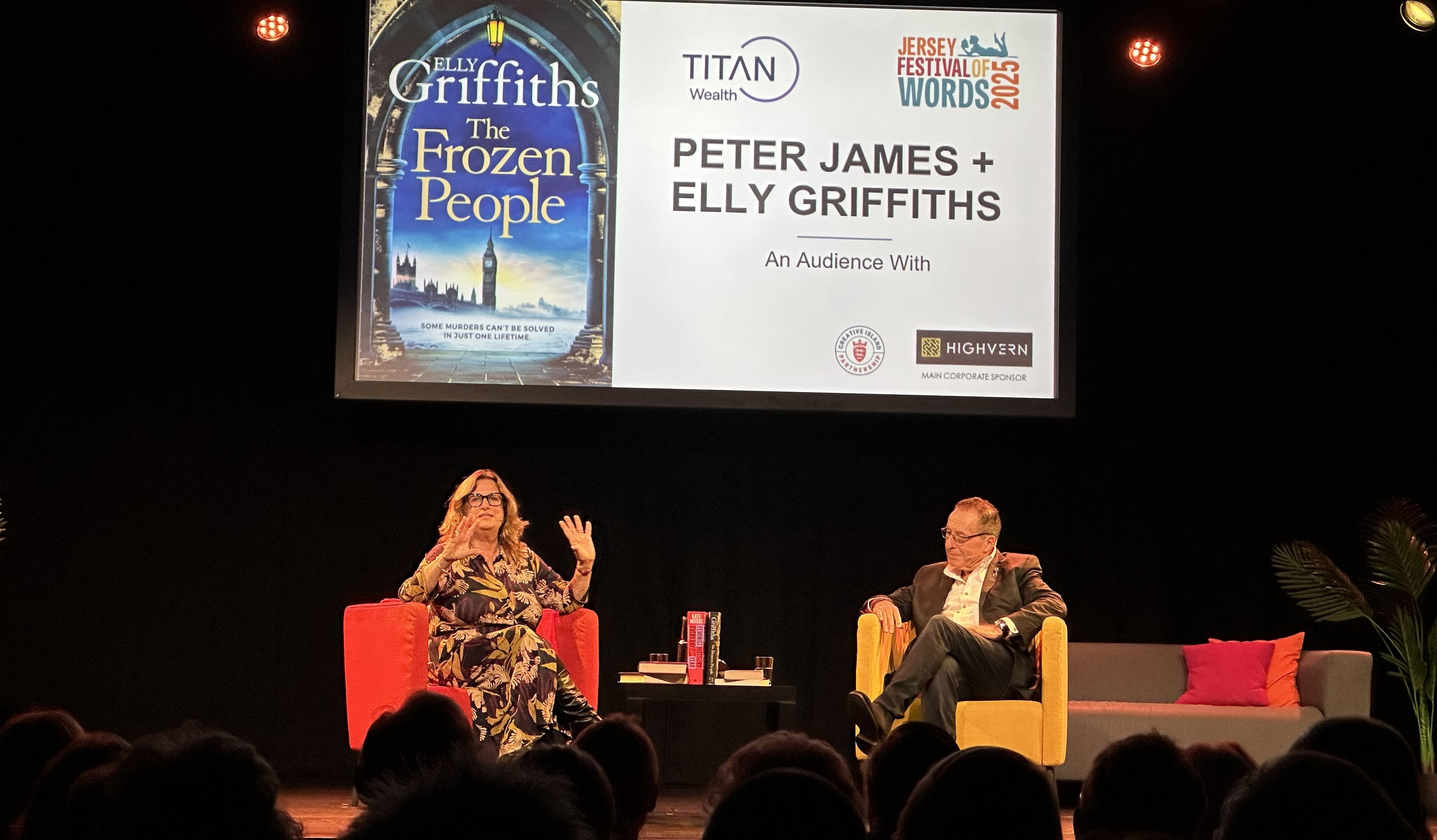
Peter discussed his latest book in the Roy Grace series at a local Festival of Writing event, whilst in conversation with the delightful Elly Griffiths (another fantastic and highly recommended author, you can check out her latest book The Frozen People here).
Apparently, it all started when Peter found out that he was Queen Camilla’s favourite author. He went over to introduce himself at a local event at her bequest. They struck up a conversation in which Peter suggested it would be wonderful if Buckingham Palace became the setting for a Roy Grace novel and, of course, Queen Camilla loved the idea. And so, a new Roy Grace adventure was born.

Peter wrote the first draft and sent it to Queen Camilla for her feedback. Suffice to say, she adored it.

The Hawk Is Dead was released today and is available to purchase via the link below.

The Blurb:

Roy Grace never dreamed a murder investigation would take him deep into Buckingham Palace . . .
Her Majesty, Queen Camilla, is aboard the Royal Train heading to a charity event in Sussex when disaster strikes – the train is derailed.
A tragic accident or a planned attack?
When, minutes later, a trusted aide is shot dead by a sniper, the police have their answer.
Despite all the evidence, Roy Grace is not convinced The Queen was the intended target. But he finds himself alone in his suspicions.
Fighting against the skepticism of his colleagues and the Palace itself, Grace pursues his own investigation. But when there is a second murder, the stakes rise even higher, and Grace is at risk of being embroiled in a very public catastrophe – and in mortal danger.
Failure at this level is not an option. But time is running out before a killer in the Palace will strike again . . .

Roy Grace is back with his most difficult case yet in the gripping new installment from number one bestselling author Peter James. BUY IT NOW HERE.

Book Review: The Day I Lost You by Ruth Mancini

The Blurb

‘I need to report a crime. My baby has been stolen.’

All Lauren wants is a new life in Spain. She’s suffered an unimaginable loss, but at last she has found a home in the pretty seaside town of Mantilla de Mar. Everyone deserves a new start, and Lauren needs to put her past firmly behind her.

Hope has everything: an interesting career as a therapist, an attractive husband, a dream home in the countryside – and, finally, the baby she always longed for. Sam. Her beautiful boy.

But Sam has gone missing.

So when the police tell her that a woman has been found in Spain with a child matching Sam’s description, Hope thinks that her nightmare might be coming to an end.

But Lauren is insisting Sam is her baby. She even has his passport and birth certificate to prove it.

So what really happened to Baby Sam? And who still has secrets to hide?

One child. Two mothers. And a past that won’t let them go.


The Review

The follow up to The Woman On The Ledge, this book promised to be an exciting read, and it doesn’t disappoint. From the first page, you are catapulted into the world of Lauren, a woman with a child that someone else claims is theirs, stolen from them in the dead of night.

A twisty tale begins. Two women, both claiming the little boy, Sam, is theirs. The hint of an affair. Is this a surrogacy gone wrong or is it something darker. It is hard to say more without giving it all away. But it is clear that both women have suffered loss and trauma. Both unreliable narrators to their stories. A legal battle ensues for rights to the child. Who will you root for?

This book is sad and thrilling in equal measure. It hooks you in and won’t let go, leaving you desperate to know how it will all end. I gave it 5 stars and highly recommend it as your next read!

You can get it now here: The Day I Lost You

#TheDayILostYou


About the Author

Ruth Mancini is an author and criminal defence lawyer. Her background as a solicitor adds authenticity to her crime and psychological fiction. She has spent two decades representing those accused of crimes, navigating courtrooms and police stations. Her storytelling prowess and legal background combine to create thrilling reads that will keep you guessing until the very end. Ruth was born in London and now lives in Oxfordshire with her husband and two children.

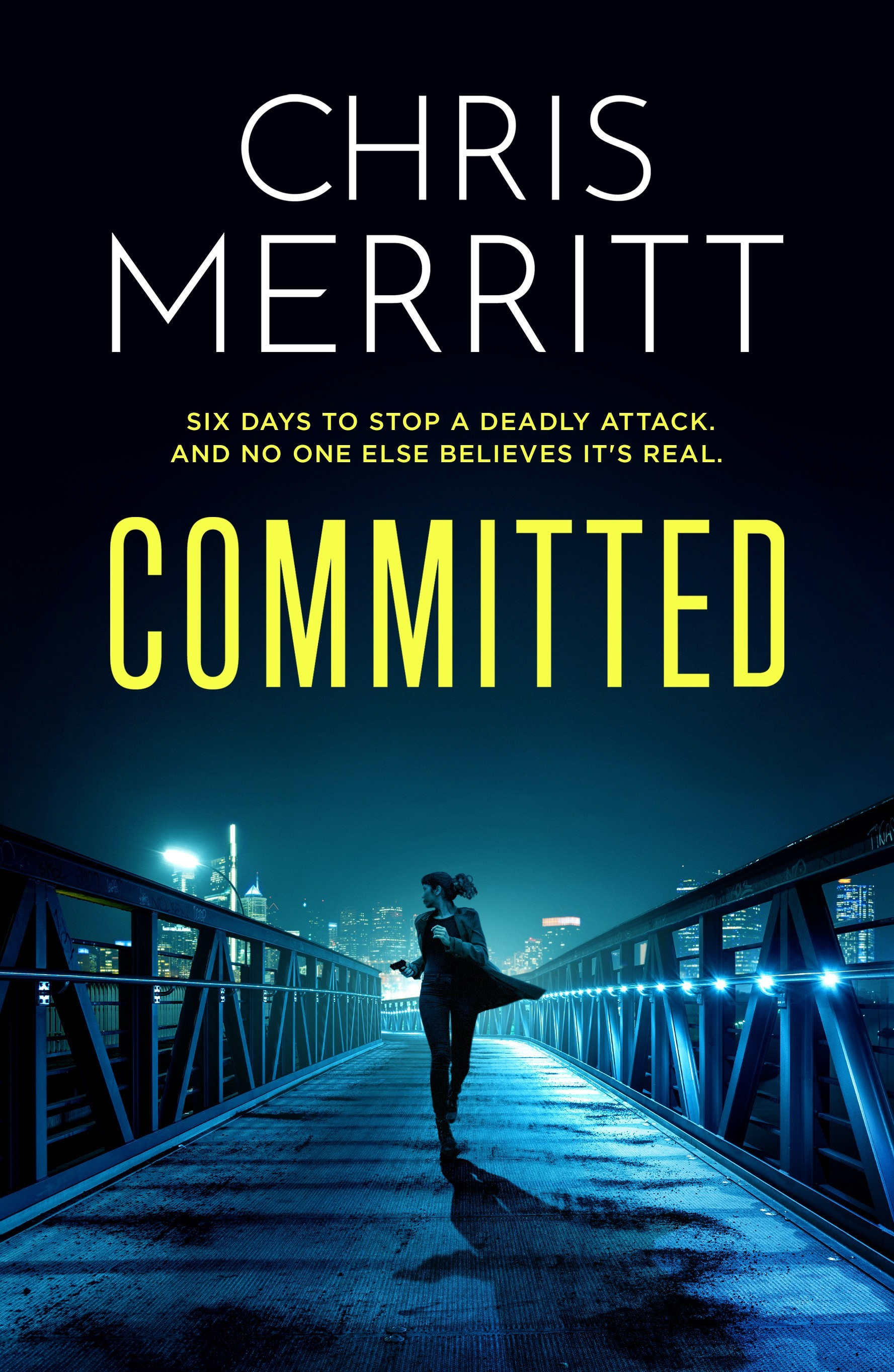
Book Review: Committed by Chris Merritt

The Blurb

Six days to stop a deadly attack. And no one else believes it’s real.

Former CIA undercover operative Ellen McGinley is battling to overcome PTSD when she stumbles upon a domestic terror plot. The deadly attack is due to take place in six days and will strike at the very heart of her homeland.

For Ellen, it’s a chance to find redemption for her greatest mistake – one she will never allow herself to forget.

But no sooner than she alerts the authorities, she finds herself diagnosed as delusional and locked in a psychiatric ward. No one believes her story.

She’s the only one who thinks the danger is real, which means she’s the only one who can stop it.

Ellen must draw on all her old skills to escape, stay alive, protect her family, and find those responsible – before all hell breaks loose.

Committed is the propulsive thriller you won’t want to miss this summer. Perfect for fans of Lee Child, David Baldacci, JB Turner and Robert Dugoni.


Author Quotes

‘Very well done – tight action and a smart central character.’  – Anthony Horowitz

A blistering, heart-pounding, edge-of-the-seat, adrenaline rush of a read. Absolutely outstanding and without doubt the best book I have read this year.’  – Carol Wyer


The Review

This blistering plotline takes off right from the first page and doesn’t let up. Ellen is smart and sassy, and you spend the whole novel routing for her to make it and foil the terrorists without getting killed – there are moments when you just don’t know which way it’s going to go or how she is possibly going to escape the situation she finds herself trapped in.

The idea that you can be locked up and drugged against your will for your own safety is terrifying. Add that to the knowledge that something horrific is going to happen and no one believes you, and so only you can stop it, and you genuinely are gripped by this book and held permanently on the edge of your seat to the last page. Just when you think things can’t get any more tense, they do. It’s pacey, twisty, and very clever.

I gave it 5 stars and highly recommend it as your next read!

You can get it now on Amazon here: Committed

#Committed

Twitter: @DrCJMerritt


About the Author

Chris Merritt is a clinical psychologist and former diplomat. As a member of the British foreign service, he completed postings in Jerusalem and Iraq. He has also lived and worked in the US. Committed is his eighth novel.

Book Review: Remember Tomorrow by Amanda Saint

Remember Tomorrow Amanda Saint

The Blurb

England, 2073. The UK has been cut off from the rest of the world and ravaged by environmental disasters. Small pockets of survivors live in isolated communities with no electricity, communications or transportation, eating only what they can hunt and grow.

Evie is a herbalist, living in a future that’s more like the past, and she’s fighting for her life. The young people of this post-apocalyptic world have cobbled together a new religion, based on medieval superstitions, and they are convinced she’s a witch. Their leader? Evie’s own grandson.

Weaving between Evie’s current world and her activist past, her tumultuous relationships and the terrifying events that led to the demise of civilised life, Remember Tomorrow is a beautifully written, disturbing and deeply moving portrait of an all-too-possible dystopian world, with a chilling warning at its heart.

The Review

This is a well written and emotive dystopian novel about a bleak future world where everyone is suspicious of ‘the others’ and the darkest parts of history are being relived.

It is clear from the writing that the author has a deep understanding of the world we are currently living in and the dangers our political and environmental damage is doing. Some moments in the book sound spookily accurate and possible in the current climate, and for our immediate future. We should take heed from this if we do not want our planet to end up like the one in this novel.

Evie’s story is compelling. There are a lot of twists and turns, and often you hope for the best whilst fearing the worst. Whilst some parts of the novel are quite dark there is a thread of hope that weaves through the book, which you find yourself clinging to as you read on. An enjoyable and recommended read, with a very topical warning thrown in for good measure!

Author Quotes

“A dystopian future that echoes the present times. A reflection of society in a stark, unforgiving mirror. Unsettling, honest and unputdownable.” Susmita Bhattacharya, author of The Normal State of Mind

“A chilling descent into the chaos that lies in the hearts of men. A searing portrait of a dystopian future where civilisation’s thin veneer has been ripped away, and it is women who suffer most as a result. Excellent.” Paul Hardisty, author of Absolution


The Writing Journey: A Perspective

journey 3 cropped

I have been a writer since I was old enough to hold a pencil in my hand. I loved writing short fairy stories and poetry all through primary school, and I couldn’t seem to get enough of reading or listening to my favourite tales. So, it’s only natural that as an adult I wanted to be a published author.

The thing no-one tells you about the writing journey is that it is much longer and more complicated than you ever expect it to be. As a child stories are like an effortless magic, so you expect the process of writing a story to be just as effortless and magical. But it isn’t. In fact, the amount of effort it takes to make a story seem effortless cannot be underestimated.

When I first said I was going to write a book, oh, many, many years ago, I assumed it would be a straightforward process. How wrong I was. As my mother would put it when I was complaining one day, “Surely you just put one word in front of the other until it’s done.” Well yes, OK, it is that easy AND that difficult. But that is also an extremely naive point of view, and most likely, the words of someone who will NEVER write a book.

Because the process of selecting those words that you write, one in front the other, is far more complicated than such a sentence allows. In actual fact, writing a book is a long and laborious process. And just when you think you’ve got a handle on that process you find out you don’t know the half of it. Let me explain.

First, you write what is commonly referred to as the ‘shitty first draft’. Now, this might seem like an easy task, but it isn’t. You start off with a great idea. You begin writing furiously as you let your ‘totally amazing and perfect bestseller’ spill onto the page/computer screen. You get to around 25,000-40,000 words and suddenly realise you haven’t got a clue where this is going or how it’s going to end, never mind how you are going to write another 50,000 odd words. You panic. Stop writing, and either sink into despair, procrastinating whilst you do everything but write, or abandon the book altogether.

Back to the drawing-board.

You decide you need to know how this writing-malarkey works and binge read as many ‘how to write’ books as you can get your hands on. Then you go to a few workshops/retreats and discover that things will work much better if you construct a ‘book plan’ with a basic outline of your plot points. Suddenly all fired up you put the biscuits down and return to your notebook/computer. You force yourself to come up with a plot in approximately 10-12 points. “Aha!” you think, “I’ve cracked it!”

And so the writing process begins (again!). Either with a whole new novel or a rehashed version of the one you just stepped away from.

You write, filling in the plot points and expanding each scene as you go. You’re on fire! (Note: several months, if not years, of your life go by). At the end of this process you finally have that elusive ‘shitty first draft’ Hemingway was talking about. “Eureka!” you shriek, “I’ve finally written a book.”

Except you haven’t. You have just completed ‘stage one’. Next you get to go back, possibly several times, and redraft or edit your work as you try to shape it into something less ‘shitty’. (Note: several more months, if not years, may go by.)

Eventually, you get to a point where you simply can’t polish that turd any further. It’s as ‘shiny’ as you’re ever gonna make it. Surely, now you can say that you’ve written that book, right? Wrong. Now, you need to send it to a few mates, fellow writers or willing strangers – otherwise known as beta readers – who will read what you have written and then feedback any issues, plot holes, typos and general things that need fixing. Once you get that feedback it’s back to the old drawing-board where, you guessed it, you get to start the editing process again.

Once you have spent several more months fixing everything, you can then (if you want/can afford to) have your work looked at by a professional editor. Prices for this type of work vary but it is a good investment these days if you’re serious about getting your work out there, especially if you intend to self-publish at the end of it. When you get your feedback report, you get to do another ‘final’ edit (is editing really ever over?!) where you fix up any last remaining problems with your novel.

And then, finally, after all of this, you can (more or less) say, “I’ve written a book!”. Congratulations!

But wait, there’s more! It doesn’t end there. Because once you’ve spent all that time and effort writing the damn thing and making it as perfect as you can get it, you then have to decide what you want to do with it and how you are going to go about it. So a new journey begins – The Publishing Journey. And that is a whole new story.

So when you think of the writing journey see it as, rather than a hill to climb, a series of hills in a vast mountain range. You climb to the top of the first hill only to find there is another bigger hill behind it. Then another behind that, and so on. And it’s only as you get to the top that you can see the peaks in the distance of the many other hills you have to climb. But it’s also once you finally get to the summit that you can look back and see how far you’ve come, and there’s not a feeling of accomplishment quite like it.

Happy writing!

© Abigayle Blood

Rules of Writing Series | Part 6

Rules-of-writing

Get an accountant, abstain from sex and similes, cut, rewrite, then cut and rewrite again – if all else fails, pray!”

Inspired by Elmore Leonard’s 10 Rules of Writing, The Guardian asked authors for their personal dos and don’ts.

Set over a series of posts, here are those authors rules of writing. Some are more serious than others, feel free to accept, reject or adapt as required.

Enjoy!


Zadie Smith

1. When still a child, make sure you read a lot of books. Spend more time doing this than anything else.

2. When an adult, try to read your own work as a stranger would read it, or even better, as an enemy would.

3. Don’t romanticise your “vocation”. You can either write good sentences or you can’t. There is no “writer’s lifestyle”. All that matters is what you leave on the page.

4. Avoid your weaknesses. But do this without telling yourself that the things you can’t do aren’t worth doing. Don’t mask self-doubt with contempt.

5. Leave a decent space of time between writing something and editing it.

6. Avoid cliques, gangs, groups. The presence of a crowd won’t make your writing any better than it is.

7. Work on a computer that is disconnected from the ­internet.

8. Protect the time and space in which you write. Keep everybody away from it, even the people who are most important to you.

9. Don’t confuse honours with achievement.

10. Tell the truth through whichever veil comes to hand – but tell it. Resign yourself to the lifelong sadness that comes from never ­being satisfied.


Colm Tóibín

1. Finish everything you start.

2. Get on with it.

3. Stay in your mental pyjamas all day.

4. Stop feeling sorry for yourself.

5. No alcohol, sex or drugs while you are working.

6. Work in the morning, a short break for lunch, work in the afternoon and then watch the six o’clock news and then go back to work until bed-time. Before bed, listen to Schubert, preferably some songs.

7. If you have to read, to cheer yourself up read biographies of writers who went insane.

8. On Saturdays, you can watch an old Bergman film, preferably Persona or Autumn Sonata.

9. No going to London.

10. No going anywhere else either.


Rose Tremain

1. Forget the boring old dictum “write about what you know”. Instead, seek out an unknown yet knowable area of experience that’s going to enhance your understanding of the world and write about that.

2. Nevertheless, remember that in the particularity of your own life lies the seedcorn that will feed your imaginative work. So don’t throw it all away on autobiography. (There are quite enough writers’ memoirs out there already.)

3. Never be satisfied with a first draft. In fact, never be satisfied with your own stuff at all, until you’re certain it’s as good as your finite powers can ­enable it to be.

4. Listen to the criticisms and preferences of your trusted “first readers”.

5. When an idea comes, spend silent time with it. Remember Keats’s idea of Negative Capability and Kipling’s advice to “drift, wait and obey”. Along with your gathering of hard data, allow yourself also to dream your idea into being.

6. In the planning stage of a book, don’t plan the ending. It has to be earned by all that will go before it.

7. Respect the way characters may change once they’ve got 50 pages of life in them. Revisit your plan at this stage and see whether certain things have to be altered to take account of these changes.

8. If you’re writing historical fiction, don’t have well-known real characters as your main protagonists. This will only create biographical unease in the readers and send them back to the history books. If you must write about real people, then do something post-modern and playful with them.

9. Learn from cinema. Be economic with descriptions. Sort out the telling detail from the lifeless one. Write dialogue that people would actually speak.

10. Never begin the book when you feel you want to begin it, but hold off a while longer.


Sarah Waters

1. Read like mad. But try to do it analytically – which can be hard, because the better and more compelling a novel is, the less conscious you will be of its devices. It’s worth trying to figure those devices out, however: they might come in useful in your own work. I find watching films also instructive. Nearly every modern Hollywood blockbuster is hopelessly long and baggy. Trying to visualise the much better films they would have been with a few radical cuts is a great exercise in the art of story-telling. Which leads me on to…

2. Cut like crazy. Less is more. I’ve ­often read manuscripts – including my own – where I’ve got to the beginning of, say, chapter two and have thought: “This is where the novel should actually start.” A huge amount of information about character and backstory can be conveyed through small detail. The emotional attachment you feel to a scene or a chapter will fade as you move on to other stories. Be business-like about it. In fact…

3. Treat writing as a job. Be disciplined. Lots of writers get a bit OCD-ish about this. Graham Greene famously wrote 500 words a day. Jean Plaidy managed 5,000 before lunch, then spent the afternoon answering fan mail. My minimum is 1,000 words a day – which is sometimes easy to achieve, and is sometimes, frankly, like shitting a brick, but I will make myself stay at my desk until I’ve got there, because I know that by doing that I am inching the book forward. Those 1,000 words might well be rubbish – they often are. But then, it is always easier to return to rubbish words at a later date and make them better.

4. Writing fiction is not “self-­expression” or “therapy”. Novels are for readers, and writing them means the crafty, patient, selfless construction of effects. I think of my novels as being something like fairground rides: my job is to strap the reader into their car at the start of chapter one, then trundle and whizz them through scenes and surprises, on a carefully planned route, and at a finely engineered pace.

5. Respect your characters, even the ­minor ones. In art, as in life, everyone is the hero of their own particular story; it is worth thinking about what your minor characters’ stories are, even though they may intersect only slightly with your protagonist’s. At the same time…

6. Don’t overcrowd the narrative. Characters should be individualised, but functional – like figures in a painting. Think of Hieronymus Bosch’s Christ Mocked, in which a patiently suffering Jesus is closely surrounded by four threatening men. Each of the characters is unique, and yet each represents a type; and collectively they form a narrative that is all the more powerful for being so tightly and so economically constructed. On a similar theme…

7. Don’t overwrite. Avoid the redundant phrases, the distracting adjectives, the unnecessary adverbs. Beginners, especially, seem to think that writing fiction needs a special kind of flowery prose, completely unlike any sort of language one might encounter in day-to-day life. This is a misapprehension about how the effects of fiction are produced, and can be dispelled by obeying Rule 1. To read some of the work of Colm Tóibín or Cormac McCarthy, for example, is to discover how a deliberately limited vocabulary can produce an astonishing emotional punch.

8. Pace is crucial. Fine writing isn’t enough. Writing students can be great at producing a single page of well-crafted prose; what they sometimes lack is the ability to take the reader on a journey, with all the changes of terrain, speed and mood that a long journey involves. Again, I find that looking at films can help. Most novels will want to move close, linger, move back, move on, in pretty cinematic ways.

9. Don’t panic. Midway through writing a novel, I have regularly experienced moments of bowel-curdling terror, as I contemplate the drivel on the screen before me and see beyond it, in quick succession, the derisive reviews, the friends’ embarrassment, the failing career, the dwindling income, the repossessed house, the divorce… Working doggedly on through crises like these, however, has always got me there in the end. Leaving the desk for a while can help. Talking the problem through can help me recall what I was trying to achieve before I got stuck. Going for a long walk almost always gets me thinking about my manuscript in a slightly new way. And if all else fails, there’s prayer. St Francis de Sales, the patron saint of writers, has often helped me out in a crisis. If you want to spread your net more widely, you could try appealing to Calliope, the muse of epic poetry, too.

10. Talent trumps all. If you’re a ­really great writer, none of these rules need apply. If James Baldwin had felt the need to whip up the pace a bit, he could never have achieved the extended lyrical intensity of Giovanni’s Room. Without “overwritten” prose, we would have none of the linguistic exuberance of a Dickens or an Angela Carter. If everyone was economical with their characters, there would be no Wolf Hall… For the rest of us, however, rules remain important. And, ­crucially, only by understanding what they’re for and how they work can you begin to experiment with breaking them.


Jeanette Winterson

1. Turn up for work. Discipline allows creative freedom. No discipline equals no freedom.

2. Never stop when you are stuck. You may not be able to solve the problem, but turn aside and write something else. Do not stop altogether.

3. Love what you do.

4. Be honest with yourself. If you are no good, accept it. If the work you are ­doing is no good, accept it.

5. Don’t hold on to poor work. If it was bad when it went in the drawer it will be just as bad when it comes out.

6. Take no notice of anyone you don’t respect.

7. Take no notice of anyone with a ­gender agenda. A lot of men still think that women lack imagination of the fiery kind.

8. Be ambitious for the work and not for the reward.

9. Trust your creativity.

10. Enjoy this work!

***

I hope you’ve enjoyed this series and it has given you some ideas as well as some laughs along the way. Now you know the rules, time to get back to work.

Via: https://www.theguardian.com/books/2010/feb/20/10-rules-for-writing-fiction-part-two

Rules of Writing Series | Part 5

Rules-of-writing

Get an accountant, abstain from sex and similes, cut, rewrite, then cut and rewrite again – if all else fails, pray!”

Inspired by Elmore Leonard’s 10 Rules of Writing, The Guardian asked authors for their personal dos and don’ts.

Set over a series of posts, here are those authors rules of writing. Some are more serious than others, feel free to accept, reject or adapt as required.

Enjoy!


Annie Proulx

1. Proceed slowly and take care.

2. To ensure that you proceed slowly, write by hand.

3. Write slowly and by hand only about subjects that interest you.

4. Develop craftsmanship through years of wide reading.

5. Rewrite and edit until you achieve the most felicitous phrase / sentence / paragraph / page / story / chapter.


Philip Pullman

My main rule is to say no to things like this, which tempt me away from my proper work.


Ian Rankin

1. Read lots.

2. Write lots.

3. Learn to be self-critical.

4. Learn what criticism to accept.

5. Be persistent.

6. Have a story worth telling.

7. Don’t give up.

8. Know the market.

9. Get lucky.

10. Stay lucky.


Will Self

1. Don’t look back until you’ve written an entire draft, just begin each day from the last sentence you wrote the preceeding day. This prevents those cringing feelings, and means that you have a substantial body of work before you get down to the real work which is all in . . .

2. The edit.

3. Always carry a notebook. And I mean always. The short-term memory only retains information for three minutes; unless it is committed to paper you can lose an idea for ever.

4. Stop reading fiction – it’s all lies anyway, and it doesn’t have anything to tell you that you don’t know already (assuming, that is, you’ve read a great deal of fiction in the past; if you haven’t you have no business whatsoever being a writer of fiction).

5. You know that sickening feeling of inadequacy and over-exposure you feel when you look upon your own empurpled prose? Relax into the awareness that this ghastly sensation will never, ever leave you, no matter how successful and publicly lauded you become. It is intrinsic to the real business of writing and should be cherished.

6. Live life and write about life. Of the making of many books there is ­indeed no end, but there are more than enough books about books.

7. By the same token remember how much time people spend watching TV. If you’re writing a novel with a contemporary setting there need to be long passages where nothing happens save for TV watching: “Later, George watched Grand Designs while eating HobNobs. Later still he watched the shopping channel for a while . . .”

8. The writing life is essentially one of solitary confinement – if you can’t deal with this you needn’t apply.

9. Oh, and not forgetting the occasional beating administered by the sadistic guards of the imagination.

10. Regard yourself as a small corporation of one. Take yourself off on team-building exercises (long walks). Hold a Christmas party every year at which you stand in the corner of your writing room, shouting very loudly to yourself while drinking a bottle of white wine. Then masturbate under the desk. The following day you will feel a deep and cohering sense of embarrassment.


Helen Simpson

The nearest I have to a rule is a Post-it on the wall in front of my desk saying “Faire et se taire” (Flaubert), which I translate for myself as “Shut up and get on with it.”

***

Check back soon for some more writing rules from authors.

Via: https://www.theguardian.com/books/2010/feb/20/10-rules-for-writing-fiction-part-two