19 YA Books Everyone Should Read 

YA-novels

I saw this article on BuzzFeed, which asked members of the BuzzFeed Community for the young adult novels they’d recommend to anyone, regardless of their age. I really loved it, as I’ve never thought of myself as a YA reader, but there are a number of suggestions here that I’m really interested in picking up. Here’s what they said…

1. The Hate U Give by Angie Thomas

“It’s a beautifully, tragically relevant book for young adults and adults alike. Unarmed, 16-year-old Khalil is fatally shot by a police officer, and his friend Starr, who is with him at the time, deals with the aftermath and the struggles of feeling like a second-class citizen her own country. It’s very engaging, and when I finished the book, I felt that I had learned something important.”

2. I’ll Give You The Sun and The Sky Is Everywhere by Jandy Nelson

“Her books are so beautifully written, I couldn’t pick between the two. Her characters are relatable she deals with topics like grief, sexuality, family, and coming to terms with who you are. Read her books. You will not regret it. I wish she would write more!”

3. Eleanor and Park by Rainbow Rowell

“It affected me emotionally more than any other book has in years. It’s beautifully quirky, with life lessons that are both nostalgic and currently relevant. I recommend it to everyone that asks me for a book recommendation.”

4. Aristotle and Dante Discover the Secrets of the Universe by Benjamin Alire Saenz

“It’s about a Latino boy who doesn’t know his place in the world and discovers it in a truly beautiful way. As an LGBT Latinx teen it meant the world to me when I read it and changed a lot in my world. It helped in accepting who I was and I fell in love with its beautiful characters.”

5. A Northern Light by Jennifer Donnelly

” I’ve read it annually since I was 14, which is about 12 years now. It’s a beautiful, slightly eerie story set in the early 20th century about a girl who craves and seeks a career and education, despite familial and societal pressure to become a wife and caretaker, against the backdrop of a real-life murder. It’s as poignant as ever, definitely changed my life, and set me on a path of self-care and feminism.”

6. The Absolutely True Diary of a Part-Time Indian by Sherman Alexie

“It’s about a young Native American boy who deals with health issues due to being born with hydrocephaly, and is a budding comic book artist. He ends up going to a high school in the wealthier part of his town where he is the only Native American (besides the school mascot). It’s mostly about him overcoming his struggles. Heads up: There’s mentions of alcohol, drugs, death, and slurs.”

7. The His Dark Materials series by Philip Pullman

“The main character, Lyra, is charming, and the adventures are captivating. The books ask a lot of philosophical questions about the nature of the universe and of ourselves. It’s good reading for any age, and I get more out of it every time I re-read the series.”

8. Olive’s Ocean by Kevin Henkes

“It was one of my favourite YA books growing up, and still is to this day. It covers love, death, friendship, and does so in an eloquent way that doesn’t feel like the rehashing of the same story you read in every other book.”

9. Gracefully Grayson by Ami Polonsky

“It tackles the issue of being transgender in middle school and finally accepting who you really are. Some people accepted Grayson, some didn’t.”

10. The Raven Cycle series by Maggie Stiefvater

“It’s a beautiful series about the way age, socioeconomics, gender, race, and a world of other factors complicate the relationships we have with the people we love. It mixes fantasy and historical fiction with some hints of horror to tell the story of four teenagers on a quest to find the tomb of an ancient Welsh King. They have to work with psychics and a magical forest and ghosts and cars, it’s just amazing. It lifts my heart no matter how many times I read it.”

11. The Symptoms of Being Human by Jeff Garvin

“It’s amazingly well written and it’s a one-off, so you don’t have to worry about a whole series. It follows a genderfluid person named Riley and their struggles being genderfluid and having anxiety. The book is immensely captivating – I’m not going to lie, it made me cry. I’ve read it through 3 times in the year and a half it’s been out and it’s gotten better each time.”

12. Wonder by R.J. Palacio

“It should be required reading in life. I’ve read it for myself and with students several times and the story itself has moved me to tears, but it truly is a wonder to see the empathy the kids learned from the novel. An absolute must read.”

13. The Book Thief by Markus Zusak

“Hands down my favourite book ever. It’s one of those books that straddles that strange line between modern YA and what we think is children’s literature. The writing is simple enough a younger reader can understand and, other than swearing and content that generally comes with the setting of WWII Germany, it’s fine for some younger readers.”

14. We Were Liars by E. Lockhart

“A story about a rich and distinguished family and a group of four friends who spend their summer at a private island where everything is not what it seems to be. Full of complex characters and mystery, that will suck you in from the first page. Both the adults and the teenagers are struggling with darkness within their own selves. The ending will definitely shock you and keep you wondering why you didn’t figure things out sooner. A must read.”

15. Daughter of Smoke and Bone by Laini Taylor

“The premise may seem corny at first, but the excellent characterisation and lovely prose will pull you in. It grapples with some very deep and intense themes, and creates a fantasy world that manages to feel both familiar and truly unique.”

16. Beauty Queens by Libba Bray

Beauty Queens is the answer to that ‘Lord of the Flies but with women’ movie – it was one of the first super-intersectional feminist novels I read in high school, and it holds up.”

17. Code Name Verity and Rose Under Fire by Elizabeth Wein

“World War II historical fiction written with astounding poignancy and poetry. This is a pair of books that will never leave my bookshelf.”

18. Six of Crows and Crooked Kingdom by Leigh Bardugo

“I finally got around to reading these recently and now I won’t stop talking about them to anyone who’ll listen. You’ll love Six of Crows for its fast-paced plot, but more so for its characters – the representation in these novels is seriously incredible, and it makes me feel all warm and fuzzy despite the fact that it’s about a band of criminals. The only bad thing about these books is that there’s only two of them.”

19. The Serpent King by Jeff Zentner

“A beautiful, completely gut-wrenching story about three friends in a small town looking toward their futures and how they will both escape their past and stay in touch in the future. I love this book so damn much.”

***

Via: https://www.buzzfeed.com/eleanorbate/young-adult-at-heart

Stephen King’s Reading List For Writers

Stephen-Kings-Everything-You-Need-to-Know-About-Writing-Successfully-in-Ten-Minutes

“If you don’t have time to read, you don’t have the time (or the tools)
to write. Simple as that.” 

― Stephen King

In the afterword to his acclaimed guide On Writing: A Memoir of the Craft, Stephen King shares the following reading list of 96 books, covering a diverse range of fiction and non-fiction titles.

Accompanying the list is this explanation:

These are the best books I’ve read over the last three or four years, the period during which I wrote The Girl Who Loved Tom Gordon, Hearts in Atlantis, On Writing, and the as-yet-unpublished From a Buick Eight. In some way or other, I suspect each book in the list had an influence on the books I wrote.

As you scan this list, please remember that I’m not Oprah and this isn’t my book club. These are the ones that worked for me, that’s all. But you could do worse, and a good many of these might show you some new ways of doing your work. Even if they don’t, they’re apt to entertain you. They certainly entertained me.

  1. Peter Abrahams, A Perfect Crime
  2. Peter Abrahams, Lights Out
  3. Peter Abrahams, Pressure Drop
  4. Peter Abrahams,Revolution #9
  5. James Agee, A Death in the Family
  6. Kirsten Bakis, Lives of the Monster Dogs
  7. Pat Barker, Regeneration
  8. Pat Barker, The Eye in the Door
  9. Pat Barker, The Ghost Road
  10. Richard Bausch, In the Night Season
  11. Peter Blauner, The Intruder
  12. Paul Bowles, The Sheltering Sky
  13. T. Coraghessan Boyle, The Tortilla Curtain
  14. Bill Bryson, A Walk in the Woods
  15. Christopher Buckley, Thank You for Smoking
  16. Raymond Carver, Where I’m Calling From
  17. Michael Chabon, Werewolves in Their Youth
  18. Windsor Chorlton, Latitude Zero
  19. Michael Connelly, The Poet
  20. Joseph Conrad, Heart of Darkness (Free eBook – Gutenberg / Kindle)
  21. K.C. Constantine, Family Values
  22. Don DeLillo, Underworld
  23. Nelson DeMille, Cathedral
  24. Nelson DeMille, The Gold Coast
  25. Charles Dickens, Oliver Twist (Free eBook – Gutenberg / Kindle)
  26. Stephen Dobyns, Common Carnage
  27. Stephen Dobyns, The Church of Dead Girls
  28. Roddy Doyle, The Woman Who Walked into Doors
  29. Stanely Elkin, The Dick Gibson Show
  30. William Faulkner, As I Lay Dying
  31. Alex Garland, The Beach
  32. Elizabeth George, Deception on His Mind
  33. Tess Gerritsen, Gravity
  34. William Golding, Lord of the Flies
  35. Muriel Gray, Furnace
  36. Graham Greene, A Gun for Sale (aka This Gun for Hire)
  37. Graham Greene, Our Man in Havana
  38. David Halberstam, The Fifties
  39. Pete Hamill, Why Sinatra Matters
  40. Thomas Harris, Hannibal
  41. Kent Haruf, Plainsong
  42. Peter Hoeg, Smilla’s Sense of Snow
  43. Stephen Hunter, Dirty White Boys
  44. David Ignatius, A Firing Offense
  45. John Irving, A Widow for One Year
  46. Graham Joyce, The Tooth Fairy
  47. Alan Judd, The Devil’s Own Work
  48. Roger Kahn, Good Enough to Dream
  49. Mary Karr,  The Liars’ Club
  50. Jack Ketchum, Right to Life
  51. Tabitha King, Survivor
  52. Tabitha King, The Sky in the Water
  53. Barbara Kingsolver, The Poisonwood Bible
  54. Jon Krakauer, Into Thin Air
  55. Harper Lee, To Kill a Mockingbird
  56. Bernard Lefkowitz, Our Guys
  57. Bentley Little,  The Ignored
  58. Norman Maclean, A River Runs Through It and Other Stories
  59. W. Somerset Maugham, The Moon and Sixpence (Free eBook – Gutenberg)
  60. Cormac McCarthy, Cities of the Plain
  61. Cormac McCarthy, The Crossing
  62. Frank McCourt, Angela’s Ashes
  63. Alice McDermott, Charming Billy
  64. Jack McDevitt, Ancient Shores
  65. Ian McEwan, Enduring Love
  66. Ian McEwan, The Cement Garden
  67. Larry McMurtry, Dead Man’s Walk
  68. Larry McMurtry and Diana Ossana, Zeke and Ned
  69. Walter M. Miller, A Canticle for Leibowitz
  70. Joyce Carol Oates, Zombie
  71. Tim O’Brien, In the Lake of the Woods
  72. Stewart O’Nan, The Speed Queen
  73. Michael Ondaatje, The English Patient
  74. Richard North Patterson, No Safe Place
  75. Richard Price, Freedomland
  76. Annie Proulx, Close Range: Wyoming Stories
  77. Annie Proulx, The Shipping News
  78. Anna Quindlen, One True Thing
  79. Ruth Rendell, A Sight for Sore Eyes
  80. Frank M. Robinson, Waiting
  81. J.K. Rowling, Harry Potter and the Chamber of Secrets
  82. J.K. Rowling, Harry Potter and the Prisoner of Azakaban
  83. J.K. Rowling, Harry Potter and the Sorcerer’s Stone
  84. Richard Russo, Mohawk
  85. John Burnham Schwartz, Reservation Road
  86. Vikram Seth, A Suitable Boy
  87. Irwin Shaw, The Young Lions
  88. Richard Slotkin, The Crater
  89. Dinitia Smith, The Illusionist
  90. Scott Spencer, Men in Black
  91. Wallace Stegner, Joe Hill
  92. Donna Tartt, The Secret History
  93. Anne Tyler, A Patchwork Planet
  94. Kurt Vonnegut, Hocus Pocus
  95. Evelyn Waugh, Brideshead Revisited
  96. Donald Westlake, The Ax

That’s a lot of recommendations. How many on this list have you read? If you’re anything like me, you’ve got an even bigger TBR pile now – best get cracking!

Via: http://www.aerogrammestudio.com/2014/03/04/stephen-kings-reading-list-for-writers/

15 Books That Should Be On Your Radar: September 2017

books-radar-sept-2017

Every month, the Writer’s Bone crew reviews or previews books they’ve read or want to read. This series may or may not also serve as a confessional for guilty pleasures and hipster novels only the brave would attempt. Here are their recommendations for September 2017:

  1. HOME FIRE BY KAMILA SHAMSIE
  2. THE NAMES OF DEAD GIRLS BY ERIC RICKSTAD
  3. SILENCER BY MARCUS WICKER
  4. SID SANFORD LIVES! BY DANIEL FORD
  5. HEAVY GREEN: THE COLLISION OF TWO UNLIKELY MISSIONS IN AMERICA’S SECRET WAR BY SAM LIGHTNER JR.
  6. THE TRESPASSER BY TANA FRENCH
  7. SMART BASEBALL BY KEITH LAW
  8. WELCOME TO THE SLIPSTREAM BY NATALKA BURIAN
  9. MARCEL’S LETTERS BY CAROLYN PORTER
  10. BEFORE THE FALL BY NOAH HAWLEY
  11. THE FIRE NEXT TIME BY JAMES BALDWIN
  12. MARLENA BY JULIE BUNTIN
  13. PAULINA AND FRAN BY RACHEL B. GLASER
  14. STEPHEN FLORIDA BY GABE HABASH
  15. MONSTERS: A LOVE STORY BY LIZ KAY

Click on the links above for a detailed synopsis of each book, or follow the following link to see what the Writer’s Bone crew had to say: http://www.writersbone.com/book-recommendations/books-that-should-be-on-your-radar-september-2017


Celebrating Works of Queer Fiction

Queer Fiction

In trying and discriminatory times, queer literature can portray lives and loves that might otherwise be forced to remain invisible. Stories written by or for the LGBTQ community are, of course, just as varied as ‘heterosexual fiction’. But they also serve a unique purpose: to validate, explore and challenge ideas about same-sex attraction.

Published in 2015, A Long Way to a Small, Angry Planet by Becky Chambers showcases a distant future where humans are a small part of a vast alien population. Within this sci-fi melting pot of cultures, there’s an acceptance of all sexualities, genders and races. Queer relationships are treated the same as any other, transporting the reader to a refreshingly accepting galaxy that we can currently only hope for.

It’s vital to celebrate works by queer authors

While Chambers’ novel presents a utopian vision of the future, The Line of Beauty by Alan Hollinghurt reminds us just how difficult life has historically been for gay people in Britain. Set in Eighties London with a backdrop of the Thatcher administration and the looming AIDS crisis, it follows young protagonist Nick Guest as he manoeuvres his way through the hypocrisy and prejudice of the upper classes. Elegant and stark, it’s a book that will stay with you long after you’ve put it down.

Young adult fiction also shouldn’t be ignored when discussing LGBTQ fiction, given that many people first question their sexuality during adolescence. Juliet Takes a Breath by Gabby Rivera tells the story of a Puerto Rican teenager who has just told her family she is gay. What follows is a magnificent exploration of issues such as white privilege, the power of the queer community and the process of coming out.

In a world where people are still persecuted for their sexuality, it’s vitally important to celebrate works by queer authors such as Chambers, Hollinghurst and Rivera. They remind of us all that we’ve achieved in the long march towards equality – as well as how far we still have to go.

***

Via: http://e.stylist.co.uk/2KOH-14CGF-BA6WVAR380/cr.aspx

Book Review: Trust Me by Angela Clarke 

AngelaClarke-TrustMe

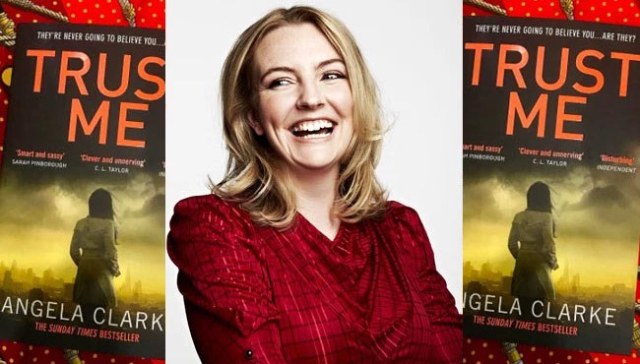
I read this fantastic book review of Angela Clarke’s Trust Me by Sophie Hedley, and now I am even more excited to read the book – I am currently making my way through all three of Anglea’s books and highly recommend them. Read this review and you will totally understand why:

Trust Me is the third book in Angela Clarke’s Social Media Murder series following book one, Follow Me, and book two, Watch Me. I mentioned all three in my Top Ten Social Media Books post because I couldn’t choose a favourite and they are all really credible, smart and up-to-date representations of social media and the dangers it possesses.

In Trust Me, the social media of choice is Periscope, where Kate stumbles upon a live video on her laptop of a girl being raped. Kate is absolutely stunned but knows she needs to do what she can to help the victim, even though she may not have survived the attack. The thing is, the video soon disappears, Kate knows nothing about the people who were in it and nobody really believes Kate can really have seen what she says she’s seen.

That is where Freddie and Nas come in. Though they are busy investigating a missing persons case, Freddie is the first person to give Kate’s story a proper listen. She’s the first person to truly believe Kate, and as Kate goes public about what she saw, Freddie and Nas begin to wonder whether their missing person’s case and the video Kate saw may be linked.

As with the other books in the series, Follow Me and Watch Me, Trust Me is pure brilliance. The author’s grasp on social media and the way she utilises it to create shocking yet realistic crimes with storytelling full of twists and turns – it’s irresistible reading. Even though I still can’t pick a favourite of the series, this one did hook me instantly and I was fascinated by how things would play out. Each book in the series seems to have got darker than the one before and I love how thought-provoking the themes always are. I couldn’t imagine what I would do if I saw something as awful as Kate did through a video on social media, yet it was entirely plausible. There’s all sorts of horrific photos and videos posted up online, and there could be a time when you see one and you can’t just scroll past and try and forget about it. Kate’s story left me thinking even when I’d put the book down.

Putting the book down was something I found difficult though as I was very engrossed in the story. I loved being back with Freddie and Nas and seeing the challenges they faced this time. Their development runs along nicely side by side with the main story and the investigation of the crimes in Trust Me made for gripping reading. With each book in the series I find that I view social media a little differently afterwards. Social media can be perfectly harmless escapism or it can be a grim and dangerous place and the author depicts this well. With short yet perfectly hard-hitting chapters, Trust Me is gritty crime at its best. It’s complex yet convincing, proper edge-of-your-seat reading.

Via: http://socialmediastories.co.uk/reviews/book-review-trust-me-by-angela-clarke/

25 Creative Bookmarks for Readers

Have you ever read a book, only to lose your place because you haven’t got a decent bookmark? Well, perhaps if you’d had one of these unique page markers, you’d be more inclined to continue your quest for knowledge or adventure.

A bleeding bookmark for a thriller? Perhaps a shark’s fin for a nautical tale? If knowledge does indeed sprout from the hallowed pages of a book, then perhaps a leaf bookmark would take your fancy?

Themed bookmarks that represent a motif from the story are a fantastic way to get get children to read. For example, the arrow from Robin Hood’s bow helps bring Sherwood Forest to life. Or imagine chasing the White Rabbit into Wonderland after being tantalised by his pink ears!

Here is a whole collection of creative bookmarks to brighten your day.


Via: http://www.boredpanda.com/creative-bookmarks/

16 Books That Should Be On Your Radar: August 2017

books-radar-august-2017

Every month, the Writer’s Bone crew reviews or previews books they’ve read or want to read. This series may or may not also serve as a confessional for guilty pleasures and hipster novels only the brave would attempt. Here are their recommendations for August 2017:

  1. Hum If You Don’t Know The Words by Bianca Marais
  2. The Late Show by Michael Connelly
  3. Fierce Kingdom by Gin Phillips
  4. Of Mess And Moxie by Jen Hatmaker
  5. Killerjoy by Jon Negroni
  6. A Clean Kill In Tokyo by Barry Eisler
  7. The Road To Concord by J.L. Bell
  8. All The Bayou Stories End With Drowned by Erica Wright
  9. Mrs. Fletcher by Tom Perrotta
  10. I Was Told To Come Alone by Souad Mekhennet
  11. The Weight Of Blood by Laura Mchugh
  12. Into The Forest by Jean Hegland
  13. A House Among The Trees by Julia Glass
  14. A Distant View Of Everything by Alexander Mccall Smith
  15. The Elephants In My Backyard by Rajiv Surendra
  16. Everybody’s Son by Thrity Umrigar

Click on the links above for a detailed synopsis of each book, or follow the following link to see what the Writer’s Bone crew had to say: http://www.writersbone.com/book-recommendations/2017/8/3/17-books-that-should-be-on-your-radar-august-2017


5 Books You Should Read If You Want To Write

5-books-you-should-read-to-write

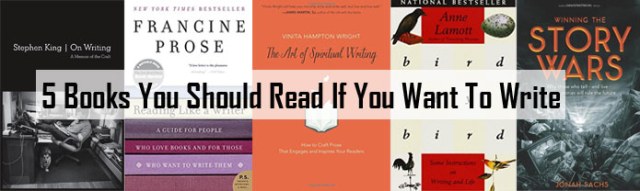
You have no doubt heard it said over and over again, in order to write, you need to read. Probably the most famous person who says this is Stephen King. And to be fair, if Stephen says it’s true, who am I to argue. The following are 5 top books you should read if you want to write. There are of course many, many others, but these are a good place to start:

1. ON WRITING BY STEPHEN KING

This is a fantastic book on writing. I love Stephen King, and in this book he describes his personal writing process as well as making suggestions for other writers. King is careful to focus mainly on his own journey and not offer blanket statements about writing which may not work for everyone. I really enjoyed the anecdotes and no-nonsense approach to what it takes to be a writer.

2. READING LIKE A WRITER BY FRANCINE PROSE

The premise of this book is firmly founded on the mantra: in order to write, you need to read. Read anything and everything you can get your hands on. Reading the writing of a wide variety of authors allows you to be exposed to different voices, different perspectives, and different ideas. When I was younger, I read nonstop and I’m grateful for the time I put in to each and every one of those books because they taught me how to tell stories.

Prose breaks down her book, Reading Like A Writer, into chapters devoted to different literary devices such as paragraphs, narration, character, dialogue, etc. and offers different excerpts in order for you to read closely and pay attention to what the author is trying to do in his or her work. It’s more of a guidebook than a narration on personal experience, but equally important in order to learn how to focus on all of the different aspects of writing.

3. THE ART OF SPIRITUAL WRITING BY VINITA HAMPTON WRIGHT

I like this book because it is a) short (161 pages) and b) speaks of the importance of authenticity in writing. It is important to share experience and talk about things that are uncomfortable because it’s a way of connecting with others.

Hampton Wright takes her decades of experience as both an editor and an author and lays out a writing manual that describes the best way to write from the heart and inspire other people. It contains both technical writing information as well as advice about what she terms “spiritual writing”.

4. BIRD BY BIRD BY ANNE LAMOTT

This is another great book that contains both suggestions and experiences similar to that of King in On Writing. What I like about it is that it’s even more no-nonsense than King’s book and also goes out of the way to dispel a lot of myths that people have concerning the writing and publishing process.

Be warned, this book does not sugar coats things, which is important in managing expectations. Many people operate under misconceptions that could ultimately harm them if they are seriously trying to make a living as a writer. Lamott is funny, but real, and it’s a quick and entertaining read.

5. WINNING THE STORY WARS BY JONAH SACHS

This book not only appeals to writers, but also marketers and business owners. Sachs writes under the conception that those who tell the best stories will “rule the future”. What he means by that is that in a sea of advertisements, personal stories, social media, and other brand messages, it’s hard for a person or company to get their story out. Writing in a way that breaks through that wall will help your message and your brand gain traction.

Sachs relies on examples from mythology, psychology, the history of advertising, and even biology to push for a revolution of story telling. He offers advice on how to get your story out above the crowd and make others take notice. Along with academia and personal anecdotes, it’s a great book to inspire you to do more with your writing. It’s also a great read for bloggers who are aiming at strengthening their own personal brand and breaking through the noise of millions of other existing blogs.

***

Happy reading! 🙂

The Man Booker Prize 2017 Longlist Announced

The longlist, or ‘Man Booker Dozen’, for the £50,000 Man Booker Prize has been announced.

This year’s longlist of 13 books was selected by a panel of five judges: Baroness Lola Young (Chair); literary critic, Lila Azam Zanganeh; Man Booker Prize shortlisted novelist, Sarah Hall; artist, Tom Phillips CBE RA; and travel writer, Colin Thubron CBE.

The list was chosen from 144 submissions published in the UK between 1 October 2016 and 30 September 2017.

The Man Booker Prize for Fiction, first awarded in 1969, is open to writers of any nationality, writing in English and published in the UK.

The 2017 longlist, or Man Booker ‘Dozen’, of 13 novels, is:

Title Author (nationality) (imprint)

4 3 2 1 by Paul Auster (US) (Faber & Faber)
Days Without End by Sebastian Barry (Ireland) (Faber & Faber)
History of Wolves by Emily Fridlund (US) (Weidenfeld & Nicolson)
Exit West by Mohsin Hamid (Pakistan-UK) (Hamish Hamilton)
Solar Bones by Mike McCormack (Ireland) (Canongate)
Reservoir 13 by Jon McGregor (UK) (4th Estate)
Elmet by Fiona Mozley (UK) (JM Originals)
The Ministry Of Utmost Happiness by Arundhati Roy (India) (Hamish Hamilton)
Lincoln in the Bardo by George Saunders (US) (Bloomsbury)
Home Fire by Kamila Shamsie (UK-Pakistan) (Bloomsbury)
Autumn by Ali Smith (UK) (Hamish Hamilton)
Swing Time by Zadie Smith (UK) (Hamish Hamilton)
The Underground Railroad by Colson Whitehead (US) (Fleet)

Chair of the 2017 judges, Baroness Lola Young, says:

‘Only when we’d finally selected our 13 novels did we fully realise the huge energy, imagination and variety in them as a group.  The longlist showcases a diverse spectrum — not only of voices and literary styles but of protagonists too, in their culture, age and gender.  Nevertheless we found there was a spirit common to all these novels: though their subject matter might be turbulent, their power and range were life-affirming – a tonic for our times.

Together their authors — both recognised and new — explore an array of literary forms and techniques, from those working in a traditional vein to those who aim to move the walls of fiction’.

Arundhati Roy makes the list with her second work of fiction, The Ministry of Utmost Happiness; Roy’s debut novel won the then Booker Prize in 1997. She is joined by four previously shortlisted writers: Ali Smith (2001, Hotel World; 2005, The Accidental; and 2014, How to Be Both); Zadie Smith (2005, On Beauty), Sebastian Barry (2005, A Long Long Way Down; 2008, The Secret Scripture; and longlisted in 2011 for On Canaan’s Side) and Mohsin Hamid (2007, The Reluctant Fundamentalist). It is a third longlist appearance for Jon McGregor (2002, If Nobody Speaks of Remarkable Things, 2006, So Many Ways To Begin).

Three debut novels are recognised by the judges this year, two of them written by the youngest authors on the list: Elmet by Fiona Mozley, aged 29, and History of Wolves by Emily Fridlund, aged 38. The third is George Saunders’ first full-length novel, Lincoln in the Bardo.

Three independent publishers are longlisted: Canongate, Faber & Faber and Bloomsbury. They are joined by Penguin Random House imprint Hamish Hamilton (which publishes four of the 13 titles), 4th Estate, and Hachette UK imprints: Weidenfeld & Nicolson; JM Originals; and Fleet. The latter two are new imprints and this is the first time they have had a title on the Man Booker Prize longlist.

Luke Ellis, CEO of Man Group, comments:

‘Congratulations to all the authors who have been longlisted for this year’s Man Booker Prize. The longlist recognises the hard work and creativity of thought of these exceptional writers, and inclusion is an important achievement. As ever, we are we are very proud to support the Man Booker Prize and the valuable role it plays in promoting literary excellence and endeavour.’

The shortlist and winner announcements

The shortlist of six books will be announced on Wednesday 13 September at a morning press conference at Man Group, the sponsor of the prize. The shortlisted authors each receive £2,500 and a specially bound edition of their book.

The 2017 winner will then be announced on Tuesday 17 October in London’s Guildhall at a black-tie dinner, one of the highlights of the publishing year. The ceremony will be broadcast by the BBC.

The winner of the 2017 Man Booker Prize receives £50,000 and can expect international recognition. In the week following the 2016 winner announcement, sales of The Sellout by Paul Beatty increased by 658%. To date over 360,000 print copies of the Oneworld edition have been sold, and 26 foreign language rights deals have been secured – 19 of which were sold since his win.

Beatty made history in 2016 as the first writer from the United States to win the Man Booker Prize. Prior to 2014 only citizens of the Commonwealth, the Republic of Ireland or Zimbabwe were eligible for the prize.

At a Man Booker reception held in New York last week, Beatty stated that winning the prize has broadened his world and said:

‘I’ll be in Hackney or I’ll be in Calcutta and somebody will stand up and give an amazing diatribe on what this book has meant to them, how this book has touched them. And not all the time, but often, it’s not about how the book is American or it’s set in LA, but about all these bigger things.’

The leading prize for quality fiction in English

First awarded in 1969, the Man Booker Prize is recognised as the leading prize for literary fiction written in English. The list of former winners features many of the literary giants of the last four decades: from Iris Murdoch to Salman Rushdie, Ian McEwan to Hilary Mantel.

The rules of the prize were changed at the end of 2013 to embrace the English language ‘in all its vigour, its vitality, its versatility and its glory’, opening it up to writers beyond the UK and Commonwealth.

The Man Booker Prize is sponsored by Man Group, an active investment management firm. 

Via: http://themanbookerprize.com/news/man-booker-prize-2017-longlist-announced

7 Books That Are More Feminist Than You’d Think

wuthering heights emily bronte

Reading while also being a feminist can be a demoralising endeavor. It feels like for every brilliant piece of feminist writing, there’s an unassailable mountain of misogynistic nonsense (I’m looking at you, Ernest Hemingway). So much of what we read in secondary school literature, for example, is written by white men, about white men, and for white men, and it starts to get exhausting. Can we only read books of essays on feminist theory for the rest of time? Are any other books safe? Well, these books might not change your entire gender-based worldview, but they certainly all have feminist messages buried in there somewhere. Here are a few books that turn out to be more feminist than you’d think.

I mean sure, we can all enjoy the occasional story about hunting lions in Africa with your shrewish wife, but over half of the planet’s population is made up of genders other than men. It’s tempting to give up on male authors entirely and go live underground and/or only read Ella Enchanted on repeat for the rest of your life. But if that’s sounding a little unrealistic, here are a few books that have more to say on women’s rights than you might have guessed:

1. ‘Romeo and Juliet’ by William Shakespeare

Sappy romance between hormonal teens…or secret feminist manifesto? Romeo and Juliet has quite the reputation for being a classic love story, but the way it deals with gender is very nearly revolutionary. Despite being a teen boy, Romeo is the emotional, romantic, sensitive character, who kills himself using poison, which is traditionally a “woman’s weapon.” Juliet, on the other hand, is a thoughtful, logical teenage girl, who has a whole monologue about how excited she is to have sex with her boyfriend, and who stabs herself to death in a very traditionally masculine form of violence.

2. ‘Ulysses’ by James Joyce

Yes, James Joyce writes a lot about dudes staring at women and yes, a lot of his fans are lit bros who’ll make you read their screenplay and then ghost you. But if you can make it through Ulysses, you just might find that Joyce is more complex than that. The book is all about Leopold Bloom, but Molly Bloom, his wife, gets the final chapter all to herself. The last few pages are a stream of consciousness monologue from Molly as she masturbates, and it’s presented as a beautiful, empowering, life-affirming event (that got the book repeatedly banned for obscenity).

3. ‘The Suffragette Scandal’ by Courtney Milan

A lot of people write off the romance genre as trashy or backwards, but there are many well-written feminist love stories out there. The Suffragette Scandal, for one, is a nuanced and sexy romance between an outspoken suffragette and a man who actually appreciates her for her wit, tenacity, and bold opinions.

4. ‘One Thousand and One Nights’ by Hanan Al-Shaykh

Like most classic folklore collections, the original One Thousand and One Nights isn’t exactly up to date on gender politics. But Hanan Al-Shaykh’s beautiful, witty re-telling of these stories manages to highlight complex women throughout. The stories are equally funny and gruesome, and at the center of all of them is young Shahrazad, spinning tales to save her life, and to protect other women from the king’s wrath.

5. ‘Persuasion’ by Jane Austen

People seem to be split on Jane Austen: either they think she’s a brilliant proto-feminist, or they dismiss her books as classic chick lit. Those “chick lit” people need to take a long hard look in the mirror and then read Persuasion. It may not have as much of a feminist following as Pride and Prejudice, but Persuasion is the most mature of Austen’s novels: the story of an old-ish young woman looking for a second chance with a man she once spurned. But more than that, our heroine is forced to deal with the existential question of her own place in society as a woman who never married (she’s a dried up old maid of 27!).

6. ‘A Series of Unfortunate Events’ by Lemony Snicket

I don’t know that anyone would call Lemony Snicket’s darkly humorous children’s series sexist, but it’s certainly not the book that comes to mind first in a discussion of feminist kids’ books. That’s too bad, because the Baudelaire siblings eschew traditional gender roles and deal with a lot of sexist creeps. Violet, the mechanically minded inventor, is a great example of a young women who can enjoy hair ribbons and machinery.

7. ‘Wuthering Heights’ by Emily Brontë

When it comes to the Brontës and feminism, Jane Eyre gets most of the attention. After all, Jane Eyre is very clearly the story of one woman growing into her own independence, while Wuthering Heights is… more of a story about two awful people who love/hate each other until they angrily die. But, I’d argue that Wuthering Heights is important in part because it has an unlikable female protagonist. So many great books star antihero men, so why can’t Cathy be an antihero woman? Wuthering Heights challenges us to invest in the story of a young woman who is not particularly pleasant or nice, but who is still a fully realised individual with passions and thoughts.

Via: https://www.bustle.com/p/7-books-that-are-more-feminist-than-you-think