3 Things to Cut From Your Writing 

I believe that within each writer there is an editor, a source of self-criticism that can take our work to the next level with a simple re-read and a dash of red pen. Of course, self-editing is not the end of the line when it comes to polishing your writing (workshopping and seeking a third-party editor is invaluable) but you can do a lot for your story, poem, or script by simply cleaning it up yourself.

At sentence-level (looking at each word and how it functions within the sentence it forms) you can usually cut, condense, or re-word to enrich your writing. There are many things that you could focus on when self-editing at sentence-level (from tone and voice to word-choice and vocabulary) but without even delving too deeply you can tighten and intensify your style.

But before you email your writing to a friend, or send off your submission to an agent, take the time to focus on the following to wake up your inner-editor:

Cut adverbs

This may sound harsh, but adverbs are lazy. Adverbs work against the idea of ‘show, don’t tell’ by telling the reader that ‘the star shone brightly’ rather than showing that it ‘twinkled and glittered like a lost silver coin’, for example.

There is almost always a way to show an adverb rather than telling it, and sometimes you can just cut them entirely and your writing hasn’t lost anything.

The more adverbs you use, the less interesting and unique your descriptions become. So any time you can show your adverb, or cut it entirely, the more enjoyable your writing becomes to read.

Omit needless words

It was the great Strunk who hammered the following into E.B. White’s brain, and it stands true today. We pack our writing (as we do our speech) with ‘filler’ words, words that don’t add to the sentence but just take up valuable space.

The main culprits to take note of include: really, very, just, so, a lot, pretty much, rather, quite, and sometimes.

Sometimes these words are necessary, but you’ll know when to get rid of them and when to re-write them. Check out this cheat sheet for ideas on how to get around lazy ‘very’ words.

Unnecessary words can also work their way into your writing by means of tautology or repetition. When you’ve said one thing but reiterate it in different words you’re creating unnecessary work for the reader, and using up your word count.

Comb back through your writing and analyse the importance of every word at sentence-level, cutting the ones that are pointless. Be ruthless. This will tighten your sentences and give greater impact and immediacy to your writing.

Avoid clichés

We wouldn’t have them if they weren’t so good. But it’s like flogging a dead horse (see what I did there?). Clichés are used so frequently in our everyday language that it feels natural to slip them into your writing, and you don’t even notice.

They’re often brilliant images or analogies, but when you’ve heard them all your life they become meaningless and dull.

If you find the perfect cliché to sum up your character’s emotions or thoughts, cut it and re-write your own with images that are original and new. Creativity is refreshing, so use it to your advantage to wow your reader with new words in new ways.

***

I hope you find these tips useful. Happy writing!

Via http://writersedit.com/top-3-things-cut-writing/

52 Things | Ideas for Writers

n-WRITING-628x314

A couple years ago my friends and I made a list of 52 goals we wanted to accomplish, the equivalent of a bucket list for a year’s worth of achievable things. Most of them were simple goals, but measurable. For instance, you couldn’t just write “read more” as a goal. It had to be quantifiable, like “Read a book a month.” It was fun, but also challenging, both to put the list together and to accomplish all the things I came up with.

So if you want to create a 52 Things list this year, and you’re looking to add some writing goals to your list, here are 52 ideas:

1. Start or join a writing group.

2. Go see three movies based on books you love.

3. Guest post for a blog you read/admire.

4. Get your name in print.

5. Read a banned book during Banned Book Week.

6. Submit a story to a call for submissions for an anthology.

7. Become a blogger.

8. Buy a book for a child or teenager in your life for no reason at all

9. Join an online writing community or a private Facebook group dedicated to a specific genre.

10. Commit to writing a certain number of words per week, or per month.

11. Become a regular content contributor to a website you follow or admire.

12. Attend a local author reading, or two or five or ten.

13. Support your local independent bookstore with a new purchase.

14. Write a book review and put it on your blog. If you don’t have a blog, post it on Facebook.

15. Do one thing that truly champions another writer.

16. Read a book that falls way outside your general area of interest.

17. Post a comment on social media in support of someone you admire.

18. Go to a writers’ conference.

19. Participate in online pitch conferences (like pitch fests on Twitter).

20. Participate in NaNoWriMo in November.

21. Join a literary association.

22. Go on a writing retreat.

23. Get an op-ed placed, or learn how to do it by taking an Op-Ed Project class.

24. Do a 500 Words challenge, where you write 500 words a day for a set number of days, a month or longer. Give it a whirl!

25. Listen to an audio book of a recently published book.

26. Map a book you love. It will teach you a lot to outline a book you’ve read more than once to see how another author thinks about structure, scenes, and narrative arc.

27. Read your work out loud, either at an open mic night or at a literary event.

28. Take an online class.

29. Find a number of authors you love on Facebook or Twitter and follow them.

30. Follow literary agents on Facebook and Twitter if you’re interested in developing agent relationships.

31. Gift yourself a weekend away somewhere nice to brainstorm or write, or to just be with your own thoughts.

32. Do a literary pilgrimage to see a site where a favourite author lived or wrote about, or, if you’re a memoirist, perhaps take a pilgrimage into your own past – to your childhood home, or the setting of your memoir.

33. Visit a printing press.

34. Write and publish an e-book. These can be as short as 25 or 30 pages (single stories or essays) and they can get your work on the map.

35. Enter your work into a contest. You have nothing to lose!

36. Tell your friends and family about your literary ambitions. It’s okay to dream big!

37. Set up a separate bank account for your writing pursuits. Pay yourself a small sum a month for your writing, or when you get paid to publish. Start to think of your writing as a business.

38. Attend an in-person writing class.

39. Map out a timeline for your book, or for your next book. Consider when would be a reasonable publication date for your book and write it down. Post it somewhere where you can see it to hold that date as a goal.

40. Create a book cover for your book-in-progress. Nothing brings a book to life like making it real, even if it’s just a collage or a vision that serves as the basis of what you want the book to look like some day.

41. Commit to a certain number of blog posts a month — one, two, four — and stick to it for the whole year.

42. If you don’t already have a website, start one. If you have a website you know needs a facelift, commit to giving it one.

43. Write a fan letter to your favourite author. These letters are amazing displays of gratitude and appreciation. It’s also good karma.

44. Create a vision board for your book. This is different than a book cover concept. It’s a collage of images and/or words that inspire you, and that can keep you motivated and disciplined with your writing goals.

45. Memorise a poem.

46. Get involved with a local library event.

47. Create a family reading night once a week.

48. Set up a book donation site at your workplace during the holidays.

49. Make a list of your top 10 favourite books in your own genre and reread two of them.

50. Get a logo made. Yes, the brand of you — as a writer — needs a logo.

51. Write an affirmation statement that expresses all your strengths as a writer. Remind yourself why you write and allow yourself an opportunity to truly give yourself a compliment.

52. Do something that shows your commitment to writing – plant something or buy yourself a house plant; get a piece of “writing” jewelry; or create or purchase something that’s meaningful to you that you see every day as a reminder to yourself about the meaning writing holds in your life.

Via: http://m.huffpost.com/us/entry/6396948

Punctuation Problems for Writers

Punctuation

Punctuation is usually the most ignored grammar aspect when it comes to writing. Yet, it might make you look really unprofessional in the eyes of your readers. In some cases, they may just fail to understand you well. Learn the most crucial punctuation mistakes and take all the necessary steps to avoid them.

1. Oh that comma

The use of commas adds necessary breaks into the text. Without commas, it would be difficult to choose an appropriate intonation and divide the sentences into logical parts. You can either miss them where they are necessary or put too many of them into the text.

Solution: Read your sentence out loud and pay attention to those places where you make pauses. Don’t put commas after “but” or “and” if the second sentence doesn’t have a subject. If you see your sentence is too long and overloaded with commas, try replacing some of them with periods and making two or even three sentences out of one.

2. It’s or Its

Inappropriate use of any of these forms is quite widespread in writing today. Though being seemingly similar, they have absolutely different meanings, and their misuse can affect the entire sentence. This is actually one of the most popular mistakes that even experienced writers can accidentally make.

Solution: It stands for it is or it has while its is used when you are referring to a possessive form of something. Always read your text upon writing. It will help you spot even those mistakes you’ve been confident you’ve avoided.

3. Confusion with apostrophes

The use of apostrophes can often be a problem, especially for non-native language speakers. Even if you remember to put an apostrophe whenever you need to create a possessive form, some issues are still unclear when you do it.

Solution: It’s their’s – apostrophe shouldn’t be used here. Be careful when the noun that is used before another noun serves as an adjectival label (e.g. writers conference). In this case, no apostrophe is required either. When we need to create a possessive form out of plurals, keep in mind that they already end in s and the apostrophe has to be placed at the end of the word (e.g. babies’ beds).

4. Too many exclamation marks

Do you really think you will grab more attention if you use exclamation marks all over the text? It will only make your text annoying. By the excessive use of exclamation marks, I mean either using them after each sentence or using three or more marks in a row.

Solution: Remember: if you add more exclamation marks than necessary, it won’t make your information more meaningful. Leave them for some really impressive facts or details. Don’t make your readers bored with them. In addition, your text will look visually unattractive if it’s overcrowded with exclamation marks.

5. Hyphen or Dash

The misuse of dashes and hyphens in a text is quite widespread among writers. And that’s not just because of not understanding the difference. It’s mainly because of some keyboard limitations when you work in certain text editors.

Solution: Hyphen (short line) is used to bridge two or more related words (e.g. face-to-face). Dash (long line) is used to describe things in detail or show a better explanation of something. Very often, it’s possible to see a dash shown as “–” (two hyphens). Make sure you use it as “–“ to look more professional.

6. Misuse of quotation marks

The excessive use of quotation marks in a text is quite common. They are often used to emphasize certain parts of the sentence and make them look visually stronger. When nothing is quoted, neither single nor double marks are relevant.

Solution: As the name suggests, we should use the quotation marks only when we quote someone’s words. When you really need to emphasize something, consider using italic or bold font, or even write it in a different color. One more important detail about the quotation marks is their combination with the commas, periods, exclamation and question marks. All the punctuation marks should be put inside the quotation marks.

7. Colons and semi-colons

These are sometimes mistakenly used interchangeably in the text or used where starting a new sentence would be much better.

Solution: Colons are used in a text to introduce one or more items. However, try not to use colons when the list follows the verb (e.g., I want tea, breakfast, and water). They are also used when you are listing items one per line or when two independent clauses are used, and one of them explains another one (e.g., He got what he deserved: he really worked hard to get this promotion).

8. One more comma problem

While sometimes you just need your common sense to feel when commas are required, in the majority of cases, you will still have to rely on the rules to make sure you use commas where necessary.

Solution: All the introductory words (Moreover, In addition, However) are separated with a comma. When you need to specify some unessential information in the text, you’d better separate it with commas too. You should also use it before a direct quotation.

9. Inappropriate punctuation of Latin abbreviations

Latin abbreviations are used quite frequently in the text. However, some of them can sometimes be misused or punctuated incorrectly.

Solution:

  • etc. means so on. If it’s put at the end of the sentence, one more period is not required.
  • e.g. means for example. It’s followed by a comma.
  • i.e. means that is, in essence. It is followed by a comma as well.

10. Punctuation of bulleted lists

Bulleted lists make it easier to present information and list things. They are used so frequently that it’s necessary to know how to punctuate them properly.

Solution: If one bullet covers a full sentence, use periods at the end of each. Use no punctuation marks after single words or phrases. However, the last item in the list will be followed by a period. Do not use semi-colons to separate the list items.

Read the original article here: https://www.justpublishingadvice.com/10-top-punctuation-problems-for-writers/

Is A Pseudonym Right For You?

pen-name-right

In the past the use of a pseudonym (or pen name) has been common practice for many reasons. It’s been a particularly popular choice among authors who change genres, are concerned about their privacy, or want to mask their gender. While some authors have been known to make great use of pseudonyms, it’s all about when to use them, and when to not. In this age of digital abundance, it could be argued that pseudonyms offer little use to most authors. This is especially the case when authors choose to use a pseudonym for the wrong reasons…

If you are an emerging writer and you have ‘nothing to hide’, you probably don’t need to use a pseudonym. In fact opting to use one is likely to place more strain on yourself and your publisher, as it requires you to register the name for copyright purposes and requires consistent application of the name when you’re submitting works to publish. Editor and writer Moira Allen has some great information on the logistics of using a pseudonym that you can find on her site ‘Writing World‘. If you have found success as an author however, there are a few good reasons to adopt a pseudonym.

When a Pseudonym’s right for you

You need to keep your worlds separate

Do you need to keep your personal and professional lives separate? If you answered yes to this question, using a pseudonym could be a good idea. Privacy is a lot harder to maintain in the electronic world, but if you’re careful, it’s possible to hide your true identity from your readers. Separating your personal life from your work life can be particularly relevant for writers of certain genres. Are you an erotica writer that teaches primary school by day? Or do you work for a government department that won’t allow you to publish under your real name? These are the sorts of situations when you’re likely to benefit from using a pseudonym.

You’re switching genres

Once you’re an established writer you may decide you want to switch genres. Let’s say you’re a romance author who wants to mimic the style of authors like George R.R. Martin and explore the world of fantasy; it’s common practice to use a pseudonym in these situations. J.D. Robb is a good example of this. He managed to stay masked as a new science fiction writer for a staggering six years before coming out as Nora Roberts, a popular romance author. Even since her revelation Nora Roberts still publishes her sci-fi novels under J.D. Robb. Using a different names for different genres can keep your readers from getting confused and allows them to stick to the reading the genre they want.

When not to use a pseudonym

Sadly many authors make the mistake of using a pseudonym for the wrong reasons, or don’t acknowledge how difficult it is to juggle a pseudonym and your real name. An author on Mindy Klasky’s blog cited her difficulty with maintaining her pseudonyms:

“I tried to juggle two pen names before I was published – one for erotic romance, one for mainstream. That meant I was three people in public. It was waaaaay too confusing for me; I never knew how to refer to myself at conferences. Fortunately, only the erotic romance took off, and I could drop the other pen name before people even really knew it existed.”

When you want reader’s to identify with you

People associate the name with the writing it accompanies, not the other way around. The truth of the matter is that people are more likely to identify with your work if they can identify with you as an author, readers like having that link between them and the person that wrote the book they’re obsessing over. Think about it, every time you read a book that you really love, the first thing you do is Google the author; you want to know who they are and what they do, more importantly you want to know if they have any other books that you can fall in love with. Next thing you know, you’re buying all their books and recommending them to all your friends. Writing anonymously can take away that link between reader and author.

You want to protect yourself legally

Another common mistake writers make is thinking using a pen name can protect them against defamation or writing about real people. This is definitely not the case. A pseudonym will never protect you against legal repercussions. Your pen name is a flimsy cover for what’s underneath; the exterior doesn’t change the interior. One way or another the people you write about will find out who you are and that’s bound to get messy. The only real way to avoid legal ramifications is to keep your subjects informed and always seek their permission.

***

Deciding whether or not you should use a pen name can be tricky, the best way to decide is to weigh up the pro’s and con’s that are relevant to you and your circumstances, and consider how using a pseudonym could benefit you.

Good luck!

Via: https://writersedit.com/pseudonym-right-for-you/

Video: How Authors Can Use Pinterest For Fiction Writing & Novels

Pinterest-video

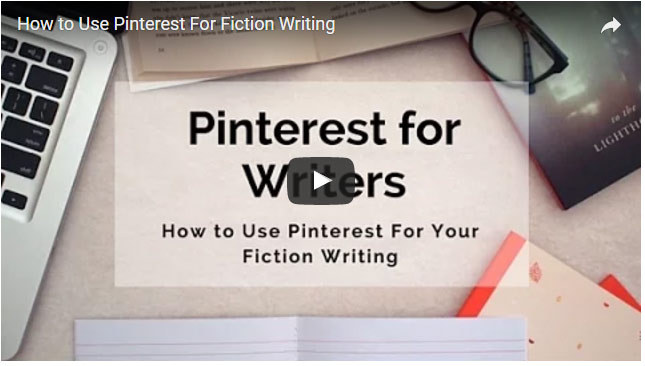
Further to yesterday’s post about researching your novel, here is a link to a useful video from Writer’s Edit, in which Founding Editor Helen Scheuerer talks about how she used Pinterest to organise visual aids for the second novel in her fantasy series.

“It’s something I never really considered before… But now I don’t think I’ll do another book without it. I’ve created boards for different characters, settings and costuming. Any big element in my book, I have a board for it.”

To watch the video follow the link here: https://writersedit.com/video-how-authors-can-use-pinterest-for-fiction-writing-novels/

Happy researching!

How to: Research a Novel

Research is a given when writing non-fiction texts. Journalists and authors of non-fiction books are no strangers to researching a piece before they start writing – but what about fiction authors?

If you’re writing a novel and wondering whether you need to research it, the answer is generally yes. The same rules that apply to non-fiction writers don’t necessarily apply to novelists, but research is nevertheless an important step in planning to write a novel.

There are plenty of things you can do to ensure you’re writing the most authentic novel possible. Setting, characters, plot details, historical influences, even genre and craft – all these elements and more can be researched to strengthen your knowledge and flesh out your book.

So how exactly should you approach the research process?

Let’s take a look at seven top tips to get you started.

1. Establish a system to organise and store research

Before you start researching, it’s imperative to get organised. There’s no point collecting hundreds of bits of information only to create a disorganised mess that you won’t be able to navigate later!

Every writer works differently, so think about your own methods of organisation and what might work best for you when it comes to sorting and storing your research.

Here are a few organisation methods to consider:

  • A physical folder or binder, divided into clearly labelled sections such as Setting, Characters etc., in which you can store hard-copy sheets of research and information.
  • A digital Research folder on your hard drive, divided into sub-folders for each section of your research. If you choose this option, make sure to back up your files regularly to avoid losing data.
  • A notebook full of handwritten notes, clippings and snippets of information.
  • A set of research files in a novel-writing program such as Scrivener. These kinds of programs are great for storing information, and because your novel and your research are stored in the one place, it’s easy to access them simultaneously. (Again, as with any digital method, ensure you back up your files religiously.)

Whichever method of research storage you choose, ensure it’s easily navigable, accessible, and well-organised. Trust me – you’ll thank your past self when you’re in the midst of the writing process and know exactly where to refer to that specific piece of information!

2. Read, read, and read some more

As a writer, you’re probably a voracious reader already (and if not, you should be!). All reading helps to improve your craft, your knowledge and your story, but when you’re researching a novel, your reading will have to kick up a notch.

Whether it’s books, newspapers, online articles or any other source of written material, reading is going to be your primary method of attack when it comes to novel research. Let’s take a look at the different kinds of reading you’ll need to do in preparation for writing your book.

Read texts on your subject matter

Obviously, your chosen subject matter will be the first thing you start investigating.

Writing a crime novel? You’ll need to research things like murder weapons, forensics, and past criminal cases. Writing a romance novel set in modern-day Rome? You’ll need to pay Italy a virtual visit by reading as much as you can about its capital city. Writing historical fiction set in medieval Europe? Time to learn everything you can about that period in history.

‘But I’m a poor, struggling writer,’ you might be thinking. ‘How am I going to afford all these books I need for research?’ Well, two words will solve that problem, my friend…

The library

If you’re not already a frequent visitor, it’s time to acquaint yourself with your local library. It’s free to become a member, and most libraries will have hundreds, if not thousands of books on every subject imaginable.

Most libraries should have an extensive catalogue of all their resources, so all it will take is a few keyword searches to discover a wealth of information relevant to your novel. You can borrow as many books as you need, taking down notes as you read and giving yourself a solid foundation on which to build your own story.

If you’re a university student, your uni library can be a great place to start your research. University libraries often have large research collections and access to exclusive online databases.

The internet

Here’s a fact that may horrify the most dedicated bibliophiles among us: all the information you need might not necessarily be found in books.

Shocking, I know! But never fear: there’s this new-fangled thing that’s perfect for writers researching their novels, and it’s called the internet.

Think of it as your personal, digital library, full of countless pieces of information and inspiration, all available from the comfort of your own desk or armchair. Everything from online encyclopaedias and databases to blogs and digital publications can be extremely helpful in your research process.

However, there’s a caveat that comes with using the internet to research your novel: you need to be extra careful about online resources and their validity.

The internet, being the enormous, free source of information it is, can unfortunately be subject to some pretty dodgy information at times. To avoid being misinformed, ensure you’re gathering information from reliable sources, and that any facts you uncover can be validated.

It’s easy to fall into the Wikipedia trap and believe that everything written online is true, but unfortunately that’s not necessarily the case, so you’ll have to be more discerning when researching on the internet.

Read other novels dealing with similar subject matter

Research doesn’t necessarily have to be restricted to reading non-fiction texts about your subject matter. You can also read other novels as a valid and useful form of research.

You can begin by reading novels that deal with a similar subject matter to your own. This will not only give you some extra information on your subject, but will also allow you to see how that subject has been covered before, and how you might approach it differently.

As well as novels with similar topics, it’s a good idea to read widely in your chosen genre. This method of research is especially helpful for writers in genres such as sci-fi and fantasy, who can’t necessarily visit the places or research the time periods featured in their entirely imagined stories. Reading other novels in your genre can help you see how other authors have tackled the process of building their own worlds. (More on researching genre and craft below.)

TIP: On Goodreads, you can often find user-generated lists of books about particular topics. Simply perform a Google search using the keywords ‘Goodreads’ and ‘novels about [insert topic]’.

For example, say your novel is about an artist. Googling ‘Goodreads novels about artists’ brings up several lists, including ‘Art & Artists in Fiction’, ‘Fiction Books Involving Art’, and ‘Books With Main Characters Who Are Artists’. These lists can give you a great place to start when deciding what novels to read as research for your own.

3. Delve into other forms of media

Books, newspapers, articles and online resources aren’t the only things that will help you with your research. While reading will likely be your primary method of gathering information, other forms of media can be extremely helpful as well.

Video

Movies, documentaries and videos on YouTube can all be great sources of information and inspiration for writers. Whether you’re researching a place, a time period, a type of person or a particular culture, you’re sure to find some video sources that will help you understand your topic.

Sometimes, sensory sources such as video are even more helpful than written ones, as they can allow you to see, hear and virtually experience things you might not otherwise have access to. Try searching some relevant keywords on YouTube or Netflix and see what comes up.

TIP: Similarly to the Goodreads lists mentioned above, you can find movie recommendation lists online at websites like IMDb. These are also user-generated and can be found using a similar method: Google the keywords ‘IMDb’ and ‘movies about [topic]’.

After you’ve found a few movie options, it’s simply a matter of renting, purchasing, or downloading/streaming the movie (legally, of course) to provide some visual inspiration for your novel.

Images

Images are the next-best thing to video when it comes to visual research for your novel. With millions of images available and easily accessible online, you’ll be able to get a much clearer mental picture of the things you’re writing about in your book.

Online images

Google Images and Wikipedia are great places to start – simply type in some keywords and start browsing their mammoth collections. Plenty of institutions have online image galleries, too; for example, if it’s historical images, maps or text excerpts you’re after, try something like the British Library’s online image gallery.

Google Maps is also a great tool for conducting research about locations and settings. We’ll talk more below about actually visiting real-world locations for research, but when that’s out of the question, using the Street View function of Google Maps is the next best thing.

Pinterest

Using Pinterest for fiction writing and novels sounds like a strange concept, but believe me – it can be super helpful! As a visual medium, Pinterest is full of all kinds of images that can be utilised for a writer’s research or inspiration.

You can browse Pinterest without becoming a member, but if you sign up for a free account, you can also create your own collages and collections using what are essentially digital ‘mood boards’.

This is a great way to organise and store images for different parts of your research. For example, you might have a Pinterest board full of images relevant to your setting, another for images of characters and clothing, and so on.

4. Talk to people.

We writers are generally a solitary bunch, but when it comes to researching a novel, sometimes it pays to step away from your desk and talk to some real people!

It might be an expert on the subject you’re writing on, a resident of the location in which your book is set, or a person who can relate to the situation one of your characters is in. It might be a friend-of-a-friend, a relative, or someone you’ve found by reaching out to your local community. Whoever you speak to, you’re likely to gain truly valuable first-hand information and insight that you just can’t get through a book or the internet.

For those who are shy about reaching out to strangers, remember that in today’s digital age, you don’t necessarily have to seek people out in person or by phone. Many internet communities exist in which you can communicate with others via online forums or messages.

Reddit is a great example. It has thousands and thousands of sections, or ‘subreddits’, dedicated to every topic imaginable. Once you’ve found your desired subject, you can search through the existing posts for information, or become a member and create your own call-out seeking answers or insight on a particular aspect of the topic.

TIP: Talking to people while researching may not only provide you with information, but also with inspiration when it comes to characters. Meeting and chatting with new people is a great way to gain insight into the way different people act and speak, and can inspire character traits or quirks in your own fiction.

5. Immerse yourself in some real-world research.

Just as it’s helpful to talk to real people in your research, it’s also extremely valuable to get out and visit some real-world places!

We spoke above about researching setting and place through various online methods. However, if at all possible, it’s always a good idea to visit the places you’re utilising in your fiction. Take some time to stroll through the location, taking in not only the sights but the sounds, smells, vibe and atmosphere of the place.

If you’re writing about a made-up setting, you can visit a similar location to inspire the place of your own invention. For example, if your novel is set in a fictional small beachside town, visit a few of these kinds of locations, and allow details from each to inspire and be woven throughout your novel’s unique setting.

TIP: Don’t assume you already know all there is to know about your setting – for example, if your novel is set in your own home town. Just because you’re already familiar with a place doesn’t mean you don’t need to conduct further research.

You don’t want to become complacent with your existing familiarity. It may mean you don’t end up truly doing your setting justice for readers who aren’t as familiar with it as you are.

6. Extend your research to craft as well as content.

When writers think of researching their novel, they usually think of investigating all the main content components we’ve covered above: setting, characters, plot elements, etc.

However, don’t just restrict your research to content alone. You should also research the craft of writing itself. This kind of research comes in two forms: style and genre.

Style

Research on style involves learning about how to improve your skills as a writer. Whether you’re reading advice from other writers, completing writing exercises, or taking a course to further your skills and knowledge, researching the craft of writing is an essential step for any novelist.

As a writer, you should aim to constantly improve your skills and style over the course of your entire career. This means keeping up to date with advice, branching out and experimenting with your skills, and always striving to become better at your craft.

Genre

Research on genre involves learning everything you can about the genre in which you’re writing. You should be intensely familiar with your chosen genre, reading widely within it and learning from the works of other writers.

You should aim to discover where and how your own work will fit within the genre, and to think of ways you can introduce a fresh perspective.

7. Don’t get stuck on research and forget to start writing.

Phew! We’ve covered a lot of ground here. Hopefully you’re now feeling prepared and ready to get stuck into researching your novel. However, once you do start researching, it can be hard to know when to stop.

‘How long should I research for?’ is a common question asked by many writers. Unfortunately, there’s no easy answer – only you will know when you have enough material to begin the writing process itself. It’s usually better to have more research material than you’ll actually need, rather than not enough.

However, you must be careful not to fall into the trap of never-ending research as a means of putting off the actual writing of your novel.

If you think this is happening to you, don’t worry – it’s completely understandable. Writing an entire book can be a daunting and overwhelming prospect, and writers want to feel as prepared as possible before they launch themselves into the drafting process.

However, there’s really no such thing as being completely prepared to write a novel. The truth is that even the most experienced writer often needs to jump in head-first and just see where the writing takes them!

Don’t spend months or years researching without writing a single word of your novel. Gather enough information and inspiration to form a solid foundation and starting point, then ease yourself into the writing. There’ll always be time for further research later on; right now, if you’ve got enough research behind you to begin, then begin.

TIP: One important final recommendation when it comes to research: not everything needs to end up on the page. This is the classic error new writers make: ‘info-dumping’ the product of their extensive research in its entirety, believing it will make for a better story.

The truth is that readers don’t want to be spoon-fed every single piece of information. They’re not reading a research report, after all; they’re reading a novel.

Weave details into your story sparingly, and allow your research to inform your writing as subtly as possible. When it’s clear you know what you’re talking about, your readers will, too. There’s no need to overload them with detail and information.

Happy researching!

Via: https://writersedit.com/top-7-tips-researching-novel/

A Room of One’s Own | Helen Scheuerer

A-room-of-ones-own2

When Virginia Woolf wrote A Room of One’s Own she referred to not only the physical space a woman needs to write, but also the need for room in education and the literary world for female writers to overcome the patriarchal nature of society.

Though I dare to say we are in no shape to dismiss these matters just yet, I’m not about to embark upon dissecting the latter topic in this article. What I do wish to talk about, is the need any writer has (woman or man) for a physical work space to call their own.

Like many writers, I’ve lived and worked in some pretty cramped places; from an office that squeezed twenty writers around one trestle table (elbow-to-elbow) to a studio apartment shared with an equally hardworking partner.

I’ve certainly longed for the luxury of my own desk (let alone my own room). It’s because of these experiences over the past few years that I’ve come to realise the importance of having your own work space, whether it’s a coffee table in the corner of a tiny room or an actual office.

Writing is, for the most part, a solitary venture. We lock ourselves away in the world we are creating and don’t want to be disturbed.

Personally, I can’t stand the noise of the television blaring, or people clanging about downstairs unnecessarily, though over the years I’ve become better at tuning it out.

These intrusions usually serve as distractions from our craft, and there really is nothing worse, considering how many of us struggle to find time for it in the first place.

A woman must have money and a room of her own if she is to write fiction.

Try and find yourself a little nook in the house where you can set yourself up a desk (it doesn’t have to be imposing). This desk should be yours and yours alone.

You should be free to leave your books open, your papers loose and your pen lidless, without the fear of having someone come along and moving things around.

Having this space is so important to your creative well being. It allows you to create routine, to stay focused and to have discipline. When you are sitting at your desk, there is only one thing you should be doing: writing.

Woolf said we needed money and a room of our own. I’d say that we need to get the room first (or at least the desk), and the money will come later. Hopefully.

Via: http://writersedit.com/room-ones-own/

Which Is More Important: Writing or What We Write?

Which-Is-More-Important-Writing-or-What-We-Write-820x380

The key thing to remember about writing: It’s about writing! The more we think about what we write, the harder it gets. We can talk and think ourselves out of writing far easier than allowing ourselves just to write. The mind of a writer is filled with objections because most writers are afraid of writing something that doesn’t make sense, or worse, writing something that comes across as idiotic or is considered arbitrary. Your inner voice all too often will put forth resistance, telling you that you don’t make any sense whatsoever and you’d be much better off doing anything, except writing!

Maybe you’ll recognize some of these inner objections:

Am I really a writer? Am I any good?

Will anyone care about what I write about?

Does my story make any sense to anyone else?

Do I constantly repeat myself?

Do I over-edit?

Do my characters seem real? Do they have depth? Should I just go ahead and kill them all off now and give up writing forever?

Do I suck? No, I don’t. Yes, I do.

How bad do I suck? Bad! The Titanic sunk because it knew that I would be born and try to become a writer.

Why Writers Struggle So Much With Rejection

One of the things my inner voice loves to tell me is that my writing is total and complete garbage and beyond any shadow of a doubt will be rejected. My inner voice isn’t alone, as so-called experts tried to convince me of the same things too. Fear of rejection is powerful, because at some point or another we have all been rejected for something, and we never forget the pain. The more times we have been rejected for anything, the more doubt compounds within us. This is an especially complicated issue for writers, because we’ve all heard the stories and watched the movies where writers get rejected. Some will even tell you that if you want to be a writer then you better get used to being rejected. It’s almost as bad as trying to ask someone on a date for the very first time. The possibility of being turned down isn’t just extremely high, it’s 100% going to happen.

Have I made you feel any better about rejection? I didn’t think so. The good news is that the power of rejection holds less threat for writers today. You don’t need an editor’s approval to self-publish and you don’t have to send out thousands of letters to be accepted by any agent or publisher if you don’t want to. So then, what’s to stop you from writing and publishing your writing? Perhaps it’s the internal messaging system we all have that tends to tell us that when doing something, anything, it must be done in a certain way or it won’t be acceptable. Well, that may have been true for a long time, but when it comes to writing and publishing your work, you are now the-end-all-be-all if you want to be.

I think we hold onto memories of rejection because we try to avoid putting ourselves in a position of being rejected again, no matter what type of rejection that might be or from whom. Very few of us, if any, are completely free of this internal fear. All of us have our own way of dealing with it; however, to be truly free of the fear of rejection, one must come to terms with it. One way I have done that is to write for myself, knowing I can publish whatever I write if I choose to. That doesn’t mean I’ll sell a million copies or that it will attract a huge readership, but it’s still a freedom that gives me room to write. Blogging helps too, because it can be done regularly, in increments, and articles can be published privately first and then, when we’re ready, we can publish them publicly. Blogging also takes a while to gain a readership, so our writing is exposed to readers more slowly. As we gain more readers over time, we naturally gain confidence and eventually worry less about being rejected.

How to Conquer the Internal Editor One Word at a Time

At times, if you want to get past the internal resistance of your own mind, you actually have to give in and allow yourself to write whatever you come up with. Even if your writing seems like terrible, useless drivel no one will want to read, the more you write and get your thoughts on paper, or on the screen, or on your blog, the less power the internal nay saying voice has.

Writing rituals also help, which I’ll get to in a moment. Before writing, you might consider looking in the mirror and telling yourself you’re going to write the best gibberish you can come up with, and then challenge yourself to do exactly that! You may find yourself amazed at how much sense your gibberish makes when you read it back.

If you’re like me, then you’d like your first draft to be your only draft, but you probably also know that’s not what actually happens. Writing a first draft is mostly just getting your thoughts out of your head, but there’s a little more to it. A first draft often only makes sense to you, the writer, and it will need to be shaped and formed during the second and, perhaps, third draft. We sometimes heap unnecessary pressure on ourselves to write a perfect first draft. I don’t know of any writer who is ever completely satisfied with his or her first draft. I know I never am. It is the action of writing that matters, not necessarily the content itself.

The Most Important Advice Any Writer Will Ever Hear

I am willing to bet every writer on God’s green earth has been told their first draft is crap. Somehow we come to believe it and even tell ourselves this without ever considering the true mental and emotional impact. I refuse to join the chorus. Allow me to share something very important with you and it took me too long to realise it.

Your first draft is not crap no matter how far from perfect it might be.

I regret the many first drafts I’ve thrown away, because I’ll never be able to get them back. An idea is wonderful, but an idea written down is heaven. As a draft, it becomes a physical, tangible manifestation you can refer to and build on. Throwing away an idea, even symbolically, is painful and wasteful. I think all of us have woken from dreams and wished we had written them down, even if just haphazardly, and even if only to remember them later. How many dreams have you forgotten, but somehow the feeling that they were wonderful still stays with you? What if you had written about a dream while it was still fresh in your mind? What if that became your first draft? What would you refer to it as? I somehow doubt you would call it crap.

Think about it a moment. Consider how the word crap makes you feel (and I am using the “clean” version of the word). What emotional value does it provide? The first draft matters the most and it deserves proper credit. The belief you’re merely writing crap in order to be okay with the fact that it’s not “good” only serves to feed your doubts about your writing.

Every book, every article and every blog post starts off as a first draft. A first draft is when you turn an idea into some coherent form, when you’ve assembled your loose thoughts from notes collected on napkins, scraps of paper, or from your voice recorder. You know how painstaking this process is. Your first draft is perhaps the most important step to completing your project. It’s special. No one’s ever gotten to the end without the beginning. Crap is the last thing in the world that your first draft is!

I’m writing this because too many have come to believe that when they sit down and write their first draft they aren’t doing something crucial to the creative process. I mean, how important can crap be? Don’t throw away another seed before it has the opportunity to grow into something beautiful. Don’t discard the memory of another glorious dream before it can be realised.

Are You Consciously Investing in Your Writing?

I discovered this the hard way. If I don’t think constructively about what I’m writing, I won’t make the necessary mental and emotional investment it takes to see my writing through to fruition. Once I figured this out, I lowered my risk of falling into depths of writer’s doubt and became much more prolific. Your state of mind has a huge influence on your confidence and productivity. Today, when I sit down and write my first draft, I have the greatest respect for it. It won’t be perfect, and it certainly won’t be polished, but without the first draft I wouldn’t have anything!

If you want to feel better about your imperfect draft, then acknowledge that it’s incomplete and know you will shape it later on. It will take time and hard work. It won’t always be fun, but if it was just crap, would you want to put that kind of effort into it? I wouldn’t. What if you stopped calling it crap and started calling it by its true value? Would that change your perspective and increase the emotional value you place in your work?

Let’s be honest here, just for a moment. Between you and me, in the real world, what do you do with crap? You flush it or bin it. You’re too good for that and your first draft is too! No matter how imperfect it might be and no matter how much work must still be done.

With respect and admiration for Ernest Hemingway, I prefer this quote by Michael Lee:

“The first draft reveals the art, revision reveals the artist.”

One Easy Path to Respecting What You Write in Your First Draft

Starting a new writing project is an exciting, mysterious, and sometimes nerve-racking adventure, so try not to limit your process. I have several ways I use to get myself started. One very effective method is talking to myself.

Do you ever talk to yourself? When you’re alone (I think you’ll really want to be alone for this one), go ahead and start talking to yourself. Talk about anything: how the day has been, why you didn’t do something you should have done, a situation at work, or whatever happens to be on your mind.

Here, I’ll help you with a couple of questions: What do you really want to write about? Is there a special story that you want to tell? Talk out loud to yourself about that story, tell yourself openly and honestly why you want to write it.

Now here’s the key to this exercise: while you’re talking, make sure you have a word processor open. Type everything that you say, every single word. Don’t look at the monitor. No, don’t do that! Carry on your conversation with yourself until you’ve said everything you need to. Try not to hold anything back. When you’re finished talking, then, and only then, look at the monitor. There’s your first draft ready to be fashioned into your story. It might not be perfect, it might not be exactly what you wanted to write, but it certainly isn’t crap. It is a start, and it’s your very own personal invitation to continue writing.

Like I said, writing is about writing and sometimes it’s not what we write, but the actual process of writing itself that matters the most.

Via: http://www.helpingwritersbecomeauthors.com/what-we-write/

Unleash Your Creativity With Freewriting

freewriting

If you have ever been to a writing class, group, retreat or similar, you will most likely have heard the term “freewriting”.

In freewriting, you write just fast enough so that your hand moves faster than your brain can defend itself. The results are sometimes unpredictable, but the most surprising images, characters, memories and stories can pour out onto the page.

How to Freewrite

What exactly is freewriting?

  • Freewriting is a practice that helps to liberate your writer’s voice and connects you to the vibrant stream of creativity that lies just under the surface of our ordinary thinking.
  • Freewriting can be used to launch you over a writer’s block, to explore painful emotional memories, and to work out problems in a longer work. It can be used for making contact with one’s own unconscious.
  • Freewriting is a simple, structured practice that is flexible and forgiving. It can be used as the base of a writing practice, or spontaneously whenever you want to go deeper into a subject.

A good way to learn freewriting is through a 10-minute timed write.

When we freewrite, we try as much as possible to suspend judgment about what we are writing. It is an exercise in getting out of our own way. You may notice you are writing in a way that is unacceptable or foreign to what you are accustomed to. Try to simply observe the process rather than interrupt it.

Here are some freewriting guidelines, although in the spirit of freewriting freedom, feel free to not follow any that don’t feel right.

  • Use a prompt. If you run out of ideas before the time is up, start writing the prompt and see if a new thought arises. Go with it.
  • Set a timer. Having a reliable timer will free you from being drawn away from what you are writing. If you are moved to, feel free to continue writing after the time has expired until you complete your thought.
  • Keep your pen moving. Don’t stop writing until the timer goes off.
  • Write quickly. Write a little bit faster than your thought formation, even if it’s a little uncomfortable. Messy handwriting is welcome.
  • Use the first word. Don’t try to think of the perfect word, just use the first word that comes to mind and go with it. Don’t worry about paragraphing, subject-verb agreement or even if what you are writing makes sense. Just write.
  • Write crap. Give yourself permission to write a really bad first draft. You can always edit it later, but this permission allows you to do something new. Try to avoid any thoughts about what you are writing. You are just there to propel the pen. Telling yourself it’s okay to write crappy first drafts is incredibly liberating. Try it.
  • Go for it. If the first thing that pops into your mind is ridiculous, go for it. If it’s violent, see where it goes. Be open to the unexpected. After all, you didn’t create these thoughts, did you? Our job is to honour them, allow them to come to light.

Going Longer With Your Freewrites

You can also use a meta-freewrite technique to explore longer works. Look at what you’ve written. If a question is generated when you read it, or you are looking for a solution to a problem you see, use it as a prompt for your freewrite. Keep using it, and the questions it generates, to ask yourself to go deeper into the subject. Be open to what comes up.

Crafting prompts can be good fun, and the simplest prompts sometimes reveal the deepest veins of meaning in our stories. If you’ve written something you would like to explore, use a prompt like “What does this story really mean…” or “What I really want to say is…” to get at a deeper meaning.

For instance: A prompt from Natalie Goldberg that can help with your personal history explorations is “I remember…” Continue to write what comes to your memory and every time you hesitate, write again “I remember …” and start again.

Prospect for stories using prompts like “The most scared I ever got was when…” or “The first time I met…” or “The most momentous trip of my life was…” or “When I was a kid we…”

If you want to develop something you’re writing, look for prompts within the writing itself. What jumps out at you? What has “juice” for you when you read it? There’s your next prompt. Put it at the top of your page and go for it.

Happy writing!

Via: https://www.thebookdesigner.com/unleash-your-creativity-now-how-to-freewrite/