Man Booker Prize Announces 2017 Shortlist

ManBookerShortlist-Main.00_00_15_12.Still008

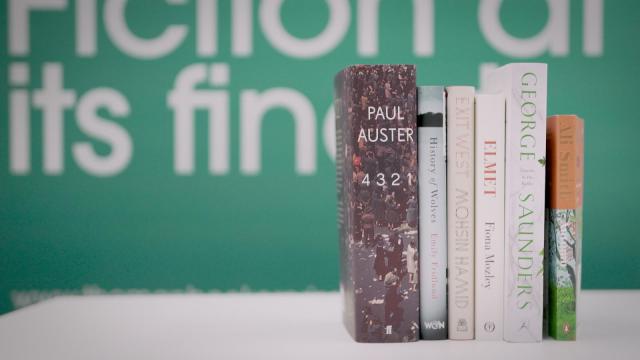
Paul Auster, Emily Fridlund, Mohsin Hamid, Fiona Mozley, George Saunders and Ali Smith were announced on 13th September 2017 as the six shortlisted authors for the 2017 Man Booker Prize for Fiction.

Their names were announced by 2017 Chair of judges, Lola, Baroness Young, at a press conference at the offices of Man Group, the prize sponsor.

The judges remarked that the novels, each in its own way, challenge and subtly shift our preconceptions — about the nature of love, about the experience of time, about questions of identity and even death.

The shortlist, which features three women and three men, covers a wide range of subjects, from the struggle of a family trying to retain its self-sufficiency in rural England to a love story between two refugees seeking to flee an unnamed city in the throes of civil war.

In the fourth year that the prize has been open to writers of any nationality, the shortlist is made up of two British, one British-Pakistani and three American writers.

Two novels from independent publishers, Faber & Faber and Bloomsbury, are shortlisted, alongside two from Penguin Random House imprint Hamish Hamilton and two from Hachette imprints, Weidenfeld & Nicolson and JM Originals.


The 2017 shortlist of six novels is:

Title Author (nationality) (imprint)

4321 by Paul Auster (US) (Faber & Faber)

History of Wolves by Emily Fridlund (US) (Weidenfeld & Nicolson)

Exit West by Mohsin Hamid (UK-Pakistan) (Hamish Hamilton)

Elmet by Fiona Mozley (UK) (JM Originals)

Lincoln in the Bardo by George Saunders (US) (Bloomsbury Publishing)

Autumn by Ali Smith (UK) (Hamish Hamilton)


Lola, Baroness Young comments:

‘With six unique and intrepid books that collectively push against the borders of convention, this year’s shortlist both acknowledges established authors and introduces new voices to the literary stage. Playful, sincere, unsettling, fierce: here is a group of novels grown from tradition but also radical and contemporary. The emotional, cultural, political and intellectual range of these books is remarkable, and the ways in which they challenge our thinking is a testament to the power of literature.’

Ali Smith makes the Man Booker shortlist for the fourth time (she was previously shortlisted for Hotel World in 2001, The Accidental in 2005 and How to Be Both in 2014). This year also sees a repeat shortlisting for Mohsin Hamid, who made the list in 2007 with The Reluctant Fundamentalist.

Hachette imprint JM Originals makes the shortlist for the first time with Fiona Mozley’s Elmet, which was the first ever acquisition of assistant editor Becky Walsh. Mozley is also the youngest author on the shortlist, aged 29, and one of two debut writers to make the list – the other being 38 year-old American Emily Fridlund with History of Wolves.

The other two American authors on the shortlist are Paul Auster and George Saunders. 4321 by Auster, who turned 70 this year, is the longest novel on the shortlist at 866 pages and, according to the author, took three and a half years, working 6 and a half days a week, to write. Lincoln in the Bardo, the first full-length novel by Saunders — an acclaimed short story writer and Folio Prize winner — completes the list.


Luke Ellis, CEO of Man Group, comments:

‘Congratulations to each of the authors who have been shortlisted for this year’s Man Booker Prize. The list represents a celebration of exceptional literary talent, ranging from established novelists to debut writers, that we are honoured to support. As well as playing an important role in recognising literary endeavour, the prize’s charitable activities underscore Man Group’s charitable focus on literacy and education and our commitment to creativity and excellence.’

The judging panel, chaired by Lola, Baroness Young, consists of: the literary critic, Lila Azam Zanganeh; the Man Booker Prize shortlisted novelist, Sarah Hall; the artist, Tom Phillips CBE RA; and the travel writer and novelist, Colin Thubron CBE.


The 2017 winner announcement

The 2017 winner will be announced on Tuesday 17 October in London’s Guildhall, at a dinner that brings together the shortlisted authors and well-known figures from the literary world. The ceremony will be broadcast by the BBC.

In the meantime, there will be a number of public events featuring the shortlisted authors. These include an event at the Nottingham Lakeside Arts Theatre in partnership with Nottingham UNESCO City of Literature on Tuesday 10 October and two events at The Times & The Sunday Times Cheltenham Literature Festival on Saturday 14 October. The traditional Man Booker Prize readings will take place at the Southbank Centre on the eve of the prize, 16 October, hosted by broadcaster and author Gemma Cairney.

The shortlisted authors each receive £2,500 and a specially bound edition of their book. The winner will receive a further £50,000 and can expect international recognition.

The Booker Prize Foundation provides funding for the Royal National Institute of Blind People to ensure that braille, giant print & audio versions of the shortlisted books are available for the visually impaired in time for the winner announcement. The majority of this year’s shortlist is already available for readers in these formats. The Booker Prize Foundation has a longstanding partnership with RNIB to provide Man Booker Prize books to the tens of thousands of blind and partially sighted members of the RNIB Library.


The leading prize for quality fiction in English

From longlist stage onwards, the ‘Man Booker Dozen’ receives widespread interest from the media, booksellers and the public, in the form of critical engagement, media coverage and significantly increased book sales.

First awarded in 1969, the Man Booker Prize is recognised as the leading prize for high quality literary fiction written in English. Its list of winners includes many of the giants of the last four decades, from Salman Rushdie to Hilary Mantel, Iris Murdoch to Ian McEwan. The prize has also recognised many authors early in their careers, including Eleanor Catton, Aravind Adiga and Ben Okri.

The rules of the prize were changed at the end of 2013 to embrace the English language ‘in all its vigour, its vitality, its versatility and its glory’, opening it up to writers beyond the UK and Commonwealth when their novels are published in UK.

Man Group, an active investment management firm, has sponsored the prize since 2002.

Via: http://themanbookerprize.com/news/man-booker-prize-announces-2017-shortlist

The Sleeping Beauty Fairy Tale | Interesting Literature

I found this very interesting, being a ‘child of Disney’ I only knew half of this fairystory, and believed Sleeping Beauty’s tale came to an end upon waking and falling in love with the Prince – and they all lived happily ever after – but apparently not! The tale goes on and a whole new saga unfolds with the Queen Mother and her children.

Read this and see how much of the story (which version) you know and love from your childhood:

‘Sleeping Beauty’ is, depending on which version of the story you read, called Sleeping Beauty, Talia, Little Briar Rose, Rosamond, or Aurora. This is because, like many other classic fairy tales, the tale of Sleeping Beauty exists in numerous versions, each of which is subtly – or, in some cases, quite strikingly – different from the others. In the Italian version published in the Pentamerone, an Italian collection of fairy tales published in 1634, the heroine is named Talia. Charles Perrault, in his version published later in the century, calls her the Sleeping Beauty. The Brothers Grimm call her Dornröschen or ‘Little Briar Rose’, which is sometimes adapted as ‘Rosamond’. In the Disney film, the adult heroine is named Aurora. For the purposes of clarity here, we’re going to call her ‘Sleeping Beauty’ or ‘the princess’.

Nevertheless, the overall plot of these different versions of ‘Sleeping Beauty’ remains broadly the same, so it might not prove entirely impossible to offer a short plot summary. A king is protective of his beautiful daughter, the princess. An evil fairy curses the princess, pronouncing that she will die when she is pricked by a spindle. However, a good fairy manages to intervene so that the prophecy is softened: the princess will not die if she is pricked with a spindle, but she will fall unconscious for a hundred years. The king bans flax and spinning equipment from his palace, so as to protect his daughter from such a fate. 

However, around fifteen or sixteen years later, when the king and queen were away from the palace, the princess was exploring many rooms when she came upon an old woman with a spindle, who knew nothing about the spinning ban. The princess asked if she could have a go, and the old woman let her – you can guess what happened next. The princess pricked her finger on the spindle, and dropped down unconscious. The old woman fetched help, and everyone tried to revive the princess, but to no avail. So there was nothing for it but to let the princess sleep for a hundred years. The good fairy cast a spell that essentially protected the princess in the palace, with trees grown up around the building and all of the princess’s servants, attendants, and pets made to sleep for a hundred years too.

After the century had elapsed, another king (of a different royal family) sits on the throne. His son, the prince, heard tales of the palace where the princess slept, and became interested in what he’d find if he ventured there. So he cut a path through to the palace and at length came upon the sleeping form of the princess, falling to his knees at the sight of her beauty.

His timing couldn’t have been better. For at that moment, the hundred years came to an end and the spell was lifted; the princess woke, and seeing the prince she fell in love with him, and they talked a great deal (well, after all, the princess had missed out on a hundred years of news). The whole of the palace then woke up – the servants and animals that had been put under the spell by the good fairy – and the prince and princess lived happily together, having two children, a daughter and a son whom they called Morning and Day respectively.

The prince returned to his parents, the King and Queen, but said nothing about the princess whom he had fallen in love with, because the Queen was part ogress and there were rumours that she had ‘ogreish’ tendencies – in other words, she wanted to eat people. The prince married Sleeping Beauty in private, without his parents’ knowledge.

A couple of years later, the King died and his son, the prince, became King, and brought his wife publicly to the court. But shortly after this he had to go to war with the emperor of a neighbouring country. In his absence, his mother, the Queen Mother, sent away Sleeping Beauty to the country, and sent the cook to kill Morning, the young daughter of the King and Sleeping Beauty, and cook her so that the Queen Mother could eat her with a nice sauce. But the cook was a kind man, who instead slaughtered a lamb and dished it up for the Queen Mother to eat. (She couldn’t tell that it was Lamb and not Little Girl that she was eating.) Meanwhile, the cook sent away Morning to be kept safe by his wife in their chambers in the palace.

But the Queen Mother was soon hungry again, and wanted to have Day for her dinner this time. Once again, the cook sent away the little boy and served up a young kid or baby goat for the Queen Mother to feast upon instead. But the Queen Mother’s appetite was insatiable, and next she wanted to eat the Queen, Sleeping Beauty, herself. The cook despaired of being able to deceive the Queen Mother a third time, so he went up to Sleeping Beauty’s chambers with the intention of slitting her throat. When the Queen saw him, she told him to kill her, so she might join her children, whom she feared dead. The cook told her that her children were alive and well and of how he had tricked the ogreish Queen Mother, and he took her to where his wife was looking after the Queen’s children. Then the cook dished up a hind for the Queen Mother to eat, thinking it was Sleeping Beauty.

But soon after this, the evil Queen Mother heard Sleeping Beauty and her children in the palace, where they were concealed, and she realised she had been tricked! She set about plotting her revenge, ordering that a huge tub be placed in the courtyard and filled with vipers and venomous toads and other dangerous creatures, so that Sleeping Beauty, Morning, Day, the cook, his wife, and his maid, might be thrown in there the next day, and suffer a horrible death. Next day, the prisoners were brought out for the sentence to be carried out – but just as they were about to be thrown into the tub, the King returned, and, angry that her plan had been foiled, the ogreish Queen Mother threw herself in the tub and was killed by the snakes and toads. The King was reunited with Sleeping Beauty and his children, and they all lived happily ever after.

This summary of ‘Sleeping Beauty’ is based on the tale that the Opies include in their The Classic Fairy Tales; there are some minor differences between the various versions of the tale, which has been told by Charles Perrault and the Brothers Grimm, among others. Indeed, the only reason the Brothers Grimm didn’t throw out ‘Sleeping Beauty’ from their catalogue of fairy tales for being too French was the tale’s suggestive affinities with the myth of Brynhild in the Völsunga saga, which was the inspiration for Wagner’s Ring Cycle among other things. (Brynhild was imprisoned in a remote castle behind a wall of shields and doomed to sleep there in a ring of flames until a man comes along, and rescues and marries her.)

It was Charles Perrault, however, who first made the fairy tale of Sleeping Beauty famous, when he included it in his landmark 1697 collection of fairy stories. Yet as we remarked at the beginning of our summary and analysis of this, one of the most famous of all fairy tales, the basic story predates Perrault, and a similar version can be found in the 1630 Pentamerone. Yet even by this stage, the story of Sleeping Beauty was a few centuries old: one of the stories in the anonymous fourteenth-century prose romance Perceforest features a princess named Zellandine who, like Sleeping Beauty after her, is cursed to end up being pricked by a spindle, an accident which prompts her to fall asleep until – you’ve guessed it – a dashing prince, in this case a chap named Troylus, arrives to wake her up. (Unfortunately, this important medieval collection of tales remains criminally out of print and in need of a good translation/edition: Oxford University Press or Penguin, please commission one!)

‘Sleeping Beauty’ features many of the common tropes of classic fairy tales: the beautiful princess, the evil stepmother figure (the evil Queen Mother), the handsome prince, the good fairy, and the patterning of three (the Queen Mother’s planned meals of Morning, Day, and Sleeping Beauty respectively). Throw in a palace and a bit of suspended animation, not to mention a cunning servant (that enterprising and kindly cook) and you have all of the ingredients of a classic.

Via A Summary and Analysis of the Sleeping Beauty Fairy Tale — Interesting Literature

Writer’s Workshop: Festival of Writing

Print

This weekend, I attended the fabulous Festival of Writing in York. It was, as ever, a valuable weekend of learning, feedback, and meeting new and old writer friends. To give you a taste of how amazing it was, here is a post from Julie Crisp, who taught at the FoW:

I spent a rather lovely weekend doing some of my favourite things: meeting new authors and talking about books and publishing. This was my first time attending The Festival of Writing in York and, as such, I wasn’t sure quite what to expect. I certainly wasn’t expecting it to be quite as BIG with so many enthusiastic attendees.

I did two workshops and a series of one-to-ones. For anyone who knows me – they’ll know how much I hate public speaking. I always over prepare and spend far too much time worrying about having an unreceptive or unresponsive audience . . . a lecture hall filled with empty seats and a long awkward silence. Thankfully – there was none of that!

The first workshop I did was: How to Get an Agent: The Dos and Dont’s. Trying to come up with something fresh to say when there’s SO much information on the Internet about it (Juliet Mushens’ post on it is especially good), is always difficult. But the authors attending were fabulous. Lots of great ideas and information were exchanged and it was chatty, informal, and lots of fun. I may have been buzzing and gabbling a bit from the caffeine overdose but no one seemed to mind.

One of the most interesting questions for me as both editor and agent was: Who has the final say in the direction your novel is going? Who decides what can be kept and what gets changed? My personal answer to that is: You. The author. Agents and Editors are not there to rewrite your entire work to fit a template of their own making. They are not there to shoehorn it in a direction that you don’t agree with. What they will try to do is help you shape it into something that fits within commercial expectations. They’ll have a vision that uses those ideas and structures in the book that work and help you to take it a step further.

And for anyone attending that who wanted to know what a good pitch letter to me looks like then this is it:

THE PITCH LETTER

Dear (get the name right please),

  1)  One paragraph of an introduction to the book (listing the market, genre and readership you’re aiming at) and maybe one line or so about why you choose this agent. If it starts to feel like you’re following a script or template just keep the letter brief, businesslike and to the point. I’d much prefer succinct professionalism than overwriting.

  2)  A paragraph or two (more than that starts to feel like a retelling of the novel) about the book. The best pitches for me are those which read like cover copy rather than a synopsis…so a shoutline and then brief description.

  3)  A paragraph about yourself listing any relevant writing credits – look at published author bios – this is what you should be aiming at. Don’t over share!

Yours,

I also did a series of one-to-one meetings which I thoroughly enjoyed. I LOVE offering editorial feedback. It’s one of the most enjoyable parts of my job. There were some brilliant concepts. Lots of wonderful writing. I don’t think I totally ruined anyone’s day. At least no one left in tears so that’s always a plus! And I did ask for one complete script which I’m eagerly awaiting.

The Gala dinner was great, I got to catch-up with a few friends and make some new ones. But I did dash halfway through so could finish prepping for my workshop the next day.

Again, despite the large turnout – it felt like a really friendly, informative, sharing workshop. Everyone had ideas and thoughts about what worked to market your book on social media. I’d put a suvey poll on Twitter the night before.

So it was interesting to see that the hit rate for readers being influenced by social media in book sales was about 50% for those who participated, bearing in mind my usual followers are pretty book engaged. If it went out to a larger spread of people I’d expect it to go down…what we do know from the workshop is that no one likes the hard sell. Not from authors or publishers. And that the time you spend on Social Media will rarely result in equivalent book sales. If you’re interested in the rest of the presentation you can find it here. It’s rough notes but could be useful. There are loads of great articles on the web though which go into a lot more detail than mine about how to market your book online.

All in all I thought the Festival was fabulous. The Writer’s Workshop organised everything brilliantly and were happy to help wherever they could. I can see why it’s such a popular festival and why so many authors return year after year. It’s great for contacts, networking, up-to-date information, advice and support. As Tor Udall, author of A Thousand Paper Birds said, ‘I sit in workshops at #FoW17 and I still learn.’

Don’t we all.

Hope everyone enjoyed it and found it as useful as I did.

I certainly did.

See the original post here: http://www.juliecrisp.co.uk/writers-workshop-festival-of-writing

Joanna Walsh: Author Interview

joanna walsh

Taking in everything from linguistic dystopianism to Freudian whimsy, the stories in Joanna Walsh’s second collection, Worlds from the Word’s End, are alternately playful, melancholic, subversive and wistful. The collection demonstrates the wide range of Walsh’s writing, and her continual desire to shift the boundaries of conventional storytelling. From the mid-European detachment of Hauptbahnhof to the playful fairy tale Simple HansWorlds from the Word’s End marks Walsh out as one of our most inventive authors.

Here, she talks to Minor Literature[s] about the impact of technology on storytelling, autofiction, and demystifying the role of the author:

In many of your stories, from Fractals (2013) and Grow a Pair (2015) up to your current collection, you examine the influence of technology on the way we communicate; this is perhaps most directly addressed in the title story from Worlds From the Word’s End. As a writer, how do you incorporate these changes in discourse into your work, and what challenges do you face? 

It a no-brainer. We live via technologies–and always have: writing is the original technology if by technology you mean an artifice created to replace or extend a human function–and each technological shift creates different styles of language that facilitate (and hamper) our uses of it, and its uses of us. Language that wants to section itself off as ‘literary’ is dead. Interesting writers keep a close eye on changes in the ways we speak and write to each other, as well as how this speaking and writing changes us. 

As you showed with your novella Seed, you’re very open to experimenting with digital storytelling techniques; what sort of possibilities do you think new technologies open up for your work, and how can this help to move literature forward? 

I’m not interested in the digital reproduction of the conventional book form. If I’m reading a ‘book’ I prefer print. I hope digital offers a huge number possibilities that do not already exist in print for representing experience via words, most of which I know nothing about. In Seed, I’ve used digital to explore written ways of telling developed by modernist and postmodernist writers, and in feminist and posthumanist thought, that challenge conventional linear notions of time and memory, and conventionally coherent subjectivity (aka ‘plot’ and ‘character’). 

You’ve already published short fiction, digital fiction, creative non-fiction (Hotel) and the A7-sized Shklovsky’s Zoo, amongst other forms; do you see yourself as a sort of ‘format agnostic’? Or is there a particular form you’d like to focus on in the future? Equally, is there anything you haven’t yet tackled which you’d like to try?

Form seems to arise to fit individual projects, or projects to fit situations. I’m flexible, and innovation is always also response, depending on collaboration, funding opportunities etc. But Hotel was a challenge to genre rather than form. If it began as response, it became deliberate, which makes me less an agnostic than an iconoclast. It started as an attempt to tell an autobiographical story outside the bounds of ‘memoir’. Traditionally memoir seems to concentrate on the subject. I’m only interested in myself as a starting point for discussing something wider. 

Following on from this, you’ve previously said that in the Anglosphere, the terms ‘writer’ and ‘novelist’ are almost synonymous. Do you think there have been any negative consequences from having moved between styles and formats early in your career, or is this something you’ve ever worried about? 

I started writing with no expectations of a ‘career,’ conscious of  not having written books that fit into easily saleable categories. But I haven’t been a writer all my adult life, and the idea of writing ‘the next book’ for the sake of writing the next book makes no sense to me. If that became the case, I hope I could walk away from it. But I hope I’ll be able to continue as an ‘amateur,’ like Clarice Lispector… though I also hope my amateurism has a long course  🙂

Autofiction has been an influence on your work; at the moment, the most prominent autofiction writers, such as Chris Kraus, Michelle Tea and Sheila Heti, seem to be based in North America. Do you think there’s something in the British literary scene which discourages this style of writing, and if so, are we likely to see that change? 

The UK reviews of Heti’s How Should a Person Be were almost unanimously negative, usually due to a perception that it is ‘narcissistic’ to write about yourself. I don’t see much change to that yet, but I meet (and teach!) people who want to read (and write) something they can’t quite define: a take on their own story, but not memoir or biography… and I spend a lot of my teaching time giving them permission to write what they want. But my influences don’t come only from North America, but also Europe, particularly France: NDiaye, Garreta, Duras, Sarraute, Ernaux… 

You’ve spoken previously about the importance of authors talking about how they make a living, if not solely from their work. Do you think there needs to be a process of demystifying the role of the author? And is this a shift that you see happening? 

Going back to Lispector: though she claimed to be an ‘amateur’ writer, she was a successful journalist, producing hundreds of columns on a variety of subjects for Brazilian newspapers. Perhaps her amateurism resided in her ability to separate paid work from play. “A professional has a personal commitment to writing. Or a commitment to someone else to write,” she said. “I insist on not being a professional. To keep my freedom.

When I read novelists in newspapers complaining they can’t make a living as a writer like they used to, I usually find they are living the sorts of lives I wouldn’t want to live, writing the sorts of works I wouldn’t want to write. They are ‘authors.’  

“If there’s any mystery left around the position or author (rather than around the practice), I’m be happy to see it evaporate.

But who is paid, and what they are paid, to write, is never neutral. These are things we need to question, and re-question. It is nice to be paid for something you’re skilled at, but the relationship between money and art can never be entirely ‘demystified,’ or art would become static. Fair returns should be paid to people whose work is sold,’ but that’s a commercial proposition. If writing can be weighed out and paid for per word, I don’t want to know what that exchange rate is. 

But, to answer your question: in practice, I have earned a living from journalism and teaching and, at the moment, PhD funding plus the occasional grant or residency. I don’t make much money from writing books, nothing like the UK living wage, but this has made my practice wider that it would have been were it easier to comfortably make a living by producing books.

What’s the relationship between the stories in Worlds From the Word’s End, and those in your previous collection, Vertigo? Was there a particular feeling you envisioned for each collection, that influenced your choice of stories? 

The stories for the two collections were mostly written concurrently – I had not idea that they’d be collected into these two volumes. Danielle Dutton of Dorothy made the initial selection of stories for Vertigo, selecting those with a hyperreal focus, about women in family relationships. I realised that the remaining stories had something in common too: a concentration on wordplay and abstraction. With a little work, they formed what I hope is an equally coherent collection. 

If you were an Egyptian pharaoh and had to be buried with a few key objects to take to the next world, what would they be?

It sounds wanky, but I’m not attached to particular objects, though I for preference I will live in a pleasant—though easily-reproducible—environment (a few nice clothes, a reasonable laptop, good coffee & decent alcohol please). I’m happy being temporary, in anonymous spaces, in other people’s houses. And I like to say goodbye to things. Recently I destroyed a lot of my artwork from when I was an illustrator because I have less storage space in my new place. I had a few twinges about that after, but it was probably the right thing to do because I felt it was at the time. I don’t like to go to writers’ houses, but I was in Prague with someone who wanted to visit Kafka’s house, and it’s now my favourite writers’ museum: so beautifully designed, around so little of him. I’m horrified how writers are interpreted via their ephemera: burn it all!

What’s your favourite portrait (it can be a song, a painting, a film, anything)?

This week? Maybe Joni Mitchell’s Carey.

***

Via: https://minorliteratures.com/2017/09/06/an-interview-with-joanna-walsh/

How To Keep Writing In Tough Times

lemons

If you’ve found yourself in the midst of a difficult season, what can you do to keep moving forward with your writing? Here are 3 ways to keep writing through adversity:

1. Think About Your Priorities

Consider what exactly is going on in your life and understand the time demands that come from it. Maybe you’re getting married and the planning is time consuming… but you’ve got this novel you just don’t want to let go of for a few months. Getting married is quite different than being stuck in a hospital for the better part of five months, and your time restrictions are going to be different. Whatever your tough situation, think about what you want to achieve. Maybe you can only spare ten minutes a day to write a few paragraphs. But hey, it’s a start!

2. Outline Your Goals

This is where you look at where you want to take your writing career, and realistically try to figure out how to keep writing and stay on track. Do you want an agent, a publishing deal, etc. Because all of that is going to require a time commitment. Working on your goals, and figure out how those work alongside the other needs and commitments you have in your life.

3. Always Be Doing Something – Even if It’s Not Writing

There are loads of positive things you can be doing to keep your head in the game. Read, listen to podcasts, or check out blog posts from other writers – to name but a few.

There are a lot of great writing podcasts out there:

When adversity strikes, you don’t have to let your writing fall by the wayside. But it will if you let it. However, you can not only continue on with your goals in the face of harrowing times, you can amaze others with your work ethic. The tenacity to push through is something almost everyone will admire. It’s also a really good feeling as a writer.

If you can get through adverse times and figure out how to keep writing, you’ll find it that much easier to carve out time on days when you’re not in the middle of a trial.

***

Read the full article here: https://www.helpingwritersbecomeauthors.com/how-to-keep-writing/

Top 10 Plot Twists In Fiction | The Guardian 

Gone Girl Film Shot

The word “twist” exerts a strange power over crime fiction addicts like me. Publishers know this all too well, which is why the promise of a twist is often used to advertise books that don’t have twists at all. “You’ll never see the breathtaking twist coming!” screams the press release. Well, no, you won’t, because it doesn’t exist. And so many people think a brilliant resolution is the same thing as a twist. It isn’t. Agatha Christie’s Murder on the Orient Express offers the most impressive puzzle solution in all of detective fiction. But, however ingenious and surprising, it’s not a twist ending.

So what is a bona fide twist? In my view, it has to be something that overturns or negates an already drawn conclusion or a firmly entrenched and reasonable assumption (Orient Express overturns an unreasonable assumption on the part of the reader, which is why I wouldn’t call it a twist).

Writing a twist isn’t an exact science, but part of what makes the brilliant ones so attractive in fiction is that feeling of having everything you thought you knew reversed, inverted or demolished; the fictional equivalent of being on a rollercoaster that suddenly turns upside down, leaving everything looking and feeling very different for the rest of the ride. And the new picture created by the shake-up of the twist has to be one that makes sense and is not risible. For example, if you find out at the end of the novel that the murderer is not the person whose fingerprints were on the knife, but rather his long-dead second cousin who developed marvellous fingerprint-forging technology unknown to science or the reader – that’s not a twist, it’s a travesty.

It’s going to be very hard to do this without spoilers, but I will try. In my opinion, these are 10 excellent examples of novels with genuine twists:

1. My Sister’s Keeper by Jodi Picoult
A moving, complex moral-dilemma story about a girl who takes her family to court in order to win the right to refuse a life-saving bone marrow transplant to her dying sister. What’s great about the twist is that you were neither waiting nor hoping for it – the story feels totally satisfying and complete without it – and yet when it arrives, you realise that there was a carefully and subtly carved space all throughout the novel for that perfect twist to fit into.

2. Rebecca by Daphne Du Maurier
A psychological suspense classic about a woman who marries a man she adores, only to discover that he, his home and his staff are apparently still obsessed by his far more charismatic first wife, to whom our heroine fears she can never measure up. Without revealing anything that’s gone before to be a lie, the twist changes the meaning of everything we’ve seen so far and provides the novel with an exemplary and memorable resolution.

3. Jane Eyre by Charlotte Brontë
Not all superb twists need to come at the end. There’s a twist in the middle of this classic novel that takes it to another level of passion, intrigue and excitement. There are hints before the big reveal, but not even the most imaginative reader would dare to imagine the truth. Twists in the middles of stories rather than at their ends tend to say: “And what do we all think now?” rather than, “So THIS is what we’re supposed to think!” – and this one does that brilliantly.

4. Before I Go to Sleep by SJ Watson
An unputdownable novel about a woman who loses her memory every night as she sleeps, and wakes each next morning remembering nothing. The author expertly leads the reader to assume that there is a binary choice in terms of who and what to suspect, and then reveals at the last moment that there is a third and even more terrifying possibility…

5. We Need to Talk About Kevin by Lionel Shriver
You can tell when a twist is brilliant, because copycats spring up all over. The twist at the end of Lionel Shriver’s masterpiece about a school shooting and a difficult mother-son relationship is one that literally takes your breath away. I’ve read two novels since that have copied and pasted Shriver’s twist as if it hadn’t been done before (or perhaps they simply hadn’t read Kevin!). Either way, neither of the copycats used the twist with Shriver’s panache.

6. Innocent Blood by PD James
I know I don’t have to choose a No 1 – this is, after all, a top 10 – but this novel contains my favourite twist in all of crime fiction. Halfway through this story of an adopted young woman determined to trace her biological parents, there is a twist that made me leap up off my sun-lounger and yell at random holiday makers that they needed to read this book urgently. I won’t say any more – just, please, read it.

7. Shutter Island by Dennis Lehane
This novel about a US Marshal trapped on an island, trying to find an escaped murderer in a sanatorium, has a twist of such audacity, I’m not sure I’d have dared, but I’m very glad Lehane did. It’s so bold and all-encompassing, it’s perfect.

8. Gone Girl by Gillian Flynn
This brilliant thriller contains a meta-twist, devised and inflicted by a central character within the novel rather than by the author herself. It’s a middle-twist rather than an end-twist, and the character responsible spends much of the novel afterward boasting about it. It works exceptionally well.

9. The Secret House of Death by Ruth Rendell
A brilliant crime novel by one of the UK’s finest crime writers, in which the murder itself is the twist. You won’t understand what I mean by that – so you must read the book! The last line, which underscores how profoundly the reader has been fooled, sent a shiver down my spine.

10. Behind Closed Doors by BA Paris
I’m not sure all readers would recognise that this is a twist-based story, but it is. It twists our expectations of the entire psychological thriller genre. The novel begins as a portrait of a marriage in which the wife seems to be a little nervous around her husband… What could possibly be going on? Is he abusive? Does she have a guilty secret? I liked this novel from the start, but a few chapters in, one of the main characters provides information that’s so startling, it shakes up all of the reader’s expectations about the genre they think they’re reading, making the rest of the story all the more exciting.

So there you have it – I hope these have whetted your appetite. If you haven’t yet read them, add them to your TBR pile immediately! Happy reading 🙂

Via: https://amp.theguardian.com/books/2017/aug/16/top-10-twists-in-fiction

9 Bad Writing Habits You Should Break 

writing habits

If you are a writer, just like with anything, you have probably picked up some bad habits. These habits can be hard to break, and eliminating them all together can take anywhere between 72 hours to more than 21 days. Some long-lasting habits built up over time are even ingrained at our neural level, meaning they can even determine our behaviour or outlook on life.

But this is also the perfect reason to break a bad habit, so you can make room for more successful productive ones. Here are 9 such bad habits, which might be holding you back, and if so, you should try to break them:

1. Not sticking to the writing plan

Most of us are guilty of this one. Never rely on the whimsical character of your inspiration, it will not always be on tap to get you through. Sometimes you have to lock yourself in a room and force yourself to write.

The thing about plans is that if you can promise yourself to follow it without yielding to excuses, you might actually get some writing done. Here are three ways you can make yourself stick to your writing plan:

  • Make monthly, weekly and daily goals to control the process.
  • Decide how much time (minimum) you can commit to writing and stick to it.
  • Do not review a single sentence until you finish, even if you know there are some mistakes.

2. Giving in to procrastination and self-criticism

Procrastination and postponing your writing goals to fulfill other minor errands is another mistake. Often these can appear like writing – researching writing, blogging about writing, social media on writing – but none of this is actually writing.

Believe that you are good enough and you can do it. Turn off the internet, put your phone on silent and just write. I accept this is challenging, but once you get going it can also be very rewarding.

3. Over thinking your novel when you are not writing

We all tend to sit and think about our novels – inspiration might hit you at the oddest of times, when you are nowhere near your laptop/computer. However, unless you make notes – in a notebook, on your phone, on a scrap of paper – all that over thinking is just wasted. By the time you sit down it will be gone, or have changed shape. So try to introduce a better habit of carrying around a notebook (or similar) instead.

4. Writing without enough sleep

When your mind is already dried out, you shouldn’t expect anything special to come out. Sleep deprivation can result in chronic fatigue and even severe depression. When writing a book you should allow yourself from 7 to 9 hours of sleep each day.

5. Giving someone your unfinished book to read

This might sound like a good idea, but it isn’t. Feedback is great, you should get feedback, but only after you’ve finished your first draft completely. Otherwise you might end up completely changing the book, only to find it worked better before, or you have to change it again anyway.

6. Limiting yourself with one place for writing

Whilst I think it is a great idea to have somewhere that is solely for you and your writing to help you get into that space easier, limiting yourself to just that space may mean you have trouble writing anywhere else. It is good to be flexible, so that if you find yourself somewhere new you can still pen a few words without having a breakdown. It’s a useful writer skill to have.

7. Writing too many things at once

Even if you have several ideas for different novels, I recommend you keep a separate notebook or folder somewhere for these ideas, but don’t get too drawn into it without finishing what you are working on first. Dividing your attention between several story-lines can confuse you and make the process of finishing one of these books very hard.

8. Isolating yourself from family and friends

When you are writing a book, it can be very tempting to dive into it and ignore everybody. However, this is not always a good thing, as it can make you feel very lonely and isolated. We need our friends and family for support in those moments when we are not writing, so don’t lock yourself away – take the odd break and chat, laugh, get things off your chest. It will improve your writing time no end.

9. Not eating/drinking properly 

You’re in the zone. You don’t have time to eat. You snatch a quick fatty unhealthy snack and keep going. Does this sound like you? Me too! However, this can be counter productive because not fuelling yourself properly means your creative brain won’t be functioning to its highest capacity, and drinking enough water is also key for that process. Allow yourself a half hour break, eat something nutritious and make sure you have a big bottle of water to hand. Then let those creative juices flow!

***

Based on: https://www.justpublishingadvice.com/nine-bad-writing-habits-that-you-should-break/

Writing Prompt: Opposites Attract

writing-prompts-Opposites attract

Characters come in many forms, and not all of them are happy protagonists who light up a room. Antagonists, villains, and grumpies may not be the most likeable characters but they’re still important to the story.

I was recently procrastinating writing a chapter from the perspective of my novel’s antagonist, purely because he was someone I wouldn’t get along with in real life. But once I started writing through their eyes I saw all their motivations and reasoning, and realised they weren’t so bad.

This writing prompt is about seeing through new perspectives and creating complex characters.

Create a Villain

Come up with a character that is so opposite to you that you couldn’t stand them if they were in the room with you. Give them beliefs that would get you into a heated debate, give them personality traits that would make you cringe, and a lifestyle that would make you sick. Go all out with this, and create the most horrible person that you can imagine.

Learn to Like Them

Jump into your character’s mind (this can be easier said than done) and find something about your character that gives a reason as to why they’re so villainous.

We all have experiences that shape us, so determine what life-changing experiences your character went through. Try and see how they justify their actions, and why they are perfectly reasonable from their perspective.

You might not necessarily ‘like’ them by the end of it, but you’ll certainly understand them much better.

Happy writing!

Via: https://writersedit.com/fiction-writing/writing-prompts

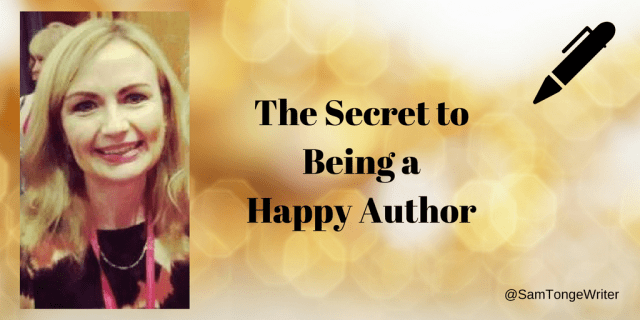
The Secret to Being a Happy Author

The-Secret-toBeing-aHappy-Author

I read this lovely post by Sam Tonge, and wanted to share it here – as it is very good and grounded advice. Something all writers and authors need to take on board.

It’s a tough business, publishing. I recall, years ago, a successful author warning a group of aspiring writers (me amongst them) to be careful what they wished for – that getting published didn’t solve all your problems. In fact, it brings a different set. And I can certainly confirm this. Don’t get me wrong, I love my job and consider myself very lucky to be doing it –  but signing that deal means that instead of suffering submission rejections you are faced with a whole new gamut of challenges, such as tight deadlines, bad reviews, disappointing sales…these things happen to all authors and can come as a shock after finally achieving your dream.

It pays to bear in mind that most dreams are unrealistic – the getting published bit isn’t, but it’s what we subconsciously attach to that aspiration. Your view of “getting published” might be that… you earn loads of money. Buy a big house and fancy car. Gain respect from everyone you meet. Suddenly become irresistible to the object of your affection. Never feel depressed again. End up on the Booker List. Stand on the red carpet next to George Clooney. Fit into that size ten dress. Prove to everyone who ever doubted you that their view of you was incorrect.

IT IS UNREASONABLE TO EXPECT ANY OF THESE THINGS TO HAPPEN AS A DIRECT RESULT OF FINALLY GETTING YOUR BOOK OUT THERE!

So how can us writers hold onto our happiness during such a roller coaster career?

Over the last year I’ve learn a lot from Buddhism. One of its tenets is that unhappiness comes from being attached to either good or bad things. What helps is realising that nothing is permanent. If we can do that, our life will achieve a sense of balance.

Take my 2015 bestseller Game of Scones. It reached #5 in the Kindle chart and stayed in the Top Ten for a good length of time. It won an award. Many readers loved the story. I was finally on my way to “making it” I whooped! I attached myself to that success and expected it to continue.

That was my  mistake. The next book didn’t do badly, but didn’t do as well. I felt I’d failed. I attached myself to those feelings of disappointment and wondered if I’d ever have a bestseller again.

As it turned out I did and last year Breakfast Under a Cornish Sun got to #8. However, these days I have a different perspective. I don’t become attached to the peaks or the troughs. And I have zero expectations when a book is released. I write it the best I can, with love and heart, and I promote it at the outset… but then I let it go and get on with my next project. What will be will be. There are SO MANY reasons why a book does or doesn’t do well: the publisher’s strategy, the cover, title, price, the timing of its release, the other books around at that moment… I find that if I distance myself from my successes and see them for what they are – transitory events – it gives me a much more balanced view of my career.

Remember, the path to misery is littered with expectations and senses of entitlement!

And all of this can be applied to life. Physical looks, our own and loved ones’ personalities, domestic circumstances, financial earnings, our state of health … be aware that everything is impermanent and in a constant state of flux. This makes it easier to accept your situation when the status quo changes – which it will.

By all means enjoy your highs. You have worked hard. You deserve them. And lick your wounds during the lows. But remember – neither is permanent. Work hard and keep submitting manuscripts and you will get a deal. Keep writing and learning more about your craft and those good reviews and sales rankings will once again appear. Finding working with your current publisher/editor/agent difficult? One way or another that situation won’t last forever.

In my experience, keeping detached and enjoying the good moments simply for what they are (without further expectations), and realising the bad moments will eventually pass… THAT – in writing and in life – is the secret to happiness.

Via: http://samanthatonge.co.uk/news-and-blog/the-secret-to-being-a-happy-author/