Happy Sunday, and happy writing!
#sundaywritingquotes
Happy Sunday, and happy writing!
#sundaywritingquotes

Have you ever been reading a story, only to be struck with déjà vu? Perhaps you noticed that roses had just been mentioned for the tenth time. Or daffodils. Or the colour purple. Perhaps you found yourself wondering, ‘Why on earth is this author so obsessed with pineapples?’ But what is it you are really noticing? What are these recurring symbols and images? It may seem like you’ve discovered a strange fetish of the writer, but what you have more likely stumbled upon are motifs.
Just like any other literary device, writers can use motifs to add depth, convey meaning, and/or shape the way a reader receives, responds to, or understands a text. However, before using any literary device, you should first make sure you are familiar with how it works. So, here are the things you may need to know about ‘motif’, before using it in stories of your own.
What is a ‘Motif’?
In literature, a motif can be defined as any recurring image, object, idea, or element within a particular work. However, this definition is not entirely complete. After all, a motif should never be meaningless. In fact, a motif should contribute some form of symbolic significance to the story. For instance, a motif may be used to establish mood and atmosphere, or to reinforce/further explore the overriding themes of a story.
Motif vs. Symbol
As motifs are often symbolic in nature, they can often be mistakenly identified as mere symbols. However, it is important to remember that these two literary devices are not one and the same. So what is the difference between the two? The key difference to note between motifs and symbols is the element of repetition. As we’ve already established, a motif is an item that reoccurs throughout a text. In contrast, a symbol may only appear once. Beyond this, a motif often contributes toward developing the themes of a text, whereas a symbol’s significance may be limited to the particular scene. In this way, a motif may be a symbol, but a symbol is not necessarily a motif.
Motif vs. Theme
Another element ‘motif’ can often be mistaken for is ‘theme’. This is no doubt due to the fact that motif and theme are so closely connected. While a theme can be defined as a key or central idea explored throughout a text, a motif is more a means of embellishing, examining, or reinforcing these central ideas. For instance, a text may examine themes of good versus evil through the repeated images, or ‘motifs’, of light and dark.
Examples of Motif from a Literary Master
The best way to understand any literary device is to study examples of them in action. To better understand ‘motif’ and its relationship with ‘symbol’ and ‘theme’, let’s turn to a literary master, Mr. Edgar Allan Poe. The Fall of the House of Usher is rich with examples of motif. For example, the idea of certain things passing from one state to another is constantly repeated throughout the story. The word “pass” or “passed”, for instance, can be found on no less than seven occasions. On top of this, the very name ‘Usher’ (as in Roderick Usher) is associated with someone who directs us from one place to another. In this way, we can see a motif emerging, relating to the idea of transition.
This motif is also contributing to an overlaying theme – a theme of crossing, or transcending boundaries (particularly those between life and death). Madeline Usher, for example, is portrayed as crossing the boundary between life and death, when she emerges, alive, from her tomb. This theme is further enforced by the motif of decay. From the description of the partially “crumbling” house, and the “decayed trees”, to the description of Roderick Usher, possessing a “cadaverousness of complexion”, the notion of death and decay is clearly repeated throughout. As the very process of decay is itself a transitional state – one from pristine to ruin, we can see how this motif works to symbolise and reinforce the overall theme of crossing the boundary between life and death.
***
So now you know more about motif, symbols and themes, try identifying some of your own. The next time you read a novel, take note of the images and elements that reoccur. See how they are used, and what they symbolise. Then get writing, and practice using motifs of your own.
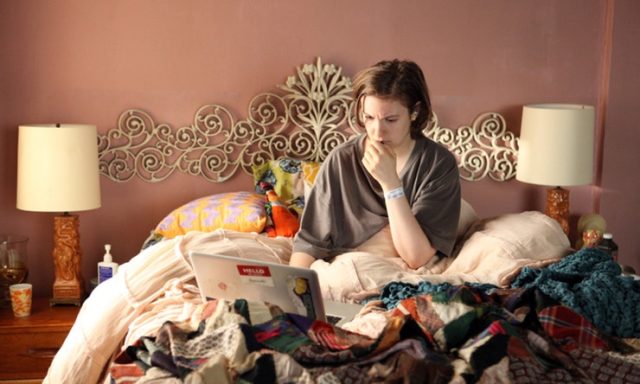
So you’re a writer. My condolences. You might be a fresh faced creative writing major, or a veteran freelancer, or a new writing convert with a fancy pen and a lot of ideas. There are many different types of writers, and there is no one “right way” to write. But you’ve probably noticed by now that there’s a certain pattern to your particular writing. Like it or not, you have a signature writing style, and you should probably learn to embrace it or you’ll never finish that manuscript. Here’s what your writing style says about you.
If you’ve ever read about famous writers’ writing habits, you’ve probably notice that writing styles vary wildly from person to person. Maya Angelou wrote in a hotel room with a glass of sherry. Ernest Hemingway wrote standing up. Haruki Murakami wakes up at 4 a.m. everyday to write before running 10km. The common factor with all successful writers just seems to be that they kept at it. So, whichever writing style seems to work for you, just keep going until you hit that final page count. And maybe take a moment to think about what your writing style means, because every writer could use a healthy dose of self reflection and listicle-based procrastination:
The Procrastinator
You have elevated Not Writing into an art form. You sit down to write… and then somehow you find yourself washing the windows, or watching unboxing videos on YouTube. The only thing that can actually motivate you to work is last minute panic — so you’ve become a master of the lightning fast rewrite. You can churn out ten pages the day of your deadline. You think that arriving anywhere early is an act of aggression, and you’re always changing plans so you can submit your work on-time, but you’re excellent when it comes to thinking on your feet and improvising (especially improvising excuses).
The Nine-to-Five-er
If your writing time isn’t rigorously scheduled, it’s not going to happen. You’re an early riser who sets word count goals, takes regular snack breaks, and keeps track of pens. People think you’re naturally organised, but really, if you didn’t schedule things, your life would very quickly collapse into a vortex of chaos. You’re the friend who people rely on for getting to the airport, you keep a physical planner, you set timers, and lending out your good pens makes you anxious (you’ve been burned too many times before).
The Nocturnalist
You’re basically a vampire, if you replace all that bloodsucking with writing and eating dry Lucky Charms out of a mug. During the day you work a day job or sleep, but when the moon comes out you set up shop and write long into the night. Or maybe you plan to stop writing at a reasonable hour, but you get caught up in your screenplay and/or suspense novel, and before you know it the birds are chirping. You’re passionate about your writing, but frequently tired, and you’re forever frustrated when friends won’t answer your texts at three in the morning.
The Diligent Note-Taker
You never go anywhere without your notebook (or legal pad, or voice-to-memo app). You’re constantly scribbling down ideas, or even entire overheard conversations. You’ve gotten in to trouble for putting your friends’ quotes into your writing verbatim, but you’ve got to draw inspiration from somewhere, right? You’re almost constantly in writing mode, which is great for coming up with new ideas, but not so great when you need to put your story on pause and focus on your so-called “job.”
The Plotter
The dark cousin of the Note-Taker, the Plotter doesn’t write a word without several charts, outlines, and perhaps a binder full of paper on plotting. The Plotter approaches writing as a subset of engineering: in order to build something great, you first need several month’s worth of math. As a Plotter, you take a little extra time on big projects, and your friends don’t understand half of what you’re talking about. But your detail work is impeccable, your character backstories are extensive, and you throw the world’s best theme parties.
The Research Fiend
You have an encyclopedic knowledge of Heian Era Japan and the history of conjoined twins in America, but you’re not quite sure how to fit it all into your Veep spec script. You live for the thrill of the research, frequently fall down Wikipedia wormholes, and you consider reading to be a form of writing (you’re absorbing material!). You sometimes overwhelm people with your enthusiasm and exhaustive knowledge of cat breeds/fencing/space travel, but you’re a killer at bar trivia.
The Inspiration Seeker
Writer’s Block is your constant nemesis. You make the time for writing… and spend it staring vacantly into space. You spend a lot of time “courting inspiration” by trying out various writing spots, music choices, and latte flavors, to see what gets your creative juices flowing. When the inspiration finally hits, though, you’re a writing machine. You also spend way too long looking at the menu at restaurants, trying to decide what you want, but you’re a great friend to talk to about emotions, because you understand frustration very, very well.
The Speed Demon
You’re all about writing as much and as quickly as possible. You’re strategy is to throw absolutely everything at the wall and see what sticks. You’ll pare it down later. That’s what editing is for! You’d much rather hit that page count as soon as humanly possible, and worry about the finessing later. You’re not great at sitting still and you have no patience for meandering slice of life films.
The Detailer
The opposite of the Speed Demon, you know that writing isn’t a race. You’ll put in one comma in the morning, go about your day, and take the comma out again that night. You’ve been working on your magnum opus for years now, because you know that great work takes time. You take font choices seriously. You’re thoughtful and methodical in everything that you do, and you never let anyone see your work until you have the description of every character’s hair colour precisely right.
The Multi-Tasker
You write under the table during meetings. You have two novels and one play going at once. You’re always reading no fewer than three books at any given time. You can keep four or five online chats going at once, not to mention all those group texts. If you get blocked on one piece of writing, you just bounce on over to another (starting things is a no brainer, but finishing them is a tad harder). You drink a lot of coffee and sometimes have to be reminded to eat.
The Workshopper
You live for the feedback. Giving it, getting it, either way — you like having a writing workshop group to force you to actually sit down and write. You never know what to do with a finished piece of writing until an incisive piece of feedback slaps you in the face. You regularly outsource your outfit choices to friends, you send detailed reports on first dates, and you’re always trying to trick people to come to coffee shops with you and make you write.
The Secret Writer
You don’t talk about writing. You don’t share your writing. You only write in total solitude, preferably in some sort of cavern or attic. You’re kind of hoping that you can become a wildly successful novelist without ever letting anyone read what you’ve written but you understand that might be difficult. You don’t like social media or workshop groups, but you do kind of like the dual identity thing you have going on, because you’re basically the Batman of writing.
***

Every month, the Writer’s Bone crew reviews or previews books they’ve read or want to read. This series may or may not also serve as a confessional for guilty pleasures and hipster novels only the brave would attempt. Here are their recommendations for July 2017:
- Stephen Florida by Gabe Habash
- What We Lose by Zinzi Clemmons
- The Fallen by Ace Atkins
- Madame Zero by Sarah Hall
- Grunt by Mary Roach
- The Orphan’s Tale by Pam Jenoff
- Unsub by Meg Gardiner
- The Graybar Hotel by Curtis Dawkins
- Found Audio by N.J. Campbell
- Homegoing by Yaa Gyasi
- The Dark Dark by Samantha Hunt
- Joe Gould’s Teeth by Jill Lepore
- St. Marks is Dead by Ada Calhoun
- The Songs by Charles Elton
- The Reason You’re Alive by Matthew Quick
- Blind Spot by Teju Cole
- Sweat by Lynn Nottage
- Borne by Jeff Vandermeer
Click on the links above for a detailed synopsis of each book, or follow the following link to see what the Writer’s Bone crew had to say: Books-that-should-be-on-your-radar-July-2017
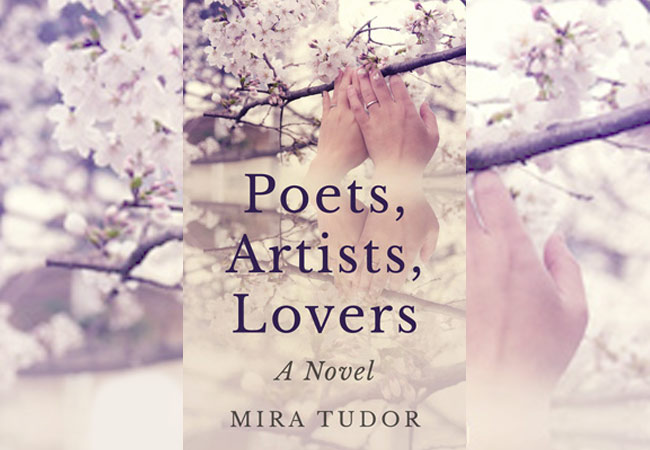
Today on Writer’s Blog is a special guest author, Mira Tudor. She has written a book entitled Poets, Artists, Lovers: A Novel which is her debut. She got in touch to let me know about her work, an excerpt of which is below.
I am very happy to support up and coming authors, as we all know how hard this business of writing is. And so, if you read the excerpt and want to read more, please follow the link to Kindle Scout, where you can do just that, find out a bit more about Mira, and vote for her work. If you do vote for it, you will receive a free copy of the novel, which is always a nice bonus.
Enjoy!
“Why are you always leaving your things in the middle of the floor?” Haralambie asked his girlfriend, stepping out of the kitchen into their living room.
Henriette ran her hands through her long, wavy red hair, looked at him ruefully, and got up from her computer.
“Henriette, this is not just your studio. I live here too,” Haralambie continued, bending to gather her latest clay pieces, her sculpting utensils and plastic sheets, which he placed on a shelf on the balcony with some of her other works. Having thus voiced his feelings and tidied up the place, he headed back into the kitchen to light another cigarette and drink the rest of his coffee by the window.
In the adjacent room, Henriette swayed languidly to a sixties rock ballad, flailing her arms and bending this way and that until she noticed Haralambie’s slim body leaning comfortably against the doorframe.
“Is that what it’s like at those parties of yours?” he asked.
“No, but that’s how I like it sometimes,” she responded provocatively, a wicked smile on her lips.
Haralambie walked over to her, cupped her face in his hands, and planted a kiss on her lips. “You’re not sixteen anymore, Henriette, and you know it.”
To read more, please follow this link: https://kindlescout.amazon.com/p/JSEPZW00AG6S
The campaign will finish on 22 July 2017.

1. She has wanted to be an author ever since she can remember: “As soon as I knew what writers were, I wanted to be one. I’ve got the perfect temperament for a writer; perfectly happy alone in a room, making things up.”
2. When she was extremely young, she would sit and copy words from books “without knowing what the words meant”.
3. She wrote her first story – called Rabbit – age six, and wrote her first novel at age 11. It was about “seven cursed diamonds and the people who owned them”.
4. She was head girl at her secondary school, but doesn’t consider it much of an achievement.
5. One of her teachers, Steve Eddy, remembered Jo as “not exceptional” but “bright, and quite good at English”.
6. She applied to study at Oxford, but was rejected, and instead studied French at the University of Exeter. She said she did “no work whatsoever” while she was at university.
7. Her eldest daughter, Jessica, is named after Jessica Mitford, who was an author, investigative journalist, and civil rights activist.
8. It took Jo five years to plan all seven books in the Harry Potter series. Most of her plans were written by hand on odd scraps of paper.
9. She wrote the last book’s epilogue in 1990, before she had mapped out the series as a whole or even had a publisher.
10. In 2000, she said she’d hope to be placed in Gryffindor, but that in reality she’d probably end up in Ravenclaw. Later, the official Pottermore quiz sorted her into Gryffindor.
11. She has described Hermione as a combination of herself and her younger sister, Dianne: “that sort of annoying person who underneath is very insecure”.
12. When asked why Harry’s scar was shaped like a lightning bolt, she said, “To be honest, because it’s a cool shape. I couldn’t have my hero sport a doughnut-shaped scar.”
13. The “only time” she consciously put someone she knew into the Harry Potter books as a character was as Gilderoy Lockhart. She says she “barely exaggerated” what he was like in real life.
14. In 2003, her father sold a first edition copy of Goblet of Fire – which included a handwritten inscription reading “lots of love from your first born” – at auction for £27,500. They had stopped speaking earlier that year.
15. The three-year publishing gap between Goblet of Fire and Order of the Phoenix was a direct result of the pressure she felt because of the series’ success. She became so overwhelmed that she found it difficult to write, and told her publisher there “wouldn’t be a book next year”.
16. She maintains that she never truly finished Order of the Phoenix, saying she didn’t do her usual final edit before handing it over to her editors, “and it definitely shows”.
17. She almost called the final book Harry Potter and the Elder Wand and Harry Potter and the Peverell Quest, which she quickly decided against because the word “quest” was too cheesy.
18. Her favourite chapter from the entire Harry Potter series is Chapter 34 of Deathly Hallows, “The Forest Again”. Her favourite from the first book is “The Mirror of Erised”.
19. Her worst fear – like Mrs Weasley’s – is someone she loves dying. For that reason, she understands why Voldemort is so obsessed with conquering death.
20. If given the choice between all three Hallows, she would be tempted – like Harry – to choose the Resurrection Stone, but ultimately believes that “the greatest wisdom is in accepting that we all must die, and moving on”.
21. Her favourite funny line from the Harry Potter books is at the end of Deathly Hallows, when Ron responds to Peeves’ “Voldy’s gone mouldy” rhyme with “Really gives a feeling for the scope and tragedy of the thing, doesn’t it?”
22. At the height of the Potter craze, she had people going through her bins, stealing her post, and attempting to bribe her friends in order to find out information about the upcoming plot.
23. She briefly considered not publishing The Casual Vacancy – her first novel after Deathly Hallows – because she felt uncomfortable with the attention any book of hers would inevitably receive.
24. In 2011, Lifetime aired an unauthorised J.K. Rowling biopic called Magic Beyond Words, which she hasn’t seen because “the thought of watching it makes [her] curl up like a pretzel”.
25. In the same year, it was announced that she had become the first female billionaire novelist. She was removed from Forbes’ list the following year after giving around £100 million to charity
26. She once bought an expensive pair of earrings but felt guilty afterwards for spending the money, so wrote a cheque for the same amount to give to charity.
27. In 2013, she donated £10 million to help open the Anne Rowling Regenerative Neurology Clinic at the University of Edinburgh. The clinic is named after her mother, who had multiple sclerosis.
28. She read aloud from J.M. Barrie’s Peter and Wendy at the Opening Ceremony of the 2012 London Olympics, but initially said no, because she thought she’d “wet herself or faint or something”.
29. She was once invited to visit South Africa by Nelson Mandela, but had to say no because she was pregnant.
30. In 2006, she revealed she had written another children’s book, meant for a younger audience than Harry Potter. She called it “a political fairy story” and it was about a monster.
31. Doctor Who writer Russell T. Davies wanted her to star in an episode where her “imagination becomes real” and the Doctor has to “battle through a world of witches and wizards and CGI wonders”, but David Tennant refused the idea because it would be “too spoofy”.
32. She said that the author she identifies with most is E. Nesbit.
33. Her favourite drink is gin and tonic.

What does your typical bedtime routine look like? Do you snuggle under your recently washed sheets around 10:00 pm, a mug of warm milk in one hand and a Tolstoy novel in the other? Or do you flop into bed between one and five in the morning, eyes bloodshot, clutching your phone to your heart as you desperately scroll through photos of baby sloths? We all struggle to stick to a healthy bedtime routine. But if you can make it to bed with your favorite book, you might have a better night’s sleep. Here are just a few of the reasons why you should read before bed.
Now I know what you’re going to say, book-lovers: “Every time I read before bed, I end up staying up until dawn finishing my book! That can’t be good for my skin and general temperament!” And no, medically speaking, it’s not a great idea to read instead of sleeping. But if you can stick to just a chapter or three at bedtime, it could actually be good for your health.
So pry your phone out of your trembling hands about an hour before bed, and settle down with a good book (hot milk optional):
1. You’ll retain more
When you sleep, you brain dumps all of your short term memory goo into the long term memory goo-reserves (in a manner of speaking). That means that the things you read right before bed stick with you better in the long run. Read a book before drifting off, and you won’t forget any minor plot points.
2. It’s screen-free time
We all know that we’ll sleep better if we cut down on screens right before bed. And yet… most of us still fall asleep with our phones/laptops/video calculators pressed lovingly against our faces. But if you set aside bedtime for reading an analog, paper book, you get that rare screen-free time that your eyes desperately need.
3. It’s a calming ritual
If you have trouble getting to sleep, many doctors and bloggers will recommend a calming ritual to perform every night before bed. Reading is the perfect kind of ritual: it forces you to lie down and cut out the distractions, it’s quiet, and it doesn’t get boring because you’re always reading something new.
4. You can’t skip it
Unless there is something terribly upsetting going on in your life right now, you go to sleep every single day. You can’t skip bedtime more than once in a very great while without totally falling apart at the seams. So, if you make a habit out of reading before bed, you’ll set aside time for reading every day, and end up reading more books than ever before.
5. You’ll de-stress
Reading is shown to reduce stress levels. And I don’t know about you, but as soon as I get under the covers I immediately start ruminating on all of the things I have to do and all of the times I embarrassed myself in the third grade. Reading will ease some of your classic nighttime anxiety, so you can actually fall asleep instead of staring and the ceiling and worrying about honey bee deaths.
6. You’ll have better dreams
Do I have a very scientific source for this? Maybe not, but I’ve always found that whatever I read or watch right before bed heavily affects my dreams. So maybe steer clear of the Stephen King late at night, but feel free to read about exciting fantasy realms that you’d like to visit in your sleep.
7. You’ll be more focused
Not only does reading boost your concentration in general, reading before bed will help you concentrate more on whatever it is you’re reading in the moment. You won’t be battling ten thousand other distractions. You don’t have to deal with other commuters. No one will (hopefully) stop you to ask what you’re reading. Reading before bed is one of the few guaranteed moments of reading in peace.
8. You can read in privacy
It’s a little easier to be emotionally open when you’re reading in your own bed, and not at your work computer while your co-worker chews with their mouth open. You’re free to laugh or ugly cry or Google word definitions to your heart’s content when you’re safe in your own bed.
9. It’ll help you sleep
It’s true: reading before bed gives you a more restful night’s sleep. Specifically, reading a book made of genuine paper (sorry, kindle-heads) will calm your brain and help you transition peacefully into dreamland without any glaring screens. So put aside that Netflix show based on a book, and pick up an actual book tonight before you hit the sack.
Via: https://www.bustle.com/p/9-reasons-why-you-should-read-before-bed-63326
Happy Sunday, and happy writing!
#sundaywritingquotes

Sex scenes in fiction are a tricky subject. For a start – depending on your genre – should they be there? How much do you show? Should you write the whole scene or stop at the heavy petting? There are many, many questions. And one of the best articles I’ve read on the subject is by Helen Scheuerer, who gives some helpful tips and advice. Here it is, and I hope you find it useful:
Since getting stuck into the structural edit of my novel, I’ve been doing a lot of reading about sex scenes in fiction. When should they be included? What makes them work? What makes them fail spectacularly? What warrants a ‘Literary Review’s Bad Sex Award‘?
Originally, there was only one sex scene in my novel, but at the request of my publisher, I’ve since added two more in, and recently, I’ve had the somewhat surreal experience of critiquing these scenes with my editor.
Editing in general can often be an intimate discussion regarding the intentions and interpretations of characters versus those of the author, but when it comes to the more explicit scenes in fiction, the process involves even more lengthy debates.
My editor and I read articles on the subject, and researched the best sex scenes in literature (the library scene from Atonement topped most of those lists, in case you were wondering), and realised that in any context, sex is a tricky subject. Perhaps largely because it plays such a major role in people’s lives, and yet it remains arguably a mystery to us, often still taboo, and kept behind closed doors.
Within fiction it’s even more complex. I have friends who hate reading sex scenes in books as it makes them uncomfortable, and then I have friends who enjoy reading the more explicit scenes.
Personally, I’m often confused when there’s zero sex in a book, as it’s such a big part of life, it lays bare motivations, desires and consequences, all of which tell you a lot about a character. Sex can be ugly, uncomfortable and awkward just as much (if not more often) than the head tossing, back arching cliches we so often see in fiction.
It can mean the start (or the end) of something, and set into motion a series of events. It’s a fact of life, just like birth and death, violence and love – none of which we shy away from when we write, so why is it different? Why should sex be metaphorical and ultimately glossed over, when it’s acceptable to create a vivid description of someone being shot in the face?
My editor and I discussed all these issues, before we got down to the nitty gritty sentence-level of the scenes themselves. The scenes I included weren’t particularly explicit in terms of naming body parts and describing actions in detail, but there was definitely more description than the ‘kiss and fade out’ option some authors favour.
So, within the comments section of Microsoft word, my editor and I tried to work out what makes a sex scene ‘literary’, and what factors separate these scenes from erotica, or worse ‘smut’. The use of language in these scenes is definitely tricky; too anatomical and the moment’s ruined, too vague and no one knows what is going where or how the characters feel.
I also learnt as a writer, you also have to be wary of the fact that one person’s turn-on is another person’s deal breaker, which is probably why so many authors choose to keep it vague.
Additionally, I was aware of the fact that I was a female author writing a sex scene. I’ve spoken about the gender bias in the writing industry before, but realised it was incredibly present when it came to interpreting fictional sex scenes. Often, these scenes when written by women are seen as confessions, autobiographical even, which made me feel particularly uncomfortable.
What helped me move past this discomfort was the fact that I was writing from a man’s perspective. This helped me feel like I was keeping a relatively safe distance from the risks above, at least during the writing and editing process (perhaps another post will be due by the time these scenes are finalised in print).
Essentially, what I’ve come to understand is like most things in writing, there’s no ‘right’ answer, a writer just has to be aware of their own intentions, as well as that of their characters, and should work closely with an editor to make sure these two visions match up as best they can.
Lastly, I thought I’d list a few quick tips I’ve learned during this process below. Fingers crossed someone out there finds them useful…
Top 7 Tips For Writing Sex Scenes in Fiction
- Don’t include them just for the sake of it, like any scene, they should drive the story forward, or reveal something new about a character.
- Space out the explicit details with emotional responses, and revelations of character.
- Don’t say ‘member’, ever.
- Don’t make it perfect, nothing ever is.
- Accept that not every reader will find the same thing attractive.
- If you’re not comfortable writing them, don’t – that’s why there’s always a ‘fade out’ option.
- Accept that you’re going to have to be comfortable editing these scenes with someone in a professional capacity.
Via: https://writersedit.com/writing-editing-sex-scenes-fiction/

Bath Novel Award 2017 Winner:
SOPHIE SNELL for THE PEAR DRUM
(Unpublished PSYCHOLOGICAL THRILLER)
Prize: £2,000
“I’m very excited by The Pear Drum’s commercial potential, and I loved the creepy concept and the gothic undertones.” Laura Williams, literary agent and 2017 judge.
“The Pear Drum is a gripping read. Loved the fairytale elements and touches of the gothic.” Joanna Barnard, author of Precocious and Hush Little Baby.
Sophie Snell is a traditional oral storyteller. After a first career in accountancy, motherhood rekindled her love of stories and storytelling. She found her head blossoming with characters and ideas and began travelling the country, entertaining all ages with folk tales and songs. Sophie lives with her family in a rural Derbyshire house filled with music, books, cats and steaming wet sports kit dumped on the kitchen floor.
Always fascinated by fairy tales, the spark for The Pear Drum came to Sophie after moving to the country and waking to find her hillside farm house marooned in a white sea of autumn mist. Sophie imagined a woman travelling back to her childhood home, only to find it filled with fairy tale horrors and elusive memories. Sophie put the unpacking of her removal boxes on hold, cleared a writing desk and finished The Pear Drum just in time for the Bath Novel Award 2017 deadline.
Read the opening pages of all five shortlisted novels here
Visit Sophie Snell’s website at www.sophiesnell.co.uk
And see the winner announcement and shortlist here: The Bath Novel Award 2017 Winner’s Announcement — The Bath Novel Award
 Writer's Blog