15 Books With Plot Twists You Never Saw Coming

plot twists you never saw coming

If you participated in Mystery & Thriller Week on Goodreads earlier this year, then you probably used the opportunity to crack open at least a few of those mind-bending, spine-tingling reads in your TBR pile. But with the week only running May 1 through May 7 (due to the fact that, you know, weeks are only seven days long) you may not have had quite enough time to get your fill of creepy, shocking, heart-pounding books with plot twists you never saw coming. (I barely made a dent in my own TBR pile, TBH.)

The good news is, you don’t have to stop reading great thrillers just because the Goodreads’ Mystery & Thriller Week is over. If you’re the kind of bookworm who loves her shelves stacked high with one shocking plot twist after another, then maybe every week is Mystery & Thriller Week in your reading life. Or maybe you used the opportunity to spark a new love of mysteries and thrillers — in which case you’re probably going to need some book recommendations, am I right? From classics like Henry James to contemporaries like Paula Hawkins, there are plenty of thrillers on this list that’ll shake up your reading life. And, if you like your plot twists a little less terrifying, there are also a few non-thrillers that will leave you just as floored.

Here are 15 novels with plot twists you never saw coming:

1. ‘Big Little Lies’ by Liane Moriarty

Even if you missed the HBO mini-series Big Little Lies, it’s not too late to check out Liane Moriarty’s New York Times bestselling novel from which the show was adapted. (And even if you did, there are some big differences between the novel and the show that are definitely worth checking out.) For those who don’t know, Big Little Lies tells the story of a group of mothers who are all wrestling different demons — some psychological, others pulled directly from the real world, and a few that fall under both categories, and they’re not always honest about it; often lying to each other and themselves. Somehow this novel will manage to both amuse and disturb you, often on the very same page. And it will definitely surprise you.

2. ‘Everything, Everything’ by Nicola Yoon

Another New York Times bestseller, this YA novel will surprise — and maybe even infuriate you — with its ending. (And if you haven’t seen the film yet, definitely read the book first.) Everything, Everything introduces readers to 17-year-old Madeline, a girl who has never left her house. She is, as she describes, allergic to the whole world. But when the tall, dark, and handsome teen Olly moves into next door, Madeline finally discovers something — or rather someone — she is willing to risk stepping outside for. But not everyone is going to be happy about it.

3. ‘Water for Elephants’ by Sara Gruen

Don’t let the performance of the circus distract you — Sara Gruen’s Water for Elephants has some surprising twists you’ll want to watch out for. In this Depression-era novel, penniless college drop out Jacob Jankowski hops a freight train in the middle of the night, and joins the circus; the Flying Squadron of the Benzini Brothers Most Spectacular Show on Earth, to be exact. But the most spectacular show on earth isn’t always all it’s cracked up to be, and behind the scenes things like sex and alcohol, violence and betrayal abound. And, everyone isn’t who they seem to be — or, at least, they’re not who they are for the reasons you might expect.

4. ‘People Who Knew Me’ by Kim Hooper

On September 11, 2001, Emily Morris’s entire life is transformed — pregnant and prepared to leave her husband for the man she’s been having an affair with, Emily instead uses the national disaster to take on a new identity, leaving New York City and the mistakes she made there behind. Fast forward 13 years, and Emily is raising a teenage daughter and battling a terminal illness — one that leaves her wondering if she can re-imagine her life, and more importantly the life of her 13-year-old daughter, once more. Maybe other readers predicted the ending of People Who Knew Me, but I definitely didn’t.

5. ‘Into the Water’ by Paula Hawkins

I don’t even know where to begin with this one. Into the Water is filled with more twists and turns than any book I’ve recently read — and once you think you’re starting to figure it out, author Paula Hawkins will surprise you again. This novel, from the bestselling author of The Girl on the Train, takes readers to a small, storied town, where a teenage girl and a single mother are found drowned in the nearby river — a river that has seen a disturbing number of drownings of women before. Suddenly, long-buried local mysteries rise to the surface, and there are a few people in the community who can’t let that happen.

6. ‘The Queen of the Night’ by Alexander Chee

A lengthy read, Alexander Chee’s The Queen of the Night is not, IMO, a book to be missed. Blending historical fiction with a mystery thriller, The Queen of the Night takes readers back to the historic Paris Opera, where the legendary soprano Lilliet Berne has just been given the role of a lifetime — one that will define her legacy in the opera forever. But as she begins to perform her part, she realizes the opera is based on a dark and secret part of her own past, which, if revealed, could certainly ruin her life. The thing that terrifies Lilliet even more than the opera itself is who could have committed her secrets to performance in the first place — and that’s the question that will keep you guessing as well.

7. ‘The Turn of the Screw’ by Henry James

Henry James’s The Turn of the Screw is a classic Gothic horror, telling the story of a governess who moves into an English estate to care for two children, only to have her sanity compromised by supernatural happenings and evil phantoms — phantoms that her two charges already seem eerily well familiar with. Or, was the well-meaning governess insane to begin with? If you haven’t read this classic yet, definitely check it out.

8. ‘Gone Girl’ by Gillian Flynn

The way I see it, Gillian Flynn’s Gone Girl did (at least) two important things for the thriller genre: it made thrillers appealing for people who never read thrillers, and it turned the violent male/victimized female formula of the genre entirely on its head. And I’m glad for that. If you haven’t read this one yet, you should. When Nick Dunne’s wife Amy disappears before their fifth wedding anniversary, suspicion immediately falls on Nick — who, let’s face it, isn’t awesome. And his lies make him look even worse. But the plot twist Flynn has in store might actually make you shout out loud from surprise, or throw the book across the room. Really.

9. ‘Waking Lions’ by Ayelet Gundar-Goshen

Set in the novelist’s native Israel, Ayelet Gundar-Goshen’s Waking Lions begins with a murder — the hit-and-run of an undocumented Eritrean immigrant by Israeli doctor Eitan Green. Eitan, speeding down a rural road late at night, slams into Asum and after a quick inspection of the immigrant’s body, decides to flee the scene. Except he’s left some evidence behind — evidence that Asum’s wife, Sirkit, will use to blackmail the doctor into operating a free, nighttime health clinic for Israel’s undocumented immigrants and refugees. In Waking Lions, the bad guys are the good guys, the victims are the perpetrators, and the ending is definitely not what you’ll expect.

10. ‘The Circle’ by Dave Eggers

Man has always had a complicated relationship with machines — but that relationship is getting a whole lot creepier of late. Written like 1984-meets-The Fountainhead for the social media generation, Dave Eggers’ The Circle will take you behind the scenes of one of the world’s most powerful tech companies — one that monitors your every move, where secrets, privacy, and unplugging are automatically suspect. What’s so shocking about The Circle isn’t the ending (with its strong echoes of Winston and Julia) but rather how familiar some of the disturbing happenings in The Circle will start to sound.

11. ‘Second Life’ by S.J. Watson

Another novel that will make you re-think your relationship with the internet forever, S.J. Watson’s psychological thriller, Second Life, tells the story of a fairly unremarkable wife and mother whose entire life is turned upside-down after her sister is murdered. According to Julia, the police aren’t doing everything to find Kate’s killer, and so she takes matters into her own hands. Suddenly, Julia finds herself immersed in her sister’s secret world of online dating and cybersex, and quickly begins to succumb to a hidden, and potentially deadly, digital “second” life of her own.

12. ‘The Westing Game’ by Ellen Raskin

Featuring a surprising plot for a YA/Middle Grade novel, Ellen Raskin’s The Westing Game just might have been your very first mystery thriller. In The Westing Game, sixteen characters are thrown together to play a series of games hosted by a dead millionaire — and lifelong lover of games himself. Samuel Westing’s will is filled with games, tricks, and mysteries, all leading his heirs to their share of his estate… and although all are somewhat eccentric in their own rights, one might actually be a murderer.

13. ‘Before the Fall’ by Noah Hawley

Alternating between the past and the present, Noah Hawley’s novel, Before the Fall, tells the story of a terrible (and unlikely?) boating accident. When an entire boat of people traveling from Martha’s Vineyard to New York one summer evening disappears into the thick fog off the coast, only two survivors surface: an unknown painter and a four-year-old boy who seems to have lost his entire family. But was the disappearance really an accident? As past and present begin to collide, and theories abound, the possibility that this was really a planned conspiracy becomes increasingly likely — and disturbing.

14. ‘The Kite Runner’ by Khaled Hosseini

Young Afghan boys Amir and Hassan might feel like they’re best friends, but the ethnic and tribal tensions that permeate every aspect of Afghan society say otherwise. Amir is the son of a wealthy Pashtun merchant and Hassan, of the Hazara caste, is technically his servant. But Baba Amir’s father, loves both boys as sons; often exhibiting a soft spot for Hassan, while critiquing Amir. This fear of disappointing his father causes Amir to betray his lifelong friend, threatening their relationship with more than just the dynamics of Afghan politics. And once Amir betrays Hassan, unforgivably, he discovers — through one surprising twist after another — that the rest of his life risks being defined by this betrayal.

15. ‘We Were Liars’ by E. Lockhart

The winner of several awards for books for young writers, E. Lockhart’s We Were Liars introduces you to Cadence Sinclair, a teen suffering from amnesia who is struggling to remember the accident that led to her injury, trusts no one, and is questioning everything — including her cousins and best friends, the “Liars.” Written in choppy, nontraditional prose, We Were Liars will take you through Cadence’s internal journey, into the darkest depths of her mind, leaving you wondering whether she is the victim of a terrible violence or an unreliable narrator. All is revealed in the end.

Via: https://www.bustle.com/p/15-books-with-plot-twists-you-never-saw-coming-56286

Tips For Writing Superbad Villains

villains_860

In today’s article, Sacha Black gives some tips on how to write a convincing villain.

Writers have a habit of worshipping their heroes. I know I do. It tends to be the first character we create when we start a new project, and that’s for a reason; our hero saves the day, and usually, that’s who the story is about.

But without Lex Luthor or General Zod causing chaos for Metropolis, there would be no need for Superman to save the day.

Bad guys, villains, gangsters, warlords, vigilantes, and anti-heroes create conflict. Which is why we need to bust the myth that your hero is the most important character in your novel. He isn’t. Your villain is.

But that gives writers a problem because villains are usually seen through the eyes of your hero, which means they don’t get much page time. That makes it harder to give a villain the depth they need to convince your reader they’re credible. Here are 5 quick steps to create kick-ass villains.

1. Understand Their Why

Some people use character interviews or sheets to develop their villain; others wing it as they go. Both ways work. But the one vital piece of information you do need to know is – why your villain is doing what he’s doing.

We all do things for a reason, often because of an amalgamation of experiences in our past. It’s the big events, the things that wound us for instance, losing the love of your life, or not making it to your parent’s deathbed.

Those events shape our brains and the way we see the world and ultimately, they become the source of the decisions we make. All of a sudden, rational thought leaves a villain and doing something immoral or unjust is perfectly valid because that’s what experience has taught them.

The Lion King is a great example of this. The King, Mufasa, has a brother called Scar who grew up in his shadow, always second best. As a result, Scar becomes bitter and jealous. In his mind, he deserves the crown. Therefore, anything he does to get it is fair. His jealousy is the reason why there’s conflict, and that conflict over the crown drives the plot.

2. Motive and Goal

Motives and goals are closely linked:

The goal is what a villain wants e.g. a throne or a squillion dollars.

The motive is the reason why he wants it e.g. he thinks he deserves the throne or wants to be rich.

Motive is the foundation of your story because:

No motive means no conflict, and no conflict means no story.

If your villain doesn’t have a motive, neither does your hero. Put it this way:

You’ve identified your villain’s ‘why,’ the source of their behavior. Add that to a motive – revenge or a warped view of justice, and that gives you the action your villain takes to reach his goal. Which leads to your hero’s reaction saving the day. Simply,

Why + Motive = Villain Action

Therefore, Villain Action = Hero Reaction

3. Make the Conflict Specific

When it comes to conflict, you can’t be broad. Half measures won’t work. That’s like going into a bar on a Friday night and ordering half a shot of tequila. No one does that unless they’re cheap, or a chicken. You’re just short-changing yourself a Saturday morning hangover. While no one wants an ethanol-induced hangover, readers do want a book hangover.

To give a reader what they want, the conflict has to be full of drama to suck a reader in.

The best way to do that is to create conflict that’s specific and targeted so that the hero and villain both invest in fighting each other.

For example, if a wild-eyed science genius is considering releasing a plague, but your friend’s sister-in-law’s cousin said it might only effect ostriches, then no one’s going to get out of bed to save the world. Be specific and link the conflict to your hero/villain’s goals.

Scar wants his brother’s, crown, so everything he does is targeted straight at his brother and his son.

4. Know Your Cliché From Your Trope

There’s a big difference between a cliché and a trope. A cliché is old and tired, it’s been done to death, and when you read or watch a cliché, it makes you cringe. Like a lawyer shouting ‘objection’ in the courtroom or the lover arriving at a marriage ceremony right as the priest says ‘does anyone object?’

For a villain, clichés could be a witch with a cackle and a wart on her nose, or a bad guy dressed head to toe in black, sipping on red wine with an oil painting portrait hanging above a roaring fire. Get the picture? Good.

Clichés are pesky little irritants; they sneak into our stories without us realizing. The important thing is for you to eliminate them regularly.

Tropes, however, are very different. Your novel needs tropes like your body needs oxygen, desperately, and on a permanent basis!

A trope is a pattern. Like a theme or concept that’s found embedded in particular genres. The difference is, a trope can be used time and again.

For example, in fantasy, there might be a magic sword, or ‘the chosen one’ character who is the only one that can save the day. In crime, it could be a maverick detective whose underhand tactics save the day.

The best way to nail down the tropes from the clichés is to read and watch everything you can in your genre. Do it obsessively and jot down the patterns that keep arising.

5. Make Your Villain Unbeatable

Nobody likes a hero who gets it easy. You know the ones – the guys that always land on their feet and defeat the villain with a mere waft of their shapely biceps. It’s boring because it’s unrealistic. Life isn’t like that so your story shouldn’t be either.

Readers want to relate to your hero. That means he needs to work hard for his win. He needs to defeat a huge villain shaped barrier that seems, for 85% of your novel, like it’s totally insurmountable.

How do you make the villain seem undefeatable?

Make your villain an expert at something – if your villain is an expert in amassing huge armies, your hero is going to struggle to gather a rabble of misfits big enough to defeat him.

Inextricably link to your hero’s character arc to your villain-barrier. Think Thor from the Marvel universe movies. Thor was so arrogant and selfish his father cursed his magical hammer (the hammer that can defeat the villain) until he can change and prove himself worthy of the power the hammer wields.

Your Villain Matters

Remember, your villain needs as much love as your hero does. If you accept that, and devote as much time to shaping your villain as you do your hero, your story conflict, pace and tension will be much better for it.

How superbad are your villains?

Via: https://www.thecreativepenn.com/tips-writing-superbad-villains/

How I Got Published | Louise Beech

Louise-Beech

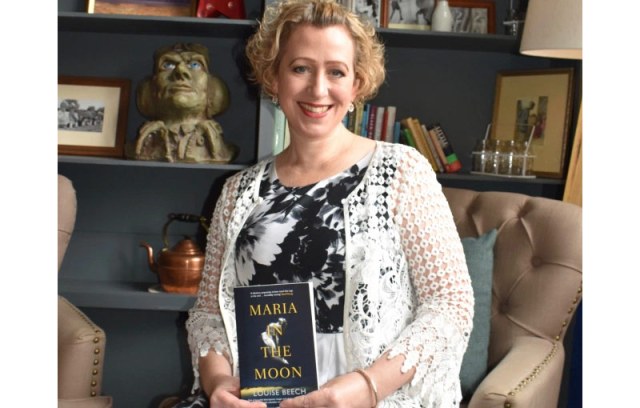
Today, an article all about “How I Got Published” by Louise Beech, which I hope you will agree is a very interesting read. Enjoy!

How did I get a book deal? It’s one of the things I’m frequently asked about at book events and festivals. How did I get published?

Unless the person asking – usually a hopeful writer, like I’ve been most of my life – has five hours, the determination to still keep writing despite my reply, and a pretty thick skin, I can’t respond fully. Time and a desire not to dishearten them prevents me answering in detail. Because my journey was long. Ten years long. People serve less time for serious crimes. It was littered with rejection upon rejection upon rejection. There was no satnav to tell me which way to go so that I arrived more easily at my destination.

There’s no magical right answer to the question of how to get published. Every single author will likely have a different tale to share. Some might have enjoyed a quick trip from writing a first novel to book deal, some may have got lucky with their tenth book, but most are probably still driving down the motorway, looking for the right exit.

All I can share is my story. And here it is. Are you ready?

I’ve been writing since I could hold a pen. I filled notepads and exercise books with entire novels (chapters and contents page included) from the age of nine. Writing was then – and still is – pure joy to me. The place I escape to, the place I feel safest, the only place in the world where I really feel I know what I’m doing, and that I’m doing what I’m supposed to be. As a teenager, I started my own magazine to rival the school one, and told anyone who would listen that I’d one day be a world-famous novelist. (That I’m still hoping for.) Then life took over a bit when I got pregnant at nineteen…

In my early thirties, I sent some pieces I’d written to our local newspaper and was offered my own column, Mum’s the Word, in which I wrote for ten years about being a parent. I also began to write short stories. Lots of them. I sent some out to magazines, entered some in competitions. Rejections came thick and fast. I cried the first time. But only once. I got up, wiped the tears away, and decided I had to improve. I wrote more. Slowly, they began being accepted. First by small ezines, and eventually by national magazines. I shortlisted twice for the Bridport Prize.

That was what gave me the confidence to write a novel. Every bit of advice I’d read suggested a writer hone their craft via the precise art of producing short stories, and by joining forums to gain harsh critiques in order to improve. I’d done both. So, after we flooded in 2007 and I had more time due to giving up work to care for my ill daughter, I started Maria in the Moon. It took me six months. It was a labour of not only love, but of tears. When I write, I give everything, and that can be draining afterwards. I let it ‘settle’ and then edited it some more. Then I sent it out to every agent and publisher. Over a period of a year, every single one of them rejected it.

I took time to recover – it’s hard, there’s no denying it, when your lovingly created work is rejected by everyone – and in 2009 I started a second novel, The Lion Tamer Who Lost. I tried to use all the advice I’d been given on forums, and all the tips I’d read by successful authors, but most of all I went back to the place where I knew I was supposed to be. Writing. Six months later I sent it out to every agent and publisher. They all rejected it.

In 2011, I went back to Maria in the Moon and tried to improve her. I tried a couple of new agents. Success! (Or so I thought.) A lady from United Agents invited me to visit her. Carol really liked it and took me on. She did everything, but – again – all the publishers she sent it to said no. One of them liked the style and asked if I had any more ideas for a novel. I told her about The Lion Tamer Who Lost but she didn’t like it. I mentioned one I had in my head, and she liked the sound of it. So, in 2012, I wrote The Mountain in my Shoe.

She said no. Carol sent it to other publishers. They all said no. Some had positive comments, but the general problem seemed to be what I was. Where I fit. I was that difficult creature – I didn’t fit into a genre. But I refused to conform. When I write I can only write what must be written. I can’t fit into some narrow niche. It isn’t me. But this was only going to make things harder.

Ironically, after being told that not fitting into a genre would hinder me, in 2013 I started the novel that was my most unusual and hardest to define – How to be Brave. This was one book that refused to kowtow to any market. I knew this would be my hardest sell, and yet I had to write it. Just as I finished, Carol told me she was retiring. She did everything to try and secure me another agent, but no one was interested. I was on my own again. I had written four books now.

I sent How to be Brave to every agent and publisher. They all said no. At the end of 2014 it shortlisted for a big competition. This is it, I thought. The prize was a book deal. And I was going to win. I wore my lucky red dress, told husband Joe that I knew someone in a red dress was going to win. We arrived at the prize-giving and another writer had on a red dress. She won. I was genuinely happy for her, because I knew how happy she must be. But I cried all the way back to the hotel. I was inconsolable.

I’ll admit, that was the hardest time. Friends asked how I could go on writing in the face of constant rejection. I said I did because I knew one day it would happen. I really did. But I began to lose my faith a little. I began to wonder if I could write a fifth book and go through it all again.

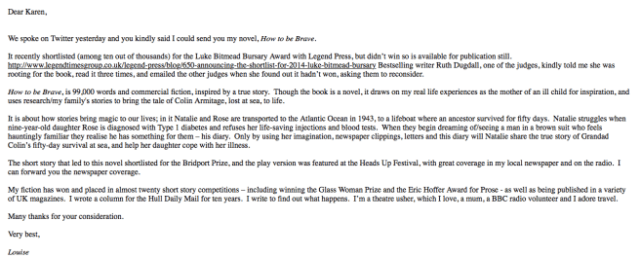
Then on Twitter I saw that a vivacious woman called Karen Sullivan was starting up Orenda Books. She wanted to publish beautiful books. Books she loved. I cheekily (this goes against all professional advice, folks!) tweeted her and asked if she would read How to be Brave. She said yes. She and slush reader Liz liked it. I had a tense wait for a definite answer, between Christmas 2014 and February 2015.

Louise Beech screen-shot-2017-07-03-at-11-11-45

Then on 9th February 2015 Karen emailed to say she loved the book, and of course it was a yes. I think, having read my journey, you can imagine how I felt. It makes me teary now to revisit. I know now that I only got rejected because I was supposed to be with Karen. She’s the only one who ‘got’ me. Got my books. Two years on, she has published the other novels no one wanted. Next year she will publish The Lion Tamer Who Lost too.

And I’m back to do doing what I love, but without all the tears. Writing. I’ve started book five, loosely titled Star Girl. And it’s exactly like when I was nine and filled notepads with words. It’s where I’m supposed to be. What I’m supposed to be doing. And I’m glad I never gave up.

Via: https://louisebeech.co.uk/2017/07/03/how-i-got-published/

Writing Prompts: Perspective

writing-prompt-perspective-shoes

Perspective is an essential part of writing, and as well-known piece of advice is to always “write what you know”. But if we followed this idea we would miss out on a lot of great stories (not just from genres like sci-fi and fantasy, but stories written in other times, settings, or countries).

This writing prompt is about breaking the rules and immersing yourself entirely in another space and time to gain new perspectives, even when you have no solid real life experience.

Think outside your square

Imagine a character that lives in a country or city you’ve never visited, and then choose a time period that is either past or future, but not present. You don’t necessarily have to know historical or geographical details of this time and place, and it’s probably better if you don’t.

Write a few paragraphs or a short story that takes place in this completely unknown world. Don’t worry about being factually correct because this writing prompt is only designed to put yourself in someone else’s shoes, and whose shoes they are doesn’t really matter.

Using your imagination and general knowledge to create something new in a story-world that is alien to you will get you used to seeing from other perspectives which will help you in your own work. Whether you’re writing for the opposite gender or writing something set in the 1800’s, you have to be able to re-create and re-imagine something you’ve never really known.

We can never have complete personal experience of every time and setting, so why restrict ourselves to stories that we ‘know’?

Happy writing!

Via: https://writersedit.com/weekly-writing-prompts-23/


20 Books That Should Be On Your Radar: June 2017

books-radar-june-2017

Every month, the Writer’s Bone crew reviews or previews books they’ve read or want to read. This series may or may not also serve as a confessional for guilty pleasures and hipster novels only the brave would attempt. Here are their recommendations for June 2017:

  1. The Force By Don Winslow
  2. Killers Of The Flower Moon By David Grann
  3. The Light We Lost By Jill Santopolo
  4. Mom & Me & Mom By Maya Angelou
  5. Exit Strategy By Steve Hamilton
  6. The Bright Hour By Nina Riggs
  7. The Immortal Irishman By Timothy Egan
  8. American Bang By Doug Richardson
  9. Apollo 8 By Jeffrey Kluger
  10. Wedding Toasts I’ll Never Give By Ada Calhoun
  11. Girl At War By Sara Nović
  12. Evicted By Matthew Desmond
  13. Trajectory By Richard Russo
  14. She Rides Shotgun By Jordan Harper
  15. The Story Of My Teeth By Valeria Luiselli
  16. Goodbye, Vitamin By Rachel Khong
  17. There Are More Beautiful Things Than Beyoncé By Morgan Parker
  18. The Animators By Kayla Rae Whitaker
  19. White Fur By Jardine Libaire
  20. IQ By Joe Ide

Click on the links above for a detailed synopsis of each book, or follow the following link to see what the Writer’s Bone crew had to say: Books-that-should-be-on-your-radar-June-2017

The Costa Short Story Award

In 2012 the Costa Short Story Award was launched, given to a single story and not voted for against the other categories. The public votes for the winner from three shortlisted stories selected by five judges and published on their website.

All shortlisted stories are available on this page to download and either listen to or read. The judges may also select an additional number (up to six) of Highly Commended authors each year. Those authors are notified and their details released once voting has closed.

The 2017 Costa Short Story Award

This year’s Short Story Award is open for entry from Monday 3rd July to Friday 4th August. Follow this link to enter, find details of terms and conditions, and more: http://www.costa.co.uk/costa-book-awards/costa-short-story-award/

Good luck!

This Is What Disabled Looks Like: Living With An Invisible Disability

AngelaClarke-disability

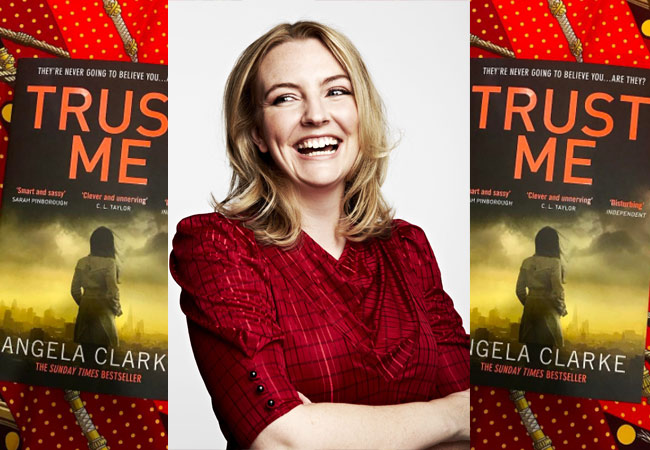
Angela Clarke is a crime novelist, who also happens to have an invisible disability. Today, on Writer’s Blog, I wanted to share this important article she has written to highlight the plight being suffered by many people who also have disabilities that you cannot obviously see. Let it serve as a reminder that we should not judge a book by its cover!

The young woman twiddled her Edinburgh Festival staff lanyard and gave a loud, frustrated sigh. She was no more than 21, we were three-quarters into the August arts festival that colonises Scotland’s capital annually, and I could tell she’d had enough of unreasonable requests. Except I hadn’t made one.

Arriving to see a play based on Jurassic Park (if you don’t know the Edinburgh Festival, this is towards the normal end of the programme), I’d discovered the venue was up five flights of stairs. It happens. There are over 10,000 performers sprawling across the capital and it’s impossible to research every venue when you’re packing in five shows a day. No biggie, I just asked if there was a lift.”There is, but I’ll have to ask if you can use it,” the woman replied, before speaking into her walkie-talkie. “Wait here. I’ve called for the manager,” she added.Time ticked towards curtain up, and my friends were looking nervous.

“Can I just go in and use the lift myself?” I said hopefully.

The girl scowled at me.

I told my friends to go. My husband waited with me.

“Is anyone actually coming?” I asked the girl again.

“The disabled entrance opens directly onto the stage,” she replied as if in answer.

With a minute ’til the show started, I sent my husband running up the stairs to catch it. My door guard was still huffing and puffing. I knew what was coming. I’d had this before. Her whole reaction had been as if I were asking for something outrageous. With a triumphant look, she said, “You’ve missed the show. No late admittance.”

“I’d still like to speak to the manager,” I said, feeling myself blush. Alone on the street, I didn’t feel so confident asking for my rights.She gave me a long look up and down. I’m 35. I was wearing Zara denim cut-offs and a Marc Jacobs jumper (sale bargain). My hair is highlighted, and I’d blow-dried it. I wasn’t wearing much makeup but my nails were gel manicured. She thought I was a diva. A Mariah Carey wannabe who didn’t do stairs. Some kind of blagger. She raised an eyebrow and with pointed emphasis said, “Can I ask exactly what is wrong with you?”And I felt sorry for her. “I have a degenerative connective tissue disorder that, among other things, means I injure and dislocate easily, and my mobility is compromised. I find stairs very difficult.”

A FEW WEEKS AGO, A BARMAN REFUSED TO GIVE ME A KEY FOR THE DISABLED TOILET UNLESS I PRODUCED MEDICAL PROOF IN FRONT OF A PACKED PUB. SERIOUSLY, WHO THINKS HAVING A GO IN AN ACCESSIBLE TOILET IS A WINNING SCAM?

The moment the word ‘degenerative’ came out of my mouth, her face fell. She was mortified. She’d made a wrong assumption about me. She was young, she didn’t know better. It’s possible she’d never met anyone like me. Or more likely she had, and never realised. I am one of the 11 million people in the UK estimated to be living with a limiting long-term illness, impairment or disability. There are no statistics on how many of those 11 million have an invisible condition – the term used to describe a wide spectrum of hidden disabilities or challenges that are primarily neurological in nature. But based on similar data studies carried out in the US, we could estimate that 74% of those who live with severe disability do not use either a wheelchair, a walking stick or a cane. In other words, they, like me, often don’t have a visual “tell” that they are disabled. And that is at odds with what many people think someone with a disability looks like.

The Edinburgh Festival worker wasn’t the first to treat me as if I were trying to cheat the system. It happens all the time. Just a few weeks ago, a barman refused to give me a key for the disabled toilet unless I produced medical proof and history in front of a packed pub. (Seriously, who thinks blagging a ride in a lift and having a go in an accessible toilet is a winning scam?) People may think they’re doing a good thing – protecting services for those who they believe truly are disabled – but it’s time for greater awareness. It’s humiliating to have to share personal information just so you can pee. It marks you out as ‘other’. People look at you differently. You quickly become someone to pity, when all you wanted was a glass of wine and a whizz. Able-bodied people aren’t required to give intimate details about their health in front of strangers. Why should I have to justify my need to use a disabled bathroom or the lift? If someone has gone to the bother of queuing at a bar to ask for a disabled toilet key, as opposed to just nipping downstairs to the main toilets, chances are there’s a reason. You shouldn’t be made to feel as if you’re taking the piss when you’re simply trying to go for one.

NEWSFLASH: DISABLED PEOPLE AREN’T SOME DICKENSIAN THROWBACK STEREOTYPE. WE’RE CLEAN, WE TAKE PRIDE IN OUR APPEARANCE, WE LIKE GOING OUT FOR A DRINK AND A LAUGH.

As disability cuts are rolled out, and politicians talk in the rhetoric of “strivers” and “skivers”, there’s an increasing sense that those with disabilities are only ever a drain on society. In 2015, an open letter from Sam Cleasby to a woman who tutted at her using a disabled toilet went viral. Sam is a glamorous 33-year-old who suffers from the invisible condition ulcerative colitis and wears a j-pouch bag that collects faecal matter. In the same year, Corinna Skorpenske’s online response to this note left on her car went viral: “You should be ashamed!! When you take a handicap spot an actual disabled person suffers!” Corinna was with her 16-year-old daughter, who has the invisible but debilitating and painful condition lupus, which severely restricts her mobility. This was the third anonymous note Corinna had received.

Anyone with an invisible condition will recognise this attitude all too well. The reason the Edinburgh Festival worker couldn’t get her head round me being disabled is the same reason why people doubted Sam Cleasby, Corinna Skorpenske’s daughter and countless other sufferers of invisible conditions across the country. People expect those who are disabled to look like victims. Newsflash: disabled people aren’t some Dickensian throwback stereotype. We’re clean, we take pride in our appearance, we also like going out for a drink and a laugh. We have careers, deadlines, lives, loves, and family. We look just like you. Living with an invisible disability throws up enough challenges; don’t let your attitude be one of them.

***

Angela Clarke’s new book Trust Me is out now. You can get your copy here.

Via: http://www.refinery29.uk/amp/invisible-disability

Writing Prompt: Love Without Cliché

writing-prompt-love

It’s hard to escape that most talked-about and often clichéd theme: love. It’s a fundamental part of many stories, whether it’s love between people, love for a thing, or love that was lost.

But how do we approach the topic of love in our writing without sounding sappy or following too closely in the footsteps of the many authors who have written about ‘love’ before us?

This writing prompt is about battling the clichés and writing something original.

Write a scene where two characters show love for each other.

Sounds simple enough, right? Here are the rules:

  • Set your scene somewhere completely unromantic (the dump, a fish market, a funeral – it’s up to you).
  • You cannot use the words, ‘love’, ‘beautiful’, ‘overwhelming’, ‘heart’, or ‘butterflies’.
  • You cannot use a ‘love at first sight’ or ‘let’s make love’ plot (keep it PG-13, people!).
  • Avoid clichés at all costs!

Writing about love (and making it sound sincere rather than silly) is a difficult thing, so cut out the clichés and broaden your imagination.

Happy writing!

Via: https://writersedit.com/weekly-writing-prompts-16/