Not today, thank you!

Why is it that no matter how hard you try ‘life’ always seems to want to get in the way? I am a writer, I’ve told everyone that is what I am doing all day, every day. Yet somehow that never seems to mean anything to anyone but me. I don’t have a proper job so I must be doing nothing or sitting on my ass watching TV all day!

Admittedly, there are times when I watch TV to give my brain a little break whilst I’m eating lunch, but the majority of the time I am actually busy. I might be writing or editing, reading, researching something for my book or working on the plot or characterisation. I might even be interacting on social media or updating my blog. But I am certainly not ‘free’ or busy doing nothing!

So why is it that when I say ‘I’m busy’ people think that is code for ‘I’m not really busy, I’m just saying I am because I’m otherwise unemployed!’ and feel the need to invite themselves around for coffee or suggest doing lunch to give me something to do, because let’s face it – you’re just saying you’re busy aren’t you?!

I find life so frustrating sometimes. All I want is to be left in peace with my computer and my imagination, and perhaps a bottomless cup of hot coffee, so that I can allow my creativity to flow from my fingertips uninterrupted. Yet that always seems to be too much to ask. There are endless people (usually the same ones on a loop) vying for my attention. I don’t mean to be selfish, I do want to see you, honestly I do, but I just need some time to myself right now. Just for today. Please. So if it’s not too much trouble, and it won’t put you out, then no, not today, thank you!


© Abigayle Blood

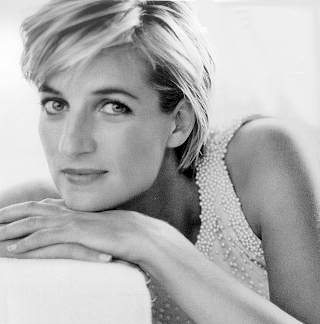
Diana the movie: a tragedy for strong women!

Image

When I first heard that there was a new biographical film being made about Princess Diana’s life I expected a compelling, powerful story about a British female icon. I could not have been more wrong. Instead, we have some flimsy love story with Diana given the leading role as the typical helpless female in need of rescue. Somehow even a woman like Diana, who is well known for all the amazing things she accomplished, has been transformed into nothing more than a weak puppy-dog desperate for love.

What is it about strong women that filmmakers are so afraid of? Are we not allowed to know our own minds, have the courage of our convictions and be independent enough to accomplish our dreams without the aid of a man? We aren’t all damsels in distress desperate for a male hero to save us with happy-ever-afters. Diana was proof of that. She did charity work, helped the sick and dying, worked with the homeless, drug addicts and the elderly. She campaigned against the use of landmines and influenced the signing if the Ottawa Treaty. She did all this in spite of her divorce from Prince Charles and the way she was treated by the Royal Family, effectively becoming a single mother with two young children. She was constantly battling the press and public opinion on what she should and should not be doing, thinking, saying… and so on. Yet she died a strong independent woman that would not be told what to do or how to live by anyone.

I am so frustrated that a woman as iconic as Diana, historically known for her strength and charisma in the face of so much adversity, has been reduced to a pathetic ‘Mills and Boon’ character; that such a powerful woman of our time has been subverted into a non-threatening fiction when she could have (and should have) been so much more; this is a tragedy for both female-empowerment and for Diana’s legacy – a car-crash of a movie that should never have been made!

Literary Quotes (Part 1)

“Write the kind of story you would like to read. People will give you all sorts of advice about writing, but if you are not writing something you like, no one else will like it either.”
Meg Cabot (via writingquotes)

“A book is really like a lover. It arranges itself in your life in a way that is beautiful.”
Maurice Sendak (via bookmania)

“I am profoundly uncertain how to write. I know what I love and what I like, because it’s a direct passionate response. But when I write, I’m very uncertain whether it’s good enough. That is, of course, the writer’s agony.”
Susan Sontag (via ilivetowriteandinspire)

“We all know writing is a reclusive, lonely endeavour. It just is. But nobody writes alone.”
Iain Reid (via writingquotes)

“Number one rule for fiction: Coincidence can be used to worsen a character’s predicament, but never to solve his problems.”
Vivian Vande Velde (via writingquotes)

“A book is the most effective weapon against intolerance and ignorance.”
Lyndon Baines Johnson (via samswish)

“There is no friend as loyal as a book.”
Ernest Hemingway (via tumblerete)

“Many a book is like a key to unknown chambers within the castle of one’s own self.”
Franz Kafka (via silencemadenietzschecry)

“Words can be like X-rays if you use them properly — they’ll go through anything. You read and you’re pierced.”
Aldous Huxley, Brave New World (via onesunnycloudyday)

“Start writing, no matter what. The water does not flow until the faucet is turned on.”
Louis L’amour (via writers-conflict)

Not all writer’s block is created equal

Writer’s Block
writerstips:

Not all writer’s block is created equal..

1. The Mental Block
This is when you get trapped by your own thinking. To help this form of block go do/watch/see something new, take a break, and ask yourself “what if”. What if your character did something else? What if this event didn’t happen or is something else happened instead?

2. The Emotional Barrier
You may be uncomfortable with something you are currently writing. Or maybe you are scared about how this will reflect on you, what you will learn about yourself, or feel your subject matter is embarrassing or weird. A good way to deal with this kind of block is just to write through. Push yourself to new limits, open yourself up to new options and horizons. It will help take your work to new depths.
“It’s like getting into a cold swimming pool — you can dive in head first, or inch your way in. Either way, it’s going to be bone-chillingly cold. But once you’ve got over the initial shock, done a few lengths, and got into the flow of it, you may be surprised to discover how invigorated you feel.” – MarkMcGuinness

3. Overwhelm
A block may come from having too much, instead of too little. Maybe you feel paralyzed by too many ideas, options, and obligations. To help this type of block, I recommend simplifying. Keep a journal to store excess ideas and get them out of your head. Then focus on the core of your story. You can always add things during revisions.

Whatever the type of writer’s block you experience, the important thing is to just keep at it until you break through it. Don’t give up. Keep writing!

Self-editing tips for writers

Strengthen Your Writing With Three Self-Editing Tips
writersfriend:
by Melinda Copp

The English language, like mathematics, has rules that make your message clear and understandable. In today’s era of e-mail and text communications, some may feel the rules of communication are largely unimportant as long as one gets the message across. But we know from verbal communication that how one says something is often as important, maybe even more important, than the actual words being said.
When you want to ensure your written communications are professional and clear, knowing the following three self-editing tricks can enhance your prose.

1. Check Your Commas
One piece of punctuation that frequently trips up even the best writers is the comma. While the comma has many different rules and uses, one of the most helpful is this: don’t use a comma if two sentences divided by a period will do. Make a statement. End the sentence. Following this rule will help you avoid run-on sentences and keep your writing simple and easy to read.

2. Simplify Your Sentence Construction
Grammar rules are difficult to understand, even for English students. But knowing what a strong sentence looks like, and then not straying far from that construction, can be helpful.
Every sentence has nouns and verbs. For example, consider three parts of the sentence, “The boy runs to the store.” The most important part is the verb, or action word, “runs.” The other two parts are both nouns. “Boy” is the subject, the thing doing the action, while “store” is the object, the thing being acted upon. In effect, this structure amounts to noun, verb, noun, or “a something does something to something.”
An easy way to figure out if a sentence is strong and active is to make sure the answers to the following three questions are clear in the way your sentence is constructed:
• What is being done? 
• Who or what is doing it? 
• Who or what is it being done to?
Now consider this sentence: “It is the boy who ran to the store.” It has the same three parts from the first example. “Boy” is the subject. “Ran” is the verb. And “store” is the object. However, it has extras words that weaken the sentence’s meaning: “who,” “it,” and “is.” And adding these words broke away from the “a something does something to something” model, weakening the overall effect.

3. Activate Your Verbs
Another important rule is use the imperative verb form rather than the form with the suffix “-ing.” The imperative form is a verb’s un-conjugated form. For instance, “to deliver” is the imperative root of “delivers,” “delivered,” “will deliver,” and “delivering.” In many cases, “-ing” verbs are a sign of a weak or awkward sentence.
Now consider the sentence: “The boy runs to the store delivering apples.” While the sentence is not incorrect, the imperative form can be used with a stronger clarifying effect: “The boy runs to the store to deliver apples.”

Self-Editing Your Writing
Although it always helps to have your work professionally edited, you can use these tips to eliminate many of the grammar and style issues that weaken your writing. These rules make it easy to find unclear sentences and keep your writing active, concise, and professional.

Why aren’t lesbians anyone’s gay BFF?

“This is my gay bestie,” a new acquaintance chirps, pulling forward her homosexual arm candy with the same proud smile one might use to present a great prize. It’s a phrase I hear often in one form of another from almost every straight girl I know. Now that we’re on the winning side of the culture war, gays are faced with a funny phenomena: where once we were shunned, now we are fetishized.

I suppose it’s an improvement, but it’s not equality. How straight people objectify gays is different for women and men: gay men are treated as glittery accessories for any straight girl worth her clutch; lesbians are objectified as non threatening fuck puppets for straight male consumption and ejaculation. Neither role puts emphasis on our humanity, just our utility. It’s like once the mainstream stops wanting to destroy something, they start wanting to possess it. And we, the rainbow-tinged masses, are now in the very strange position of being in demand not for who we are but what we represent.

The modern woman doesn’t just need to have a black friend to be cool; she needs a gay friend to tell her how FIERCE she is. And lucky for her, gays seem far less threatening to white heteros than blacks. So unthreatening straights feel comfortable, nay entitled, to treat and refer to gay people as objects well within earshot. Frankly sometimes I wish straight people were a little more afraid of gays. It would make them less annoying. The role of GAY BFF has fallen squarely on the shoulders of gay men, not gay women. I’m super glad about that, but I still can’t help but wonder why? Why does the term “gay BFF” seem to apply only to men?

Original Cindy: Dark Angel‘s Lesbian BFF

dark-angel-7

I suspect there are several reasons that friendship with a lesbian isn’t prized as highly as friendship with a gay man. First, the obvious: gay men are sexually unthreatening. Since lesbians by definition are attracted to other women, straight women might feel less comfortable around us. That reasoning, while flawed, is still acceptable.

As lesbians, we know perhaps more than anyone how traumatic and uncomfortable attention from straight men can feel; I could never begrudge straight women for not wanting to be hit on by women. That being said, HELLO, honey, like you could get this. Lesbians do sexualize women; it’s fun! However we also share the female experience and are much less likely to put unwanted sexual attention or pressure on straight women than men. Most straight girls I know are pretty chill about the “lesbian thing” but once and awhile I tell a girl I’m gay and she defensively retracts, emphasizing “I’M NOT” as quickly as possible lest I fall for her incomparable charms. My favorite response to that is “Relax I’m only into model types,” which you can totally use if you like. But I digress!

The second reason lesbians aren’t seen as Gay BFF material is that lesbians are stereotypically perceived as being overly masculine, while gay men are seen as overly feminine. And a lot of lesbians do present themselves in a “manly” way (by straight people standards) or possess traits like independence or assertiveness that are traditionally and incorrectly connected with masculinity. But that doesn’t make us straight guy wannabes, and it sure as hell doesn’t mean we can’t appreciate a good sale.

Before I came out, I was very much a girl’s girl. I’m still a girl’s girl, but it’s different to be a girl’s girl when you like girls because you’re no longer exactly one of the girls. I’m not going to commiserate about how CONFUSING men are (they seem pretty simple to me) or how HARD it is to find the right man (how could it be so hard there’s an insane amount of them). We can’t all go to the club and mack on cuties because my kind of cutie has a booty and hangs out at a different club (those gay clubs straight girls go to when they just want to DANCE and be worshiped like in Sex and the City). Before I came out, I didn’t notice how important men are to female friendships. Now I feel like a walking Bechdel test, and no one likes a test.

Leslie Shay is Dawson’s LBFF/Dawson is Shay’s Straight BFF on Chicago Fire

The third and final reason lesbians aren’t in demand as gay men for the role of dazzling arm adornment is simple; lesbians aren’t perceived as being very much fun. Unless we’re having sex with each other and therefore catering to the male gaze, our utility is diminished. We’re man-hating uber feminists who secretly want to be men. We exclusively wear plaid and Kmart jeans. Our sole means of entertainment is playing with our dozens and dozens of felines. Basically, by rejecting the odious embrace of men, we’ve been cast in the role of “miserable spinster” by a society that prizes male attention above all other.

This is unfortunate, because the lesbians I know get rowdy. We drink, we smoke, we have awesome hair, our clothes are carefully curated to express that certain je ne sais quoi that will lure women to our side. The lesbians I know bare little resemblance to the haggard debs looming large in the minds of American culture. We’re not accessories, but we’re still treated as two-dimensional objects rather than complex individuals in our own right.

Continue reading