Writing Advice & Coffee With My Friend, Peter James

Whilst attending one of the many literary festivals I go to annually, I was fortunate enough to meet and talk to bestselling author, Peter James. I discovered that not only is he a fine and well-loved author, but a genuinely lovely bloke who also happens to live not too far away from me.

So, I cheekily asked him if he fancied catching up sometime for a coffee in order that I could pick his brain about writing. He smiled and said he would love to, which was both surprising and amazing in equal measure. It certainly was not the response I expected, I was gobsmacked. This famous bestselling author, who I rather admired, was willing to take time out of his busy schedule to have a coffee and chat with little old me. Somebody pinch me!

Afterwards, I wondered whether it would really happen. I’m not big and famous (yet, lol) and so I found it hard to believe, but sure enough, true to his word, we met up shortly after this festival for coffee (see photo evidence above for proof!) and he gave me some wonderful writing advice.

I’m privileged to share it with you now………


Peter James on Writing

Tips and Advice:

  • Have an end goal: Set arbitrary deadlines to keep you on track.
  • Set writing targets: So many pages a week, so many words a week. Whatever suits you best.
  • Have a routine: Write at the same time every day. Protect your writing time.
  • Create the right environment: Have a little ritual to get you in the zone. (He likes a vodka martini, very James Bond!)

Writing Process:

Peter writes the first 100 pages or so, editing as he goes. Then he does a read through to see if he’s happy with it. He has a team of readers who check it and tell him what they think. If it works, then he finishes the manuscript. If not, he makes the necessary changes.

He has a regular routine, doing 2 hours a day, 6 days a week. He starts at 6pm, as this is when he works best. It usually takes him 6 months to produce the final draft of a book this way, before it’s edited by his publishers.

PETER’S TOP TIP: Know your ending! Have in mind where you think you’re going so that you can get there. If it helps to do an outline, do that. Then you have a destination in mind, rather than not knowing.

An Insight: How he got started

Peter was always into stories, like me. He wanted to write a book and decided to give it a go, writing 3 spy novels, which didn’t do well. Then someone said to him, ‘write what you know’. He happened to have lots of police friends and this inspired him to write about that, which is how the idea for Roy Grace started. One of these police friends became the real life inspiration behind Roy Grace, and that person will review each book to ensure it is accurate and believable.

Peter does a lot of research. He uses many real life inspirations from cases and people. He also likes to pose the question of ‘what if?’ For instance, his first novel Dead Simple was inspired by the question: ‘What if someone played the worst prank ever on you (buried you alive) and then they all died?’ (If you haven’t read it, I highly recommend it. It is one of the most compelling books I’ve ever read. Find it here.)


Latest Book In The Series: The Hawk Is Dead

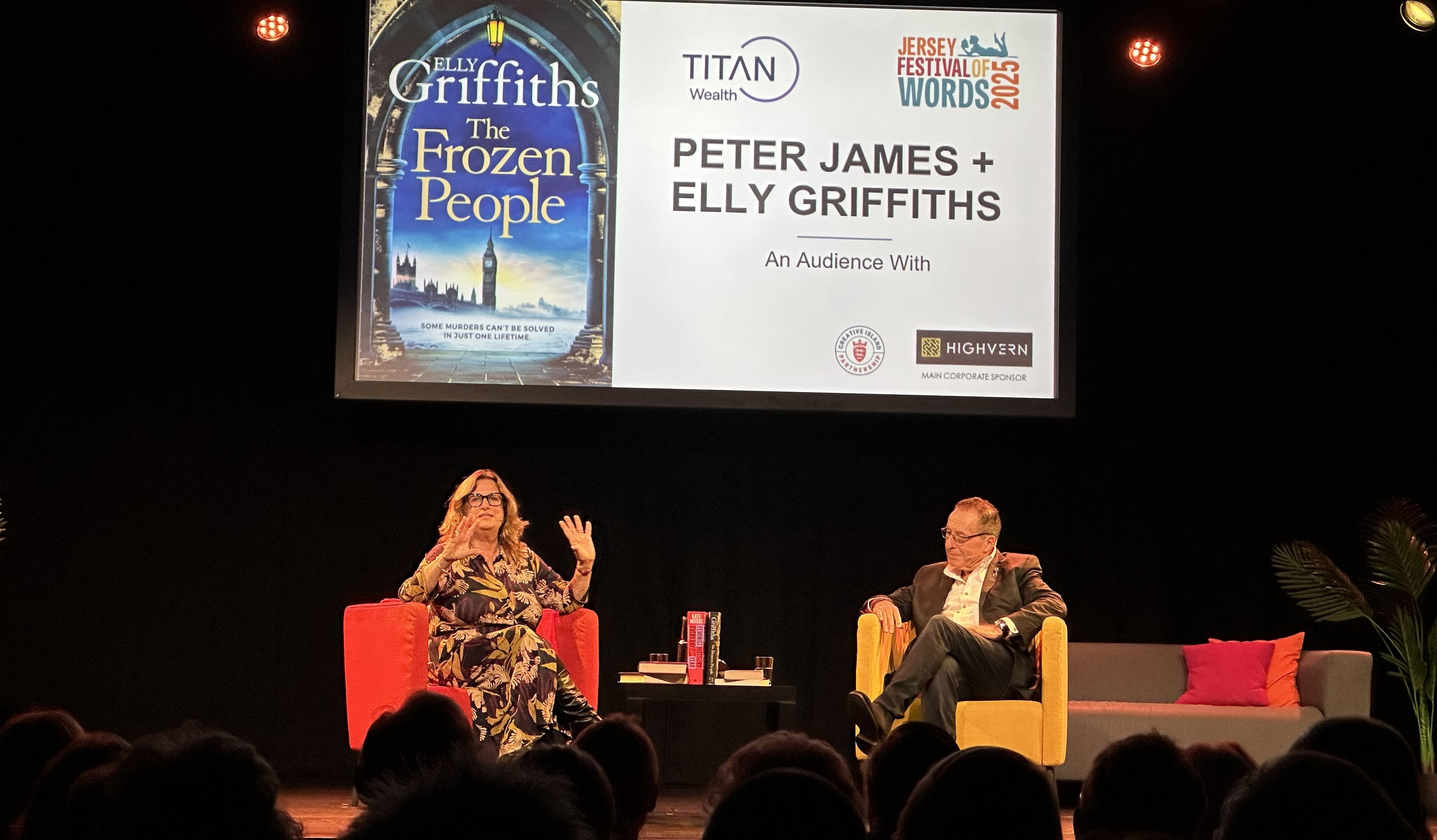
Peter discussed his latest book in the Roy Grace series at a local Festival of Writing event, whilst in conversation with the delightful Elly Griffiths (another fantastic and highly recommended author, you can check out her latest book The Frozen People here).
Apparently, it all started when Peter found out that he was Queen Camilla’s favourite author. He went over to introduce himself at a local event at her bequest. They struck up a conversation in which Peter suggested it would be wonderful if Buckingham Palace became the setting for a Roy Grace novel and, of course, Queen Camilla loved the idea. And so, a new Roy Grace adventure was born.

Peter wrote the first draft and sent it to Queen Camilla for her feedback. Suffice to say, she adored it.

The Hawk Is Dead was released today and is available to purchase via the link below.

The Blurb:

Roy Grace never dreamed a murder investigation would take him deep into Buckingham Palace . . .
Her Majesty, Queen Camilla, is aboard the Royal Train heading to a charity event in Sussex when disaster strikes – the train is derailed.
A tragic accident or a planned attack?
When, minutes later, a trusted aide is shot dead by a sniper, the police have their answer.
Despite all the evidence, Roy Grace is not convinced The Queen was the intended target. But he finds himself alone in his suspicions.
Fighting against the skepticism of his colleagues and the Palace itself, Grace pursues his own investigation. But when there is a second murder, the stakes rise even higher, and Grace is at risk of being embroiled in a very public catastrophe – and in mortal danger.
Failure at this level is not an option. But time is running out before a killer in the Palace will strike again . . .

Roy Grace is back with his most difficult case yet in the gripping new installment from number one bestselling author Peter James. BUY IT NOW HERE.

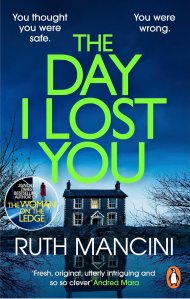
Book Review: The Day I Lost You by Ruth Mancini

The Blurb

‘I need to report a crime. My baby has been stolen.’

All Lauren wants is a new life in Spain. She’s suffered an unimaginable loss, but at last she has found a home in the pretty seaside town of Mantilla de Mar. Everyone deserves a new start, and Lauren needs to put her past firmly behind her.

Hope has everything: an interesting career as a therapist, an attractive husband, a dream home in the countryside – and, finally, the baby she always longed for. Sam. Her beautiful boy.

But Sam has gone missing.

So when the police tell her that a woman has been found in Spain with a child matching Sam’s description, Hope thinks that her nightmare might be coming to an end.

But Lauren is insisting Sam is her baby. She even has his passport and birth certificate to prove it.

So what really happened to Baby Sam? And who still has secrets to hide?

One child. Two mothers. And a past that won’t let them go.


The Review

The follow up to The Woman On The Ledge, this book promised to be an exciting read, and it doesn’t disappoint. From the first page, you are catapulted into the world of Lauren, a woman with a child that someone else claims is theirs, stolen from them in the dead of night.

A twisty tale begins. Two women, both claiming the little boy, Sam, is theirs. The hint of an affair. Is this a surrogacy gone wrong or is it something darker. It is hard to say more without giving it all away. But it is clear that both women have suffered loss and trauma. Both unreliable narrators to their stories. A legal battle ensues for rights to the child. Who will you root for?

This book is sad and thrilling in equal measure. It hooks you in and won’t let go, leaving you desperate to know how it will all end. I gave it 5 stars and highly recommend it as your next read!

You can get it now here: The Day I Lost You

#TheDayILostYou


About the Author

Ruth Mancini is an author and criminal defence lawyer. Her background as a solicitor adds authenticity to her crime and psychological fiction. She has spent two decades representing those accused of crimes, navigating courtrooms and police stations. Her storytelling prowess and legal background combine to create thrilling reads that will keep you guessing until the very end. Ruth was born in London and now lives in Oxfordshire with her husband and two children.

Book Review: Committed by Chris Merritt

The Blurb

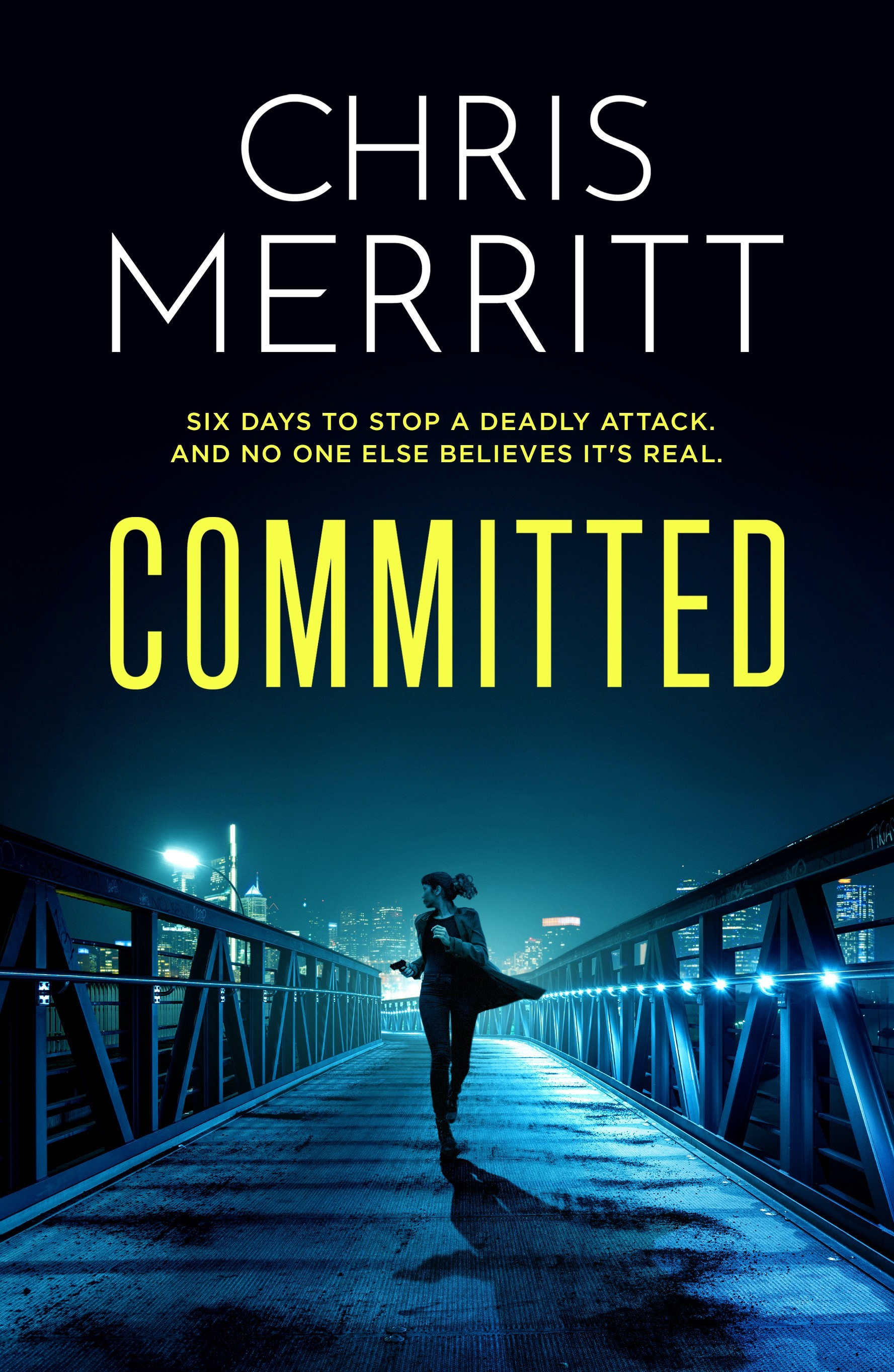
Six days to stop a deadly attack. And no one else believes it’s real.

Former CIA undercover operative Ellen McGinley is battling to overcome PTSD when she stumbles upon a domestic terror plot. The deadly attack is due to take place in six days and will strike at the very heart of her homeland.

For Ellen, it’s a chance to find redemption for her greatest mistake – one she will never allow herself to forget.

But no sooner than she alerts the authorities, she finds herself diagnosed as delusional and locked in a psychiatric ward. No one believes her story.

She’s the only one who thinks the danger is real, which means she’s the only one who can stop it.

Ellen must draw on all her old skills to escape, stay alive, protect her family, and find those responsible – before all hell breaks loose.

Committed is the propulsive thriller you won’t want to miss this summer. Perfect for fans of Lee Child, David Baldacci, JB Turner and Robert Dugoni.


Author Quotes

‘Very well done – tight action and a smart central character.’  – Anthony Horowitz

A blistering, heart-pounding, edge-of-the-seat, adrenaline rush of a read. Absolutely outstanding and without doubt the best book I have read this year.’  – Carol Wyer


The Review

This blistering plotline takes off right from the first page and doesn’t let up. Ellen is smart and sassy, and you spend the whole novel routing for her to make it and foil the terrorists without getting killed – there are moments when you just don’t know which way it’s going to go or how she is possibly going to escape the situation she finds herself trapped in.

The idea that you can be locked up and drugged against your will for your own safety is terrifying. Add that to the knowledge that something horrific is going to happen and no one believes you, and so only you can stop it, and you genuinely are gripped by this book and held permanently on the edge of your seat to the last page. Just when you think things can’t get any more tense, they do. It’s pacey, twisty, and very clever.

I gave it 5 stars and highly recommend it as your next read!

You can get it now on Amazon here: Committed

#Committed

Twitter: @DrCJMerritt


About the Author

Chris Merritt is a clinical psychologist and former diplomat. As a member of the British foreign service, he completed postings in Jerusalem and Iraq. He has also lived and worked in the US. Committed is his eighth novel.

Book Review: Remember Tomorrow by Amanda Saint

Remember Tomorrow Amanda Saint

The Blurb

England, 2073. The UK has been cut off from the rest of the world and ravaged by environmental disasters. Small pockets of survivors live in isolated communities with no electricity, communications or transportation, eating only what they can hunt and grow.

Evie is a herbalist, living in a future that’s more like the past, and she’s fighting for her life. The young people of this post-apocalyptic world have cobbled together a new religion, based on medieval superstitions, and they are convinced she’s a witch. Their leader? Evie’s own grandson.

Weaving between Evie’s current world and her activist past, her tumultuous relationships and the terrifying events that led to the demise of civilised life, Remember Tomorrow is a beautifully written, disturbing and deeply moving portrait of an all-too-possible dystopian world, with a chilling warning at its heart.

The Review

This is a well written and emotive dystopian novel about a bleak future world where everyone is suspicious of ‘the others’ and the darkest parts of history are being relived.

It is clear from the writing that the author has a deep understanding of the world we are currently living in and the dangers our political and environmental damage is doing. Some moments in the book sound spookily accurate and possible in the current climate, and for our immediate future. We should take heed from this if we do not want our planet to end up like the one in this novel.

Evie’s story is compelling. There are a lot of twists and turns, and often you hope for the best whilst fearing the worst. Whilst some parts of the novel are quite dark there is a thread of hope that weaves through the book, which you find yourself clinging to as you read on. An enjoyable and recommended read, with a very topical warning thrown in for good measure!

Author Quotes

“A dystopian future that echoes the present times. A reflection of society in a stark, unforgiving mirror. Unsettling, honest and unputdownable.” Susmita Bhattacharya, author of The Normal State of Mind

“A chilling descent into the chaos that lies in the hearts of men. A searing portrait of a dystopian future where civilisation’s thin veneer has been ripped away, and it is women who suffer most as a result. Excellent.” Paul Hardisty, author of Absolution


Bath Novel Award 2018 Shortlist

BathNovelAwards

And the awards lists just keep on coming!

The Bath Novel shortlist has also recently been announced. Here is what they had to say:


We are delighted to announce The Bath Novel Award 2018 shortlist.

The Bath Novel Award is an annual £2,500 prize for unpublished and independently published novelists writing for adults or young adults. This year’s prize attracted 1,201 submissions by writers in 38 countries worldwide with a longlist of 24 novels announced in May.

2018 has proved to be an exceptionally strong year for novels about displacement and the pursuit of truth. We have feared and cheered for: a young Nigerian housemaid; three London schoolgirls; an escapist boater in Tenerife; Ugandan Asian shopkeepers and a secret team of international literary agents fighting a rewrite of the world.

As all our judges read “blind” we’ll be keeping the shortlistees’ identities under wraps until the winner is announced on September 13th 2018, but in the meantime, many congratulations to the writers of these five standout titles:

  • INKLAND
  • KOLOLO HILL
  • THE AUSPICE
  • THE FURIES
  • THE GIRL WITH THE LOUDING VOICE

The winner of The Bath Novel Award 2018, as judged by Felicity Blunt of Curtis Brown Literary Agency, will be announced at a reception in Bath’s Victoria Art Gallery on September 13th. The winning novelist will receive £2,500 and one longlisted writer will also win a place worth £1,800 on Edit your Novel the Professional Way from Cornerstones Literary Consultancy.

Good luck to all 5 authors!

***

Via: https://bathnovelaward.co.uk/the-bath-novel-award-2018-shortlist/

The 10 Most Expensive Books in the World

Most-Expensive-Books

The astonishing prices people will pay to own a piece of human history…

One Friday in 2012, Christie’s New York auctioned a copy of John James Audubon’s Birds of America, which already holds the title of most valuable printed book in the world, having sold for about $11.5 million in 2010. In fact, according to The Economist, a true list of the ten most valuable single books ever sold would have to include five copies of The Birds of America. Though that sale didn’t break the record, the book still sold for a considerable sum: $7.9 million.

To help you brush up on your knowledge of the very old and very valuable, here is a list of the ten most expensive books ever sold – no white gloves necessary. Look through the overview, and then head upstairs to check your attics for any forgotten dusty tomes – you could be a millionaire and not even know it.

The First Book of Urizen, William Blake — $2.5 million

Originally printed in 1794, The First Book of Urizen is one of the major pieces (and some say the most important) in Blake’s series of prophetic works. One of only eight known surviving copies was sold at Sotheby’s New York in 1999 for $2.5 million to a private collector.

The Tales of Beedle the Bard, J.K. Rowling — $3.98 million

Before this book, meant to be the same children’s book that figures heavily in Harry Potter and the Deathly Hallows, became a mass-market paperback, J.K. Rowling created seven original copies, each one handwritten and illustrated by Rowling herself. Six were given to friends and editors, but in 2007, one of the seven was put up for auction. It was snapped up by Amazon.com for a whopping $3.98 million, making it the most expensive modern manuscript ever purchased at auction. The money from the sale of the book was donated to The Children’s Voice charity campaign.

Geographia Cosmographia, Claudius Ptolemy — $4 million

The world’s first printed atlas, and the world’s first book to make use of engraved illustrations, Ptolemy’s 1477 Cosmographia sold at Sotheby’s London in 2006 for £2,136,000, or almost $4 million at the time.

Traité des arbres fruitiers, [Treatise on Fruit Trees] written by Henri Louis Duhamel du Monceau, illustrated by Pierre Antoine Poiteau and Pierre Jean François Turpin — $4 million

Definitely the most expensive book ever written about fruit trees (featuring sixteen different varieties!), a copy of this lush, five volume set of illustrations and text sold for about $4.5 million in 2006.

The Gutenberg Bible — $4.9 million

A copy of the Gutenberg Bible sold in 1987 for a then-record $4.9 million at Christie’s New York. Only 48 of the books — the first to be printed with movable type — exist in the world.

First Folio, William Shakespeare — $6 million

Though the First Folio’s original price was a single pound (one or two more if you wanted it bound in leather or otherwise adorned), intact copies are now among the most highly prized finds among book collectors, with only an estimated 228 (out of an original 750) left in existence. In 2001, Microsoft co-founder Paul Allen purchased a copy for $6,166,000 at Christie’s New York.

The Canterbury Tales, Geoffrey Chaucer — $7.5 million

A first edition of the 15th century bawd-fest sold for £4.6m (or about $7.5 million at the time) at Christie’s in London in 1998. Of the dozen known copies of the 1477 first edition, this was the last to be held privately, and was originally purchased for £6 by the first Earl Fitzwilliam at the sale of John Radcliffe’s library at Christie’s in 1776. Talk about growing your investment.

Birds of America, James Audubon — $11.5 million

In 2000, Christie’s auctioned off a copy (one of only 119 known complete copies in the world) of Birds in America for $8,802,500. Ten years later, another complete first edition was sold at London at Sotheby’s for £7,321,250 (or about $11.5 million) In 2012, another copy of the enormous four volume went up for auction at Christie’s, and sold for a considerable $7.9 million.

The Gospels of Henry the Lion, Order of Saint Benedict — $11.7 million

Originally commissioned by Henry the Lion, Duke of Saxony, for the altar of the Virgin Mary at the Brunswick Cathedral, this gospel book was purchased by the German government at Sotheby’s of London in 1983 for £8,140,000, or about $11.7 million (at the time). At 266 pages, including 50 full-page illustrations, the book is considered a masterpiece of the 12th century Romanesque illuminated manuscript.

The Codex Leicester, Leonardo da Vinci — $30.8 million

The most famous of da Vinci’s scientific journals, the 72-page notebook is filled with the great thinker’s handwritten musings and theories on everything from fossils to the movement of water to what makes the moon glow. The manuscript was first purchased in 1717 by Thomas Coke, who later became the Earl of Leicester, and then, in 1980, bought from the Leicester estate by art collector Armand Hammer (whose name the manuscript bore for the fourteen years he owned it). In 1994, Bill Gates nabbed the journal at auction for $30,800,000, making it the most expensive book ever purchased. But hey, at least Gates put his purchase to good use — he had the book scanned and turned into a screensaver distributed with Microsoft Plus! for Windows 95.

***

So next time you are cleaning out the loft and you come across a dusty old book, check how much it’s worth before you condemn it to the scrap heap. It might be worth a fortune!

Via: https://www.theatlantic.com/entertainment/the-10-most-expensive-books-in-the-world/


10 Signs You’re A Bibliophile

Row-of-books2

The word “bibliophile” literally means a lover (phile) of books (biblio). The term is often thrown around to refer to people who simply like to read, but in its most precise interpretation, “bibliophile” means something more specific: someone who loves books particularly how they look, how they smell, what they feel like. Of course, most bibliophiles are great readers, collecting (OK, hoarding) books in part because they love the narratives in them.

But they also value books as fascinating objects in themselves, objects with their own stories to tell. These are readers who will never really be satisfied with electronic books – how can a cold iPad screen possibly compare to a tattered, musty, well-loved print book? To find out if you are one of those blessed with (or suffering from, depending on you point of view) bibliophilia, read on.

1. You have both a permanent copy and a loaner copy of your favorite books

Certain books, ones I’ve read over and over since I was a teenager, have enormous personal value to me. Of course, I want to share these wonderful, formative reading experiences with other people. But other people are jerks sometimes! What if I lend a friend a book and she dog-ears the pages? What if she breaks the spine? WHAT IF SHE LOSES IT? So I have my copy, and a loaner copy, and everyone is happy. All perfectly normal, right?

2. You judge other people according to the books they have

Oh, come on. We all do it. Actually, I don’t judge people so much by what books they have as by whether they own books or not. I don’t care what people read, but someone who doesn’t have any books is probably an orc and cannot be trusted.

3. You spend way to much time thinking about book organisation

My books are organized according to an intricate system that is so logical that only I can understand it. Some are alphabetized, some are categorized according to genre, some are ordered by colour. You know what I’m talking about, right?

4. Used books stores fill you with glee

Used books are the best: they’re cheap, they hold the same texts as newer editions, and sometimes you find amazing evidence of past readers – marginal notes, bookmarks, inscriptions. All tiny glimpses into other people’s lives. Bibliophiles can’t get enough of all of that. More, please.

5. You view books as actual home decor

Because they are pretty. Spaces always look more interesting, more inviting, and more homey when they are filled with books.

6. You plan to use them as centerpieces at your wedding (or you already did)

For bibliophiles, books form a major part of one’s personal identity. It’s only natural that you’d want to be surrounded by them on your big day.

7. Your ultimate fantasy is to have a library in your house, à la Belle in Beauty and the Beast

Preferably one with a ladder. And yes, you’re going to swing around the room, gesturing grandly, whatever.

8. You would love to travel far and wide to look at books and the homes of the people who write them

I’ve gone far, far out of my way to visit places like Haworth (home of the Brontë family in West Yorkshire) and Prince Edward Island (home Lucy Maud Montgomery and the Anne books). There is something powerful in seeing where my favourite books were written, and in seeing great authors’ own books. Because, naturally, great writers tend to be bibliophiles themselves.

9. You own multiple copies of the same books

I have at least four copies of Pride and Prejudice, including a battered paperback edition, a fancy leather-bound edition, a critical edition, and an illustrated edition. And they are all completely necessary to my life.

10. You spend crazy amounts of money on rare books

One would have to have crazy amounts of money in order to fulfill this criterion, but I think we can assume that whoever spent $11.5 million on a copy of John James Audubon’s Birds of America is a pretty hard-core book lover.

***

Via: https://www.bustle.com/10-signs-youre-a-bibliophile-because-so-what-if-you-like-books-more-than-people

Announcing The Women’s Prize Winner 2018!

WomensPrize2018 winner

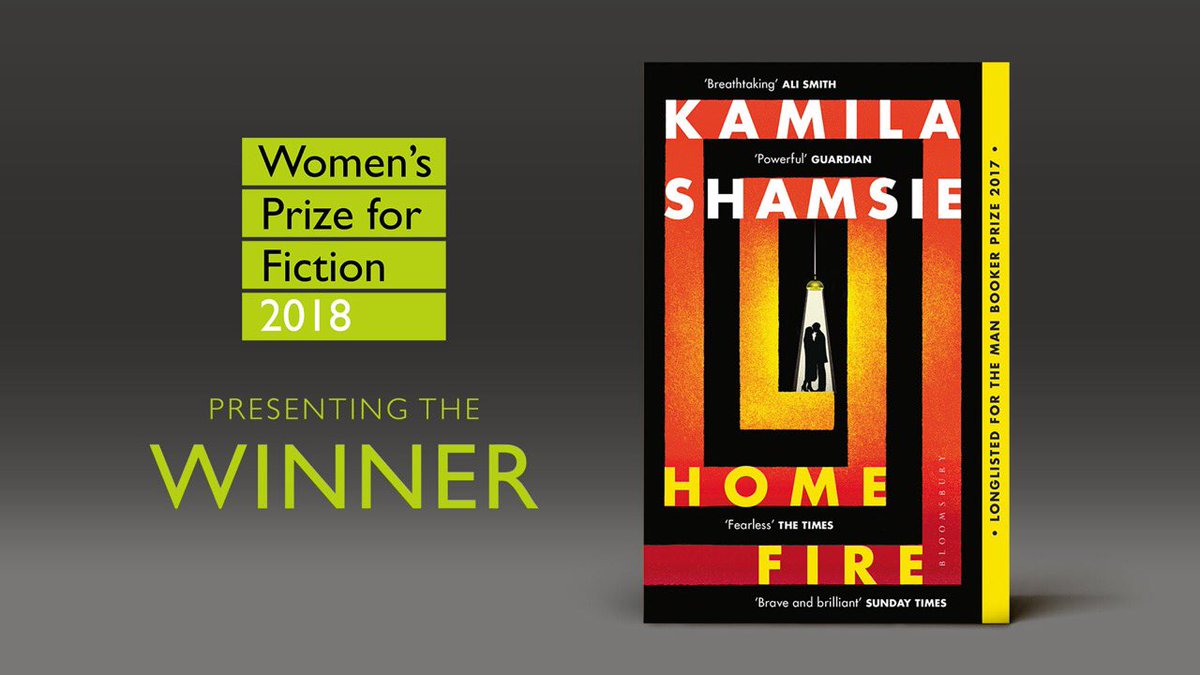
Absolutely thrilled to reveal that Kamila Shamsie has won the 2018 Women’s Prize for Fiction with her seventh novel Home Fire.

At an awards ceremony hosted in Bedford Square Gardens, central London – hosted by novelist and Women’s Prize Founder Director, Kate Mosse – the 2018 Chair of Judges, Sarah Sands presented the author with the £30,000 prize and the ‘Bessie’, a limited edition bronze figurine. Both are anonymously endowed.

The fantastic 2018 Chair of Judges Sarah Sands, said: “This was a dazzling shortlist, it had depth and richness and variety. We were forcibly struck by the quality of the prose. Each book had its champions. We loved the originality of mermaids and courtesans, we were awed by the lyrical truth of an American road trip which serves as a commentary of the history of race in America, we discussed into the night the fine and dignified treatment of a woman’s domestic abuse, we laughed over a student’s rite of passage and we experienced the truth of losing a parent and loving a child. In the end we chose the book which we felt spoke for our times. Home Fire is about identity, conflicting loyalties, love and politics. And it sustains mastery of its themes and its form. It is a remarkable book which we passionately recommend.”

Did Home Fire have your vote? Join in the conversation on Twitter and Instagram

***

Via: https://www.womensprizeforfiction.co.uk/announcing-2018-womens-prize-winner

The Perfect Girlfriend: Book Review

perfectgirlfriend

So, I was lucky enough to attend the book launch for my fantastically talented friend, Karen Hamilton, and pick up a copy of her debut.

I have to say, I have just finished it and it didn’t disappoint.

Juliette is troubled and twisted but absolutely determined to get her man. And as the pieces fall into place you find yourself rooting for her. The plans that she chooses to employ get more and more obscene, and yet when you see the world through her eyes they make perfect sense.

Juliette is calculating, obsessive and ruthless in her quest. She wants to succeed, no matter what the cost, which makes for a gripping and enthralling ride. This is one of those books that I couldn’t stop reading, even into the early hours in the morning, because I just had to know what she was going to do next!

Incredibly addictive, I highly recommend this book for thriller fans.

Happy reading!


Juliette loves Nate.
She will follow him anywhere. She’s even become a flight attendant for his airline, so she can keep a closer eye on him.

They are meant to be.
The fact that Nate broke up with her six months ago means nothing.
Because Juliette has a plan to win him back.

She is the perfect girlfriend.
And she’ll make sure no one stops her from getting exactly what she wants.

True love hurts, but Juliette knows it’s worth all the pain…

There’s a new spate of psychological thrillers in town – where things are mixed up a bit and the main protagonists are not all sympathetic characters stuck in an untenable situation – sometimes the main protagonists ARE the untenable situation as is true with Juliette, the star of “The Perfect Girlfriend” – and what a star she is.

Obsessive – Yes. Brilliantly engaging – Yes. Really quite scary – Yes, absolutely! Also occasionally witty, always focused, and actually has a real beef, Nate isn’t exactly the most reliable or the nicest of men. Still, you know, she wants him back and boy will she do absolutely anything to get him.

Follow Karen on Twitter

Purchase The Perfect Girlfriend

***

Via: http://lizlovesbooks.com/ones-to-watch-in-2018-the-perfect-girlfriend-karen-hamilton/

The Rejection Letters: How Publishers Snubbed 11 Great Authors

books-rejected

After nine years of rejection from publishers, Eimear McBride’s debut, A Girl is a Half Formed Thing, won the 2014 Bailey’s Prize. But the Irish writer won’t be the last to laugh in the face of those publishing houses who won’t take a punt on an experimental or challenging novel.

From Gertude Stein and William Burroughs to recent rags-to-riches writers such as J.K. Rowling and Cassandra Clare, there have been brutal rejection letters to accompany most bestselling novels. Here are extracts from some of them:

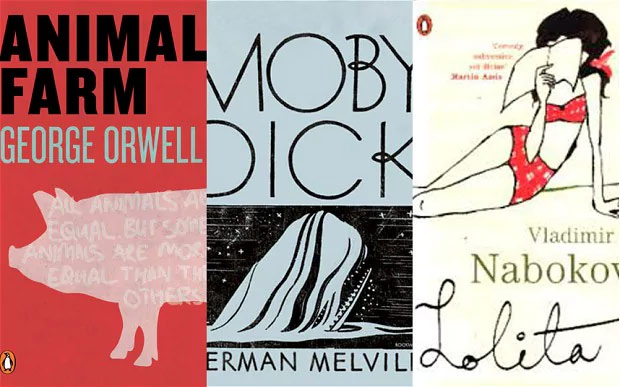
1. “Overwhelmingly nauseating, even to an enlightened Freudian…the whole thing is an unsure cross between hideous reality and improbable fantasy. It often becomes a wild neurotic daydream… I recommend that it be buried under a stone for a thousand years.”

Thankfully, for both Vladimir Nabokov and literature as a whole, Lolita wasn’t buried, but published in France after two years of rejections by New York publishers such as Viking, Simon & Schuster, New Directions, Farrar, Straus, and Doubleday. When Graham Greene got hold of it, shortly after its French publication, he reviewed it in The Sunday Times, describing it as “one of the three best books of 1955”.

Despite this, the novel still wasn’t published in the UK until 1957, because the Home Office seized all imported copies and France banned it. When British publishing house Weidenfeld & Nicolson took it on, it was at the cost of Nigel Nicolson’s political career.

2. “The girl doesn’t, it seems to me, have a special perception or feeling which would lift that book above the ‘curiosity’ level.”

One of the 15 publishers who didn’t think The Diary of Anne Frank was worth reading.

3. “First, we must ask, does it have to be a whale?

“While this is a rather delightful, if somewhat esoteric, plot device, we recommend an antagonist with a more popular visage among the younger readers. For instance, could not the Captain be struggling with a depravity towards young, perhaps voluptuous, maidens?”

Herman Melville’s leviathan novel was rejected, as above, by Peter J Bentley. However, Richard Bentley, of the same London publishing house, eventually offered him a contract in 1851. Moby Dick was published 18 months later than Melville expected and at great personal expense, as he arranged for the typesetting and plating of his book himself to speed up the process. Young, voluptuous maidens never made the final edit.

4. “For your own sake, do not publish this book.”

One publisher turned down DH Lawrence’s Lady Chatterley’s Lover, first published in 1928. Perhaps they had predicted the furore that was unleashed when the full novel did hit the British bookshelves in 1960.

5. “Do you realise, young woman, that you’re the first American writer ever to poke fun at sex”

This was what Anita Loos received before her novel, Gentlemen Prefer Blondes, was successfully published in 1925. It was part of a rejection note, although by today’s standards it sounds quite the accolade.

6. “Miss Play has a way with words and a sharp eye for unusual and vivid detail. But maybe now that this book is out of her system she will use her talent more effectively next time. I doubt if anyone over here will pick this novel up, so we might well have a second chance.”

An editor at Knopf in 1963 rejected Sylvia Plath’s The Bell Jar when it was submitted under the pseudonym Victoria Lucas. After realising it had been written by Plath, who had already published a couple of poetry collections, the same editor read and rejected it again – and managed to spell her real name three different incorrect ways in the process. His assertion that “she will use her talent more effectively next time” is poignant, as Plath had committed suicide six weeks earlier.

7. “You’re welcome to le Carré – he hasn’t got any future.”

A fantastically incorrect prediction by one publisher, sent to his colleague, upon turning down The Spy Who Came in from the Cold

8. “Your pigs are far more intelligent than the other animals, and therefore the best qualified to run the farm – in fact, there couldn’t have been an Animal Farm at all without them: so that what was needed, (someone might argue), was not more communism but more public-spirited pigs.”

The poet TS Eliot, editor of Faber & Faber, was one of the many publishers, including George Orwell’s own, Victor Gollancz, who rejected Animal Farm. When it was published, in 1946, Orwell’s original title, Animal Farm: A Fairy Story was amended.

9. “We are not interested in science fiction which deals with negative utopias. They do not sell.”

Stephen King received this letter about Carrie. His first published novel was rejected so many times that King collected the accompanying notes on a spike in his bedroom. It was finally published in 1974 with a print run of 30,000 copies. When the paperback version was released a year later, it sold over a million copies in 12 months.

10. “I am only one, only one, only one. Only one being, one at the same time. Not two, not three, only one. Only one life to live, only sixty minutes in one hour. Only one pair of eyes. Only one brain. Only one being. Being only one, having only one pair of eyes, having only one time, having only one life, I cannot read your M.S. three or four times. Not even one time. Only one look, only one look is enough. Hardly one copy would sell here. Hardly one. Hardly one.”

So Arthur Fifield, founder of the British publishing house AC Fifield, wrote to Gertrude Stein after receiving one of her manuscripts in 1912.

11. “If I may be frank, Mr. Hemingway — you certainly are in your prose — I found your efforts to be both tedious and offensive. You really are a man’s man, aren’t you? I wouldn’t be surprised to hear that you had penned this entire story locked up at the club, ink in one hand, brandy in the other.”

Mrs Moberley Luger, of Peacock & Peacock, didn’t realise how accurate she was in her 1925 rejection letter of Ernest Heminway’s The Sun Also Rises.

***

So if you’ve been rejected don’t be disheartened, it might be you one day who is able to look back and laugh at the publisher who didn’t want your bestseller!

Happy writing x

***

Via http://www.telegraph.co.uk/The-rejection-letters-how-publishers-snubbed-11-great-authors