What Your Reading Style Says About Your Personality

reading style

If you’ve ever encountered a fellow reader in a classroom or a book club or living in the walls of an independent bookshop, then you probably know that there are many different types of readers. And I don’t just mean that different readers favour different book genres — people can enjoy the same book in very different ways. You might be a highly organized, one chapter per night kind of reader, or you might be the kind of person who picks up a novel and doesn’t put it down until you’ve reached the last page, dehydrated and sobbing. The good news is that there’s no one right way to be a book-lover, so here’s what your reading style says about you.

Of course, most of us dabble in multiple reading styles. When I’m reading a biography, for example, I’ll read a chapter or two during my commute and spend a lot of time thinking quietly about the impact of one individual on the grand course of history. But if I’m reading the latest bestselling fiction thriller novel, I’ll hole up in my room until I’m finished, and then spend a lot of time discussing it with everyone I know until they stop taking my calls.

So check out your these different reading styles, and what they say about you:

1. The Cozy Reader

You don’t even think about cracking open that book until you’ve got your slippers, sweatpants, blankets, and warm drink of choice firmly in place. You like your reading time to be quiet and solitary (unless you have a best friend or significant other willing to cuddle in silence). You’re religious about taking off your pants and/or bra as soon as you get home, your bed is the most comfortable place in the world, you prefer cats to dogs, and you check “interested” instead of “going” on all Facebook invites, just in case you’d rather stay home.

2. The Commuter

You have to take the train/bus/ferry everyday anyway. Why not put that time to good use? You’re a pro at blocking out all sights and smells while you read, and you can balance a book, a bagel, and a cup of coffee while holding onto a pole, wedged between two business bros. You’re not afraid to be judged for the books you read in public, and you’re excellent at making the most of your time.

3. The Speed Reader

You devour books whole. You were always getting in trouble as a kid for reading at the table, or under your desk during class, but all that youthful reading gave you the ability to rip through paragraphs in record time. You feel like you’ve wasted a week if you weren’t able to make it through a single book, and no matter how fast you read it always seems like your TBR list is getting longer. At least once, you’ve started a “new” book, only to realise that you’ve read it before (it’s hard to keep track!).

4. The Book Clubber

When you finish a book, you want to talk about it. You need to talk about it, preferably over wine with people you like. It doesn’t matter if you loved or hated the book, you have opinions to share! If you read a book outside of book club, you might even venture online just to discuss it with someone. You also enjoy bite-sized finger foods, starting debates, and throwing themed birthday parties for your friends/pets.

5. The Digital Reader

You’re all about Kindles and E-readers of every kind. You like having all your books in one place, especially when you travel. You never type when you can speak into your phone, you own real headphones, not earbuds, and you have a strong opinion about the proper pronunciation of “gif.”

6. The Series Junkie

Sure, you’ll read the occasional stand alone book, but deep down you’re a die-hard series junkie. Nothing gets your heart racing like seeing “Book One” on the cover of that new novel you just purchased. You’re enthusiastic and deeply protective of the books and people that you love. You may or may not own several mugs/key chains/candles based on your favourite series, you’ve read at least one piece of fanfiction, and you always display your books in order on the shelf.

7. The Re-Reader

Your favourite books are held together with tape and sheer willpower. You could probably recite Harry Potter from memory. You know that re-reading isn’t for everyone, but you secretly believe that you haven’t really read a book until you’ve read it at least twice. You’re big on posting Throwback Thursday pics, and you’re not afraid to get a little nostalgic about everything from The Baby-sitters’ Club to Furbies.

8. The Slow & Steady Reader

Reading isn’t all about speed. You don’t race to the last page, but you still enjoy a good book. You might leisurely work your way through an 800 page novel over the course of the year, and that’s still quite an accomplishment. You choose your words carefully, but when you speak, people listen (your friends won’t let you pick the restaurant anymore, though, because no one has that kind of time).

9. The Scribbler

Some people call it desecrating a book, but you call it taking notes! When you read, you simply have to underline and highlight and comment on every sentence that strikes you. You’re all about writing in the margins (what else are the margins for?) and collecting quotes. You’ve caught multiple typos before. You jiggle your foot a lot when you try to sit still, you were always the first to raise your hand in English class, and you have extensive thoughts about why that pivotal scene got cut out of the HBO adaptation of your favourite book.

10. The Audio Addict

You have no time for those people who don’t think that audiobooks “count” as “real books.” If you’re walking or cleaning or driving, you better believe that you’re listening to an audiobook. You can read so many more books this way! You have a very active imagination, and you sometimes find yourself daydreaming in your favourite book narrator’s voice.

11. The Book Juggler

Why read one book at once when you could read five? You’re constantly starting new books, and you’re pretty adept at holding multiple plots in your brain at once. You’re a habitual multi-tasker, you bounce between multiple social groups, and your plans are sometimes just a tad more ambitious than you have the time for.

12. The Night Owl

You don’t necessarily plan to stay up all night reading…but here you are at four in the morning, still flipping pages. You’ll go days without picking up a single book, and then read two in one night. You’ll try to stick to one chapter before bed, and wind up reading ten. Something about nighttime just makes it easier to get sucked in! You have a similar problem with binge watching TV shows and eating all the Girl Scout cookies in one sitting, but you’re also a lot of fun when it comes to spontaneous road trips and late night heart to hearts.

***

Via: https://www.bustle.com/p/what-your-reading-style-says-about-your-personality

7 Books That Are More Feminist Than You’d Think

wuthering heights emily bronte

Reading while also being a feminist can be a demoralising endeavor. It feels like for every brilliant piece of feminist writing, there’s an unassailable mountain of misogynistic nonsense (I’m looking at you, Ernest Hemingway). So much of what we read in secondary school literature, for example, is written by white men, about white men, and for white men, and it starts to get exhausting. Can we only read books of essays on feminist theory for the rest of time? Are any other books safe? Well, these books might not change your entire gender-based worldview, but they certainly all have feminist messages buried in there somewhere. Here are a few books that turn out to be more feminist than you’d think.

I mean sure, we can all enjoy the occasional story about hunting lions in Africa with your shrewish wife, but over half of the planet’s population is made up of genders other than men. It’s tempting to give up on male authors entirely and go live underground and/or only read Ella Enchanted on repeat for the rest of your life. But if that’s sounding a little unrealistic, here are a few books that have more to say on women’s rights than you might have guessed:

1. ‘Romeo and Juliet’ by William Shakespeare

Sappy romance between hormonal teens…or secret feminist manifesto? Romeo and Juliet has quite the reputation for being a classic love story, but the way it deals with gender is very nearly revolutionary. Despite being a teen boy, Romeo is the emotional, romantic, sensitive character, who kills himself using poison, which is traditionally a “woman’s weapon.” Juliet, on the other hand, is a thoughtful, logical teenage girl, who has a whole monologue about how excited she is to have sex with her boyfriend, and who stabs herself to death in a very traditionally masculine form of violence.

2. ‘Ulysses’ by James Joyce

Yes, James Joyce writes a lot about dudes staring at women and yes, a lot of his fans are lit bros who’ll make you read their screenplay and then ghost you. But if you can make it through Ulysses, you just might find that Joyce is more complex than that. The book is all about Leopold Bloom, but Molly Bloom, his wife, gets the final chapter all to herself. The last few pages are a stream of consciousness monologue from Molly as she masturbates, and it’s presented as a beautiful, empowering, life-affirming event (that got the book repeatedly banned for obscenity).

3. ‘The Suffragette Scandal’ by Courtney Milan

A lot of people write off the romance genre as trashy or backwards, but there are many well-written feminist love stories out there. The Suffragette Scandal, for one, is a nuanced and sexy romance between an outspoken suffragette and a man who actually appreciates her for her wit, tenacity, and bold opinions.

4. ‘One Thousand and One Nights’ by Hanan Al-Shaykh

Like most classic folklore collections, the original One Thousand and One Nights isn’t exactly up to date on gender politics. But Hanan Al-Shaykh’s beautiful, witty re-telling of these stories manages to highlight complex women throughout. The stories are equally funny and gruesome, and at the center of all of them is young Shahrazad, spinning tales to save her life, and to protect other women from the king’s wrath.

5. ‘Persuasion’ by Jane Austen

People seem to be split on Jane Austen: either they think she’s a brilliant proto-feminist, or they dismiss her books as classic chick lit. Those “chick lit” people need to take a long hard look in the mirror and then read Persuasion. It may not have as much of a feminist following as Pride and Prejudice, but Persuasion is the most mature of Austen’s novels: the story of an old-ish young woman looking for a second chance with a man she once spurned. But more than that, our heroine is forced to deal with the existential question of her own place in society as a woman who never married (she’s a dried up old maid of 27!).

6. ‘A Series of Unfortunate Events’ by Lemony Snicket

I don’t know that anyone would call Lemony Snicket’s darkly humorous children’s series sexist, but it’s certainly not the book that comes to mind first in a discussion of feminist kids’ books. That’s too bad, because the Baudelaire siblings eschew traditional gender roles and deal with a lot of sexist creeps. Violet, the mechanically minded inventor, is a great example of a young women who can enjoy hair ribbons and machinery.

7. ‘Wuthering Heights’ by Emily Brontë

When it comes to the Brontës and feminism, Jane Eyre gets most of the attention. After all, Jane Eyre is very clearly the story of one woman growing into her own independence, while Wuthering Heights is… more of a story about two awful people who love/hate each other until they angrily die. But, I’d argue that Wuthering Heights is important in part because it has an unlikable female protagonist. So many great books star antihero men, so why can’t Cathy be an antihero woman? Wuthering Heights challenges us to invest in the story of a young woman who is not particularly pleasant or nice, but who is still a fully realised individual with passions and thoughts.

Via: https://www.bustle.com/p/7-books-that-are-more-feminist-than-you-think

9 Reasons Why You Should Read Before Bed

bedtime reading

What does your typical bedtime routine look like? Do you snuggle under your recently washed sheets around 10:00 pm, a mug of warm milk in one hand and a Tolstoy novel in the other? Or do you flop into bed between one and five in the morning, eyes bloodshot, clutching your phone to your heart as you desperately scroll through photos of baby sloths? We all struggle to stick to a healthy bedtime routine. But if you can make it to bed with your favorite book, you might have a better night’s sleep. Here are just a few of the reasons why you should read before bed.

Now I know what you’re going to say, book-lovers: “Every time I read before bed, I end up staying up until dawn finishing my book! That can’t be good for my skin and general temperament!” And no, medically speaking, it’s not a great idea to read instead of sleeping. But if you can stick to just a chapter or three at bedtime, it could actually be good for your health.

So pry your phone out of your trembling hands about an hour before bed, and settle down with a good book (hot milk optional):

1. You’ll retain more

When you sleep, you brain dumps all of your short term memory goo into the long term memory goo-reserves (in a manner of speaking). That means that the things you read right before bed stick with you better in the long run. Read a book before drifting off, and you won’t forget any minor plot points.

2. It’s screen-free time

We all know that we’ll sleep better if we cut down on screens right before bed. And yet… most of us still fall asleep with our phones/laptops/video calculators pressed lovingly against our faces. But if you set aside bedtime for reading an analog, paper book, you get that rare screen-free time that your eyes desperately need.

3. It’s a calming ritual

If you have trouble getting to sleep, many doctors and bloggers will recommend a calming ritual to perform every night before bed. Reading is the perfect kind of ritual: it forces you to lie down and cut out the distractions, it’s quiet, and it doesn’t get boring because you’re always reading something new.

4. You can’t skip it

Unless there is something terribly upsetting going on in your life right now, you go to sleep every single day. You can’t skip bedtime more than once in a very great while without totally falling apart at the seams. So, if you make a habit out of reading before bed, you’ll set aside time for reading every day, and end up reading more books than ever before.

5. You’ll de-stress

Reading is shown to reduce stress levels. And I don’t know about you, but as soon as I get under the covers I immediately start ruminating on all of the things I have to do and all of the times I embarrassed myself in the third grade. Reading will ease some of your classic nighttime anxiety, so you can actually fall asleep instead of staring and the ceiling and worrying about honey bee deaths.

6. You’ll have better dreams

Do I have a very scientific source for this? Maybe not, but I’ve always found that whatever I read or watch right before bed heavily affects my dreams. So maybe steer clear of the Stephen King late at night, but feel free to read about exciting fantasy realms that you’d like to visit in your sleep.

7. You’ll be more focused

Not only does reading boost your concentration in general, reading before bed will help you concentrate more on whatever it is you’re reading in the moment. You won’t be battling ten thousand other distractions. You don’t have to deal with other commuters. No one will (hopefully) stop you to ask what you’re reading. Reading before bed is one of the few guaranteed moments of reading in peace.

8. You can read in privacy

It’s a little easier to be emotionally open when you’re reading in your own bed, and not at your work computer while your co-worker chews with their mouth open. You’re free to laugh or ugly cry or Google word definitions to your heart’s content when you’re safe in your own bed.

9. It’ll help you sleep

It’s true: reading before bed gives you a more restful night’s sleep. Specifically, reading a book made of genuine paper (sorry, kindle-heads) will calm your brain and help you transition peacefully into dreamland without any glaring screens. So put aside that Netflix show based on a book, and pick up an actual book tonight before you hit the sack.

Via: https://www.bustle.com/p/9-reasons-why-you-should-read-before-bed-63326

15 Books With Plot Twists You Never Saw Coming

plot twists you never saw coming

If you participated in Mystery & Thriller Week on Goodreads earlier this year, then you probably used the opportunity to crack open at least a few of those mind-bending, spine-tingling reads in your TBR pile. But with the week only running May 1 through May 7 (due to the fact that, you know, weeks are only seven days long) you may not have had quite enough time to get your fill of creepy, shocking, heart-pounding books with plot twists you never saw coming. (I barely made a dent in my own TBR pile, TBH.)

The good news is, you don’t have to stop reading great thrillers just because the Goodreads’ Mystery & Thriller Week is over. If you’re the kind of bookworm who loves her shelves stacked high with one shocking plot twist after another, then maybe every week is Mystery & Thriller Week in your reading life. Or maybe you used the opportunity to spark a new love of mysteries and thrillers — in which case you’re probably going to need some book recommendations, am I right? From classics like Henry James to contemporaries like Paula Hawkins, there are plenty of thrillers on this list that’ll shake up your reading life. And, if you like your plot twists a little less terrifying, there are also a few non-thrillers that will leave you just as floored.

Here are 15 novels with plot twists you never saw coming:

1. ‘Big Little Lies’ by Liane Moriarty

Even if you missed the HBO mini-series Big Little Lies, it’s not too late to check out Liane Moriarty’s New York Times bestselling novel from which the show was adapted. (And even if you did, there are some big differences between the novel and the show that are definitely worth checking out.) For those who don’t know, Big Little Lies tells the story of a group of mothers who are all wrestling different demons — some psychological, others pulled directly from the real world, and a few that fall under both categories, and they’re not always honest about it; often lying to each other and themselves. Somehow this novel will manage to both amuse and disturb you, often on the very same page. And it will definitely surprise you.

2. ‘Everything, Everything’ by Nicola Yoon

Another New York Times bestseller, this YA novel will surprise — and maybe even infuriate you — with its ending. (And if you haven’t seen the film yet, definitely read the book first.) Everything, Everything introduces readers to 17-year-old Madeline, a girl who has never left her house. She is, as she describes, allergic to the whole world. But when the tall, dark, and handsome teen Olly moves into next door, Madeline finally discovers something — or rather someone — she is willing to risk stepping outside for. But not everyone is going to be happy about it.

3. ‘Water for Elephants’ by Sara Gruen

Don’t let the performance of the circus distract you — Sara Gruen’s Water for Elephants has some surprising twists you’ll want to watch out for. In this Depression-era novel, penniless college drop out Jacob Jankowski hops a freight train in the middle of the night, and joins the circus; the Flying Squadron of the Benzini Brothers Most Spectacular Show on Earth, to be exact. But the most spectacular show on earth isn’t always all it’s cracked up to be, and behind the scenes things like sex and alcohol, violence and betrayal abound. And, everyone isn’t who they seem to be — or, at least, they’re not who they are for the reasons you might expect.

4. ‘People Who Knew Me’ by Kim Hooper

On September 11, 2001, Emily Morris’s entire life is transformed — pregnant and prepared to leave her husband for the man she’s been having an affair with, Emily instead uses the national disaster to take on a new identity, leaving New York City and the mistakes she made there behind. Fast forward 13 years, and Emily is raising a teenage daughter and battling a terminal illness — one that leaves her wondering if she can re-imagine her life, and more importantly the life of her 13-year-old daughter, once more. Maybe other readers predicted the ending of People Who Knew Me, but I definitely didn’t.

5. ‘Into the Water’ by Paula Hawkins

I don’t even know where to begin with this one. Into the Water is filled with more twists and turns than any book I’ve recently read — and once you think you’re starting to figure it out, author Paula Hawkins will surprise you again. This novel, from the bestselling author of The Girl on the Train, takes readers to a small, storied town, where a teenage girl and a single mother are found drowned in the nearby river — a river that has seen a disturbing number of drownings of women before. Suddenly, long-buried local mysteries rise to the surface, and there are a few people in the community who can’t let that happen.

6. ‘The Queen of the Night’ by Alexander Chee

A lengthy read, Alexander Chee’s The Queen of the Night is not, IMO, a book to be missed. Blending historical fiction with a mystery thriller, The Queen of the Night takes readers back to the historic Paris Opera, where the legendary soprano Lilliet Berne has just been given the role of a lifetime — one that will define her legacy in the opera forever. But as she begins to perform her part, she realizes the opera is based on a dark and secret part of her own past, which, if revealed, could certainly ruin her life. The thing that terrifies Lilliet even more than the opera itself is who could have committed her secrets to performance in the first place — and that’s the question that will keep you guessing as well.

7. ‘The Turn of the Screw’ by Henry James

Henry James’s The Turn of the Screw is a classic Gothic horror, telling the story of a governess who moves into an English estate to care for two children, only to have her sanity compromised by supernatural happenings and evil phantoms — phantoms that her two charges already seem eerily well familiar with. Or, was the well-meaning governess insane to begin with? If you haven’t read this classic yet, definitely check it out.

8. ‘Gone Girl’ by Gillian Flynn

The way I see it, Gillian Flynn’s Gone Girl did (at least) two important things for the thriller genre: it made thrillers appealing for people who never read thrillers, and it turned the violent male/victimized female formula of the genre entirely on its head. And I’m glad for that. If you haven’t read this one yet, you should. When Nick Dunne’s wife Amy disappears before their fifth wedding anniversary, suspicion immediately falls on Nick — who, let’s face it, isn’t awesome. And his lies make him look even worse. But the plot twist Flynn has in store might actually make you shout out loud from surprise, or throw the book across the room. Really.

9. ‘Waking Lions’ by Ayelet Gundar-Goshen

Set in the novelist’s native Israel, Ayelet Gundar-Goshen’s Waking Lions begins with a murder — the hit-and-run of an undocumented Eritrean immigrant by Israeli doctor Eitan Green. Eitan, speeding down a rural road late at night, slams into Asum and after a quick inspection of the immigrant’s body, decides to flee the scene. Except he’s left some evidence behind — evidence that Asum’s wife, Sirkit, will use to blackmail the doctor into operating a free, nighttime health clinic for Israel’s undocumented immigrants and refugees. In Waking Lions, the bad guys are the good guys, the victims are the perpetrators, and the ending is definitely not what you’ll expect.

10. ‘The Circle’ by Dave Eggers

Man has always had a complicated relationship with machines — but that relationship is getting a whole lot creepier of late. Written like 1984-meets-The Fountainhead for the social media generation, Dave Eggers’ The Circle will take you behind the scenes of one of the world’s most powerful tech companies — one that monitors your every move, where secrets, privacy, and unplugging are automatically suspect. What’s so shocking about The Circle isn’t the ending (with its strong echoes of Winston and Julia) but rather how familiar some of the disturbing happenings in The Circle will start to sound.

11. ‘Second Life’ by S.J. Watson

Another novel that will make you re-think your relationship with the internet forever, S.J. Watson’s psychological thriller, Second Life, tells the story of a fairly unremarkable wife and mother whose entire life is turned upside-down after her sister is murdered. According to Julia, the police aren’t doing everything to find Kate’s killer, and so she takes matters into her own hands. Suddenly, Julia finds herself immersed in her sister’s secret world of online dating and cybersex, and quickly begins to succumb to a hidden, and potentially deadly, digital “second” life of her own.

12. ‘The Westing Game’ by Ellen Raskin

Featuring a surprising plot for a YA/Middle Grade novel, Ellen Raskin’s The Westing Game just might have been your very first mystery thriller. In The Westing Game, sixteen characters are thrown together to play a series of games hosted by a dead millionaire — and lifelong lover of games himself. Samuel Westing’s will is filled with games, tricks, and mysteries, all leading his heirs to their share of his estate… and although all are somewhat eccentric in their own rights, one might actually be a murderer.

13. ‘Before the Fall’ by Noah Hawley

Alternating between the past and the present, Noah Hawley’s novel, Before the Fall, tells the story of a terrible (and unlikely?) boating accident. When an entire boat of people traveling from Martha’s Vineyard to New York one summer evening disappears into the thick fog off the coast, only two survivors surface: an unknown painter and a four-year-old boy who seems to have lost his entire family. But was the disappearance really an accident? As past and present begin to collide, and theories abound, the possibility that this was really a planned conspiracy becomes increasingly likely — and disturbing.

14. ‘The Kite Runner’ by Khaled Hosseini

Young Afghan boys Amir and Hassan might feel like they’re best friends, but the ethnic and tribal tensions that permeate every aspect of Afghan society say otherwise. Amir is the son of a wealthy Pashtun merchant and Hassan, of the Hazara caste, is technically his servant. But Baba Amir’s father, loves both boys as sons; often exhibiting a soft spot for Hassan, while critiquing Amir. This fear of disappointing his father causes Amir to betray his lifelong friend, threatening their relationship with more than just the dynamics of Afghan politics. And once Amir betrays Hassan, unforgivably, he discovers — through one surprising twist after another — that the rest of his life risks being defined by this betrayal.

15. ‘We Were Liars’ by E. Lockhart

The winner of several awards for books for young writers, E. Lockhart’s We Were Liars introduces you to Cadence Sinclair, a teen suffering from amnesia who is struggling to remember the accident that led to her injury, trusts no one, and is questioning everything — including her cousins and best friends, the “Liars.” Written in choppy, nontraditional prose, We Were Liars will take you through Cadence’s internal journey, into the darkest depths of her mind, leaving you wondering whether she is the victim of a terrible violence or an unreliable narrator. All is revealed in the end.

Via: https://www.bustle.com/p/15-books-with-plot-twists-you-never-saw-coming-56286

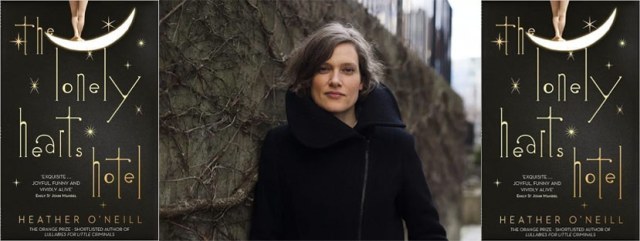
Book Review: The Lonely Hearts Hotel | Heather O’Neill

Lonely-Hearts-Hotel

A detailed review by Naomi Frisby of The Lonely Hearts Hotel written by Heather O’Neill, which has been long-listed for the Baileys Prize – warning this review does contain spoilers, and by the sounds of the reactions of the Baileys Prize shadow panel, it’s a Marmite book – you will either love it or hate it.

Read more here and decide what you think: https://thewritesofwoman.wordpress.com/the-lonely-hearts-hotel-heather-oneill

9 Writers on the Books that Inspired Them

2014111162Books.55cfb

There are books that stay with you during important times in your life. A great book can get you through a bad breakup or a bad high school (though, that actually might take a whole series).

The authors behind your favorite books were drawn to literature and writing by their own literary all-stars, and besides gaining comfort and pleasure, they’ve found and honed the skills utilized in their own novels.

These nine authors received their all-important titles from family and friends, during their childhoods and while dealing with the milestones of adulthood, and each owes a debt to those inspirational writers. See them here: http://mashable.com/books-that-inspired-writers

Book Review: ‘The Rosie Effect’ by Graeme Simsion

TheRosieEffect-book-review

It was the debut novel that caught the attention of Bill Gates, who described The Rosie Project as ‘funny and profound’. As it spiralled into literary stardom, The Rosie Project found a place in our hearts.

As a rather obvious but nevertheless apt choice for a sequel, titled The Rosie Effect, Graeme Simsion revisits the lives of newlyweds Don and Rosie, who are now living in New York and working in the medical department of Columbia University.

You can read a review of the book by following this link: http://writersedit.com/rosie-effect-graeme-simsion-review/

Why must the ‘best new writers’ always be under 40?

young-writers-lists-buzzf-012

Do first-time writers have a sell-by date? You could be forgiven for thinking so. Buzzfeed posted a list of ’20 under 40 Debut Writers You Need To Be Reading’. And this is a great achievement for these authors.

But making a debut is a huge achievement at any stage in life, and it would be churlish not to celebrate all of them.

Follow the link for some thoughts on this topic, and a link to the original Buzzfeed article: https://www.theguardian.com/books/best-new-writers-always-under-40

17 Books That Should Be On Your Radar: March 2017

Books-march-2017

Every month, the Writer’s Bone crew reviews or previews books they’ve read or want to read. This series may or may not also serve as a confessional for guilty pleasures and hipster novels only the brave would attempt. Here are their recommendations for March 2017:

Via http://www.writersbone.com/book-recommendations/2017/3/5/17-books-that-should-be-on-your-radar-march-2017

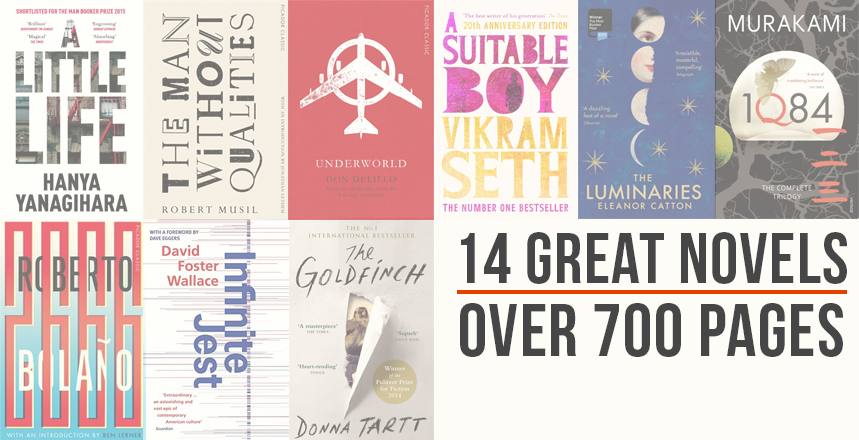
14 Great Novels over 700 Pages 

Sometimes 600 pages just isn’t enough. If you’re looking for a literary challenge for the New Year, or would just like a good excuse to spend the winter months curled up with a good book, here’s some very long novels (plus a few trilogies) that we can guarantee are worth the investment.

Via http://www.picador.com/blog/big-books-that-are-worth-your-time