12 Things All Science Fiction Fans Know To Be True, Because Your Neighbor Is Probably An Alien

Sci-Fi

In honour of the awesome Stephen Hawking, here is a Sci-Fi article, just for fun… RIP.


You know the Three Laws of Robotics, you can name half a dozen alien races, and you’re still holding out hope that your next vehicle will be a time machine. Hold that worn copy of Dune proudly over your head and embrace your fandom, because there is no shame of loving what has become know as “the last great literature of ideas.”

I fell in love with science fiction when I was in elementary school and I first read Ender’s Game. I was ready to sign up for Battle School, board a starship, and go hurtling through space faster than the speed of light. I devoured paperback after paperback, engineering robots alongside Isaac Asimov’s Powell and Donovan, hitchhiking through the galaxy with Douglas Adams’s Arthur and Ford, hacking computers with William Gibson’s Henry Dorsett Case, and walking through the exhibits of Kurt Vonnegut’s Tralfamadorian zoo. Page after page of expansive world building, adventure and terror, flashes of the future, drama, politics, and even the occasional love story, sci-fi has it all.

But after finishing a book like 1984, it’s impossible not to walk down the street without looking over your shoulder. Science fiction is filled with grim predictions of the future, some of which have already come to pass – overbearing governments, morally depraved corporations, and intrusive technology. If the books aren’t enough to give you the creeps, the movie and tv adaptations certainly will. I still have nightmares of the gnarly and enormous bugs from Starship Troopers and the glaring eyes of Big Brother from the telescreens in 1984.

Whether you like to read hard science fiction about physics and chemistry, social science fiction about a dystopian alternate reality, satire or stories about space cowboys, there are certain things you know to be true about your favorite books, and the world around you. Not all of them are pretty, but you can’t ignore facts like these.

1. Robots are people, too

Remember Andrew, the titular character of Isaac Asimov’s Bicentennial Man? He taught us robots have the capacity for creativity, personality, and emotions – all things that make them like people. Even the World Leader declared Andrew a man by law, so true sci-fi fans know to think twice before bad-mouthing the Roomba.

2. If you don’t like your reality, there is always an alternate one out there

If you’re miserable in your own world, science fiction has taught us that there are plenty of other options out there. Whether it is a different planet, a different time in history, or a different plane of reality, there is always another universe for you to try out.

3. Traveling first-class is nothing compared to travelling through space and time

Maybe you got bumped up to gold member on your last flight, but nothing can compare to travelling faster than the speed of light and conquering the aging problem. Who wants to go through TSA when you can skip the lines and board H. G. Wells’s time machine instead?

4. An alien invasion is inevitable…

Martians will come to earth, and they will destroy the planet. Whether they take the form of the Fithp from Footfall or the martians from War of the Worlds, the fact remains that the aliens are indeed coming…

5. …so is the Apocalypse, and only humans are to blame

Maybe it will be a nuclear holocaust or the accidental release of an ice-nine, but one thing is for sure: we’re all doomed, and there is no one to blame but ourselves.

6. The world’s population will likely be wiped out by a government-caused outbreak, and only those with mutant genes will survive

You know it and I know it: the government’s plan to develop a weapon or control the population will surely blow up in their faces, and wipe out 99 percent of mankind. Let’s hope we are one of the lucky survivors with superb genes and incredible fighting skills.

7. You probably have a clone out there… unless you are the clone

If you think you’re one-in-a-million, think again. Maybe you were cloned for the purpose of harvesting organs, or to serve out the narcissistic needs of your creator, but either way, you might want to think twice the next time you see a doppelganger on the train.

8. Science equals power

He who holds the Ph.D. holds the authority. In the realm of science fiction, the scientists, researchers, psychologists, doctors, and computer engineers are the ones who run the show. The enemy might have a bigger spaceship, but the victor is always the one with a handle on the scientific. (Unless this power leads them to a life of corruption, which is often the case, too.)

9. God is probably an alien

Science fiction has taught us many things, mostly that we don’t know as much about the world we live in as we think. There are other species, other climates, and other realities out there, so is it so far-fetched to think God is probably just an alien and we are probably living on the tip of his eyelash or something?

10. The corporation you work for is evil, and is definitely trying to take over the world

You think your boss is a jerk, but you have no idea how right you are. He is likely a cyborg planted by a greater evil to start a take over from the inside-out. Oh, and you know those newly designed cellphone ear pieces you’ve been working on? They’re actually brainwashing devices, so its time find your sexy but mysterious coworker and try and take down the man.

11. Big Brother is definitely watching you

He probably goes by different names – data mining, the NSA, browser history – but rest assured, you are not alone. Ever. Any true science fiction fan knows that Big Brother is out there, tracking your exercise habits and listening in on your plans to stage a coup.

12. You have every right to be a paranoid freak, because nothing is as it seems

Truth.

***

Via: https://www.bustle.com/articles/12-things-all-science-fiction-fans-know-to-be-true
10 Of The Most Powerful Female Characters In Literature

Strong-Fictional-Women

Since March is Women’s History Month, we’ve been thinking a lot about the women who have had positive and lasting impacts on our lives — and perhaps not surprisingly for a bunch of literary geeks like us, we’ve realized that many of them are fictional. For all the hullabaloo about the dearth of strong female characters in modern culture, thankfully there are some wonderfully powerful, kick-ass maidens that have inspired us with their strength, self-discovery, and incredible brilliance over the years. See our list of ten of the most powerful female characters in literature below, and then be sure to pipe up with your own suggestions — we’ve chosen the ten who resonate most deeply with us, but since there are many more than ten strong ladies in literature (thank goodness), we want to know which ones blow you away on a daily basis.

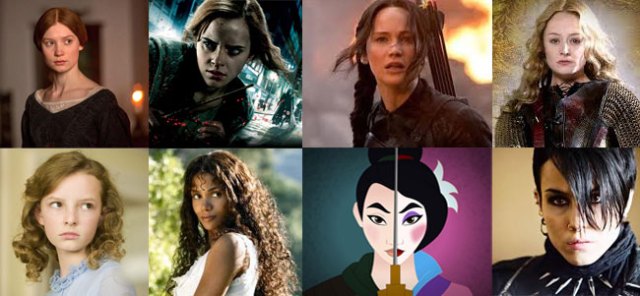
Jane Eyre, Jane Eyre

One of the earliest representations of an individualistic, passionate and complex female character, Jane Eyre knocks our socks off. Though she suffers greatly, she always relies on herself to get back on her feet — no wilting damsel in distress here. As China Miéville wrote, “Charlotte Brontë’s heroine towers over those around her, morally, intellectually and aesthetically; she’s completely admirable and compelling. Never camp, despite her Gothic surrounds, she takes a scalpel to the skin of the every day.”

Hermione Granger, the Harry Potter series

In the Harry Potter books, Hermione starts as an insufferable know-it-all, blossoms into a whip-smart beauty who doesn’t suffer fools (except Ron), and ends up as the glue that holds the whole operation together. Hermione’s steadfastness and sheer intelligence (plus the fact that she’s the only one who has ever read Hogwarts: A History) save her two best friends time and time again, and she’s the only one of the three never to wholly break down in a crisis. Intelligence often translates into strength, but only when wielded by a steady hand — and Hermione just happens to have both, and compassion to boot. That’s our kind of girl.

The Wife of Bath, The Canterbury Tales

Chaucer didn’t mean to make the Wife of Bath as big of a character as he did. Early drafts show that her role was meant to be much smaller and more one-dimensional, but somewhere along the line, Chaucer became enamored of his female creation, and eventually her prologue ended up twice as long as her tale. The Wife of Bath is lewd and lascivious — but behind all the dirty jokes, she’s making an argument for female dominance and a woman’s right to control her body, using her considerable rhetorical skill to simultaneously underscore and attack the anti-feminist traditions of the time. Not too shabby for 14th century literature.

Katniss Everdeen, The Hunger Games trilogy

Sure, Katniss annoys us no end with all her boy-related waffling and wailing, but any girl who can shoot like that deserves a place on this list. Not to mention the fact that she survived not one but two 24-person fights to the death, one of which was designed specifically to kill her. We’re just saying.

Hester Prynne, The Scarlet Letter

Though Hester Prynne, who is condemned by her Puritan neighbors for having a child out of wedlock, is sometimes seen as a victim, she manages to survive with dignity and faith throughout, which we think makes her pretty darn powerful. NPR has described her as being “among the first and most important female protagonists in American literature. She’s the embodiment of deep contradictions: bad and beautiful, holy and sinful, conventional and radical… [she] can be seen as Hawthorne’s literary contemplation of what happens when women break cultural bounds and gain personal power.”

Éowyn, The Lord of the Rings trilogy

Though Tolkien’s novels aren’t exactly known for their female protagonists, who could be more powerful than the woman who killed the Witch-king of Angmar? A shieldmaiden who is itching to defend her countrymen from the first minute we see her, Éowyn disguises herself as a man to follow her friends into battle. Bad guys should be careful making statements like “No living man can kill me” when they’re fighting ladies.

Lyra Silvertongue, His Dark Materials trilogy

Not only is she the instrumental piece in a literally cosmic war, the unruly and headstrong Lyra, who is twelve years old at the beginning of the trilogy, can do something no one else can: read the alethiometer, which tells her the truth of the present and future. She wins the hearts of those around her through her strong convictions, and earns the name “Silvertongue” after using her wits to fool the unfoolable. After all, words are the most powerful weapons of all.

Janie Crawford, Their Eyes Were Watching God

A remarkably independent woman, Janie Crawford’s strength is in her ability to keep on going, no matter what her life throws at her, and to uphold her dignity throughout. She challenges the conventions of who should love whom and what leads to a happy life, her experience leading her on a journey towards an acute self-realization.

Hua Mulan, The Ballad of Mulan

Though you may know Mulan best from the Disney film, she was originally imagined in the 6th century Chinese poem The Ballad of Mulan and has since been reinterpreted in various literary and non-literary forms. Unlike in the Disney version, which features a bumbling girl trying to be a soldier, the traditional figure is a totally bad-ass seventeen year old, already a martial arts and weapons expert — just things she picked up on the side because she was too smart to be totally happy with her life of weaving. She goes to war in place of her father, wins all over the place, and then comes home and returns to her normal life. No big deal.

Lisbeth Salander, The Girl with the Dragon Tattoo series

The powerful female protagonist of the hour is also one of the strongest women on this list. A world class computer hacker with a photographic memory, she’s also the survivor of an abusive childhood, which makes her a fiercely anti-social heroine with a violent streak. Characterized by many as a “feminist avenging angel,” Lisbeth’s brutality is nothing to aspire to — but she sure gets the job done.

***

Via http://flavorwire.com/265847/10-of-the-most-powerful-female-characters-in-literature/view-all

The 6 Reactions Book-Lovers Have to People Who Don’t Read

Read---people-who-dont

There are many ways to get passionate reactions out of hardcore book nerds. Tell us Twilight deserves a place in the pantheon of great vampire literature next to Stoker’s Dracula and Rice’s Interview with the Vampire. Ask us where we stand in the e-book vs. print book debate. Mention the ongoing Amazon-Hachette feud. Bring up any book-to-film adaptation, ever. It’s not a question of whether we’ll have opinions, but rather when we will stop beating you over the head with them with all the force of a hardcover edition of Les Miserables.

However, if you really want to whip a book-lover into a Tempest-like frenzy of emotions, all you need are four little words: “I don’t read books.”

I’ve heard those words, or similar variations (“I haven’t read a book since school,” or, even more mind-blowing, “Reading is boring”) many times in my life, and without fail, they inspire within me a tangle of emotions that leaves me speechless, at least momentarily (which is no easy feat). I understand that not everyone can enjoy reading as thoroughly as I do (actually, that’s probably a good thing; if that were the case, I’m pretty sure nothing productive would ever be accomplished), but to genuinely dislike the act of reading? You may as well say you don’t like breathing or eating.

Conversations with fellow book-lovers reveal that we all tend to have the same reactions to these rare and mysterious creatures: What … How… Why…??

It’s for their benefit, as well as the benefit of those who dare blaspheme our precious pastime with callow disregard, that I sat down to sift through the varying emotions book nerds experience when we hear those heartbreaking words: “I don’t read books.” The struggle is real. Here’s what happens next…

1. Shock/Disbelief

You … don’t … read … books? You mean, like, you don’t read novels, but you read nonfiction and stuff like that, right? No? You just straight-up do not read words printed in ink on paper and bound between two covers. Really?

2. Confusion

I see your lips moving. I hear words coming out of your mouth. They sound like English, but I can’t comprehend them. You can read, but you choose not to.

But why? Do you not have books? Do you need books? What did books do to you to make you scorn them so? Did they take you out for a nice seafood dinner and then never call you again? What do you do instead of reading, sit around and stare at things? So. Many. Questions.

3. Judgment

If I’ve known you for awhile and you reveal this, suddenly everything I thought I knew about you has been called into question. You’re lucky enough to be among the percentage of adults who can read and you choose not to exercise that privilege?

What other deep, dark secrets have you been hiding from me? Were you actually sick that night you had to cancel our plans? Do I really know you at all? And in the case that you’re someone I just met, and you tell me you don’t like to read…

4. Pity

This feeling can happen simultaneously with judgment. Do you even understand what you’re missing? Books let us travel to more locations than we could ever visit in a lifetime, as well as awesome places that don’t exist in the real world. They introduce us to amazing friends and give us kick-ass heroes to root for. They teach us, inspire us, evoke our emotions. But you’re depriving yourself of all that and it just makes me so, so sad.

5. Persuasion

It can’t be that you don’t like to read, you just haven’t found the right book yet. What interests you? Humour? History? Sports? Dwarfs? Humorous historical dwarfs playing sports? I don’t care how many hours we have to spend in the library, I will find a book you like. And I will make you love them!

6. Acceptance

No? Really? You’re absolutely, definitely not interested in one of the most beloved pastimes of the last 600 years? *Sigh* I don’t understand it, but I guess it’s true that it takes all kinds of people to make the world. So fine, be like that. And don’t worry, I can love books enough for the both of us.

***

Via: https://www.bustle.com/articles/36433-the-6-reactions-book-lovers-have-to-people-who-dont-read

15 Reading Pet Peeves Every Book-Lover Understands

book lover

It’s a proven fact that reading is the best hobby ever – any book-lover will tell you so. No matter your preferred genre or medium, there’s an endless supply of books to capture your interest and they can serve as everything from entertainment to distraction. It’s an overwhelmingly positive pastime, but I will admit that reading does occasionally have moments of inconvenience and even of frustration. At the end of the day, however, it’s usually not books themselves that are the problem, but external factors instead. We’ll call them reading pet peeves.

For bookworms, reading can often be therapeutic and relaxing, yet there are a variety of things that are all but guaranteed to raise their blood pressure nonetheless. These reading pet peeves are pretty universal, so any true reader will likely understand the annoyance they can cause. Fortunately, most are minor, rating a facepalm or a huff of frustration. It’s only the most severe offenses that make a perfectly good book suddenly look tempting as a projectile.

If you’re a reading addict, let’s commiserate over the following 15 reading pet peeves that have probably ruffled your feathers from time to time. Non-readers, please take note to avoid any of the annoying activities and occurrences below.

1. Spoilers

Is there anything worse than finding out what’s going to happen in the book you’re reading (or planning to read) before you get there? I think not.

2. Books You Don’t Like That Become Wildly Popular

It’s amazing to see books you adore get the recognition they deserve, but when books with problematic characters or storylines top the best-seller lists, it’s beyond irritating. Worse still? When film studios snap up the movie rights and you know you’re going to have to keep hearing about them. Grrrr!

3. Delayed Release Dates

You can’t really blame authors when they have to push back a book’s release date – life happens, plans change. Still, knowing you’ve got an even longer wait for reading material you’ve been looking forward to is zero fun.

4. People Who Are Careless With Borrowed Books

I don’t think it’s too much for us to expect people to treat borrowed property well, but sadly, not everyone has learned that lesson. If you’ve ever lent out a book, only to get it back in worse condition, I feel your pain.

5. People Who Are Careless With Books In General

Even if they’re not actually your books, it can be cringe-worthy to watch someone crease their book jacket or haphazardly drip coffee over the pages.

6. Waiting For Library Books

Libraries are up there on a book-lover’s list of favourite things, but having to wait on a hold list is not. Patience is a virtue, of course, but it’s not easy to come by when there’s a story you’re dying to get your hands on.

7. Being Judged For Wanting To Stay In And Read

When all you want to do is curl up for the evening with a good book, there’s no shame. The only shame should be directed at those who would guilt you or judge you for it.

8. Movie Adaptations With Plot Deviations

Bringing a book to screen has its challenges, but when the movie adaptation takes all kinds of unnecessary liberties with the original plot, it’s enough to infuriate any fan of the work.

9. Books With Promising Starts That Go Downhill

It feels like a betrayal when the story you’re reading starts out strong, only to suddenly take a turn for the worse. But more annoying then that is when you buy a book that promises a certain story on the jacket, only to find you’ve been mis-sold a completely different story. All that potential, those hopes and dreams, just ripped away.

10. Being Interrupted While Reading

It should go without saying that when you have a volume in hand, you should be left in peace. Unfortunately, not everyone seems to know this unwritten rule.

11. Poorly Edited Books

A minor typo can be forgiven, but repeated errors and grammatical disasters? Not so much.

12. Purses Too Small To Carry Books

A purse is meant to carry the necessities, so if it can’t fit a book or an e-reader, it’s failing at its purpose.

13. That Moment When Your E-Reader’s Battery Dies

Even after all the warnings of low battery, it’s still annoying when your e-reader actually dies. My own device takes several minutes to power back up again whenever this happens, and on top of that, it typically loses my most recent page. Oh, the inconvenience!

14. Hearing People Say They Don’t Like To Read

Is not enjoying reading really a thing? We book-lovers just don’t get the mentality.

15. Anything That Conflicts With Reading

Basically, anything that interferes with reading – especially when you’ve reached a cliffhanger – is a serious problem.

Now that we’ve gotten that out of our systems, it’s back to our happy place. Happy reading everyone!

***

Via: https://www.bustle.com/articles/128971-15-reading-pet-peeves-every-book-lover-understands

“What Does Your Husband Think of Your Novel?”| Jamie Quatro

Article-Husband-Think

The spring my first book came out – a collection of stories, several of which detailed an erotic but unconsummated emotional affair – I was invited to speak at an all-men’s book club. I was excited such a club existed in my town. I told them I’d love to come. Southern male readers of fiction with serious literary habits!

The meeting was held in the home of one of the members. About a dozen men showed up. We milled around and made the usual small talk. We ate good Mexican food and drank good Spanish wine and eventually gathered on sofas and chairs around the coffee table. I gave a brief talk about my “creative process” – something they’d asked me to discuss – and opened it up for questions.

No one said anything. Men shifted in leather cushions and flipped through their copies of my book. It was hot out. Someone kept opening and closing the sliding back door in little screechy increments. Maybe no one actually read it, I thought.

Finally the man sitting in the chair across from me flung his book onto the coffee table. “Okay,” he said, “I’ll just say it, because we’re all wondering the same thing: What in the hell does your husband think about your work?”

I can’t remember what came out of my mouth. Probably the laugh and the “he’s my first reader and he’s always been a hundred percent supportive” line I would grow accustomed to trotting out in the following months, when the same question surfaced again and again – from strangers after readings, from acquaintances in my town. What I do remember is what was happening inside my brain: What does my husband’s opinion of my book have to do with anything?

And: If I were a male fiction writer, writing about illicit sex, would you ask what my wife thought about my work?

*

Let’s be clear: “What does your husband think about your work” is a ruse. Beneath that query is the real question: Did you, the author, do the things the female character does in your narrative? If so, how’d you get away with writing about it? Isn’t your husband hurt? And aren’t you ashamed?

A general curiosity about the relationship between a writer’s real life and her fiction is natural. How does an artist work? I could argue that there’s a compliment behind the autobiographical query: if a reader feels I must have lived through an event, that tells me, in part, that I’ve written convincingly. And given the similarities between some of my characters and myself – a married woman with children who lives in the South – I understand how certain readers might assume there’s a comprehensive, one-to-one correlation between my fiction and my life.

But I don’t take these questions as compliments. Rather, they feel like expressions of doubt as to my imaginative capacities as an artist – specifically as an artist who writes about female sexual longing and transgression. I wrote about a woman who lives in the South with her husband and children while she battles cancer. Not one reader has asked me if I’ve had cancer. I wrote about a woman with children whose husband is a suicidal benzo addict, and who nearly gives up her religious faith because of it. Not one reader has asked if my husband is a suicidal benzo addict, or if I’ve nearly given up my faith because of it.

So why the questions about the sex often couched as curiosity about my husband’s response? Buried in these questions are four dubious assumptions:

1. It is more important and interesting to talk about you, the author behind the work, than it is to discuss the work itself.

It’s remarkable how quickly we turn our gaze from artifact to artist. When Walter Hooper asked C. S. Lewis if he ever thought about the fact that his books were “winning him worship,” Lewis replied, “One cannot be too careful not to think of it.” When you ask about my personal life, you’re missing the point. This finished book we’ve sent out into the world – that’s the pearl of great price. If we’re going to talk about anything, that’s the place we should start.

2. I recognize certain things in your work – the town where you live, the number of children you have – so everything else must be true as well.

Most writers aren’t interested in writing about what we’ve actually done. Most of us write to find out what it would be like to do things we haven’t done. It’s a chance to take the roads not taken. To solve mysteries, on the page, that we’ll never get to solve in our lives. The artistic imagination is a powerful thing. It’s all I have, the tool of my trade. I feel profoundly, ruthlessly protective of it. When a reader makes the assumption that a writer is simply recording the life she’s lived, that reader is discounting the artist’s primary gift.

Fiction begins with small, lower-case truths, then translates them into a larger lie that ultimately reveals the largest truths. “None of it happened and all of it’s true,” said Ann Patchett’s mother.

3. The way I feel reading your book must be the way you felt while writing it.

If you feel ashamed or aroused or uncomfortable reading my fiction, that’s bloody fantastic. That’s why I write: black marks on a white page reaching across time and space and palpably affecting another human soul. But how do you know I felt those same things when I was drafting? (Much less how my husband felt reading my drafts?) The passages that feel “confessional” or “erotically charged” to a reader might be the very places where I felt distanced or intellectually elated in the act of composition. And it was precisely because those were the places where the artistic imagination was free to roam.

A friend of mine who writes nonfiction told me she feels the same thing when people tell her they appreciate the “vulnerability” of her prose. Funny you think I was being vulnerable, she wants to say, because when I wrote that, I just felt like a fucking badass. 

4. A man who writes about sexual infidelity is normal, while a woman who does the same is morally suspect.

Here we reach the crux. The questions “how does your husband feel?” or “how autobiographical is your work?” actually mean, “did you commit these sexually subversive acts?” The assumptions and judgments are gendered. How are we still, in 2018, dealing with the notion that men think about illicit sex as a matter of course; but women – well, women should be more demure? If we’re going to live in a society where we aren’t taken advantage of and/or shamed in our personal and professional lives, surely we can begin by not shaming one another for our sexual imaginations. Or questioning that women are capable of that imagination to begin with.

*

Men, in particular, both mythologize and undermine female artists. But women do it to one another, too. On a recent press trip, a woman told me my latest novel, Fire Sermon, was “memoirish” and “confessional.” She said it blurred the distinction between life and art. This from a woman I’d never met. Yes, the character uses a confessional tone, I said. The character writes journal entries and prayers as ways to assuage her guilt, longing, and grief. Perhaps that’s what she meant by memoirish? But my novel was not a memoir. Those journal entries were not my own.

Last night, I did a Q and A with a local writing group. One of the first questions was from a woman: “You set a lot of your work locally … so is everything you write autobiographical?” I mentioned that I was, that very day, working on an essay about the question “what does your husband think?” “That’s what I wanted to ask!” she said.

Men, women: Let’s assume the female writer needn’t have lived out the narrative to write it. Let’s assume that she can have an imagination that is subversive and sexually transgressive.

And let’s assume the artist’s husband feels pretty fucking badass to be married to her.

***

Jamie Quatro is the author of the just-released novel Fire Sermon, as well as the story collection I Want to Show You More. She lives in Lookout Mountain, Georgia, where she’s at work on a new novel and story collection.

Via https://www.theparisreview.org/blog/2018/01/16/husband-think-novel/

10 Things You Should Avoid As A New Writer

Ten-things-new-writers-should-avoid

You can write about any subject in any format, whether you’re a blogger, a playwright, a novelist, a freelancer, a screen writer, the list goes on and on.

However, if you’re new to the industry, you’ll have a long way to go before you become one of the best. As with any profession, you’ll experience hurdles and obstacles along the way in situations where you’ll have to learn from your mistakes.

To give you the best possible head start, we’ll explore ten key aspects of writing that you should avoid.

1. Don’t Set a Path

There’s no set path in the writing world. Imagine you wanted to be a lawyer. You’ll go to university, learn everything you need to know, get a job at the bottom of a firm and then you’ll work your way up.

The writing industry has no structure. One moment you could be writing as a freelancer and the next, one of your blogs has gone viral, and you’ve got blogging requests coming in from all angles. As a rule of thumb, do what works for you. Just take things one step at a time.

2. Don’t Be Someone You’re Not

Everybody is different. There’s no point in writing if you’re going to copy the same style and language as one of your writing idols because that’s not you, that’s copying.

Experiment with some different writing styles and formats and see what works best for you. Most importantly, find the style and format that you enjoy.

With this aspect of writing, you’ll get the chance to experiment to find your feet in what kind of writer you’ll be. The more you experiment, the more you’ll discover your own style, the more you’ll enjoy writing and the more productive and successful you’ll be.

3. Never Stop Brainstorming

Even when you’re applying for freelancing jobs, never stop thinking about what you can write about. Maybe you want to publish a book; maybe you want to become a food blogger, whatever you want to be, constantly be thinking about how you can move forward. Never forget to write your ideas down and keep referring to them.

Keeping a journal or ‘thought diary’ is one of the easiest ways to jot down your thoughts as they come to you. It’s also important that you refer back to these thoughts when you can. You never know when you’ll be able to combine two ideas into one winning idea.

4. Don’t Get Disheartened by Feedback

If you’re working as a freelancer, the chances are that not every job will be a five-star rating. When that inevitable low rating comes in, don’t let it break your stride. As with any business, your services won’t be for everyone. Simply take on board the advice, better your skills and move forward.

5. Never Forget the Basics

Spelling, grammar, punctuation, language, format and structure. These are just a few aspects of writing which are essential to master if you want to succeed. Even if you have deadlines closing in on you rapidly, never forget the basics.

Always take your time when checking over your work. One mistake to the wrong client and it can seriously damage your credibility and your reputation.

6. Don’t Get Envious

You may be reading a blog or an article by a writer, and you’ll notice thousands of shares and comments, don’t think ‘Damn, I wish I had that kind of engagement’, you’re just starting out, and it will come with practice.

Take on board the positives and move forward, don’t hate someone because of their success.

Every master of any skill started as a beginner at some point in their lives. As before, take each day as it comes and take your writing career one step at a time. Be open to new opportunities and really explore the multitude of options that are available to you.

7. Don’t Lock Yourself Away

As with any career, life is all about balance. It’s easy to take on a ton of work or to sit down to work on a bulk load of projects, but you’re confining yourself to your desk. Get outside, go for a walk, see some friends and family members. Don’t forget to live your life.

With mounting deadlines and pressure from clients, especially if you’re freelancing, it’s easy to get caught up with working all the time. However, if your aim is to work as a blogger for yourself, it’s important that you set aside time for yourself to explore your ideas and your own concepts.

One piece of advice to live by is to dedicate time aside every other day to write an article for yourself to go on your blog.

8. Never Stop Reading

Whatever format you love the most, whether it’s eBooks, stories, fan-fiction, articles, blogs or research studies, reading is your greatest friend as a writer. By exploring new worlds, concepts and ideas, reading can open your mind up in new and exciting ways.

Not only will reading teach you so much more about writing, as well as tips on aspects such as sentence structure and new concepts, it will also help you to take a break from everyday writing, giving you a chance to relax and to breathe.

One other piece of advice to live by is stepping out of your comfort zone now and then. You may like a specific genre of book or author, but it can change your world by going into a bookshop and asking for a random recommendation. You never know what you’ll be reading next, and you might even discover a new favourite.

9. Don’t Avoid Tips and Advice Pages

At the Olympics, there can only be one gold medallist. However, in the writing world, there is room for an infinite number of successful writers. It is one aspect you should never forget.

Many writers are happy to share their experience and advice with the rest of the community so take on board what they are saying and never dismiss it. One piece of advice could change your life.

Some websites, such as Writer’s Digest, are dedicated help you be the best you can.

10 Never Give Up

Nobody who wanted to get somewhere amazing ever had an easy ride. Whether you wanted to climb Mount Everest or become President, it’s a struggle to get to where you want to be.

No matter how hard life is for you and no matter what it throws in your face, never give up, keep digging, keep tapping, keep scribbling and stay motivated.

Via: https://www.justpublishingadvice.com/10-things-you-should-avoid-as-a-new-writer/

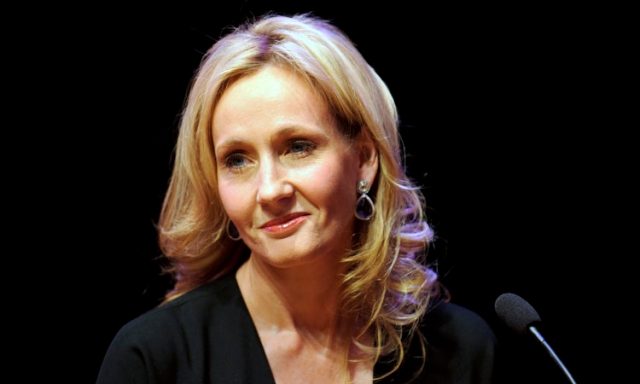
According to J.K Rowling, magic can strike you anywhere – including on the back of a sick bag!

J.K, Rowling 1

If you’re a fan of Harry Potter and his author J.K. Rowling, you probably know that the author has a penchant for writing on some decidedly unconventional surfaces. It is a well-known legend that Rowling first jotted down her initial thoughts and ideas for Harry Potter and the Sorcerer’s Stone on a napkin while sitting on a delayed train from Manchester to London back in 1990. And it was revealed in 2017 that Rowling has a dress hanging in her closet with an unpublished manuscript written all over it. So Rowling’s most recent admission of just where she first scribbled her thoughts for the four Hogwarts Houses is not exactly surprising, though it is inspiring.

In a series of tweets published by the author on 15 December 2017, she related some of her writing habits and thoughts on the HP series to curious readers. But it was in a response to one user @LizWintersMM who wrote, “Years ago, at a birthday party, with no notebook in my purse I was forced to write on napkins when inspiration struck. Now I always carry a notebook, but I’ve also been know to use my evernote app for random notes,” that Rowling revealed her own lightning bolt of inspiration.

In the tweet Rowling writes, “The best thing I ever wrote on was an aeroplane sick bag. Came up with the Hogwarts houses on it.” Can’t you just picture Rowling gazing out the window, watching the clouds float by, when suddenly Gryffindor, Ravenclaw, Hufflepuff and Slytherin pop into her head? It almost seems like a fantasy story itself, but if we know anything about Rowling at this point, its that her mind, and her world building process, doesn’t work quite like most people’s. And thank Dumbledore for that!

The Twitter conversation about writing processes first started when Rowling shared a tweet thread from author Ruth Ware, in which she wrote, “Apropos of nothing in particular, I keep seeing posts about ‘you MUST do this and it will improve your work’ or ‘REAL writers do this, if you don’t you’re not a real writer.’ I have never seen a tweet like this that I agreed with.”

Rowling hopped on to say that she agreed with Ware, and the rest is now locked away in Harry Potter history.

It’s super gratifying to see succesful authors like Rowling and Ware turning their noses up at ideas of what ‘real writers’ should or shouldn’t do, and encouraging people to let their inspiration strike whenever, and wherever it may. It seems, so long as you have an idea worth capturing, that’s all the magic you could ever need.

***

Via: https://www.bustle.com/p/jk-rowling-reveals-she-came-up-with-hogwarts-houses-on-the-back-of-airplane-vomit-bag-7607721

Man Booker Prize 2018 Judges Announced

2018-manbooker-judges-graphic-FINAL

The judges of the 2018 Man Booker Prize for Fiction, which is celebrating its 50th anniversary this year, have been announced.

The panel will be chaired by the philosopher Kwame Anthony Appiah and consists of: crime writer Val McDermid; cultural critic Leo Robson; feminist writer and critic Jacqueline Rose; and artist and graphic novelist Leanne Shapton.

Gaby Wood, Literary Director of the Booker Prize Foundation, says:

‘This year’s judging panel is not only stellar in its distinction, its members have a stunningly broad range of tastes and enthusiasms too. They are all long-standing champions of creative work who will be open to any excellent novel that may come their way, regardless of genre or geography.’

The judging panel will be looking for the best novel of the year, selected from entries published in the UK between 1 October 2017 and 30 September 2018.

The 2017 Man Booker Prize for Fiction winner was Lincoln in the Bardo by American author George Saunders, published by Bloomsbury. In the week following the winner announcement, sales of Lincoln in the Bardo increased by 1227%.

The ‘Man Booker Dozen’ of 12 or 13 books will be announced in July 2018 and the shortlist of six books in September 2018. The winner of the £50,000 prize will be announced on 16 October 2018 at an awards ceremony at London’s Guildhall, broadcast live by the BBC.

This year, the Man Booker Prize will be celebrating 50 years of the finest fiction with year-long global anniversary celebrations. The flagship event, run in partnership with Southbank Centre, the UK’s largest arts centre, is the unmissable Man Booker 50 Festival from 6 to 8 July 2018. Read more here.

The Man Booker Prize is sponsored by Man Group, an active investment management firm.

Via: http://themanbookerprize.com/fiction/news/2018-man-booker-prize-judges-announced

How Important Is The First Draft To Your Novel

The First Draft - Sandra Scofield

We’re an odd lot, novelists. Obsessive. Why else does someone launch a project that consumes so much time and holds out such a wavering promise of reward? I wrote my first three novels in deep night—the only time I had—and I used to put things away (in a dish bucket, set against the kitchen wall) in a tired heave of sadness, as if I might never pick them up again, as if my fledgling world might never be real. And of course it never was, because that’s a large part of the siren call of the novel: Come hither and create your own world. Put what you know and believe and want into story. Defy the randomness of real life; make meaning. This is a long-haul project and it is so much a part of who you are, you can’t imagine not doing it, not even if it takes years.

Maybe you, like me, write in your hidey-hole and people who know you have no idea how much you’ve taken on. Maybe you’ve found a workshop or a graduate program to help you in your endeavor. Either way, you must know by now that you have a world of figuring out to do.

Just know this: You are uniquely you, and the novel you write is one nobody else can.

I’ve written seven novels. That doesn’t count the first one; I spent years, only to discover when it was done that I was sick of it. (I had learned a lot, though.) It doesn’t count the one I lost. (I thought I stored it in the linen closet, but it wasn’t there when I searched for it.) It doesn’t count drafts, that’s for sure. It doesn’t count false starts (a box of them), or the ones I’ve been writing in my head for a decade while I tell myself I’m done with novels.

I’ve read shelves and shelves of novels. Hundreds of reviews. (I’ve written them, too.) Stacks of criticism. Biographies and memoirs of writers. But what matters to the present subject is this: I have immersed myself in the struggles of at least 200 aspiring novelists, many in one-week workshops in summer writing festivals over 20-plus years, and others in semester-long or year-long mentorships. I immerse myself in outlines and drafts. These writers have put themselves out there in a scary, exciting way. It has been my privilege to help them find new insights and fresh resolve. There is among aspiring writers an incredible range of interests, backgrounds, sense of story, and confidence, but there are many things they have in common. They are readers. They are intrigued by human nature. They are dogged.

One day it dawned on me that every summer, every semester, I have reinvented the wheel. Now, going through my teaching materials, I see that, however I may have recast notes, talks, exercises, and guidelines, there are consistent themes. I want to share what I have learned in my writing and teaching life, with special gratitude for the generosity of so many writers over so many years.

You can find many books to help you produce the first draft of a novel, especially if you subscribe to a popular theory of story much loved by screenwriters. Their strategy of structuring with acts, journeys, plot points, and arcs seems to be ratified by the success of many commercial movies, but is less helpful in developing deep story. If you want to review the basics of screenplay structure, you should read Syd Field, who popularized the model 30 years ago.

My advice is short and simple.

You should feel driven by a story you want to tell, even if you don’t know every nuance of it.

You must be able to live with the ambiguity of the enterprise.

You must have a commitment to a schedule of writing.


No one can teach you how to write a perfect first draft.

If you can say, Yes, I’m up to that, and you are just beginning, you may do best by ignoring instruction, at least until your dream is on the page. Free from rules, you may discover you have something in you nobody else has thought of. What rules did Markus Zusak ignore, writing The Book Thief, with Death as the narrator? Or Kate Atkinson, with the dazzle of her innovative Life After Life, in which her characters live more than one life? Amor Towles painted 30 years of Russian history in the confines of a single setting, a hotel, in A Gentleman in Moscow.

However much you think you know your story, however much you love it, allow yourself the freedom of discovery. Think of yourself as solving a mystery. What if? Why? Be wary of judging your work too soon. Sticking with a novel means going forward, not round and round. I say that even though I myself am a slow, deliberate writer at the sentence level. I don’t pour out pages; I feel as if every line tells me something about what the next line has to be. But I also don’t worry over the pages I’ve already written until I have a substantial draft. I learned early on that I could end up trying to perfect passages that don’t belong in the novel at all. Or I could lose my urgency to discover what next. I learned to jump ahead when I felt stymied. I started two of my novels in the middle.

Keep in mind that a first draft may be a kind of fishing expedition, a mess of a manuscript. You may not be ready to leap to revising. “First draft” should be thought of as a canopy off writing, holding however many drafts it takes to get you to the place where you feel you have grasped the story and put it on the page. You have to know how it ends. You have to know what it means.

The “first draft” of my first published novel was 1,084 pages long. It took about 14 months to write. (Remember, those were typewriter days.) I wrote ferociously and joyously. Then I had to figure out how to define reasonable parameters for the novel, and when I cut it, I discovered a huge imbalance between what I had said the most about and what I’d skimmed over. I made a painstaking outline by hand, on lined paper. There were no word processors. I had to start over with fresh paper in a typewriter. That was what it meant to revise. (I kept the boxes that held that draft in the disused cabinets over the refrigerator for many years, until they were archived. And I looked at them from time to time, a reminder of what I did, what I can do.)

When I wrote what I thought was the finished manuscript of More Than Allies, my perspicacious agent told me she liked a minor character in the story the best of all—and that character became one of the two main characters in a total rewrite. I learned to stay fluid, patient, open, and determined. Every stage has its hurdles—and its rewards.


Have fun finding your way.

You might want to toss a chapter and start over. Fine. You might want to try out a different point of view. You could discover your heavy drama is a comedy after all. You might realize you need a lot more background (setting, history) built into the story (a common concern); or you might realize that your research is clogging the manuscript’s arteries. Insight comes when you are immersed in the story, and you then have to decide whether to go back or keep going. I’m inclined to say keep going but make lots of notes about your prospective changes. You have to tell yourself that the most important thing is to get enough story down that you have something to work with; you will know more with every page you write; you can change things in the next draft.

Once you have that first full draft, you are on a different plane of writing. You’ve done a lot of stumbling and fretting, but you’ve figured out a story and you have this product, written out from beginning to end. Congratulations. Now you are ready for the next step. Unless you can do it in one go. There are writers who don’t revise full drafts, but I think that for them revising is a stream of higher consciousness.

It is instructive and fascinating to read about Gustave Flaubert’s writing; he was a man in agony, start to finish. He wrote letters to his friends saying that he hated what he was writing, that he had spent days on a paragraph, and so on. It seems clear to me that he had a very strong sense of his story from the beginning (I’m thinking of Madame Bovary), but achieving what he had in mind was incredibly demanding because his standards were so high. He spent five years writing the novel, his first. He wrote expansively, then cut, as he progressed.

When he got to the end of his “first draft,” which was the complete novel, he had performed surgery, acrobatics, diplomacy, psychology, and artistry on every page. And he had written the first modern novel.

John Steinbeck wrote a journal about how he wrote The Grapes of Wrath. It’s called Working Days and you can see why: He wrote five days a week, all day, from June to October 1938, about 2,000 words a day. He griped and grumbled, full of self-doubt and self-pity, but he had his head down and his pencil on the paper (his wife was his typist). I think he, like Flaubert, could do a one-draft wonder because every sentence was produced from deep thought. He was driven by an urgency about his subject, and he had done a lot of research. He didn’t start writing from scratch by any means.

Bernard Malamud, on the other hand, said when asked how many drafts he typically wrote, “Many more than I call three.”


Fast is fast, but is it good?

So many will say, Just get it down—work intuitively and quickly. I can’t write fast, so I can’t evaluate this approach. Anne Lamott (Bird by Bird: Some Instructions on Writing and Life), famous for encouraging unselfconscious, uncritical first drafts, has made it clear that she also does a lot of restructuring and revising later on. You have to find your own way. If you have had the story in your mind for a long time, your first draft might feel like you are pouring it onto the page. If the story feels like a mystery you want to solve, it will probably go more slowly. The writer Ann Patchett (Bel Canto), whose novels are marvelously varied, has said that she likes to think things through pretty thoroughly before she starts writing, whereas her friend, the novelist Elizabeth McCracken (TheGiant’s House: A Romance), doesn’t think a thing of changing names, histories, and plotlines as she writes. Think of the first draft as close to the chest: It’s yours alone.

What I do know is that, whether you crawl through your draft or you write it out as fast as you can type, you have to have the story on the page, start to finish, before you can evaluate it. It’s important to stay open to surprises and unbothered by dead ends. This isn’t the time to make contracts with yourself, like so many pages a day or the first draft by Christmas. Dedicated time is the one thing you do have to promise yourself. A lot will change in the writing. Later, you will come back to the same questions, the same advice, the same exercises, and find you have gone somewhere altogether different from where you were headed. That’s just fine. That’s writing. The real book might appear in the margins of your draft. You can’t revise what you haven’t written down.

***

From The Last Draft, by Sandra Scofield, courtesy Penguin Press. Copyright 2017, Sandra Scofield.  Via: http://lithub.com/how-important-is-the-first-draft-to-your-novel/

Does Being a Journalist Help When Writing a Book?

I thought this was an intriguing article and worth sharing. In it Fiona Mitchell considers whether being in the profession of writing journalism helps with writing fiction. Here is what she found…Enjoy! 🙂


Sometimes people nod their heads knowingly when I tell them I’m a journalist. ‘See that’s why you’ve managed to get your book published, you were a writer already.’ But there’s a world of difference between writing magazine features or newspaper stories and writing a book with 300-plus pages. And the differences have become even more apparent since my debut novel, The Maid’s Room, was published in November.

I’ve been interviewed several times over the past three weeks and I’m trying to get used to being the one answering questions instead of asking them. Over the years, as a journalist, I interviewed quite a few people who didn’t have all that much to say for themselves – yes or no answers, without elaboration. All while my blank notebook stared up at me, along with the creeping fear that I wouldn’t have anything to fill my 1,000-word feature with. When I’ve been interviewed, I have to admit I’ve given some monosyllabic answers myself. ‘Why did you write that scene the way you did? ‘Er, I’m not sure.’ ‘And what about the juxtaposition of light and shade in chapter 7?’ ‘Erm . . .’ I’ve also fallen into the other extreme of filling the awkward spaces with seemingly never-ending gibberish.

Yep, I may be a journalist, but I’m definitely a newbie now I’m on the other side.

Here, best-selling authors and debut novelists share their thoughts on the differences between journalism and writing a book.


Fiona Cummins: Author of Rattle, and The Collector which will be published on 22 February 2018.

‘I was surprised by how exposing it felt to be critiqued by readers. I was used to writing other people’s stories – the focus of attention was never on me – and, then, suddenly everyone had an opinion. It gave me some sense of what it must feel like to have a newspaper story written about you, whether you liked it or not. Ultimately, you have no control over what others may think.

‘It’s certainly been a steep learning curve. With my tabloid newspaper background, I was used to working at breakneck speed. Publishing moves much more slowly. I’ve also had to learn to pace myself. Writing a 90,000-word manuscript takes time – I can’t just dash it off in a day.’

Francesca Hornak Seven Days

Francesca Hornak: Author of Seven Days of Us

‘The thing I struggled with in fiction is making bad things happen . . . This isn’t true of all journalism, but in glossy magazines there’s a constant aim to create a kind of aspirational, fantasy world, where people cook recipes and buy £200 moisturisers and scented candles. In fiction, you need to make your characters miserable, otherwise there’s no story. At first I was a bit squeamish about that, but I’ve got the hang of it now.

‘Long deadlines can be hard too; there isn’t quite enough pressure in publishing.’

Cholie Mayer Boy Made of Snow

Chloe Mayer: Author of The Boy Made of Snow

‘I work in news rather than features, so the longest it usually takes for my copy to appear as a newspaper article is the next day. In contrast, the book industry moves at a glacial pace! My debut novel, The Boy Made of Snow, was released last month – more than a year and a half after I signed my publishing deal!

‘As a journalist I write stories all day long, but many articles are limited to just a few hundred words. It’s a completely different skill set to make up a story from scratch and tell it over 100,000 words – with an arc, sub-plots, and an entire cast of characters.

‘The first thing all news reporters are taught is that they must tell the whole story in the first sentence; the introduction must contain the crux of what’s happened and why. But with fiction, you must gradually build a world and let the story unfold over time.

‘Another difference is that in journalism you must explicitly lay out all of the facts and be as clear as possible. Whereas with fiction, you often have to hold back – and what isn’t said, or revealed, is often as important as what is. So learning how to write a novel as I went along was the steepest learning curve for me.’

Juliet West: Author of The Faithful and Before the Fall

‘As a journalist, and especially as a news reporter on a daily paper, there’s a pressure to get your story out very quickly. Ideally that story will be word-perfect straight from your notebook. So when I first began to write fiction I attempted the same modus operandi. I thought I could file my story straight onto the page and all would be effortless and wonderful. Of course, what came out was terrible, so I would re-work every sentence, trying to make it perfect before moving on. I think I wrote three paragraphs over a fortnight, and they were desperately worthy and self-conscious and forced.

‘I realised I needed to give myself more freedom to write a first draft, allowing the story and characters to take root before going back to add polish and finesse. So that’s my top tip. Give yourself a break. Your first draft is yours alone – it’s not going to turn up in the next day’s paper with your byline on it.

‘When I did get a publishing deal in 2013 I was delighted, but also daunted by the prospect of a publicity campaign. Somehow I’ve risen to the challenge, and I’m really proud that I’m able to stand up and give a talk, or chat to a presenter on live radio. But I don’t think I’ll ever shake the feeling that I should be the one asking the questions.’

***

Via https://fionamitchell.org/2017/12/06/does-being-a-journalist-make-writing-a-book-any-easier/