Writing Advice & Coffee With My Friend, Peter James

Whilst attending one of the many literary festivals I go to annually, I was fortunate enough to meet and talk to bestselling author, Peter James. I discovered that not only is he a fine and well-loved author, but a genuinely lovely bloke who also happens to live not too far away from me.

So, I cheekily asked him if he fancied catching up sometime for a coffee in order that I could pick his brain about writing. He smiled and said he would love to, which was both surprising and amazing in equal measure. It certainly was not the response I expected, I was gobsmacked. This famous bestselling author, who I rather admired, was willing to take time out of his busy schedule to have a coffee and chat with little old me. Somebody pinch me!

Afterwards, I wondered whether it would really happen. I’m not big and famous (yet, lol) and so I found it hard to believe, but sure enough, true to his word, we met up shortly after this festival for coffee (see photo evidence above for proof!) and he gave me some wonderful writing advice.

I’m privileged to share it with you now………


Peter James on Writing

Tips and Advice:

  • Have an end goal: Set arbitrary deadlines to keep you on track.
  • Set writing targets: So many pages a week, so many words a week. Whatever suits you best.
  • Have a routine: Write at the same time every day. Protect your writing time.
  • Create the right environment: Have a little ritual to get you in the zone. (He likes a vodka martini, very James Bond!)

Writing Process:

Peter writes the first 100 pages or so, editing as he goes. Then he does a read through to see if he’s happy with it. He has a team of readers who check it and tell him what they think. If it works, then he finishes the manuscript. If not, he makes the necessary changes.

He has a regular routine, doing 2 hours a day, 6 days a week. He starts at 6pm, as this is when he works best. It usually takes him 6 months to produce the final draft of a book this way, before it’s edited by his publishers.

PETER’S TOP TIP: Know your ending! Have in mind where you think you’re going so that you can get there. If it helps to do an outline, do that. Then you have a destination in mind, rather than not knowing.

An Insight: How he got started

Peter was always into stories, like me. He wanted to write a book and decided to give it a go, writing 3 spy novels, which didn’t do well. Then someone said to him, ‘write what you know’. He happened to have lots of police friends and this inspired him to write about that, which is how the idea for Roy Grace started. One of these police friends became the real life inspiration behind Roy Grace, and that person will review each book to ensure it is accurate and believable.

Peter does a lot of research. He uses many real life inspirations from cases and people. He also likes to pose the question of ‘what if?’ For instance, his first novel Dead Simple was inspired by the question: ‘What if someone played the worst prank ever on you (buried you alive) and then they all died?’ (If you haven’t read it, I highly recommend it. It is one of the most compelling books I’ve ever read. Find it here.)


Latest Book In The Series: The Hawk Is Dead

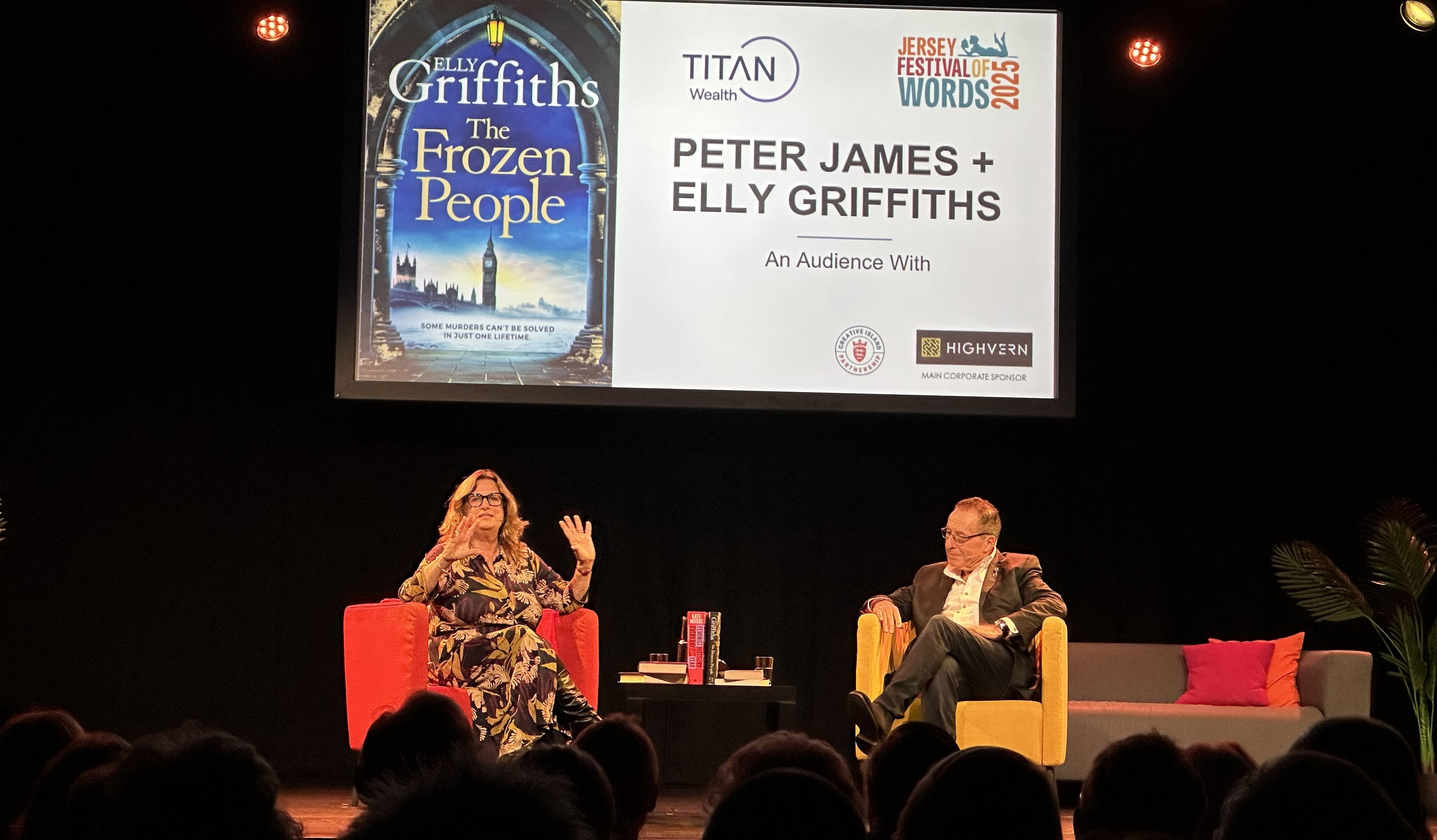
Peter discussed his latest book in the Roy Grace series at a local Festival of Writing event, whilst in conversation with the delightful Elly Griffiths (another fantastic and highly recommended author, you can check out her latest book The Frozen People here).
Apparently, it all started when Peter found out that he was Queen Camilla’s favourite author. He went over to introduce himself at a local event at her bequest. They struck up a conversation in which Peter suggested it would be wonderful if Buckingham Palace became the setting for a Roy Grace novel and, of course, Queen Camilla loved the idea. And so, a new Roy Grace adventure was born.

Peter wrote the first draft and sent it to Queen Camilla for her feedback. Suffice to say, she adored it.

The Hawk Is Dead was released today and is available to purchase via the link below.

The Blurb:

Roy Grace never dreamed a murder investigation would take him deep into Buckingham Palace . . .
Her Majesty, Queen Camilla, is aboard the Royal Train heading to a charity event in Sussex when disaster strikes – the train is derailed.
A tragic accident or a planned attack?
When, minutes later, a trusted aide is shot dead by a sniper, the police have their answer.
Despite all the evidence, Roy Grace is not convinced The Queen was the intended target. But he finds himself alone in his suspicions.
Fighting against the skepticism of his colleagues and the Palace itself, Grace pursues his own investigation. But when there is a second murder, the stakes rise even higher, and Grace is at risk of being embroiled in a very public catastrophe – and in mortal danger.
Failure at this level is not an option. But time is running out before a killer in the Palace will strike again . . .

Roy Grace is back with his most difficult case yet in the gripping new installment from number one bestselling author Peter James. BUY IT NOW HERE.

Work Alone: Ernest Hemingway’s 1954 Nobel Acceptance Speech

Hemingway-writing

“One can never be alone enough to write,” Susan Sontag observed.

Solitude, in fact, seems central to many great writers’ daily routines — so much so, it appears, that part of the writer’s curse might be the ineffable struggle to submit to the spell of solitude and escape the grip of loneliness at the same time.

In October of 1954, Ernest Hemingway was awarded the Nobel Prize in Literature. But he didn’t exactly live every writer’s dream: First, he told the press that Carl Sandburg, Isak Dinesen and Bernard Berenson were far more worthy of the honour, but he could use the prize money; then, depressed and recovering from two consecutive plane crashes that had nearly killed him, he decided against traveling to Sweden altogether.

Choosing not to attend the Nobel Banquet at the City Hall in Stockholm on December 10, 1954, Hemingway asked John C. Cabot, the United States Ambassador to Sweden at the time, to read his Nobel acceptance speech, found in the 1972 biography Hemingway: The Writer as Artist. At a later date, Hemingway recorded the speech in his own voice. Here is the transcript of that speech:

Having no facility for speech-making and no command of oratory nor any domination of rhetoric, I wish to thank the administrators of the generosity of Alfred Nobel for this Prize.

No writer who knows the great writers who did not receive the Prize can accept it other than with humility. There is no need to list these writers. Everyone here may make his own list according to his knowledge and his conscience.

It would be impossible for me to ask the Ambassador of my country to read a speech in which a writer said all of the things which are in his heart. Things may not be immediately discernible in what a man writes, and in this sometimes he is fortunate; but eventually they are quite clear and by these and the degree of alchemy that he possesses he will endure or be forgotten.

Writing, at its best, is a lonely life. Organizations for writers palliate the writer’s loneliness but I doubt if they improve his writing. He grows in public stature as he sheds his loneliness and often his work deteriorates. For he does his work alone and if he is a good enough writer he must face eternity, or the lack of it, each day.

For a true writer each book should be a new beginning where he tries again for something that is beyond attainment. He should always try for something that has never been done or that others have tried and failed. Then sometimes, with great luck, he will succeed.

How simple the writing of literature would be if it were only necessary to write in another way what has been well written. It is because we have had such great writers in the past that a writer is driven far out past where he can go, out to where no one can help him.

I have spoken too long for a writer. A writer should write what he has to say and not speak it. Again I thank you.

***

Via: https://www.brainpickings.org/ernest-hemingway-1954-nobel-speech/

13 Weird Facts About Famous Authors

Weird-habits-of-famous-authors

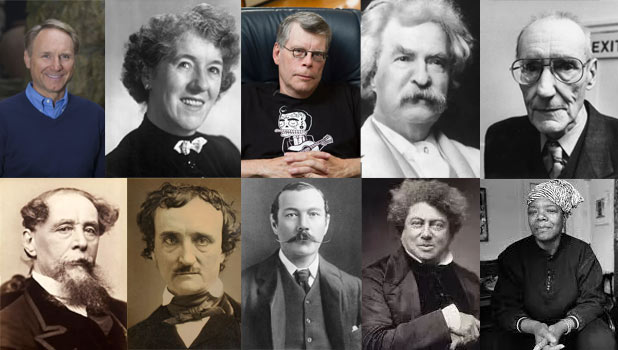
Everyone has their quirks, even famous authors. But here are 13 fun facts about them that you probably didn’t know, and might make you see them differently.

1. Dan Brown, the famed author of Da Vinci Code, was previously a pop singer and had once written a song about phone sex.

2. The author of Famous Five and Secret Seven Series, Enid Blytonhated kids and got hopping mad whenever children made a racket in her neighborhood. Even her younger daughter Imogen called her, “arrogant, insecure, pretentious and without a trace of maternal instinct.”

3. The accomplished horror writer Stephen King has triskaidekaphobia, irrational fear of number 13. He’s so terrified of it that he wouldn’t pause reading or writing if he’s on page 13 or it’s multiples till he reaches a safe number.

4. Apart from being an adept author, Mark Twain was also the inventor of the self-pasting scrapbook and the elastic-clasp brassiere strap.

5. Lewis Carroll allegedly proposed to the real 11-year-old Alice and was also thought to be a “heavily repressed pedophile”.

6. Charles Dickens was so fascinated with dead bodies that he’d spend most of his time at the Paris Morgue.

7. On May 16, 1836, Edgar Allan Poe married his first cousin Virginia Eliza Clemm. He was 26 at that time, and she was 13.

8. William S. Burroughs, the author of Naked Lunchshot his wife in the head during a drunken attempt at playing William Tell. The controversial beat writer had also once chopped the top joint of his finger to gift his ex-boyfriend but instead presented it to his psychiatrist, who freaked out and committed him to a private clinic.

9. Two young school girls tricked Sherlock Holmes’s author Sir Arthur Conan Doyle into believing in the existence of fairies.

10. Jonathan Swift, the creator of Gulliver’s Travels, was first to coin the name Vanessa.

11. Alexandre Dumas‘s pants fell off during his first duel at age 23.

12. J.R.R Tolkien was known to be a wacky prankster who once dressed as an ax-wielding Anglo-Saxon warrior and chased his neighbor.

13. Maya Angelou once worked as a sex worker and a ‘madam’, and chronicled her experiences in her memoir Gather Together in My Name.

***

Via: https://www.buzzfeed.com/13-facts-about-famous-authors

The Rejection Letters: How Publishers Snubbed 11 Great Authors

books-rejected

After nine years of rejection from publishers, Eimear McBride’s debut, A Girl is a Half Formed Thing, won the 2014 Bailey’s Prize. But the Irish writer won’t be the last to laugh in the face of those publishing houses who won’t take a punt on an experimental or challenging novel.

From Gertude Stein and William Burroughs to recent rags-to-riches writers such as J.K. Rowling and Cassandra Clare, there have been brutal rejection letters to accompany most bestselling novels. Here are extracts from some of them:

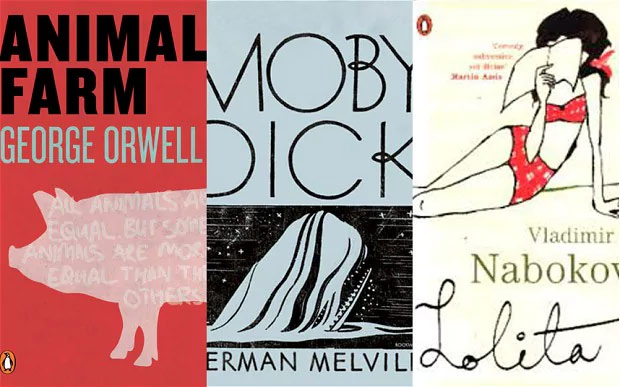
1. “Overwhelmingly nauseating, even to an enlightened Freudian…the whole thing is an unsure cross between hideous reality and improbable fantasy. It often becomes a wild neurotic daydream… I recommend that it be buried under a stone for a thousand years.”

Thankfully, for both Vladimir Nabokov and literature as a whole, Lolita wasn’t buried, but published in France after two years of rejections by New York publishers such as Viking, Simon & Schuster, New Directions, Farrar, Straus, and Doubleday. When Graham Greene got hold of it, shortly after its French publication, he reviewed it in The Sunday Times, describing it as “one of the three best books of 1955”.

Despite this, the novel still wasn’t published in the UK until 1957, because the Home Office seized all imported copies and France banned it. When British publishing house Weidenfeld & Nicolson took it on, it was at the cost of Nigel Nicolson’s political career.

2. “The girl doesn’t, it seems to me, have a special perception or feeling which would lift that book above the ‘curiosity’ level.”

One of the 15 publishers who didn’t think The Diary of Anne Frank was worth reading.

3. “First, we must ask, does it have to be a whale?

“While this is a rather delightful, if somewhat esoteric, plot device, we recommend an antagonist with a more popular visage among the younger readers. For instance, could not the Captain be struggling with a depravity towards young, perhaps voluptuous, maidens?”

Herman Melville’s leviathan novel was rejected, as above, by Peter J Bentley. However, Richard Bentley, of the same London publishing house, eventually offered him a contract in 1851. Moby Dick was published 18 months later than Melville expected and at great personal expense, as he arranged for the typesetting and plating of his book himself to speed up the process. Young, voluptuous maidens never made the final edit.

4. “For your own sake, do not publish this book.”

One publisher turned down DH Lawrence’s Lady Chatterley’s Lover, first published in 1928. Perhaps they had predicted the furore that was unleashed when the full novel did hit the British bookshelves in 1960.

5. “Do you realise, young woman, that you’re the first American writer ever to poke fun at sex”

This was what Anita Loos received before her novel, Gentlemen Prefer Blondes, was successfully published in 1925. It was part of a rejection note, although by today’s standards it sounds quite the accolade.

6. “Miss Play has a way with words and a sharp eye for unusual and vivid detail. But maybe now that this book is out of her system she will use her talent more effectively next time. I doubt if anyone over here will pick this novel up, so we might well have a second chance.”

An editor at Knopf in 1963 rejected Sylvia Plath’s The Bell Jar when it was submitted under the pseudonym Victoria Lucas. After realising it had been written by Plath, who had already published a couple of poetry collections, the same editor read and rejected it again – and managed to spell her real name three different incorrect ways in the process. His assertion that “she will use her talent more effectively next time” is poignant, as Plath had committed suicide six weeks earlier.

7. “You’re welcome to le Carré – he hasn’t got any future.”

A fantastically incorrect prediction by one publisher, sent to his colleague, upon turning down The Spy Who Came in from the Cold

8. “Your pigs are far more intelligent than the other animals, and therefore the best qualified to run the farm – in fact, there couldn’t have been an Animal Farm at all without them: so that what was needed, (someone might argue), was not more communism but more public-spirited pigs.”

The poet TS Eliot, editor of Faber & Faber, was one of the many publishers, including George Orwell’s own, Victor Gollancz, who rejected Animal Farm. When it was published, in 1946, Orwell’s original title, Animal Farm: A Fairy Story was amended.

9. “We are not interested in science fiction which deals with negative utopias. They do not sell.”

Stephen King received this letter about Carrie. His first published novel was rejected so many times that King collected the accompanying notes on a spike in his bedroom. It was finally published in 1974 with a print run of 30,000 copies. When the paperback version was released a year later, it sold over a million copies in 12 months.

10. “I am only one, only one, only one. Only one being, one at the same time. Not two, not three, only one. Only one life to live, only sixty minutes in one hour. Only one pair of eyes. Only one brain. Only one being. Being only one, having only one pair of eyes, having only one time, having only one life, I cannot read your M.S. three or four times. Not even one time. Only one look, only one look is enough. Hardly one copy would sell here. Hardly one. Hardly one.”

So Arthur Fifield, founder of the British publishing house AC Fifield, wrote to Gertrude Stein after receiving one of her manuscripts in 1912.

11. “If I may be frank, Mr. Hemingway — you certainly are in your prose — I found your efforts to be both tedious and offensive. You really are a man’s man, aren’t you? I wouldn’t be surprised to hear that you had penned this entire story locked up at the club, ink in one hand, brandy in the other.”

Mrs Moberley Luger, of Peacock & Peacock, didn’t realise how accurate she was in her 1925 rejection letter of Ernest Heminway’s The Sun Also Rises.

***

So if you’ve been rejected don’t be disheartened, it might be you one day who is able to look back and laugh at the publisher who didn’t want your bestseller!

Happy writing x

***

Via http://www.telegraph.co.uk/The-rejection-letters-how-publishers-snubbed-11-great-authors

Claire Dyer on Research and Imagination | The Literary Sofa

Claire-Dyer.jpg

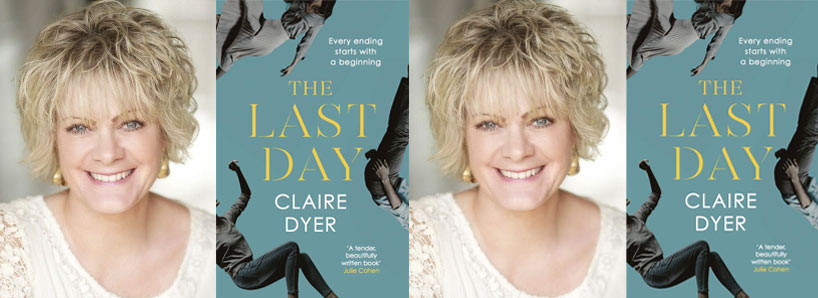
My lovely friend, Isabel Costello of The Literary Sofa, has been talking to Claire Dyer about her new book The Last Day. Here is what they had to say…


Today I am delighted to welcome the first of my Spring Spotlight guests, poet and novelist Claire Dyer. Her novel The Last Day is published by the independent Dome Press, who appear to have an eye for the magic combination of literary merit and broad appeal.  It is very much my kind of book and in my review at the end you can find out why.  But first let’s hear Claire’s thoughts on something which has always preoccupied writers and fascinated readers: the delicate balance between research and imagination in writing fiction:

I once heard that James Joyce trod the pavements of Dublin to make sure it took precisely thirteen minutes to get from point A to point B so he could represent this faithfully in his writing. Also, Wilkie Collins was known to consult astronomical charts to ensure he had a firm grasp of exactly what kind of moonlight fell on the precise night about which he was writing. In addition I also read somewhere that Audrey Niffenegger carefully researched paper making so she could write authentically about Clare’s work in The Time Traveler’s Wife.

However, authors also make stuff up, and it’s achieving a balance between research and imagination that fascinates me and is the topic I wish to explore whilst I’m here on Isabel’s Literary Sofa.

I too have embarked on many and varied types of research: I’ve done pottery lessons (for The Moment), travelled to Athens (for The Perfect Affair), interviewed carpenters, estate agents, doctors, florists, gardeners, bankers and many more to gain insights into the professions I have chosen for my characters along the way. I’ve also checked out train routes, fashions, newspaper headlines, TV listings, the music hits of the day on the internet; I’ve trawled through photographs, books, stared at Google Maps, sent detailed questionnaires to family and friends both here and in the US and have even stood on Newgale Sands in Pembrokeshire breathing in the salty air to help me prepare for the final scene in one of my books. I’ve visited the London Aquarium, Kew Gardens, the Surrey hills and plumbed deeply personal experiences of birth and death and the many stages in between.

I even visited a medium for a scene in my latest novel, The Last Day, a decision which produced a very surprising result. I went fully prepared to take notes, remain unmoved by anything she said and only think of my character, Honey, while I was there. However, half way through the session, the medium told me my mother, who had died when I was a girl, had arrived and wanted to say something to me. I can’t pretend it wasn’t a shock, one that I’m still coming to terms with, and it made me realise that sometimes the line between research and imagination can get very blurred indeed.

Yet amongst all this fact-finding, my imagination is churning away because in the foreground of all this research are my characters and their stories and it’s for them I have to get it right.

And what if I get it wrong? I remember when researching for the day at the races scene in The Perfect Affair, I looked up which horse had won which race, I studied the notes I’d made when I’d been to the races to remind myself of the small details, like how the tannoy sounds, how the horses skitter to the starting post, the press of bodies, the sweat on the animals’ flanks in the winners’ circle, and yet my scene was set in the 60s and so it was only when I pulled up some photographs on the internet that I realised two very important small details which I nearly missed. The first was that all the men in the pictures were wearing hats and the second was that the majority of the punters were smoking. And so, in my scene, I had my characters take off their hats when they arrive in the function room, which itself fills with the smoke of numerous cigarettes as the day progresses.

What if I deliberately fudge the issue? There have been times when I’ve been less than exact about road names, or the distances between places, or timelines, and also when I’ve used a little bit of artistic licence because to me such facts could be in danger of getting in the way of the all-important story. I do feel guilty about this but, on balance, I believe that it’s best for writers to try and achieve a balance between what’s made up and what’s real so that our readers (and, after all, the reader is the person for whom we are writing) can be immersed in the narrative, lose themselves in the ups and downs of our characters’ lives without worrying too much about whether the weather on the particular day in question was actually sunny or not.

And what is getting it right? Is it this immersion, this losing of oneself in the world of the novel? I think it is. And I guess I’m lucky because at least I can check my facts (if I wish to) whereas others who, for example, write fantasy novels can’t. They make up their worlds, they invent currencies, modes of transport, food, clothes and complete ways of life and I admire them greatly for doing so. I don’t think I ever could. And there are even those who like Laini Taylor blend the real with the imagined. In Daughter of Smoke and Bone which I read recently for BBC Radio Berkshire’s Radio Reads, she seamlessly melds modern-day Prague with a fantastical world of angels and monstrous creatures and gives them all hearts and consciences, hopes and fears. It is a huge achievement and one I admire immensely.

I shall continue to base my stories in this world, whether it be now or ten, twenty, thirty, forty, fifty years ago and I shall do my utmost to mix fact with fiction, the exact with the inexact, research with imagination in the hope that my characters will have room to breathe and a voice with which to tell their stories.

***

See the original article, including a review of Claire’s book, The Last Day, here: https://literarysofa.com/2018/03/02/guest-author-claire-dyer-on-research-and-imagination/

And check out more fantastic author interviews and book reviews on Isabel’s blog: the Literary Sofa.

Joanna Walsh: Author Interview

joanna walsh

Taking in everything from linguistic dystopianism to Freudian whimsy, the stories in Joanna Walsh’s second collection, Worlds from the Word’s End, are alternately playful, melancholic, subversive and wistful. The collection demonstrates the wide range of Walsh’s writing, and her continual desire to shift the boundaries of conventional storytelling. From the mid-European detachment of Hauptbahnhof to the playful fairy tale Simple HansWorlds from the Word’s End marks Walsh out as one of our most inventive authors.

Here, she talks to Minor Literature[s] about the impact of technology on storytelling, autofiction, and demystifying the role of the author:

In many of your stories, from Fractals (2013) and Grow a Pair (2015) up to your current collection, you examine the influence of technology on the way we communicate; this is perhaps most directly addressed in the title story from Worlds From the Word’s End. As a writer, how do you incorporate these changes in discourse into your work, and what challenges do you face? 

It a no-brainer. We live via technologies–and always have: writing is the original technology if by technology you mean an artifice created to replace or extend a human function–and each technological shift creates different styles of language that facilitate (and hamper) our uses of it, and its uses of us. Language that wants to section itself off as ‘literary’ is dead. Interesting writers keep a close eye on changes in the ways we speak and write to each other, as well as how this speaking and writing changes us. 

As you showed with your novella Seed, you’re very open to experimenting with digital storytelling techniques; what sort of possibilities do you think new technologies open up for your work, and how can this help to move literature forward? 

I’m not interested in the digital reproduction of the conventional book form. If I’m reading a ‘book’ I prefer print. I hope digital offers a huge number possibilities that do not already exist in print for representing experience via words, most of which I know nothing about. In Seed, I’ve used digital to explore written ways of telling developed by modernist and postmodernist writers, and in feminist and posthumanist thought, that challenge conventional linear notions of time and memory, and conventionally coherent subjectivity (aka ‘plot’ and ‘character’). 

You’ve already published short fiction, digital fiction, creative non-fiction (Hotel) and the A7-sized Shklovsky’s Zoo, amongst other forms; do you see yourself as a sort of ‘format agnostic’? Or is there a particular form you’d like to focus on in the future? Equally, is there anything you haven’t yet tackled which you’d like to try?

Form seems to arise to fit individual projects, or projects to fit situations. I’m flexible, and innovation is always also response, depending on collaboration, funding opportunities etc. But Hotel was a challenge to genre rather than form. If it began as response, it became deliberate, which makes me less an agnostic than an iconoclast. It started as an attempt to tell an autobiographical story outside the bounds of ‘memoir’. Traditionally memoir seems to concentrate on the subject. I’m only interested in myself as a starting point for discussing something wider. 

Following on from this, you’ve previously said that in the Anglosphere, the terms ‘writer’ and ‘novelist’ are almost synonymous. Do you think there have been any negative consequences from having moved between styles and formats early in your career, or is this something you’ve ever worried about? 

I started writing with no expectations of a ‘career,’ conscious of  not having written books that fit into easily saleable categories. But I haven’t been a writer all my adult life, and the idea of writing ‘the next book’ for the sake of writing the next book makes no sense to me. If that became the case, I hope I could walk away from it. But I hope I’ll be able to continue as an ‘amateur,’ like Clarice Lispector… though I also hope my amateurism has a long course  🙂

Autofiction has been an influence on your work; at the moment, the most prominent autofiction writers, such as Chris Kraus, Michelle Tea and Sheila Heti, seem to be based in North America. Do you think there’s something in the British literary scene which discourages this style of writing, and if so, are we likely to see that change? 

The UK reviews of Heti’s How Should a Person Be were almost unanimously negative, usually due to a perception that it is ‘narcissistic’ to write about yourself. I don’t see much change to that yet, but I meet (and teach!) people who want to read (and write) something they can’t quite define: a take on their own story, but not memoir or biography… and I spend a lot of my teaching time giving them permission to write what they want. But my influences don’t come only from North America, but also Europe, particularly France: NDiaye, Garreta, Duras, Sarraute, Ernaux… 

You’ve spoken previously about the importance of authors talking about how they make a living, if not solely from their work. Do you think there needs to be a process of demystifying the role of the author? And is this a shift that you see happening? 

Going back to Lispector: though she claimed to be an ‘amateur’ writer, she was a successful journalist, producing hundreds of columns on a variety of subjects for Brazilian newspapers. Perhaps her amateurism resided in her ability to separate paid work from play. “A professional has a personal commitment to writing. Or a commitment to someone else to write,” she said. “I insist on not being a professional. To keep my freedom.

When I read novelists in newspapers complaining they can’t make a living as a writer like they used to, I usually find they are living the sorts of lives I wouldn’t want to live, writing the sorts of works I wouldn’t want to write. They are ‘authors.’  

“If there’s any mystery left around the position or author (rather than around the practice), I’m be happy to see it evaporate.

But who is paid, and what they are paid, to write, is never neutral. These are things we need to question, and re-question. It is nice to be paid for something you’re skilled at, but the relationship between money and art can never be entirely ‘demystified,’ or art would become static. Fair returns should be paid to people whose work is sold,’ but that’s a commercial proposition. If writing can be weighed out and paid for per word, I don’t want to know what that exchange rate is. 

But, to answer your question: in practice, I have earned a living from journalism and teaching and, at the moment, PhD funding plus the occasional grant or residency. I don’t make much money from writing books, nothing like the UK living wage, but this has made my practice wider that it would have been were it easier to comfortably make a living by producing books.

What’s the relationship between the stories in Worlds From the Word’s End, and those in your previous collection, Vertigo? Was there a particular feeling you envisioned for each collection, that influenced your choice of stories? 

The stories for the two collections were mostly written concurrently – I had not idea that they’d be collected into these two volumes. Danielle Dutton of Dorothy made the initial selection of stories for Vertigo, selecting those with a hyperreal focus, about women in family relationships. I realised that the remaining stories had something in common too: a concentration on wordplay and abstraction. With a little work, they formed what I hope is an equally coherent collection. 

If you were an Egyptian pharaoh and had to be buried with a few key objects to take to the next world, what would they be?

It sounds wanky, but I’m not attached to particular objects, though I for preference I will live in a pleasant—though easily-reproducible—environment (a few nice clothes, a reasonable laptop, good coffee & decent alcohol please). I’m happy being temporary, in anonymous spaces, in other people’s houses. And I like to say goodbye to things. Recently I destroyed a lot of my artwork from when I was an illustrator because I have less storage space in my new place. I had a few twinges about that after, but it was probably the right thing to do because I felt it was at the time. I don’t like to go to writers’ houses, but I was in Prague with someone who wanted to visit Kafka’s house, and it’s now my favourite writers’ museum: so beautifully designed, around so little of him. I’m horrified how writers are interpreted via their ephemera: burn it all!

What’s your favourite portrait (it can be a song, a painting, a film, anything)?

This week? Maybe Joni Mitchell’s Carey.

***

Via: https://minorliteratures.com/2017/09/06/an-interview-with-joanna-walsh/

On Art, Music, and Lovers: A Novel by Mira Tudor

MiraTudor

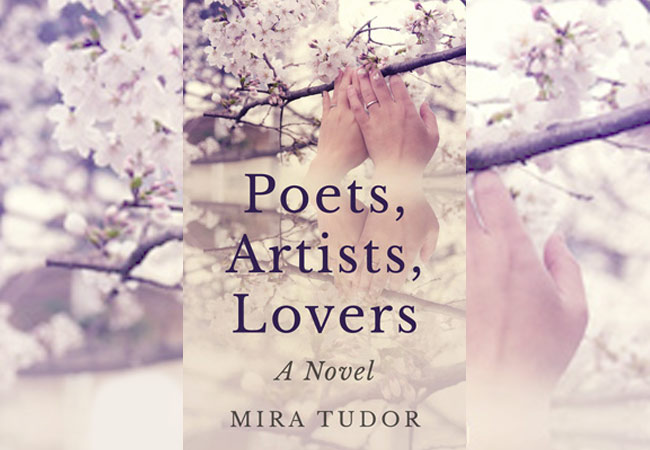
Today on Writer’s Blog is a special guest author, Mira Tudor. She has written a book entitled Poets, Artists, Lovers: A Novel which is her debut. She got in touch to let me know about her work, an excerpt of which is below.

I am very happy to support up and coming authors, as we all know how hard this business of writing is. And so, if you read the excerpt and want to read more, please follow the link to Kindle Scout, where you can do just that, find out a bit more about Mira, and vote for her work. If you do vote for it, you will receive a free copy of the novel, which is always a nice bonus.

Enjoy!

“Why are you always leaving your things in the middle of the floor?” Haralambie asked his girlfriend, stepping out of the kitchen into their living room.

Henriette ran her hands through her long, wavy red hair, looked at him ruefully, and got up from her computer.

“Henriette, this is not just your studio. I live here too,” Haralambie continued, bending to gather her latest clay pieces, her sculpting utensils and plastic sheets, which he placed on a shelf on the balcony with some of her other works. Having thus voiced his feelings and tidied up the place, he headed back into the kitchen to light another cigarette and drink the rest of his coffee by the window.

In the adjacent room, Henriette swayed languidly to a sixties rock ballad, flailing her arms and bending this way and that until she noticed Haralambie’s slim body leaning comfortably against the doorframe.

“Is that what it’s like at those parties of yours?” he asked.

“No, but that’s how I like it sometimes,” she responded provocatively, a wicked smile on her lips.

Haralambie walked over to her, cupped her face in his hands, and planted a kiss on her lips. “You’re not sixteen anymore, Henriette, and you know it.”

To read more, please follow this link: https://kindlescout.amazon.com/p/JSEPZW00AG6S

The campaign will finish on 22 July 2017.