Embrace the Art of Editing

Art-of-Editing-1

When I write, I write alone.

This statement is true for most people who take on a creative pursuit such as being an author. In fact, solitude is often the key to finding ‘the flow’ or ‘the zone’ or whatever you like to call the wonderful state where words pour onto the page bringing ideas to life. But when the story reaches its conclusion, or creative flow eludes you, being alone can become simply, lonely. That loneliness can create a space where self-doubt grows, making it even harder to keep trying.

When you finally send your work out into the world, perhaps to an agent or a professional editor, you can be forgiven for being a little apprehensive whilst awaiting a response. After all, you are sending out your darlings to be judged.

However, hearing someone’s thoughts and opinions about your work will help you see your writing in a new light. There’s always the risk of getting too close to a story, whether it’s fact or fiction. The people, good or bad, and the drama can come to affect you so deeply that objectivity becomes difficult. You begin writing from the heart rather than your head, so removing yourself enough to know what to cut can be near impossible.

In the case of fiction, it is rare when an author is not emotionally involved. We create characters from our imaginations, giving them life, hopes, dreams and obstacles to overcome. So similarly, when it comes time to edit, one of the hardest things to do is ‘kill our darlings’ – as it should be!

Editors can be objective. Whether we are talking about journalism or fiction, they are not emotionally invested like the author. Their job is to take a clinical look at the piece. They are experienced wordsmiths who can examine word placement, flow, character, plot, structure and the basics of spelling and grammar in order to give constructive feedback.

Having at times been both an editor and writer I have learnt a very important lesson; editing is essential, regardless of the form of writing and it is something we need to learn to embrace. There are horror stories about bad editors who do more harm than good, so as an author it is always your job to maintain the integrity of a story or article. However, also remember good editors have just one goal in mind – to make your writing the very best it can be.

The key is not to take feedback too personally, something often easier said than done. Not all editors are gentle and sometimes they point out things you don’t want to hear, but all feedback will teach you something.

While it can be confronting to open yourself up for criticism, editors also help give you confidence in your creation by making sure the story essentials are all clear and in place. So if you’re lonely or struggling, find an editor and don’t give up.

Things to remember:

  • See feedback as an opportunity to improve
  • Don’t be precious or defensive – if you really don’t agree, don’t make the changes
  • Keep an open mind
  • Enjoy the process of sharing your work
  • Be brave

Finishing a writing project, big or small, is an achievement that should not be understated. Many writers work around day jobs, family and dozens of other life obstacles. So keep writing and embrace editing, you never know where you might end up.

Read the original article here: http://writersedit.com/embracing-art-editing/

Punctuation Problems for Writers

Punctuation

Punctuation is usually the most ignored grammar aspect when it comes to writing. Yet, it might make you look really unprofessional in the eyes of your readers. In some cases, they may just fail to understand you well. Learn the most crucial punctuation mistakes and take all the necessary steps to avoid them.

1. Oh that comma

The use of commas adds necessary breaks into the text. Without commas, it would be difficult to choose an appropriate intonation and divide the sentences into logical parts. You can either miss them where they are necessary or put too many of them into the text.

Solution: Read your sentence out loud and pay attention to those places where you make pauses. Don’t put commas after “but” or “and” if the second sentence doesn’t have a subject. If you see your sentence is too long and overloaded with commas, try replacing some of them with periods and making two or even three sentences out of one.

2. It’s or Its

Inappropriate use of any of these forms is quite widespread in writing today. Though being seemingly similar, they have absolutely different meanings, and their misuse can affect the entire sentence. This is actually one of the most popular mistakes that even experienced writers can accidentally make.

Solution: It stands for it is or it has while its is used when you are referring to a possessive form of something. Always read your text upon writing. It will help you spot even those mistakes you’ve been confident you’ve avoided.

3. Confusion with apostrophes

The use of apostrophes can often be a problem, especially for non-native language speakers. Even if you remember to put an apostrophe whenever you need to create a possessive form, some issues are still unclear when you do it.

Solution: It’s their’s – apostrophe shouldn’t be used here. Be careful when the noun that is used before another noun serves as an adjectival label (e.g. writers conference). In this case, no apostrophe is required either. When we need to create a possessive form out of plurals, keep in mind that they already end in s and the apostrophe has to be placed at the end of the word (e.g. babies’ beds).

4. Too many exclamation marks

Do you really think you will grab more attention if you use exclamation marks all over the text? It will only make your text annoying. By the excessive use of exclamation marks, I mean either using them after each sentence or using three or more marks in a row.

Solution: Remember: if you add more exclamation marks than necessary, it won’t make your information more meaningful. Leave them for some really impressive facts or details. Don’t make your readers bored with them. In addition, your text will look visually unattractive if it’s overcrowded with exclamation marks.

5. Hyphen or Dash

The misuse of dashes and hyphens in a text is quite widespread among writers. And that’s not just because of not understanding the difference. It’s mainly because of some keyboard limitations when you work in certain text editors.

Solution: Hyphen (short line) is used to bridge two or more related words (e.g. face-to-face). Dash (long line) is used to describe things in detail or show a better explanation of something. Very often, it’s possible to see a dash shown as “–” (two hyphens). Make sure you use it as “–“ to look more professional.

6. Misuse of quotation marks

The excessive use of quotation marks in a text is quite common. They are often used to emphasize certain parts of the sentence and make them look visually stronger. When nothing is quoted, neither single nor double marks are relevant.

Solution: As the name suggests, we should use the quotation marks only when we quote someone’s words. When you really need to emphasize something, consider using italic or bold font, or even write it in a different color. One more important detail about the quotation marks is their combination with the commas, periods, exclamation and question marks. All the punctuation marks should be put inside the quotation marks.

7. Colons and semi-colons

These are sometimes mistakenly used interchangeably in the text or used where starting a new sentence would be much better.

Solution: Colons are used in a text to introduce one or more items. However, try not to use colons when the list follows the verb (e.g., I want tea, breakfast, and water). They are also used when you are listing items one per line or when two independent clauses are used, and one of them explains another one (e.g., He got what he deserved: he really worked hard to get this promotion).

8. One more comma problem

While sometimes you just need your common sense to feel when commas are required, in the majority of cases, you will still have to rely on the rules to make sure you use commas where necessary.

Solution: All the introductory words (Moreover, In addition, However) are separated with a comma. When you need to specify some unessential information in the text, you’d better separate it with commas too. You should also use it before a direct quotation.

9. Inappropriate punctuation of Latin abbreviations

Latin abbreviations are used quite frequently in the text. However, some of them can sometimes be misused or punctuated incorrectly.

Solution:

  • etc. means so on. If it’s put at the end of the sentence, one more period is not required.
  • e.g. means for example. It’s followed by a comma.
  • i.e. means that is, in essence. It is followed by a comma as well.

10. Punctuation of bulleted lists

Bulleted lists make it easier to present information and list things. They are used so frequently that it’s necessary to know how to punctuate them properly.

Solution: If one bullet covers a full sentence, use periods at the end of each. Use no punctuation marks after single words or phrases. However, the last item in the list will be followed by a period. Do not use semi-colons to separate the list items.

Read the original article here: https://www.justpublishingadvice.com/10-top-punctuation-problems-for-writers/

Is A Pseudonym Right For You?

pen-name-right

In the past the use of a pseudonym (or pen name) has been common practice for many reasons. It’s been a particularly popular choice among authors who change genres, are concerned about their privacy, or want to mask their gender. While some authors have been known to make great use of pseudonyms, it’s all about when to use them, and when to not. In this age of digital abundance, it could be argued that pseudonyms offer little use to most authors. This is especially the case when authors choose to use a pseudonym for the wrong reasons…

If you are an emerging writer and you have ‘nothing to hide’, you probably don’t need to use a pseudonym. In fact opting to use one is likely to place more strain on yourself and your publisher, as it requires you to register the name for copyright purposes and requires consistent application of the name when you’re submitting works to publish. Editor and writer Moira Allen has some great information on the logistics of using a pseudonym that you can find on her site ‘Writing World‘. If you have found success as an author however, there are a few good reasons to adopt a pseudonym.

When a Pseudonym’s right for you

You need to keep your worlds separate

Do you need to keep your personal and professional lives separate? If you answered yes to this question, using a pseudonym could be a good idea. Privacy is a lot harder to maintain in the electronic world, but if you’re careful, it’s possible to hide your true identity from your readers. Separating your personal life from your work life can be particularly relevant for writers of certain genres. Are you an erotica writer that teaches primary school by day? Or do you work for a government department that won’t allow you to publish under your real name? These are the sorts of situations when you’re likely to benefit from using a pseudonym.

You’re switching genres

Once you’re an established writer you may decide you want to switch genres. Let’s say you’re a romance author who wants to mimic the style of authors like George R.R. Martin and explore the world of fantasy; it’s common practice to use a pseudonym in these situations. J.D. Robb is a good example of this. He managed to stay masked as a new science fiction writer for a staggering six years before coming out as Nora Roberts, a popular romance author. Even since her revelation Nora Roberts still publishes her sci-fi novels under J.D. Robb. Using a different names for different genres can keep your readers from getting confused and allows them to stick to the reading the genre they want.

When not to use a pseudonym

Sadly many authors make the mistake of using a pseudonym for the wrong reasons, or don’t acknowledge how difficult it is to juggle a pseudonym and your real name. An author on Mindy Klasky’s blog cited her difficulty with maintaining her pseudonyms:

“I tried to juggle two pen names before I was published – one for erotic romance, one for mainstream. That meant I was three people in public. It was waaaaay too confusing for me; I never knew how to refer to myself at conferences. Fortunately, only the erotic romance took off, and I could drop the other pen name before people even really knew it existed.”

When you want reader’s to identify with you

People associate the name with the writing it accompanies, not the other way around. The truth of the matter is that people are more likely to identify with your work if they can identify with you as an author, readers like having that link between them and the person that wrote the book they’re obsessing over. Think about it, every time you read a book that you really love, the first thing you do is Google the author; you want to know who they are and what they do, more importantly you want to know if they have any other books that you can fall in love with. Next thing you know, you’re buying all their books and recommending them to all your friends. Writing anonymously can take away that link between reader and author.

You want to protect yourself legally

Another common mistake writers make is thinking using a pen name can protect them against defamation or writing about real people. This is definitely not the case. A pseudonym will never protect you against legal repercussions. Your pen name is a flimsy cover for what’s underneath; the exterior doesn’t change the interior. One way or another the people you write about will find out who you are and that’s bound to get messy. The only real way to avoid legal ramifications is to keep your subjects informed and always seek their permission.

***

Deciding whether or not you should use a pen name can be tricky, the best way to decide is to weigh up the pro’s and con’s that are relevant to you and your circumstances, and consider how using a pseudonym could benefit you.

Good luck!

Via: https://writersedit.com/pseudonym-right-for-you/

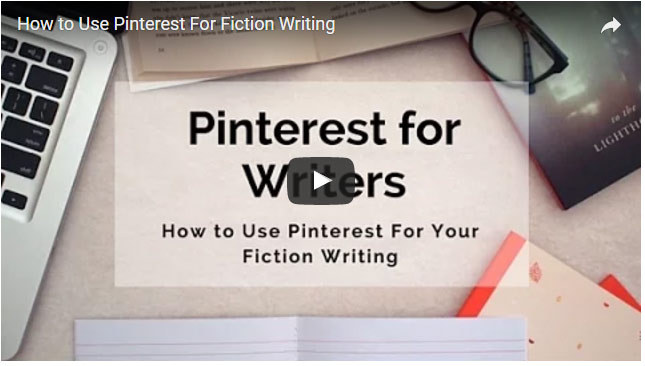
Video: How Authors Can Use Pinterest For Fiction Writing & Novels

Pinterest-video

Further to yesterday’s post about researching your novel, here is a link to a useful video from Writer’s Edit, in which Founding Editor Helen Scheuerer talks about how she used Pinterest to organise visual aids for the second novel in her fantasy series.

“It’s something I never really considered before… But now I don’t think I’ll do another book without it. I’ve created boards for different characters, settings and costuming. Any big element in my book, I have a board for it.”

To watch the video follow the link here: https://writersedit.com/video-how-authors-can-use-pinterest-for-fiction-writing-novels/

Happy researching!

How to: Research a Novel

Research is a given when writing non-fiction texts. Journalists and authors of non-fiction books are no strangers to researching a piece before they start writing – but what about fiction authors?

If you’re writing a novel and wondering whether you need to research it, the answer is generally yes. The same rules that apply to non-fiction writers don’t necessarily apply to novelists, but research is nevertheless an important step in planning to write a novel.

There are plenty of things you can do to ensure you’re writing the most authentic novel possible. Setting, characters, plot details, historical influences, even genre and craft – all these elements and more can be researched to strengthen your knowledge and flesh out your book.

So how exactly should you approach the research process?

Let’s take a look at seven top tips to get you started.

1. Establish a system to organise and store research

Before you start researching, it’s imperative to get organised. There’s no point collecting hundreds of bits of information only to create a disorganised mess that you won’t be able to navigate later!

Every writer works differently, so think about your own methods of organisation and what might work best for you when it comes to sorting and storing your research.

Here are a few organisation methods to consider:

  • A physical folder or binder, divided into clearly labelled sections such as Setting, Characters etc., in which you can store hard-copy sheets of research and information.
  • A digital Research folder on your hard drive, divided into sub-folders for each section of your research. If you choose this option, make sure to back up your files regularly to avoid losing data.
  • A notebook full of handwritten notes, clippings and snippets of information.
  • A set of research files in a novel-writing program such as Scrivener. These kinds of programs are great for storing information, and because your novel and your research are stored in the one place, it’s easy to access them simultaneously. (Again, as with any digital method, ensure you back up your files religiously.)

Whichever method of research storage you choose, ensure it’s easily navigable, accessible, and well-organised. Trust me – you’ll thank your past self when you’re in the midst of the writing process and know exactly where to refer to that specific piece of information!

2. Read, read, and read some more

As a writer, you’re probably a voracious reader already (and if not, you should be!). All reading helps to improve your craft, your knowledge and your story, but when you’re researching a novel, your reading will have to kick up a notch.

Whether it’s books, newspapers, online articles or any other source of written material, reading is going to be your primary method of attack when it comes to novel research. Let’s take a look at the different kinds of reading you’ll need to do in preparation for writing your book.

Read texts on your subject matter

Obviously, your chosen subject matter will be the first thing you start investigating.

Writing a crime novel? You’ll need to research things like murder weapons, forensics, and past criminal cases. Writing a romance novel set in modern-day Rome? You’ll need to pay Italy a virtual visit by reading as much as you can about its capital city. Writing historical fiction set in medieval Europe? Time to learn everything you can about that period in history.

‘But I’m a poor, struggling writer,’ you might be thinking. ‘How am I going to afford all these books I need for research?’ Well, two words will solve that problem, my friend…

The library

If you’re not already a frequent visitor, it’s time to acquaint yourself with your local library. It’s free to become a member, and most libraries will have hundreds, if not thousands of books on every subject imaginable.

Most libraries should have an extensive catalogue of all their resources, so all it will take is a few keyword searches to discover a wealth of information relevant to your novel. You can borrow as many books as you need, taking down notes as you read and giving yourself a solid foundation on which to build your own story.

If you’re a university student, your uni library can be a great place to start your research. University libraries often have large research collections and access to exclusive online databases.

The internet

Here’s a fact that may horrify the most dedicated bibliophiles among us: all the information you need might not necessarily be found in books.

Shocking, I know! But never fear: there’s this new-fangled thing that’s perfect for writers researching their novels, and it’s called the internet.

Think of it as your personal, digital library, full of countless pieces of information and inspiration, all available from the comfort of your own desk or armchair. Everything from online encyclopaedias and databases to blogs and digital publications can be extremely helpful in your research process.

However, there’s a caveat that comes with using the internet to research your novel: you need to be extra careful about online resources and their validity.

The internet, being the enormous, free source of information it is, can unfortunately be subject to some pretty dodgy information at times. To avoid being misinformed, ensure you’re gathering information from reliable sources, and that any facts you uncover can be validated.

It’s easy to fall into the Wikipedia trap and believe that everything written online is true, but unfortunately that’s not necessarily the case, so you’ll have to be more discerning when researching on the internet.

Read other novels dealing with similar subject matter

Research doesn’t necessarily have to be restricted to reading non-fiction texts about your subject matter. You can also read other novels as a valid and useful form of research.

You can begin by reading novels that deal with a similar subject matter to your own. This will not only give you some extra information on your subject, but will also allow you to see how that subject has been covered before, and how you might approach it differently.

As well as novels with similar topics, it’s a good idea to read widely in your chosen genre. This method of research is especially helpful for writers in genres such as sci-fi and fantasy, who can’t necessarily visit the places or research the time periods featured in their entirely imagined stories. Reading other novels in your genre can help you see how other authors have tackled the process of building their own worlds. (More on researching genre and craft below.)

TIP: On Goodreads, you can often find user-generated lists of books about particular topics. Simply perform a Google search using the keywords ‘Goodreads’ and ‘novels about [insert topic]’.

For example, say your novel is about an artist. Googling ‘Goodreads novels about artists’ brings up several lists, including ‘Art & Artists in Fiction’, ‘Fiction Books Involving Art’, and ‘Books With Main Characters Who Are Artists’. These lists can give you a great place to start when deciding what novels to read as research for your own.

3. Delve into other forms of media

Books, newspapers, articles and online resources aren’t the only things that will help you with your research. While reading will likely be your primary method of gathering information, other forms of media can be extremely helpful as well.

Video

Movies, documentaries and videos on YouTube can all be great sources of information and inspiration for writers. Whether you’re researching a place, a time period, a type of person or a particular culture, you’re sure to find some video sources that will help you understand your topic.

Sometimes, sensory sources such as video are even more helpful than written ones, as they can allow you to see, hear and virtually experience things you might not otherwise have access to. Try searching some relevant keywords on YouTube or Netflix and see what comes up.

TIP: Similarly to the Goodreads lists mentioned above, you can find movie recommendation lists online at websites like IMDb. These are also user-generated and can be found using a similar method: Google the keywords ‘IMDb’ and ‘movies about [topic]’.

After you’ve found a few movie options, it’s simply a matter of renting, purchasing, or downloading/streaming the movie (legally, of course) to provide some visual inspiration for your novel.

Images

Images are the next-best thing to video when it comes to visual research for your novel. With millions of images available and easily accessible online, you’ll be able to get a much clearer mental picture of the things you’re writing about in your book.

Online images

Google Images and Wikipedia are great places to start – simply type in some keywords and start browsing their mammoth collections. Plenty of institutions have online image galleries, too; for example, if it’s historical images, maps or text excerpts you’re after, try something like the British Library’s online image gallery.

Google Maps is also a great tool for conducting research about locations and settings. We’ll talk more below about actually visiting real-world locations for research, but when that’s out of the question, using the Street View function of Google Maps is the next best thing.

Pinterest

Using Pinterest for fiction writing and novels sounds like a strange concept, but believe me – it can be super helpful! As a visual medium, Pinterest is full of all kinds of images that can be utilised for a writer’s research or inspiration.

You can browse Pinterest without becoming a member, but if you sign up for a free account, you can also create your own collages and collections using what are essentially digital ‘mood boards’.

This is a great way to organise and store images for different parts of your research. For example, you might have a Pinterest board full of images relevant to your setting, another for images of characters and clothing, and so on.

4. Talk to people.

We writers are generally a solitary bunch, but when it comes to researching a novel, sometimes it pays to step away from your desk and talk to some real people!

It might be an expert on the subject you’re writing on, a resident of the location in which your book is set, or a person who can relate to the situation one of your characters is in. It might be a friend-of-a-friend, a relative, or someone you’ve found by reaching out to your local community. Whoever you speak to, you’re likely to gain truly valuable first-hand information and insight that you just can’t get through a book or the internet.

For those who are shy about reaching out to strangers, remember that in today’s digital age, you don’t necessarily have to seek people out in person or by phone. Many internet communities exist in which you can communicate with others via online forums or messages.

Reddit is a great example. It has thousands and thousands of sections, or ‘subreddits’, dedicated to every topic imaginable. Once you’ve found your desired subject, you can search through the existing posts for information, or become a member and create your own call-out seeking answers or insight on a particular aspect of the topic.

TIP: Talking to people while researching may not only provide you with information, but also with inspiration when it comes to characters. Meeting and chatting with new people is a great way to gain insight into the way different people act and speak, and can inspire character traits or quirks in your own fiction.

5. Immerse yourself in some real-world research.

Just as it’s helpful to talk to real people in your research, it’s also extremely valuable to get out and visit some real-world places!

We spoke above about researching setting and place through various online methods. However, if at all possible, it’s always a good idea to visit the places you’re utilising in your fiction. Take some time to stroll through the location, taking in not only the sights but the sounds, smells, vibe and atmosphere of the place.

If you’re writing about a made-up setting, you can visit a similar location to inspire the place of your own invention. For example, if your novel is set in a fictional small beachside town, visit a few of these kinds of locations, and allow details from each to inspire and be woven throughout your novel’s unique setting.

TIP: Don’t assume you already know all there is to know about your setting – for example, if your novel is set in your own home town. Just because you’re already familiar with a place doesn’t mean you don’t need to conduct further research.

You don’t want to become complacent with your existing familiarity. It may mean you don’t end up truly doing your setting justice for readers who aren’t as familiar with it as you are.

6. Extend your research to craft as well as content.

When writers think of researching their novel, they usually think of investigating all the main content components we’ve covered above: setting, characters, plot elements, etc.

However, don’t just restrict your research to content alone. You should also research the craft of writing itself. This kind of research comes in two forms: style and genre.

Style

Research on style involves learning about how to improve your skills as a writer. Whether you’re reading advice from other writers, completing writing exercises, or taking a course to further your skills and knowledge, researching the craft of writing is an essential step for any novelist.

As a writer, you should aim to constantly improve your skills and style over the course of your entire career. This means keeping up to date with advice, branching out and experimenting with your skills, and always striving to become better at your craft.

Genre

Research on genre involves learning everything you can about the genre in which you’re writing. You should be intensely familiar with your chosen genre, reading widely within it and learning from the works of other writers.

You should aim to discover where and how your own work will fit within the genre, and to think of ways you can introduce a fresh perspective.

7. Don’t get stuck on research and forget to start writing.

Phew! We’ve covered a lot of ground here. Hopefully you’re now feeling prepared and ready to get stuck into researching your novel. However, once you do start researching, it can be hard to know when to stop.

‘How long should I research for?’ is a common question asked by many writers. Unfortunately, there’s no easy answer – only you will know when you have enough material to begin the writing process itself. It’s usually better to have more research material than you’ll actually need, rather than not enough.

However, you must be careful not to fall into the trap of never-ending research as a means of putting off the actual writing of your novel.

If you think this is happening to you, don’t worry – it’s completely understandable. Writing an entire book can be a daunting and overwhelming prospect, and writers want to feel as prepared as possible before they launch themselves into the drafting process.

However, there’s really no such thing as being completely prepared to write a novel. The truth is that even the most experienced writer often needs to jump in head-first and just see where the writing takes them!

Don’t spend months or years researching without writing a single word of your novel. Gather enough information and inspiration to form a solid foundation and starting point, then ease yourself into the writing. There’ll always be time for further research later on; right now, if you’ve got enough research behind you to begin, then begin.

TIP: One important final recommendation when it comes to research: not everything needs to end up on the page. This is the classic error new writers make: ‘info-dumping’ the product of their extensive research in its entirety, believing it will make for a better story.

The truth is that readers don’t want to be spoon-fed every single piece of information. They’re not reading a research report, after all; they’re reading a novel.

Weave details into your story sparingly, and allow your research to inform your writing as subtly as possible. When it’s clear you know what you’re talking about, your readers will, too. There’s no need to overload them with detail and information.

Happy researching!

Via: https://writersedit.com/top-7-tips-researching-novel/

Book Production & Marketing | What You Need to Know

bookshop

Over the last few decades, major changes in technology, the way we read and the ephemeral nature of our economies have impacted the way we produce and publish books.

The polarisation of the book industry has become an accepted idea: multinational corporations dominate while small and micro-publishers do well on their own terms as well, with little room for success in the middle space.

This special feature will examine what defines large and small publishers, and will analyse the different approaches they take when it comes to signing authors, book production, printing and distribution as well as their approach to marketing and publicity.

We’ll aim to explore the diverse environment of book production and bookselling in specific reference to trade publishing.

Defining Big and Small Publishers

In order to examine the different approaches to book production both large and small publishers have, we must first define what ‘large’ and ‘small’ refer to.

Our idea of ‘large’ publishers will be modelled on what are known as the “big six” – Penguin Random House, Harper Collins, Allen & Unwin, Pan Macmillan, Hachette, and Simon & Schuster.

These large publishers are major international corporations with multimillion-dollar parent companies such as Bertelsmann, Pearson, News Corp and Lagardère. Small publishers will be defined as those who publish fewer than 30 titles a year and/or earn no more than £30,000 in revenue (Freeth, 2007).

Other significant differences that define these publishers are the number of staff they employ. Large publishers employ hundreds of people from in-house editors, publicists, marketers, and designers to freelancers, while small publishers can operate from someone’s home, with just one or two people at the helm, using largely freelancers and unpaid volunteers.

These details alone portray the vast difference in scale between large and small publishers.

Approaches to Book Production

For the big publishers, the sheer scale of their operations can be immensely beneficial in terms of rationalising and consolidating their economies.

John B. Thompson refers to the “the reduction of overheads and the consolidation of sales forces, warehouses, distribution and other publishing services…” For example, take the results of the recent Penguin Random House merger.

Two initially separate entities, with separate offices, staff and lists are now combining, with the staff from Penguin having just moved into the Random House Head Office in North Sydney.

In addition to tens of thousands of pounds in savings in rental agreements, each department “will be scrutinised for unnecessary duplications. The redundancies will be earmarked for elimination or consolidation” (Curtis, 2012). This is just one example of large-scale consolidation.

Big publishers use one team of experts to produce and sell more books than the small publishing houses, increasing their profit margins considerably. While for small presses producing far less titles, often the owner/founders work ‘day jobs’ to pay the bills, or:

Costs are often kept to a minimum by working from home or renting offices in low-rent premises such as disused factories. If there are paid employees, they often work long hours for modest salaries and much of the routine work is done by unpaid interns (Thompson, 2012).

Although small publishers have less revenue, they can take advantage of the low entry cost into the industry, as well as the virtual office. They have the ability to order, edit and correspond remotely, without the high costs of renting an office space.

One of the most significant factors to identify when considering different approaches to book production is the reputation or ‘brand’ of the publisher. This can affect their approach to book production three-fold: 1. In the quality of staff they can entice and hire, 2. In the prestige of the authors they sign, and 3. In the number of readers and retailers they attract.

When it comes to reputation in book production, big publishers certainly have the advantage. For example, Penguin Random House is a household name in the book world, making it a smart career choice for production professionals and authors.

A certain degree of prestige is associated with big publishers, which is why authors and staff are inclined to work with them over a small publisher. Both staff and authors can expect decent salaries/royalty rates, and may also see a positive effect on their own reputation due to their affiliation with a big publisher.

Readers and retailers must also be considered. As multinational companies tend to dominate the bestseller lists, it’s only natural that both readers and retailers come to associate these companies with books of quality.

Big publishers’ histories are steeped with success stories, and so retailers and readers come to trust their brands. This tells us that big publishers often have the first option when acquiring new titles due to their reputations alone.

Small publishers, however, often don’t have the same level of reputation, which can sometimes work against them in terms of acquisition of titles, and indeed, staff.

They don’t have competitive budgets to work with, and so often cannot afford the same services a big publisher can. However, size can work to their advantage when it comes to the economy of favours (Thompson, 2012).

This works in numerous ways, the most common being that small presses share their contacts, resources and knowledge with each other, and that freelancers charge small presses far less than they do to a big publisher.

For example, the cover designer for Kindling worked according to the economy of favours rather than her usual rate. By day, Alissa Dinallo designs covers for Penguin Random House however, she took on the brief from Writer’s Edit Press at just a fraction of the cost.

Working for emerging writers is a nice change of pace to working in trade publishing. Even though I love the fast-paced nature and commercial aspects of my job, it’s nice to sit back and get a little more artistic, as well as at the same time, support talented writers who are making a name for themselves (Dinallo, 2014).

Dinallo is in the group of freelancers who, according to Thompson “share the ethos of the indie presses and/or they find it rewarding to do so”. While small publishers can’t throw their weight around when it comes to scale, they can take advantage of the sense of community within the smaller field.

For the most part, large and small publishers use different approaches when it comes to the printing and distributing of books. Large publishers have longstanding relationships with offset printers, warehouses and third party distributors.

Given the sheer volume of business big publishers do with these selected suppliers, the terms are significantly better for them. “Large publishing corporations can put pressure on their key printers to turn around an urgent reprint in three days, whereas a small publisher might have to wait several weeks” (Thompson, 2012).

This means initial quantities of titles can be small, with the flexibility to reprint quickly if necessary. Small publishers cannot afford to operate on this scale.

Small presses feel the pressure of distribution and publicity difficulties far more acutely than publishers in the broader industry because of their lack of resources, both financial and human, and these are usually the make-or-break issues that will decide a small press’s fate (Freeth, 2007).

However, the rise in digital technologies has seen these smaller publishers able to compete without the upfront costs the bigger publishers face. Print-on-Demand (POD) has provided small houses with a much-needed breath of fresh air.

Print on demand is a book distribution method made possible by, and inseparable from, digital printing. It prints books only in response to orders… Due to the capabilities of digital printing, print on demand is capable of filling an order for one book profitably (Friedlander, 2009).

Numerous companies now offer POD services. However, along with new developments in printing and distribution come changes to book production that affect both big and small publishers: the age of self-publishing and the indie author.

Publishers had the power of the purse and the press… In the world of print, few authors could afford to self-publish… The Internet has changed all that, allowing writers to sell their works directly to readers, bypassing agents and publishers who once were the gatekeepers (Pham, 2010).

This impacts the publishing game in two ways: competition and acquisition. Self-publishing has certainly contributed to the overall sense of ‘doom’ that is currently circulating the publishing world.

According to Fowler and Trachtenberg, “some publishers say that online self-publishing and the entry of newcomers such as Amazon into the market could mark a sea change in publishing” (2010). However, big publishers are now looking to the sales figures of self-published authors to acquire their next titles.

Take the originally self-published author Hugh Howey. Howey published his post-apocalyptic novel Wool through Amazon’s self-publishing services Kindle Direct Publishing (KDP) and Createspace. After dominating the bestseller list with his self-published versions:

Howey inked a print-only contract with Simon & Schuster in the US for Wool — released in stores on March 12 of this year — and with Random House in the UK for the trilogy (Anderson, 2013).

This originally self-published author is now set to make both Simon & Schuster, and Random House UK a lot of money. However, the varied approaches to book production don’t end here.

Note Howey’s ‘print-only’ contract. Howey controls and maintains the e-book rights to all his books, ensuring that he still brings in revenue independent from the big publishers he’s signed with, and he’s not the only one:

Earlier this year, suspense master Stephen King, Brazilian novelist Paulo Coelho and Stephen Covey, the author of bestselling self-help books, self-published some of their works exclusively on Amazon’s Kindle bookstore (Pham, 2010).

Although hybrid authors like Howey tend to go with the big publishers when they cross over into traditional publishing, the benefits of POD and digital technologies have made a positive impact on small publishers.

According to Thompson, “the rise of the internet also made it much easier for publishers to work with suppliers in India and the Far East, which reduced costs still further” (Thompson, 2012). Furthermore, as the SPUNC report states: “Several publishers have moved to a Print on Demand (PoD) model to reduce costs and keep titles in print” (Freeth, 2007).

Financial risk is something that influences the editorial choices of both big and small publishers alike. However, big publishers have far more pressure on them to bring in revenue in order to pay their many staff, authors and printers.

This means they are far more unlikely to risk taking on unsolicited manuscripts. To combat this however, both Allen & Unwin and Pan Macmillan run special programs for sifting through the unsolicited slush pile and acquiring titles by new authors: the Friday Pitch and Manuscript Mondays.

Nevertheless, big publishers must still meet the demands and expectations of their loyal readers. This means producing the regular bestseller titles per year, generally in time for the big three calendar events: Christmas, Mother’s Day and Father’s Day.

The bestsellers on the New York Times Christmas list for 2013 were Stephen King, James Patterson and Nicholas Sparks; names that reoccur every year, meaning there is less diversity in the big publishers’ output. They must also find answers to the latest trends, for example: The Hunger Games trilogy called for the Divergent trilogy and The Maze Runner.

Unlike the big fish, small publishers have more freedom. According to Thompson:

Most small presses tend to be strongly editorially driven and to publish books about which the founder-owner(s) feel passionate… commercial success is generally a secondary concern [that] gives the small presses a leeway to experiment with… in a way that the large houses are less likely to do (Thompson, 2012).

Freeth (2007) notes the value of small publishers:

In general we believe that small press is flexible and has the opportunity to present new or under-represented kinds of writing to audiences… With big publishers being more cautious, there’s a huge role for small and independent publishers, who can use events, use the community, use launches and small publisher models.

Where big publishers churn out similar titles every year at number one on the bestseller charts, small publishers take more risk with the titles they acquire as they run on passion over profit. It is with these risks that small publishers can compete alongside large publishers for literary awards.

Approaches to Marketing and Publicity

Traditional marketing has changed immensely in recent years due to the rise of the Internet and the digital-savvy consumer.

The birth of the EDM (electronic direct mail), banner ads on websites and of course, social media have meant that marketing and publicity operate on a whole new level for both big and small publishers.

However, alongside these developments, one change is quite clear: much of the book marketing grunt work now falls to the author, as budgets for promotion are increasingly limited.

Authors are expected to build an author platform (website) where they can share and promote their work with a target readership they’ve built online. They are also expected to manage social media pages and attend promotional events.

Another change to the marketing and publicity of books is the decline of book coverage in traditional print media. Traditionally in newspapers and magazines, there was quite extensive coverage on books, however:

Even the New York Times, which is one of the few metropolitan newspapers in the US to have retained a stand-alone Book Review section, has shrunk the size by nearly half, from the 44 pages it averaged in the mid-1980s to the 24-28 pages it typically has today (Thompson, 2012).

Because of this decline in traditional coverage, many marketing managers are turning their attention to the online space. According to Coronel, “Books will be made successful by appealing directly to communities of readers online” (2013).

Email subscriber lists and EDMs are a major part of this strategy. This unfortunately works in favour of the large publishing houses.

Consumers recognise their brand far more easily than a small publisher, and are far more likely to offer up their personal data (email addresses) to a widely trusted brand than a newcomer.

Big publishers have had the budget to build up their subscriber lists for years, and so now when they release a new title, or an event approaches, they have an instant target market/audience of thousands.

EDMs, along with online ads placed on their high traffic websites also provide the big publishers with insightful analytics that print never offered. Through these purchased third party services, the marketers from big publishers can determine things like unique visits, impressions, page views, click through rates (CTRs) and bounce rates.

This allows them to analyse what aspects of their marketing strategies work, and what don’t, meaning that their next campaign can be better informed and more effective.

Similarly, big publishers generally have a significant following on social media. For example, Penguin Random House UK has 667,683 likes on Facebook and over 52,600 followers on Twitter according to their official Facebook & Twitter pages.

This means that on just two social media pages alone, Penguin Random House has a potential reach of over 720,000 consumers. Unfortunately, small publishers simply cannot compete in this numbers game.

Freeth (2007) reports:

A lack of resources (both financial and human) mean they often cannot put the necessary time and energy into publicity and marketing that a successful campaign requires.

In regards to publicity in retail, big publishers have to purchase store space and high visibility spots with leading retailers like Dymocks in Australia and Barnes and Noble (US). According to Thompson:

The large publishers also have the resources you need to achieve high levels of visibility within the key retail chains… the larger the publisher is, the more easily they will be able to absorb these promotional costs (2012).

Alternatively, small publishers rely on the economy of favours, hoping that both independent bookstores and the larger retail chains will support independent presses with decent in store positioning.

Finally, a big aspect of marketing and publicity strategies for both big and small publishers is participating in numerous writers’ festivals, literary festivals and book fairs that occur throughout each year.

Publishers attempt to get their authors on discussion panels, at book signings and interviews to gain exposure for their titles. However, one recent strategy combined both online efforts and the buzz of this year’s Sydney Writers Festival.

This event was the first National Book Bloggers Forum hosted by Penguin Random House. Marketing and Publicity Director, Brett Osmond said:

The National Book Bloggers Forum will be a collaboration between the growing book blogging community and Penguin Random House – we want to share news about our books and authors with leading bloggers (Random House Australia, 2014).

Random House invited approximately 50 book bloggers from all over Australia to their head office in North Sydney to hear about their upcoming titles.

This was the first event of its kind, and wasn’t without agenda. Bloggers were encouraged to use social media throughout the day, hashtagging ‘#NBBF14’ and tweeting ‘@RandomHouseAus’.

The result of this was a free social media campaign that lasted over two days. Each blogger was also given a goodie bag containing numerous Penguin Random House titles, which meant numerous book reviews on new release titles circulating online.

Combined, these tactics created much-needed buzz surrounding the PRH brand, and their authors. Valuable connections were also made with Australia’s most prominent book bloggers.

In Conclusion

The polarisation of the book industry is now a widely accepted concept and has led to major changes to the industry that affect both large and small publishers. While this article is by no means inclusive of all the approaches to book production and marketing, various approaches have been analysed – from acquisition to promotion.

With the support of numerous sources, this special feature has also examined the differences in approach to printing and distribution between large and small publishers, explored developments in digital technology and what this means for the industry, as well as delved into the various approaches to marketing and publicity.

Book production and bookselling worldwide will continue to change as our technologies develop, and our reading habits adapt.

While there is much speculation regarding the future of publishing, the rise in book producing technologies can only mean one thing: whether the publisher is large or small, the passion for great books is still well and truly alive.

For references please go here: http://writersedit.com/book-production-big-small/
Some of the Best Book to Movie Adaptations

Book-to-movies

Truth time: the book is not always better than the movie. What’s more, trying to figure out which version of a story is “better” isn’t always helpful. Film and print are two entirely different mediums, and we ask different things of each form. That said, here are the Book Riot team’s favourite book-to-movie adaptations, that capture the spirit of the original stories, while at the same time enriching them in the way that only film (or TV) can.

One Flew Over The Cuckoo’s Nest

I fell in love with the film, then read the book, then watched the film again to make sure I still liked it. While there are some major differences, Milos Forman’s adaptation captures the juxtaposing moments of insouciance and sorrow that take place in Ken Kesey’s novel. The cinematography is fantastic and the original score is haunting. Furthermore, it was filmed at Oregon State Hospital in Salem, the same setting as Kesey’s work. In the year it was released, the film won all five major Academy Awards, a feat only accomplished three times in total. Also, Louise Fletcher’s performance as Nurse Ratched is incredible.

Anne of Green Gables

I loved this adaptation because it was simply a pitch-perfect re-imagining of the classic books. There were no weird new characters added (and, let’s be honest – this was filmed in the ‘80s, there very well could’ve been an alien), no modern interpretations of plotlines or relationships, just the book’s own narrative, which is why we all fell in love in the first place. And they could not have cast better actors to play the lovely Anne, Marilla, Matthew, Gilbert, and Diana. Filming on location in picturesque Canada, and especially Prince Edward Island, did not hurt: I usually like to keep the images from the book in my own head, but seeing the White Way of Delight, Lake of Shining Waters, and Green Gables itself, so true to the book’s descriptions, was blissful. And it’s made PEI a bucket-list bookish destination for me, and many, many other readers.

Witches of Eastwick

For me, this is actually a case of the movie being better than the book. Way better. I’m not saying John Updike isn’t a great writer, but his portrayal of woman wasn’t exactly the greatest in The Witches of Eastwick. But the movie is amazing and it’s mostly due to the cast. Michelle Pfeiffer, Susan Sarandon, Jack Nicholson, and…Cher. Let me repeat that. Cher. Admittedly, the movie is a little campy, but it’s the ’80s. I’m also a sucker for movies when women band together (a la 9 to 5) and for me, the movie is what the book should have been.

Jaws

This is my go-to example when people say “name a movie that is better than the book.” (This, and Die Hard. Yes, Die Hard was a book first! It’s also the best Christmas movie, but that’s an argument for another day.) It is easy to pick Jaws, because I’m sorry but Jaws is a horrible novel. I’m sure it was a great trashy beach read when it came out, but it’s quite ridiculous. But from its ridiculousness, Steven Spielberg managed to make one of the most perfect movies ever. Every shot in Jaws is magnificent. Quint is one of the best characters. The whole thing is eminently quotable. And Spielberg cut out all the nonsense from the book, like – spoiler alert – Ellen Brody and Hooper’s affair, and the death of Hooper. How awesome is it when Richard Dreyfuss pops up at the end?

The 25th Hour

The perfect book to turn into a movie is one with a simple and lean plot that still hits heavy themes, and this debut novel by David Benioff is a great pick. The film is a faithful adaptation (by Benioff) with great casting (one of my favourite PSH roles and that’s saying something) and a talented director in Spike Lee. The 25th Hour is about a small-time drug dealer enjoying his last day of freedom before a long prison term, which sounds like a perfect Spike Lee joint, but this is a story where much is unsaid. No one can talk about the reality the next day will bring, the awkwardness and the emotion underneath are all captured here, and Lee lets the movie breathe without pushing too hard. The movie somehow feels both vibrantly alive and slowly paced. Oh, and it does a few more crucial things: it adds a strong sense of place, beautiful cinematography, and a great soundtrack. Books can do a lot of things, but these elements of sound and beauty are where movies really shine and it’s where the best adaptations make their mark. Warning: while this sounds like a total guy movie (dude bonds with his dad and other dudes) it is a huge weep-fest at the end.

The Fellowship of the Ring

The Fellowship of the Ring premiered on December 19, 2001. Since then we’ve seen the entire Lord of the Rings trilogy brought to screen and three movies based on The Hobbit. But I’ll never forget the excitement and the wonder I experienced in that movie theater when Middle Earth for the first time came to life in a movie that was both beautiful and respectful of the source material. When the movie was over, I remember exclaiming, “Yes!” with great emphasis. I was overwhelmed, in awe, exhilarated. And I couldn’t stop smiling.

The Princess Bride

Like many children of the ’80s, I became intimately acquainted with this movie well before I knew it was based on a book. When I did finally pick up William Goldman’s classic, I was delighted to discover how faithful the film is, not just to the details of the story but the spirit of it. This is a silly, and often ridiculous, story, and the movie, with its crazy-looking ROUSes and intentionally unbelievable sound-stages-dressed-up-as-mountain-cliffs, is just perfect. I’m afraid that if it were made today, we’d see WETA Workshop-style creatures and too much CGI, so The Princess Bride gets my vote for being practically perfect, and perfectly timed.

High Fidelity

When people ask me what my favourite movie is, I tell them it’s Rear Window or The Empire Strikes Back, but it’s probably High Fidelity. For one, it’s a perfect adaptation. Even though it messes with the book’s setting and even its main character’s name, it captures the spirit of Nick Hornby’s book in a way that so few page-to-screen adaptations have managed. High Fidelity is quotable, its soundtrack (and the way it’s used in the film) is exceptional, it features a career-best performance from John Cusack, Jack Black and Todd Louiso as the most endearing set of goofball employees I can imagine, and a Tim Robbins cameo even better than the one he has in Anchorman. The whole thing orbits around Hornby’s music nerd obsessiveness, and we watch Cusack’s Rob Gordon rank and list every meaningful experience (musical and otherwise) he’s ever had, including his most painful breakups. I love this movie, and I might as well face it: it’s number one, with a bullet.

Coraline

Coraline is one of my favourite all-ages books out there, and I was so thrilled when it was adapted to film. This is a case where the story went through changes (of course it did), but not to the point where one wonders what the production team was thinking. The book is one creepy experience, and the film another, with fantastic atmosphere and stop animation. If ever there were a book and film adaptation pair that could coexist, it’s this one.

Romeo + Juliet

Baz Luhrmann’s 1996 version of Shakespeare’s Romeo and Juliet made me think that Shakespeare was “cool.”  The delivery of the lines, most notably John Leguizamo’s Tybalt, is forever ingrained in my mind so that when I read the play now I hear them. I see the over-the-top versions that Luhrmann chose for the movie and the play will always be better for it. I say “better” not because it improves on Shakespeare (blasphemy!) but because it makes the play clearer to me as a reader, and helps me understand what is going on in the scenes. And that should always be the point of movie adaptations.

True Grit

True Grit is one of my favourite all-time books, and a classic work that you put down and go “I see why this is a classic.” A small, seemingly straightforward novel that has all of its cleverness buried just below the surface, waiting for you to notice it. It was adapted once back in Olden Days, as a John Wayne movie, about which I have no particular opinion. More interestingly, it was recently adapted by the Coen Brothers (who are godly filmmakers) starring Jeff Bridges and Josh Brolin, among others. It’s a film that perfectly manages the sparse simplistic style of the novel (and understands why everyone in the story talks in the weird way they do). What I realised by the end of it, though, was it had got nearly all the book’s dialog in, word for word. I’ve suggested to some people that if you’ve seen the film, you don’t need to read the book. You’ve gotten the entire book, combined with excellent performances and a haunting soundtrack. It’s one of the few times I’ve seen a book translated 100% onto screen without the results being boring and forgettable. Masterful film.

Gone Girl

I go into movie theaters prepared to make excuses, register the differences, and generally side-eye any movie made from a film. That doesn’t mean I don’t often enjoy them, just that I take ‘em with a grain of salt. But Gone Girl was a pleasure to watch from start to finish. I’d read the book twice by the time I saw it, so the plot was firmly fixed in my brain – and the movie fulfilled its promise and then some. Every shot, every actor, every segue felt true to the spirit of the book and letter be damned! No one could have made better use of Ben Affleck’s chin; Rosamund Pike brought a smoky darkness to Amy; I’m now a huge fan of Carrie Coon; and I will never be able to forget Neil Patrick Harris’s, ahem, scene. Add to that the breadcrumbs that they strewed throughout the film, leading toward the inevitably shocking conclusion – and you have one of the most faithful film adaptations I’ve had the joy to watch.

10 Things I Hate About You

Heath Ledger serenading Julia Stiles with “Can’t Take My Eyes Off You” and precious nerd-pants-baby-faced Joseph Gordon-Levitt trying to woo Alex Mack? How can this NOT be the best book-to-movie adaptation? I guess technically it’s a Shakespeare-play-to-movie adaptation, but would you rather see The Taming of the Shrew or 10 Things I Hate About You? Thought so. This is the movie that made us look at the smelly, borderline greasy dude in the leather jacket and think, “If I dance on this table to Biggie Smalls ‘Hypnotize’ and hit my head on a chandelier, maybe he will catch me before I fall, sing to me, royally piss me off by taking money from the guy who was on Party of Five and I think started his own religion in real life, then break into my car and leave me a Fender!” Maybe that was just me, I was 16 and apparently undateable when it came out. I highly recommend rewatching it as an adult. You’ll probably cry when Kat reads the poem to Patrick because… it’s really sad now.

The Shawshank Redemption

I spent a good portion of the ’90s rewatching The Shawshank Redemption over and over, and when I discovered that it was an adaptation of Stephen King’s short story “Rita Hayworth and Shawshank Redemption” (from Different Seasons, if you’re interested), it recast the Guy Who Writes The Scaries into The Guy Who Has An Unbelievable Fictional Range in my mind. Tim Robbins is perfect as Andy Dufresne, the urbane and seemingly soft-but-actually-hard-as-fucking-nails banker sentenced to life in prison for killing his wife. Morgan Freeman is, well, Morgan Freeman (his speech to the parole board is one of the best moments in movie history). This is a hope-filled heart-breaker and classic film.

If you haven’t yet read these books or seen the movies, I highly recommend them all.

Via: http://bookriot.com/2014/12/22/riot-round-favorite-book-movie-adaptations