10 Of The Most Powerful Female Characters In Literature

Strong-Fictional-Women

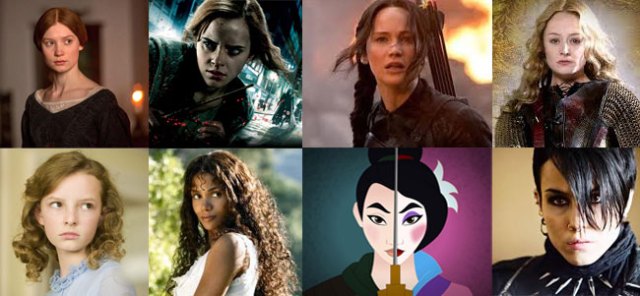
Since March is Women’s History Month, we’ve been thinking a lot about the women who have had positive and lasting impacts on our lives — and perhaps not surprisingly for a bunch of literary geeks like us, we’ve realized that many of them are fictional. For all the hullabaloo about the dearth of strong female characters in modern culture, thankfully there are some wonderfully powerful, kick-ass maidens that have inspired us with their strength, self-discovery, and incredible brilliance over the years. See our list of ten of the most powerful female characters in literature below, and then be sure to pipe up with your own suggestions — we’ve chosen the ten who resonate most deeply with us, but since there are many more than ten strong ladies in literature (thank goodness), we want to know which ones blow you away on a daily basis.

Jane Eyre, Jane Eyre

One of the earliest representations of an individualistic, passionate and complex female character, Jane Eyre knocks our socks off. Though she suffers greatly, she always relies on herself to get back on her feet — no wilting damsel in distress here. As China Miéville wrote, “Charlotte Brontë’s heroine towers over those around her, morally, intellectually and aesthetically; she’s completely admirable and compelling. Never camp, despite her Gothic surrounds, she takes a scalpel to the skin of the every day.”

Hermione Granger, the Harry Potter series

In the Harry Potter books, Hermione starts as an insufferable know-it-all, blossoms into a whip-smart beauty who doesn’t suffer fools (except Ron), and ends up as the glue that holds the whole operation together. Hermione’s steadfastness and sheer intelligence (plus the fact that she’s the only one who has ever read Hogwarts: A History) save her two best friends time and time again, and she’s the only one of the three never to wholly break down in a crisis. Intelligence often translates into strength, but only when wielded by a steady hand — and Hermione just happens to have both, and compassion to boot. That’s our kind of girl.

The Wife of Bath, The Canterbury Tales

Chaucer didn’t mean to make the Wife of Bath as big of a character as he did. Early drafts show that her role was meant to be much smaller and more one-dimensional, but somewhere along the line, Chaucer became enamored of his female creation, and eventually her prologue ended up twice as long as her tale. The Wife of Bath is lewd and lascivious — but behind all the dirty jokes, she’s making an argument for female dominance and a woman’s right to control her body, using her considerable rhetorical skill to simultaneously underscore and attack the anti-feminist traditions of the time. Not too shabby for 14th century literature.

Katniss Everdeen, The Hunger Games trilogy

Sure, Katniss annoys us no end with all her boy-related waffling and wailing, but any girl who can shoot like that deserves a place on this list. Not to mention the fact that she survived not one but two 24-person fights to the death, one of which was designed specifically to kill her. We’re just saying.

Hester Prynne, The Scarlet Letter

Though Hester Prynne, who is condemned by her Puritan neighbors for having a child out of wedlock, is sometimes seen as a victim, she manages to survive with dignity and faith throughout, which we think makes her pretty darn powerful. NPR has described her as being “among the first and most important female protagonists in American literature. She’s the embodiment of deep contradictions: bad and beautiful, holy and sinful, conventional and radical… [she] can be seen as Hawthorne’s literary contemplation of what happens when women break cultural bounds and gain personal power.”

Éowyn, The Lord of the Rings trilogy

Though Tolkien’s novels aren’t exactly known for their female protagonists, who could be more powerful than the woman who killed the Witch-king of Angmar? A shieldmaiden who is itching to defend her countrymen from the first minute we see her, Éowyn disguises herself as a man to follow her friends into battle. Bad guys should be careful making statements like “No living man can kill me” when they’re fighting ladies.

Lyra Silvertongue, His Dark Materials trilogy

Not only is she the instrumental piece in a literally cosmic war, the unruly and headstrong Lyra, who is twelve years old at the beginning of the trilogy, can do something no one else can: read the alethiometer, which tells her the truth of the present and future. She wins the hearts of those around her through her strong convictions, and earns the name “Silvertongue” after using her wits to fool the unfoolable. After all, words are the most powerful weapons of all.

Janie Crawford, Their Eyes Were Watching God

A remarkably independent woman, Janie Crawford’s strength is in her ability to keep on going, no matter what her life throws at her, and to uphold her dignity throughout. She challenges the conventions of who should love whom and what leads to a happy life, her experience leading her on a journey towards an acute self-realization.

Hua Mulan, The Ballad of Mulan

Though you may know Mulan best from the Disney film, she was originally imagined in the 6th century Chinese poem The Ballad of Mulan and has since been reinterpreted in various literary and non-literary forms. Unlike in the Disney version, which features a bumbling girl trying to be a soldier, the traditional figure is a totally bad-ass seventeen year old, already a martial arts and weapons expert — just things she picked up on the side because she was too smart to be totally happy with her life of weaving. She goes to war in place of her father, wins all over the place, and then comes home and returns to her normal life. No big deal.

Lisbeth Salander, The Girl with the Dragon Tattoo series

The powerful female protagonist of the hour is also one of the strongest women on this list. A world class computer hacker with a photographic memory, she’s also the survivor of an abusive childhood, which makes her a fiercely anti-social heroine with a violent streak. Characterized by many as a “feminist avenging angel,” Lisbeth’s brutality is nothing to aspire to — but she sure gets the job done.

***

Via http://flavorwire.com/265847/10-of-the-most-powerful-female-characters-in-literature/view-all

Writing Prompts: Birthdays

Birthdays can hold amazing memories and sometimes contain embarrassing and even tragic recollections. People all over the world have different traditions for celebrating birthdays. You may even celebrate your birthday in a unique way with your own family. Here are some fun creative writing prompts about birthdays:

1. Write a story that begins with a character suffering from a terminal disease. The scene begins with the character celebrating what he/she believes is their last birthday. What happens next?

2. Write a story where two main characters (who do not yet know each other) are preparing for their big birthday bash. However reservations get mixed up really quick and the two characters end up sharing the same party.

3. Write a story about a couple that are having a very difficult time in their marriage. One spouse decides to throw an amazing surprise party. What unexpected surprises occur?

4. Write a story about a child’s birthday gift which becomes alive. For instance, a child receives a large stuffed unicorn that comes alive and talks.

5. Write a story about being trapped in birthday-Groundhog day and reliving your own birthday over and over again.

6. Research some amazing and generous things that people have done for others for their birthday. Write a story based on these incredible stories.

7. Write a story that begins with the character celebrating their 90th birthday.

8. Write a story about a man who can change any given birthday in their life. Which birthday do they choose and how do they change it? How does this impact the rest of their life?

I hope these prompts inspire some amazing writing!

Via: http://www.litbridge.com/creative-writing-prompts-about-birthdays/

How to Get Your Writing Out There

writing (1)

Founding Editor of Writer’s Edit, Helen Scheuerer, shares advice on how to get your writing out there…


Don’t be afraid to take yourself seriously

Whether you come from a creative writing background or you’re new to the game, I’m sure you’ll be aware of the judgment that awaits writers. Not just from editors and other writers, but also from our colleagues and friends. A lot of people, amidst their own self-consciousness poke fun at those of us who try, those of us who take our work seriously, even if we haven’t yet been published or won an award. There are always going to be people who laugh at your efforts, and believe themselves to be superior in comparison to whatever it is that you’re doing. You don’t need these people, and you certainly shouldn’t shy away from your writing because of them.

It’s taken me a long time to learn this lesson. Because of these people, and the fear of their comments and judgment (never constructive in any way), I never used to promote and share my work. I would keep my projects to myself. But recently, I’ve let myself become confident in my knowledge and if not in my talent, in my perseverance. It’s the first time in years I’ve let people know just how seriously I take my writing. And while some people may have scoffed, many more have actually been impressed and have been inspired to do the same.

Create a website/Author Platform

The online world has changed the way us writers get exposure, gain a following and join communities. Creating a website, or an ‘Author Platform’ is just one of the ways you can get a readership going, even before you publish your book. Blog about the process, give away snippets, share your latest reads, and engage in conversation. One of my favourite author platforms is Chris Cleave’s (have a look, here). He blogs about book tours, ongoing projects, answers questions – it’s very simple, very casual, but it’s a great way to give his readers a little insight into his world of writing. Another author who’s taken her platform to the next level is Joanna Penn, the fingers that are rapidly typing behind The Creative Penn. You only need to take a quick trip to her site to see what I mean. You can also check out our Writer’s Edit interview with Joanna, here.

What I love about creating an author platform besides the fact that it connects you with readers and like-minded folk, is that you get to document your journey. I’ve recently started blogging about the challenges that have come with editing my novel, it’s a great release and it also lets people in on what’s gone into the product they have (or will have) in their hands at the end. You can check out my platform, here.

Some tips for creating your website?

  • Get a proper domain name. By this I mean a .com or a .com.au – not a .weebly or a .wix. This is just personal opinion, but it doesn’t look professional. Domain names are inexpensive for the most part, and cheap web hosting can be found as well. It really is worth having your own individual platform, you are after all, creating an author brand.
  • Go WordPress. It’s one of the most widely used content management systems out there, it has thousands of free and cheap themes available for download that are user friendly. I’m no internet/computer expert, but I’ve definitely got the hang of it now.
  • You need to be yourself, but professional as well. Let your personality shine through the website, but ensure that your content remains courteous, relevant to your writing, and if you choose to have images – no ‘selfies’ (if there’s a place for that, it’s not on your author platform).
  • Get some content on there before you start promoting it across social media platforms and telling all your friends about it. It needs to be impressive. This is the space where eventually, people will purchase your books from. Give it time to grow first.
  • Include your short stories, novel excerpts, poetry and writing news, regularly.
  • Ensure that your website has a ‘shop’ feature. If not, as the very least make sure you link to any pages from other websites where your books are sold, you’d be surprised at how many new authors forget to do this.

Become a regular contributor somewhere

This was something that was never stressed enough to me, but I would advise that every writer contribute to some kind of blog/magazine/forum. Becoming a regular contributor somewhere allows you to establish yourself as an author, as an authority on a certain topic/in our industry, it also connects you with other writers who are interested in the same things, it gets a conversation going! Many authors, myself included, hate the idea of ‘networking’… It’s got some negative connotations doesn’t it? But think of contributing as becoming a part of a community. You want a voice and friends in this community, because it’s here that you will get advice, it is here that you will sell your novels and start to get your name out there.

Contributing to publications is also valuable just for the experience, as well as keeping you on track with your writing. If you’ve promised an article to a publication and you’re working to deadline, there’s no more procrastinating. When you’ve committed to writing something for someone else, you’re so much more likely to stick with it. Any writing is better than no writing, it’s great to keep yourself in the discipline even if you’re not currently working on your own project.

Pay it forward

Us writers are all in the same boat, which is exactly why we need to support each other. The online world makes this so much easier than ever before. With author platforms, social media pages, sharing links, it’s never been this simple to help a writer pal out. Have they published an article lately? Have they got a new website? Are they hosting an event? Like/Share/Comment on everything! Obviously, you want to contribute, not just click buttons for the sake of it, but a lot of authors don’t understand the power of the online world.

I don’t necessarily mean that these same people are going to Like/Share/Comment on everything you ever post, but it’s being a good sport, and hopefully some social media karma will come your way when you need it most, ie. when you’re launching a book, or trying to get people to come to an event… This is certainly one major lesson I’ve learnt in recent months. We’re a very supportive bunch when we want to be, and ‘paying it forward’ also enables you to become part of a much larger community than imagined.

Things You Should Try

  • Going to a writer’s festival.
  • Starting a blog or website.
  • Sharing your work and accomplishments on social media.
  • Getting together with writer friends (and actually talk about writing).
  • Reading books and writing reviews.

***

Via: https://writersedit.com/fiction-writing/get-your-writing-out-there/

7 Steps to Tackle Your Screenplay Rewrite

Screenwriting

The most important thing I tell any writer who is embarking on writing their screenplay is to just plow through and get that first draft done.  Here’s the rub though.  Finishing that first draft is only the beginning of the journey for you as a writer.

If there is one thing I know… it’s that the first draft of your script is ALWAYS going to be terrible. Don’t worry. That’s okay. Quality is never your goal with the first draft.  The goal is to scoop those ideas out of your brain, put them on paper and get the structure of your story on the page. When you finally get that glorious awful first draft completed, this is where the real work begins.

1) Put it in a drawer

The last thing you want to do is immediately re-read your goopy brain-droppings after you clickity-clack that final Fade to Black. Your mind needs time to decompress. So find a drawer, put your script in said drawer, and leave it alone until you have a nice solid layer of dust on the cover page which you can blow off like Indiana Jones finding an artifact in some cave in Indonesia.

2) Print that puppy out

It’s been a few weeks and you’re finally able to take a look at that crap you wrote. Don’t use the computer. Print it out. Find your favourite colored felt tip pen and mark that sucker up. You’re bound to find a billion grammar mistakes, missing words, wrong names, etc. But you’ll also figure out scenes that aren’t working and characters who need improvement. New ideas will pop out and make your story work better. You will punch yourself in the face for not thinking of them the first time you wrote this garbage pile, but that’s okay. This is the evolution of the rewrite.

3) Make a New Outline

As you prep to do your first rewrite, open up a notes doc and make an outline (or beat sheet) of everything currently happening in your scrip. This will help you discover everything you need to happen in your next draft. By giving yourself a thorough roadmap for your rewrite, when you dive in, you will know where you need to go to improve all your elements. That said, don’t be afraid to stray from your roadmap. It is good to create new scenes that flow from your fingertips stream of conscious. Some of your best ideas happen in the moment, and are unplanned. If you can surprise yourself, you can surprise your audience.

4) Lather, Rinse and Repeat

After you’ve gotten through that second draft, that now doesn’t completely suck, there’s one thing you need to remind yourself. This still is not good enough to show people. You need to put it back in that drawer. You need to go do something else for a few weeks until you’ve completely forgotten everything you did, and then pull it out and repeat Steps 1-3. How many times you’ll have to repeat these steps, I cannot tell you, but you’ll eventually know when your script is ready to show to someone.

5) Get Notes

Once you finally have a draft that feels pretty good to you, it’s time to show it to a trusted group of readers who know you well enough to tell you how awful your screenplay is without totally destroying your confidence. While you may think your ideas are amazing, if other people don’t find the execution of them equally as amazing… then they might not be to the level you need them to be. Getting people’s’ feedback and applying that feedback to your script is a crucial step.

You must be able to take constructive criticism. You don’t want someone to read your fourth draft script and say “that was great” and not get any notes. Your script always needs work. Most scripts are being worked on while they are shooting the movie. Yours is no different.

Now, that doesn’t mean you have to take EVERY note. A lot of times, I’ll use this rule: if someone gives me a note I don’t agree with, I’ll ignore it for the time being. However, if three people give me that same note, then I know there’s a problem that needs fixing.

6) Have a Reading

Now that you’ve applied all of your notes to the script, it’s time to assemble a group of actors and read your script out loud and have a discussion of the story. Many times, it is an actor who gets a script bought, sold, greenlit, etc. So you need to make sure EVERY character is attractive to the actors who will play the role. Sometimes, you’ll get a tiny note that will make a world of difference when your screenplay finds itself on the desk of a studio reader.

7) The Final Draft

After you’ve squeezed every last drop of creativity from your brain onto the page, and you have done your final grammar pass, and incorporated all of your friends notes, you are ready to give the script to your agent, or producer for review. If you have done your job, their notes will be minimal and getting it into the hands of people who want to buy your screenplay will be the next step to achieve the truly fun and exciting part of being a writer… and that’s doing another rewrite with a director and a star.

In conclusion…

This is the process that works for me.  I hope it works for you.  Good luck!  Now go write that terrible, horrible, no good, very bad first draft of your screenplay.

***

Via: https://screenwritingumagazine.com/2017/12/04/7-steps-tackle-screenplay-rewrite/


The 6 Reactions Book-Lovers Have to People Who Don’t Read

Read---people-who-dont

There are many ways to get passionate reactions out of hardcore book nerds. Tell us Twilight deserves a place in the pantheon of great vampire literature next to Stoker’s Dracula and Rice’s Interview with the Vampire. Ask us where we stand in the e-book vs. print book debate. Mention the ongoing Amazon-Hachette feud. Bring up any book-to-film adaptation, ever. It’s not a question of whether we’ll have opinions, but rather when we will stop beating you over the head with them with all the force of a hardcover edition of Les Miserables.

However, if you really want to whip a book-lover into a Tempest-like frenzy of emotions, all you need are four little words: “I don’t read books.”

I’ve heard those words, or similar variations (“I haven’t read a book since school,” or, even more mind-blowing, “Reading is boring”) many times in my life, and without fail, they inspire within me a tangle of emotions that leaves me speechless, at least momentarily (which is no easy feat). I understand that not everyone can enjoy reading as thoroughly as I do (actually, that’s probably a good thing; if that were the case, I’m pretty sure nothing productive would ever be accomplished), but to genuinely dislike the act of reading? You may as well say you don’t like breathing or eating.

Conversations with fellow book-lovers reveal that we all tend to have the same reactions to these rare and mysterious creatures: What … How… Why…??

It’s for their benefit, as well as the benefit of those who dare blaspheme our precious pastime with callow disregard, that I sat down to sift through the varying emotions book nerds experience when we hear those heartbreaking words: “I don’t read books.” The struggle is real. Here’s what happens next…

1. Shock/Disbelief

You … don’t … read … books? You mean, like, you don’t read novels, but you read nonfiction and stuff like that, right? No? You just straight-up do not read words printed in ink on paper and bound between two covers. Really?

2. Confusion

I see your lips moving. I hear words coming out of your mouth. They sound like English, but I can’t comprehend them. You can read, but you choose not to.

But why? Do you not have books? Do you need books? What did books do to you to make you scorn them so? Did they take you out for a nice seafood dinner and then never call you again? What do you do instead of reading, sit around and stare at things? So. Many. Questions.

3. Judgment

If I’ve known you for awhile and you reveal this, suddenly everything I thought I knew about you has been called into question. You’re lucky enough to be among the percentage of adults who can read and you choose not to exercise that privilege?

What other deep, dark secrets have you been hiding from me? Were you actually sick that night you had to cancel our plans? Do I really know you at all? And in the case that you’re someone I just met, and you tell me you don’t like to read…

4. Pity

This feeling can happen simultaneously with judgment. Do you even understand what you’re missing? Books let us travel to more locations than we could ever visit in a lifetime, as well as awesome places that don’t exist in the real world. They introduce us to amazing friends and give us kick-ass heroes to root for. They teach us, inspire us, evoke our emotions. But you’re depriving yourself of all that and it just makes me so, so sad.

5. Persuasion

It can’t be that you don’t like to read, you just haven’t found the right book yet. What interests you? Humour? History? Sports? Dwarfs? Humorous historical dwarfs playing sports? I don’t care how many hours we have to spend in the library, I will find a book you like. And I will make you love them!

6. Acceptance

No? Really? You’re absolutely, definitely not interested in one of the most beloved pastimes of the last 600 years? *Sigh* I don’t understand it, but I guess it’s true that it takes all kinds of people to make the world. So fine, be like that. And don’t worry, I can love books enough for the both of us.

***

Via: https://www.bustle.com/articles/36433-the-6-reactions-book-lovers-have-to-people-who-dont-read

How To Edit Your Own Writing

edit-your-writing-705x220

The truth about a first draft is that it doesn’t need to be perfect – it just needs to be written. Even Hemingway claimed that “the first draft of anything is sh*t”. The first draft is where it starts, but even after you place the lid back on your pen, or press print – the process is far from over. The end of writing (and re-writing) marks the beginning of editing your work.

Writing and editing go hand in hand when it comes to producing masterpieces. When we talk about ‘great writing’, we’re also indirectly talking about ‘great editing’. While some writers have the privilege of working for a publishing company and have a professional editor to go through their work, other writers, particularly those just starting out, are their own editors. This article is for the latter. Read on for tips on how to edit your own writing…

Finish Your Work

Before we allow ourselves to be a critic of our work, we have to first finish being a writer. While the creative process can work in many ways, producing work is completely different from critiquing. Allowing both processes to intercede may demoralise the art of our writing. So always give yourself time to finish writing, and then edit it later.

Don’t look back until you’ve written an entire draft, just begin each day from the last sentence you wrote the preceding day. This prevents those cringing feelings, and means that you have a substantial body of work before you get down to the real work which is all in the edit.” — Will Self

Read It Aloud

One of the most effective ways of editing your work is to read it out loud. Reading aloud will force you to take note of your words – each and every one of them. This way, technicalities such as spelling, grammar and punctuation are magnified and more easily spotted. The trick to reading aloud is to read slowly. Speed-reading through your work will not help the editing process.

Reading your work aloud will also sound different compared to when you read it in your mind. When you speak aloud, you’ll begin to hear how your sentences are structured (for better or for worse). Ask yourself, does your work sound clunky? All the clumsy, unnecessary words should be then cut out. If you can imagine it, it’s like the way gardeners shape hedges into desired, quirky shapes; It’s a long process and takes a lot of detailed work.

Anyone and everyone taking a writing class knows that the secret of good writing is to cut it back, pare it down, winnow, chop, hack, prune, and trim, remove every superfluous word, compress, compress, compress…” – Nick Hornby

Take A Break

Editing your own work can be a tedious task. Writers don’t always have the privilege of time but when you do, let the editing process breathe. That means, walk away from your work, get some rest and focus on another activity for a while before coming back to your manuscript. If you find yourself constantly deleting and rewriting big chunks of work, or correcting a comma use, only to put it back again, then it might be due time to take that break.

After re-reading your work a couple of times, the structure and sentences of your work will become so familiar that the easiest mistakes will just slide past your eyes. Taking a break will allow you to come back to your work with a fresh perspective. 

The best advice I can give on this is, once it’s done, to put it away until you can read it with new eyes. Finish the short story, print it out, then put it in a drawer and write other things. When you’re ready, pick it up and read it, as if you’ve never read it before. If there are things you aren’t satisfied with as a reader, go in and fix them as a writer: that’s revision.” – Neil Gaiman

Read It Again And Again

There is no magic formula nor set amount of times a work should be edited before it’s ‘right’. While reading your manuscript slowly from front to back may help spot mistakes, another tip is to read it backwards. It may be confusing, but it will certainly help you be a forceful spell-checker on your own, as is makes you examine every individual word out of context.

Are there any words that you aren’t sure about? Get a dictionary. Use a standard dictionary such as The Oxford English Dictionary, or whatever equivalent is commonly used in your jurisdiction.

And look out for contextual errors that spell-check won’t necessarily pick up on. Some of the most common are:

  1. You’re/Your
  2. Affect/Effect
  3. They’re/Their/There
  4. Its/It’s
  5. Then/Than

These errors may be small, but they make all the difference as to how your work will pen out in its final form. It’s the smallest details that convey the type of writer you are and will be.

Be mindful of different perspectives. Ask yourself, how would you feel as the reader? How is what you’re saying conveyed? Sometimes as writers, we get so caught up in trying to account for our own understanding that we begin to lose sight how our work may be interpreted by our target audience.

Let Someone Else Read/Edit It

It is crucial that someone else, other than yourself helps you read through your work before you submit to any publications. Whether it is a professional editor or a trusted writer-friend, getting someone else to read and edit your work is always helpful, as they tend to be able to notice the mistakes that you’ve missed. They will also be able to give a different perspective without being emotionally biased towards your work. This helps prepare you for how your audience might interpret your story.

Editing is for anyone and everyone who writes, especially professionally. In an interview published in The Paris Review with Ernest Hemingway in 1956, Hemingway said that he rewrote the last page of Farewell to Arms 39 times before he was satisfied. The biggest problem, he admitted, was “getting the words right”.

The repetitiveness of re-reading and rewriting during the editing process can be brutal, demoralising and sometimes painfully slow, but it is always completely necessary for writers. When there comes a time when this process discourages you from writing, remember that heavy edit days make great writers.

Good luck!

***

Via: https://writersedit.com/fiction-writing/edit-writing/

Should You Write In The First, Second Or Third Person?

Which-person-do-you-write-in

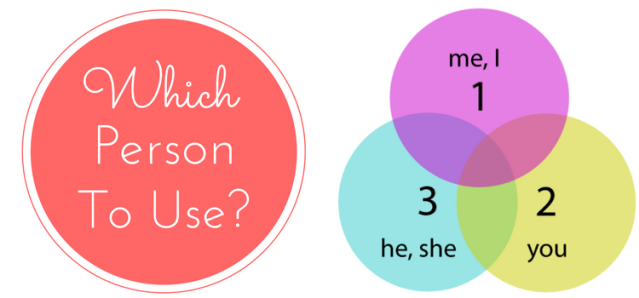
When writing your content, whether it’s a novel or an article, it can become confusing having to decide between the first, second and third person. Which you decide to use is completely up to you, but there is some method behind the madness. Let’s discuss all three options and see which would be the best for you.

The First Person

In a nutshell, first person is you and your views (or your character directly speaking and their views), and is expressed using the word ‘I’. What I like about this writing style is that you can easily express yourself and share your experiences the way it happened. It may be a bit more of a challenge when you are not writing about yourself, but still, the action is experienced in the moment as it is happening.

Many people believe that writing in the first person is the easiest way to write and perhaps they are right to a point. But beware that when you write in the first person as you can get very comfortable and sometimes overshare. If you find yourself doing this a text rewriter may come in very handy at this point.

The Second Person

Second person is where the narrator tells the story to another character using the word ‘you’. The story is being told in the voice of the onlooker, which can also be you, the reader. For instance, the text could read, “You went to school that morning. And whilst you were there you played with some play-dough.”

The second person point of view is rarely used in fiction because of its difficulty level. It is hard to develop a set of characters and a story in which the second person is appropriate. Saying that, however, you can find some fantastic stories that have been written this way if you go and look for them.

If you are writing non-fiction, you can use this style of writing when you are sharing information that does not pertain to your own experiences. For instance, this is handy when you are writing a ‘how to’ blog post or an instructional article of any kind.

If you are not familiar with this writing style, find a word rewriter and use any tools you might need until you get it right. It does take some getting used to, but it is a very effective writing style.

The Third Person

The third person point of view belongs to the person (or people) being talked about. The third person pronouns include he, him, his, himself, she, her, hers, herself, it, its, itself, they, them, their, theirs,and themselves.

You would usually associate this writing style with fiction and storytelling. It is also the preferred writing style for academic literature.

Plenty of stories and novels are written in the third person. In this type of story, a disembodied narrator describes what the characters do and what happens to them. You don’t see directly through a character’s eyes as you do in a first person narrative, but often the narrator describes the main character’s thoughts and feelings about what’s going on.

So in essence, you are a little more removed from the character in terms of direct thoughts and feelings, but you can be aware of more and inform the reader of things that your character could not do directly in first person unless they were actually experiencing them. This option gives you more choice and a greater possibility for knowledge during events, and about other characters.

The Best Choice

As you can see, there is a place for all three point of view writing styles, and one is not necessarily better than the other.

At the end of the day, we all have a different way of communicating, and you should find the style which suits you best. Think about what you have written thus far.Is there one particular style that you naturally gravitate towards?

Even though you might want to go for the easiest writing style, there is nothing wrong with stepping out of your comfort zone every now and then. It might take a little longer to write, but it will be worth the effort to get it right.

Conclusion

Writing is all about sending out good stories into the world, and this should be your principal focus.

If you are writing a novel, try writing a chapter in each different point of view and see what works best or your story. Each story you write may have a different point of view that works best for what you are trying to convey, so don’t assume that just because you usually write in one point of view that it will be the best one.

Read your work out loud, and see if it sounds right. If not, try changing the pronouns and see if it works better. Your story (and characters) will normally tell you how they want to communicate. So listen out for their voice and go with that.

If you are writing an article, write in the way that feels most natural to you. Then you can’t go wrong.

Ultimately, it does not matter if you write in first, second or third person, as long as you are writing authentically for yourself or your characters and connecting with your audience. Happy writing!

***

Via: https://www.justpublishingadvice.com/should-you-write-in-the-first-second-or-third-person/ and https://www.grammarly.com/blog/first-second-and-third-person/


Poems About Love | Valentines Day

Valentines-Poems-About-Love

So as it’s Valentines Day, I decided to share the love with poems penned by some of the greats.

Enjoy! xx


“Bright star, would I were stedfast as thou art”

Bright star, would I were stedfast as thou art—

         Not in lone splendour hung aloft the night

And watching, with eternal lids apart,

         Like nature’s patient, sleepless Eremite,

The moving waters at their priestlike task

         Of pure ablution round earth’s human shores,

Or gazing on the new soft-fallen mask

         Of snow upon the mountains and the moors—

No—yet still stedfast, still unchangeable,

         Pillow’d upon my fair love’s ripening breast,

To feel for ever its soft fall and swell,

         Awake for ever in a sweet unrest,

Still, still to hear her tender-taken breath,

And so live ever—or else swoon to death.


A Red, Red Rose

O my Luve is like a red, red rose

   That’s newly sprung in June;

O my Luve is like the melody

   That’s sweetly played in tune.

So fair art thou, my bonnie lass,

   So deep in luve am I;

And I will luve thee still, my dear,

   Till a’ the seas gang dry.

Till a’ the seas gang dry, my dear,

   And the rocks melt wi’ the sun;

I will love thee still, my dear,

   While the sands o’ life shall run.

And fare thee weel, my only luve!

   And fare thee weel awhile!

And I will come again, my luve,

   Though it were ten thousand mile.


Sonnet 116: Let me not to the marriage of true minds

Let me not to the marriage of true minds

Admit impediments. Love is not love

Which alters when it alteration finds,

Or bends with the remover to remove.

O no! it is an ever-fixed mark

That looks on tempests and is never shaken;

It is the star to every wand’ring bark,

Whose worth’s unknown, although his height be taken.

Love’s not Time’s fool, though rosy lips and cheeks

Within his bending sickle’s compass come;

Love alters not with his brief hours and weeks,

But bears it out even to the edge of doom.

If this be error and upon me prov’d,

I never writ, nor no man ever lov’d.


How Do I Love Thee? (Sonnet 43)

How do I love thee? Let me count the ways.

I love thee to the depth and breadth and height

My soul can reach, when feeling out of sight

For the ends of being and ideal grace.

I love thee to the level of every day’s

Most quiet need, by sun and candle-light.

I love thee freely, as men strive for right.

I love thee purely, as they turn from praise.

I love thee with the passion put to use

In my old griefs, and with my childhood’s faith.

I love thee with a love I seemed to lose

With my lost saints. I love thee with the breath,

Smiles, tears, of all my life; and, if God choose,

I shall but love thee better after death.


And if that little lot hasn’t left you feeling all lovey-dovey then you clearly have a heart of stone, but happy Valentines anyway! xx❤️xx