World Record For Fan With Biggest Harry Potter Collection

Harry Potter Fan

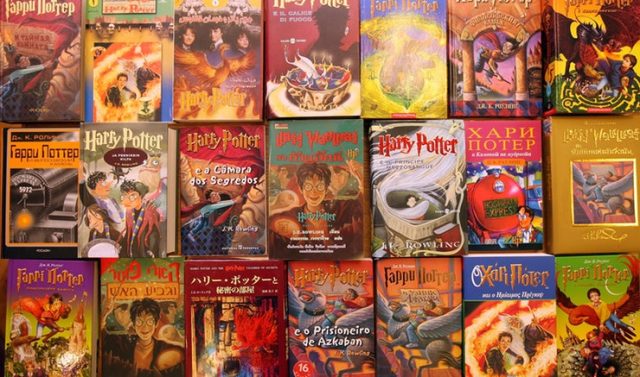
If you thought you were the world’s biggest Harry Potter fan, prepare to be disappointed. A lawyer in Mexico City has apparently shattered the Guinness World Record for largest collection of Harry Potter memorabilia. So far, he has 3,092 items in his collection, which far surpasses the previous record of only 807. Now that is one dedicated fan!

Menahem Asher Silva Vargas first started collecting Harry Potter products in 2001. In a video interview with The Telegraph, he explained that he didn’t originally think of himself as a collector; he’d just see a Harry Potter item that he liked and buy it. But as the Potter fan base in Mexico expanded (and as Potter-mania took over the world) there were more and more Potter-themed products available, and his collection just kept growing. Once it started taking up more than one room, he says, he decided to get organised and start keeping an inventory.

Now, on the one hand I know that buying things is not really a good way to measure how much of a fan someone is — after all, if Bill Gates really wanted this particular world record I’m sure he could buy up 4,000 pieces of Harry Potter memorabilia without batting an eyelash or ever reading the books — but it’s also clear that Silva Vargas really genuinely loves Harry Potter. And as a bit of a Harry Potter nerd myself, I raise a butter beer toast in salute.

In total, Silva Vargas’s collection takes up two rooms and includes everything from board games to Harry Potter attire to replica wands. But his favourite item in the huge collection is a circular wall ornament with a photo of Harry in the Chamber of Secrets that was a gift from his mother. Aww.

He says that he hopes to create some sort of interactive site to allow Potter fans from all over the world to virtually explore his massive treasure trove of Harry Potter merchandise some day.

***

Via: https://www.bustle.com/articles/42990-world-record-for-largest-harry-potter-collection-broken-by-lawyer-in-mexico-city

What Your Favourite Book Genre Says About Your Personality

genre favourite

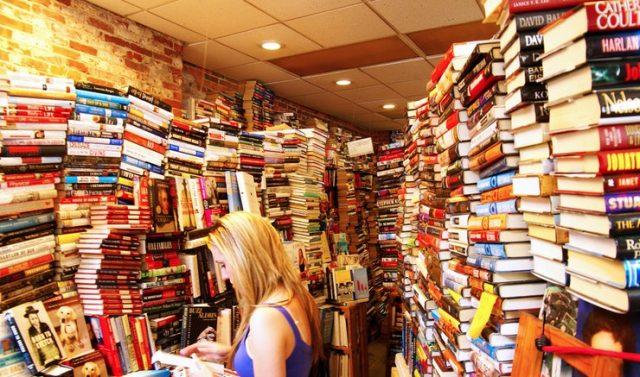
Take a look at your bookshelf, and you’ll probably have no problem determining your favourite genre. The rows of multiple Harry Potter books (all different editions, of course) and the collection of A Song Of Ice and Fire probably means you’re a big fan of fantasy. Or, when you visit your local bookstore, do you find yourself roaming toward the sci-fi section? Perhaps you drift toward the middle where the literary classics are. Wherever you find yourself, take pride: Your favourite genre is awesome, and don’t let anyone tell you otherwise.

The book genre you love most definitely says a lot about who you are as a person. Books can shape you, so it’s only natural that you learned from the characters within, whether they were fairies, aliens, or your average human. So, grab your most treasured books, figure out your favourite genre of novels, and get ready to find out what it means for you. Better than your zodiac sign, your most loved book genre will reveal your truest self:

Classics

You have and will reread just about every classic there is. Jane Austen and Sylvia Plath, Ernest Hemingway and John Steinbeck — this is the crew that will always be your favourite writers. You were the kid in high school who actually read all of the mandatory books and enjoyed them. You prefer getting to know one person deeply, rather than knowing a couple people on the surface. You tend to cherish the simplicities in everyday life more than anything else.

Fantasy

You prefer to read about huge and complex worlds where your imagination can roam as it pleases. Ever since you were a child, you’ve been more interested in mythology than anything else. You’re a daydreamer, and often zone out while at school or work thinking of the next great adventure you’ll go on. When it comes to your friends, you’ve got some of the best, and you’ll never treat them wrong because you know how valuable true friendship is after reading The Lord of the Rings and Harry Potter.

Historical Fiction

You love fiction — but you also love facts. You like knowing what’s going to happen, and aren’t a big fan of surprises. You have a very detailed planner on you at all times, but every so often aren’t afraid to indulge in a few spontaneous activities, as long as they are on the pre-approved list. You have a sharp eye for detail and are sometimes (more like always) called a perfectionist in your work. You’re a people-watcher, and enjoy listening to your friends and family tell you stories of their past.

Horror

Like Stephen King, you believe everyone should read more horror books. You aren’t scared easily, and the feeling of adrenaline rising in you is almost addicting. You’re the risk-taker in your friend group, and when you go to an amusement park, you’re the first one in line for the wildest rides. You’re one heck of a storyteller, and your friends know that when you pull out the flashlight at a bonfire, they’re in for a story that’ll haunt them for the rest of the week.

Literary Fiction

You prefer reading about common life problems and troubles that are relatable to just about everyone. You love to learn about people, and the ones you don’t know you make up life stories for as you pass by them on the streets or on your morning commute. You’re a deep thinker, and when it comes to problem solving, you’re probably a pro. You like to look at your life as if it were a movie and are always wondering when the next complicated situation will unfold.

Mystery/Thrillers

After reading Gone Girl, you couldn’t stop thinking about it for weeks. You’re exceptionally talented at picking up on foreshadowing and clues, so your friends tend to stay away from you when Game of Thrones is on to avoid spoilers. You look at life as a mystery itself, and are always searching for the bigger meaning in things. You’re a little quieter than the rest, but that’s only because you genuinely enjoy being a mystery yourself.

Nonfiction

You always have the newest memoir or autobiography in-hand before anyone else does. You’re a great listener and enjoy getting to know someone by their odd quirks and anecdotes. You are often looking for new ways to improve yourself and the lives around you. You love making big gestures because you desire to live a great life worth telling to lots of people someday.

Romance

For you, no book is a great book without a powerful love story included. Your tastes range from Gone with the Wind to Fifty Shades of Gray, and everything in between. You’re a passionate person at heart, and always go the extra mile to satisfy someone you love. You always manage to keep a positive outlook on life, even if you’ve hit rock bottom. You have high expectations when you go on dates, but you’re also pretty talented at wooing just about anyone that glances in your direction, because you never know who might turn out to be the one that sweeps you off your feet.

Science Fiction

You love reading about intergalactic adventures and futuristic events that could one day happen. When you were a kid, you didn’t always fit in because you were thinking about new worlds and characters bigger than the boring middle school you were stuck in. You often have really great ideas but are sometimes afraid to speak up. With your smart wits, you and everyone around you knows you’d be the one to live through any apocalyptic event. You’re a little bit geeky and you don’t care who knows it.

Young Adult

You’re often found in the YA section of Barnes & Noble, scanning for new releases and recommendations. You’re young at heart, and that only makes you more curious and willing to learn new things in life. You’re in tune with your emotions, and are almost always the one your friends go to when they need solid advice. More than anything, you’re independent and take pride in both your successes and failures. You know it’s all part of the process.

***

Via: https://www.bustle.com/articles/109117-what-your-favourite-book-genre-says-about-your-personality

How I Got Published | Louise Beech

Louise-Beech

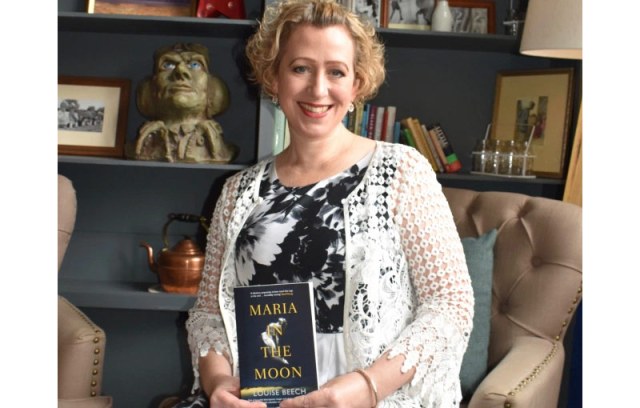
Today, an article all about “How I Got Published” by Louise Beech, which I hope you will agree is a very interesting read. Enjoy!

How did I get a book deal? It’s one of the things I’m frequently asked about at book events and festivals. How did I get published?

Unless the person asking – usually a hopeful writer, like I’ve been most of my life – has five hours, the determination to still keep writing despite my reply, and a pretty thick skin, I can’t respond fully. Time and a desire not to dishearten them prevents me answering in detail. Because my journey was long. Ten years long. People serve less time for serious crimes. It was littered with rejection upon rejection upon rejection. There was no satnav to tell me which way to go so that I arrived more easily at my destination.

There’s no magical right answer to the question of how to get published. Every single author will likely have a different tale to share. Some might have enjoyed a quick trip from writing a first novel to book deal, some may have got lucky with their tenth book, but most are probably still driving down the motorway, looking for the right exit.

All I can share is my story. And here it is. Are you ready?

I’ve been writing since I could hold a pen. I filled notepads and exercise books with entire novels (chapters and contents page included) from the age of nine. Writing was then – and still is – pure joy to me. The place I escape to, the place I feel safest, the only place in the world where I really feel I know what I’m doing, and that I’m doing what I’m supposed to be. As a teenager, I started my own magazine to rival the school one, and told anyone who would listen that I’d one day be a world-famous novelist. (That I’m still hoping for.) Then life took over a bit when I got pregnant at nineteen…

In my early thirties, I sent some pieces I’d written to our local newspaper and was offered my own column, Mum’s the Word, in which I wrote for ten years about being a parent. I also began to write short stories. Lots of them. I sent some out to magazines, entered some in competitions. Rejections came thick and fast. I cried the first time. But only once. I got up, wiped the tears away, and decided I had to improve. I wrote more. Slowly, they began being accepted. First by small ezines, and eventually by national magazines. I shortlisted twice for the Bridport Prize.

That was what gave me the confidence to write a novel. Every bit of advice I’d read suggested a writer hone their craft via the precise art of producing short stories, and by joining forums to gain harsh critiques in order to improve. I’d done both. So, after we flooded in 2007 and I had more time due to giving up work to care for my ill daughter, I started Maria in the Moon. It took me six months. It was a labour of not only love, but of tears. When I write, I give everything, and that can be draining afterwards. I let it ‘settle’ and then edited it some more. Then I sent it out to every agent and publisher. Over a period of a year, every single one of them rejected it.

I took time to recover – it’s hard, there’s no denying it, when your lovingly created work is rejected by everyone – and in 2009 I started a second novel, The Lion Tamer Who Lost. I tried to use all the advice I’d been given on forums, and all the tips I’d read by successful authors, but most of all I went back to the place where I knew I was supposed to be. Writing. Six months later I sent it out to every agent and publisher. They all rejected it.

In 2011, I went back to Maria in the Moon and tried to improve her. I tried a couple of new agents. Success! (Or so I thought.) A lady from United Agents invited me to visit her. Carol really liked it and took me on. She did everything, but – again – all the publishers she sent it to said no. One of them liked the style and asked if I had any more ideas for a novel. I told her about The Lion Tamer Who Lost but she didn’t like it. I mentioned one I had in my head, and she liked the sound of it. So, in 2012, I wrote The Mountain in my Shoe.

She said no. Carol sent it to other publishers. They all said no. Some had positive comments, but the general problem seemed to be what I was. Where I fit. I was that difficult creature – I didn’t fit into a genre. But I refused to conform. When I write I can only write what must be written. I can’t fit into some narrow niche. It isn’t me. But this was only going to make things harder.

Ironically, after being told that not fitting into a genre would hinder me, in 2013 I started the novel that was my most unusual and hardest to define – How to be Brave. This was one book that refused to kowtow to any market. I knew this would be my hardest sell, and yet I had to write it. Just as I finished, Carol told me she was retiring. She did everything to try and secure me another agent, but no one was interested. I was on my own again. I had written four books now.

I sent How to be Brave to every agent and publisher. They all said no. At the end of 2014 it shortlisted for a big competition. This is it, I thought. The prize was a book deal. And I was going to win. I wore my lucky red dress, told husband Joe that I knew someone in a red dress was going to win. We arrived at the prize-giving and another writer had on a red dress. She won. I was genuinely happy for her, because I knew how happy she must be. But I cried all the way back to the hotel. I was inconsolable.

I’ll admit, that was the hardest time. Friends asked how I could go on writing in the face of constant rejection. I said I did because I knew one day it would happen. I really did. But I began to lose my faith a little. I began to wonder if I could write a fifth book and go through it all again.

Then on Twitter I saw that a vivacious woman called Karen Sullivan was starting up Orenda Books. She wanted to publish beautiful books. Books she loved. I cheekily (this goes against all professional advice, folks!) tweeted her and asked if she would read How to be Brave. She said yes. She and slush reader Liz liked it. I had a tense wait for a definite answer, between Christmas 2014 and February 2015.

Louise Beech screen-shot-2017-07-03-at-11-11-45

Then on 9th February 2015 Karen emailed to say she loved the book, and of course it was a yes. I think, having read my journey, you can imagine how I felt. It makes me teary now to revisit. I know now that I only got rejected because I was supposed to be with Karen. She’s the only one who ‘got’ me. Got my books. Two years on, she has published the other novels no one wanted. Next year she will publish The Lion Tamer Who Lost too.

And I’m back to do doing what I love, but without all the tears. Writing. I’ve started book five, loosely titled Star Girl. And it’s exactly like when I was nine and filled notepads with words. It’s where I’m supposed to be. What I’m supposed to be doing. And I’m glad I never gave up.

Via: https://louisebeech.co.uk/2017/07/03/how-i-got-published/

Are things getting worse for women in publishing? | The Guardian

women in publishing

Today on Writer’s Blog, a very interesting article from The Guardian about Women in Publishing:

When Edie and Eddie started work as junior editors in the same corporate book publisher, they had much in common: firsts from Oxbridge and career ambition. And a passion for books and ideas. When Edie saw her role model moved out of the chief executive’s office to be replaced by a man, the two joked about what it took to get to the top.

But as both observed the same thing happen at one publishing house after another, the joke wore thin. And Eddie, frustrated at the lack of promotion, changed. “He donned a suit and began to walk and talk like the men he saw getting on in the business and suddenly things changed for him,” Edie recalls. “It was as simple as that.”

To her, it seems that “all you need to get on now is to be a suited and booted man, who looks like he has an MBA. They remind me of David Cameron and George Osborne. All of them are white, middle class and presentable.” She pauses. “And male of course, which is definitely something I cannot aspire to be.” (Edie and Eddie are not real names, but like many of the people interviewed for this piece, Edie did not wish to be identified.)

This is a harsh assessment of UK publishing; an industry that had comforted itself that the one area of diversity it need not address was gender. A 2016 survey of the gender divide in US publishing found 78% of the industry is female (no UK-wide survey has yet been done). But the same survey found that, at executive or board level, 40% of respondents were men. And Edie is not alone in the frustration she feels over the split at board level: there is growing disquiet among the rank and file.

This is not to say that women have left the boardroom completely. But, as one senior female editor notes, women such as Random House’s Gail Rebuck, Penguin’s Helen Fraser, Macmillan’s Annette Thomas and Little, Brown’s Ursula Mackenzie, who had all embodied the ideal that women publishers faced no glass ceiling, have in the last five years all been replaced by men. “There is a problem, because you get the sense with the remaining women in senior management that they have gone as far as they are going to go, and in every case they are answerable to clean-cut, fortysomething men,” the editor adds.

The disquiet felt within publishing is not just about the higher echelons becoming as white, male and middle class as other industries, but that the sector looks less welcoming to outsiders, be they female, Bame (black, Asian and minority ethnic) or disabled. And, as a creative field, publishing has grown on the back of entrepreneurs and visionaries. “Publishing should be about new ideas, about difference and innovation, but these men are all about the optics,” says another female publisher, who works in the middle ranks of one of the big three houses. “They seem to be chosen because they look good on a corporate prospectus rather more than anything else. Even the great men of publishing – the Victor Gollanczes, Allen Lanes and Andre Deutsches – would not have fitted in to this world.”

Though half the boards of the big houses are comprised of women, in almost every case, they are in charge of more traditional roles: publishing, communications, human resources or educational divisions. Look at the magical “c-circle” of group chief executive, group chief operating officer and group chief finance officer – where the real power lies – and women are notably absent.

Publishers say this is simply down to a generation of women retiring and the amalgamation of publishing houses, which has left fewer c-circle jobs to compete for. It certainly does not mean women are losing ground. “In the bigger corporate publishing houses, the divisional managing directors, who are the people making the publishing decisions, many are women,” says Lis Tribe, group managing director for Hodder Education, part of the Hachette UK group. “There are five [female] divisional managing directors or chief executives at Hachette and six [divisions] are run by women at Penguin Random House (PRH).”

Tribe, who has recently taken the president’s role at the Publishers Association, is adamant there is no problem with women getting to the top. Others disagree. “Yeah, right!” laughs one woman who asked to be unnamed, having left corporate publishing to set up her own business. “There is also a tendency that we tend to recruit in our own image,” she says. “You have a lot of white, middle- and upper-class, privately educated men selecting other white, middle-class, privately educated men now. It has a chilling effect.”

There is a persistent gender pay gap in publishing, which in the last survey by Bookcareers.com was revealed to be 16% in the UK. This is regarded as evidence that men take a disproportionate number of higher paying executive roles to women. “I find it really depressing that after all these years we are still having the same conversations about pay and diversity. Nothing has changed,” says Bookcareers.com’s Suzanne Collier.

Simple sexism is not the sole cause of the problem: mergers have left most of British publishing in the hands of three large, global media companies – Hachette, Bertelsmann-owned PRH, and HarperCollins, which is part of Rupert Murdoch’s News Corp empire. This has not just left fewer influential jobs for women, but has led to a change in the kind of beast who does rises to the top. Kate Wilson, who set up independent children’s publisher Nosy Crow after leaving Hachette-owned Hodder seven years ago, sums it up: “In my 30 years in publishing I have seen the corporatisation of publishing and it is not helpful to women.”

But sexism is there. “There is a point in women’s careers where, if they have kids, they are sidelined,” Wilson says. Because publishers are now making it into management at a younger age, at the critical point when the top tier opens up, many women are taken out of the career loop by children, leaving men to leapfrog them. On their return, they are usually juggling childcare and work in a way that many of their male contemporaries are not. “What is a farce is that at the same point, in your 30s and early 40s, men still seem to be untrammelled by family life and that helps in their careers,” adds Wilson, who made it a central aim of Nosy Crow to encourage flexible working – and the majority of her staff are now female.

But corporate publishing’s loss has been independent publishing’s gain. Wilson is among a band of women who have started independent businesses that not only allow them to better juggle professional and home commitments, but also to exercise their creativity in a way the tiers of management in global businesses do not allow. It is one of the reasons that the most interesting and innovative books coming out are from independents – whether Juliet Mabey at Oneworld with her Booker winners Marlon James and Paul Beatty, the translated fiction choices of Meike Ziervogel’s Peirene Press or Miranda West’s Do Books Company’s publishing list, based on the Do Lectures “encouragement network”.

“It is an interesting opportunity for independents like us because we are able to take account of some of the other things that women want to do, such as working part-time or more flexibly,” Wilson says. “The number of talented women who have been wasted because they can’t find a role in corporate publishing is astonishing.”

***

The Original Article can be found here: https://www.theguardian.com/are-things-getting-worse-for-women-in-publishing