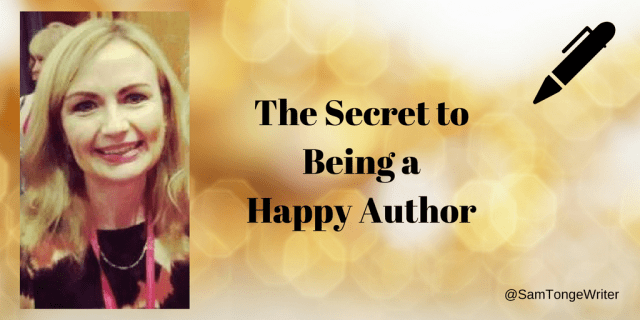
The Secret to Being a Happy Author

The-Secret-toBeing-aHappy-Author

I read this lovely post by Sam Tonge, and wanted to share it here – as it is very good and grounded advice. Something all writers and authors need to take on board.

It’s a tough business, publishing. I recall, years ago, a successful author warning a group of aspiring writers (me amongst them) to be careful what they wished for – that getting published didn’t solve all your problems. In fact, it brings a different set. And I can certainly confirm this. Don’t get me wrong, I love my job and consider myself very lucky to be doing it –  but signing that deal means that instead of suffering submission rejections you are faced with a whole new gamut of challenges, such as tight deadlines, bad reviews, disappointing sales…these things happen to all authors and can come as a shock after finally achieving your dream.

It pays to bear in mind that most dreams are unrealistic – the getting published bit isn’t, but it’s what we subconsciously attach to that aspiration. Your view of “getting published” might be that… you earn loads of money. Buy a big house and fancy car. Gain respect from everyone you meet. Suddenly become irresistible to the object of your affection. Never feel depressed again. End up on the Booker List. Stand on the red carpet next to George Clooney. Fit into that size ten dress. Prove to everyone who ever doubted you that their view of you was incorrect.

IT IS UNREASONABLE TO EXPECT ANY OF THESE THINGS TO HAPPEN AS A DIRECT RESULT OF FINALLY GETTING YOUR BOOK OUT THERE!

So how can us writers hold onto our happiness during such a roller coaster career?

Over the last year I’ve learn a lot from Buddhism. One of its tenets is that unhappiness comes from being attached to either good or bad things. What helps is realising that nothing is permanent. If we can do that, our life will achieve a sense of balance.

Take my 2015 bestseller Game of Scones. It reached #5 in the Kindle chart and stayed in the Top Ten for a good length of time. It won an award. Many readers loved the story. I was finally on my way to “making it” I whooped! I attached myself to that success and expected it to continue.

That was my  mistake. The next book didn’t do badly, but didn’t do as well. I felt I’d failed. I attached myself to those feelings of disappointment and wondered if I’d ever have a bestseller again.

As it turned out I did and last year Breakfast Under a Cornish Sun got to #8. However, these days I have a different perspective. I don’t become attached to the peaks or the troughs. And I have zero expectations when a book is released. I write it the best I can, with love and heart, and I promote it at the outset… but then I let it go and get on with my next project. What will be will be. There are SO MANY reasons why a book does or doesn’t do well: the publisher’s strategy, the cover, title, price, the timing of its release, the other books around at that moment… I find that if I distance myself from my successes and see them for what they are – transitory events – it gives me a much more balanced view of my career.

Remember, the path to misery is littered with expectations and senses of entitlement!

And all of this can be applied to life. Physical looks, our own and loved ones’ personalities, domestic circumstances, financial earnings, our state of health … be aware that everything is impermanent and in a constant state of flux. This makes it easier to accept your situation when the status quo changes – which it will.

By all means enjoy your highs. You have worked hard. You deserve them. And lick your wounds during the lows. But remember – neither is permanent. Work hard and keep submitting manuscripts and you will get a deal. Keep writing and learning more about your craft and those good reviews and sales rankings will once again appear. Finding working with your current publisher/editor/agent difficult? One way or another that situation won’t last forever.

In my experience, keeping detached and enjoying the good moments simply for what they are (without further expectations), and realising the bad moments will eventually pass… THAT – in writing and in life – is the secret to happiness.

Via: http://samanthatonge.co.uk/news-and-blog/the-secret-to-being-a-happy-author/

The Psychological Comforts of Storytelling

Row-of-books-2

When an English archaeologist named George Smith was 31 years old, he became enchanted with an ancient tablet in the British Museum. Years earlier, in 1845, when Smith was only a five-year-old boy, Austen Henry Layard, Henry Rawlinson, and Hormuzd Rassam began excavations across what is now Syria and Iraq. In the subsequent years they discovered thousands of stone fragments, which they later discovered made up 12 ancient tablets. But even after the tablet fragments had been pieced together, little had been translated. The 3,000-year-old tablets remained nearly as mysterious as when they had been buried in the ruins of Mesopotamian palaces.

An alphabet, not a language, cuneiform is incredibly difficult to translate, especially when it is on tablets that have been hidden in Middle Eastern sands for three millennia. The script is shaped triangularly (cuneus means “wedge” in Latin) and the alphabet consists of more than 100 letters. It is used to write in Sumerian, Akkadian, Urartian, or Hittite, depending on where, when, and by whom it was written. It is also an alphabet void of vowels, punctuation, and spaces between words.

Even so, Smith decided he would be the man to crack the code. Propelled by his interests in Assyriology and biblical archaeology, Smith, who was employed as a classifier by the British Museum, taught himself Sumerian and literary Akkadian.

In 1872, after the tablets had been sitting in the British Museum’s storage for nearly two decades, Smith had a breakthrough: The complex symbols were describing a story. Upon translating the 11th tablet, now widely regarded as the most important part of the story, Smith told a coworker, “I am the first person to read that after 2000 years of oblivion.” The U.K. Prime Minister at the time, William Gladstone, even showed up to a lecture Smith later gave on the tablets, whereupon an audience member commented, “This must be the only occasion on which the British Prime Minister in office has attended a lecture on Babylonian literature.”

Humans are inclined to see narratives where there are none because it can afford meaning to our lives, a form of existential problem-solving.

The story on the 11th tablet that Smith had cracked was in fact the oldest story in the world: The Epic of GilgameshGilgamesh has all the trappings of a modern story: a protagonist who goes on an arduous journey, a romance with a seductive woman, a redemptive arc, and a full cast of supporting characters.

Humans have been telling stories for thousands of years, sharing them orally even before the invention of writing. In one way or another, much of people’s lives are spent telling stories – often about other people. In her paper “Gossip in Evolutionary Perspective,” evolutionary psychologist Robin Dunbar found stories’ direct relevance to humans: Social topics, especially gossip, account for 65 percent of all human conversations in public places.

Stories can be a way for humans to feel that we have control over the world. They allow people to see patterns where there is chaos, meaning where there is randomness. Humans are inclined to see narratives where there are none because it can afford meaning to our lives – a form of existential problem-solving. In a 1944 study conducted by Fritz Heider and Marianne Simmel at Smith College, 34 college students were shown a short film in which two triangles and a circle moved across the screen and a rectangle remained stationary on one side of the screen. When asked what they saw, 33 of the 34 students anthropomorphized the shapes and created a narrative: The circle was “worried,” the “little triangle” was an “innocent young thing,” the big triangle was “blinded by rage and frustration.” Only one student recorded that all he saw were geometric shapes on a screen.

Stories can also inform people’s emotional lives. Storytelling, especially in novels, allows people to peek into someone’s conscience to see how other people think. This can affirm our own beliefs and perceptions, but more often, it challenges them. Psychology researcher Dan Johnson recently published a study in Basic and Applied Social Psychology that found reading fiction significantly increased empathy towards others, especially people the readers initially perceived as “outsiders” (e.g. foreigners, people of a different race, skin color, or religion).

Interestingly, the more absorbed in the story the readers were, the more empathetic they behaved in real life. Johnson tested this by “accidentally” dropping a handful of pens when participants did not think they were being assessed. Those who had previously reported being “highly absorbed” in the story were about twice as likely to help pick up the pens.

A recent study in Science magazine adds more support to the idea that stories can help people understand others, determining that literary fiction “uniquely engages the psychological processes needed to gain access to characters’ subjective experiences.” That’s to say, if you read novels, you can probably read emotions.

But why start telling stories in the first place? Their usefulness in understanding others is one reason, but another theory is that storytelling could be an evolutionary mechanism that helped keep our ancestors alive.

Storytelling could be an evolutionary mechanism that helped keep our ancestors alive.

The theory is that if I tell you a story about how to survive, you’ll be more likely to actually survive than if I just give you facts. For instance, if I were to say, “There’s an animal near that tree, so don’t go over there,” it would not be as effective as if I were to tell you, “My cousin was eaten by a malicious, scary creature that lurks around that tree, so don’t go over there.” A narrative works off of both data and emotions, which is significantly more effective in engaging a listener than data alone. In fact, Jennifer Aaker, a professor of marketing at the Stanford Graduate School of Business, says that people remember information when it is weaved into narratives “up to 22 times more than facts alone.”

The value humans place on narrative is made clear in the high esteem given to storytellers. Authors, actors, directors – people who spin narratives for a living are some of the most famous people in the world. Stories are a form of escapism, one that can sometimes make us better people while entertaining, but there seems to be something more at play.

Perhaps the real reason that we tell stories again and again – and endlessly praise our greatest storytellers – is because humans want to be a part of a shared history. What Smith discovered on that 11th tablet is the story of a great flood. On the 11th tablet – or the “deluge tablet” – of Gilgamesh, a character named Uta-napishtim is told by the Sumerian god Enki to abandon his worldly possessions and build a boat. He is told to bring his wife, his family, the craftsmen in his village, baby animals, and foodstuffs. It is almost the same story as Noah’s Ark, as told in both the Book of Genesis and in the Quran’s Suran 71.

Humans have been telling the same stories for millennia. Author Christopher Booker claims there are only seven basic plots, which are repeated over and over in film, in television, and in novels with just slight tweaks. There is the “overcoming the monster” plot (BeowulfWar of the Worlds); “rags to riches” (Cinderella, Jane Eyre); “the quest” (Illiad, The Lord of the Rings); “voyage and return” (OdysseyAlice in Wonderland); “rebirth” (Sleeping Beauty, A Christmas Carol); “comedy” (ends in marriage); and “tragedy” (ends in death).

Helpful as stories can be for understanding the real world, they aren’t themselves real. Is there such a thing as too much fiction? In Don Quixote, Cervantes writes of main character Alonso Quixano, “He read all night from sundown to dawn, and all day from sunup to dusk, until with virtually no sleep and so much reading he dried out his brain and lost his sanity …”

The next morning, however, Alonso Quixano decided to turn himself into a knight. He changed himself into Don Quixote, deciding he would pave his own journey. Then he went off, “seeking adventures and doing everything that, according to his books, earlier knights had done.”

***

Via: https://www.theatlantic.com/health/archive/2014/11/the-psychological-comforts-of-storytelling/381964/

13 Struggles Only Unpublished Fiction Writers Understand

unpublished writers srtuggles

First things first. This isn’t an article for all y’all fiction writers who have actually been published. I’m sure you have your problems, but this post is not for you, you beautiful, successful monsters. This post is for the semi-clueless writers whose hearts are still full of hope, with their Word docs full of nonsense plot outlines and six different versions of the same abandoned manuscript. This is for anyone and everyone who is writing a book right now and has no idea what the hell they’re doing, because that’s where I’m at too. If you’re riding on this struggle-bus with me, you know all of these struggles way too well:

1. You never have time to write

Apparently you have to work to pay rent? And see people to maintain friendships? Also, laundry gets dirty, plates don’t wash themselves, and the fridge is not filled by fairies? What! Does not compute???

2. Just kidding — you do have time, and you waste it like nobody’s business

*scrolls into the Twitter abyss*

*calls mum for a catch up*

*finds the lost portal to Narnia*

Oh man, no time to write! Better luck tomorrow.

3. The conditions have to be ‘just so’ when you’re writing

When there’s no pressure, you can write upside down strapped to a rocket. When you’re writing The Novel That Will Make You As Famous As J.K. Rowling, So Help You God, then you need to have a candle burning, a half glass of red wine at your side, and a chimpanzee playing the violin before you’ll even think about opening your laptop.

4. You’re constantly daydreaming about your characters

I’ve apologised to at least ten different stationary objects that I’ve walked into this month alone.

5. You keep getting 40,000 words into something and then immediately want to burn it down

BURN IT ALL DOWN. (Or rename it “ZZZZZ” so it hits the bottom of your Docs folder and you never have to see its ugly mug again.)

6. Whenever someone asks you what kind of story you’re working on, you make this face…

bustle pic 1 face.gif

Which basically says “It’s just this little dumb stupid terrible awful horrible story I’m working on, sort of, kind of, maybe.”

7. And whenever someone asks to read what you’re working on, you make THIS face…

bustle pic 2 face.gif

Whilst thinking “OVER MY DEAD BODY. (Nobody has to read this for it to get published, right? Right??)”.

8. And yet, you’re genuinely concerned about casting the movie for this book you haven’t even finished

Is [insert favourite actor/actress here] available and will they remain available for the next 10-15 years while I’m getting my sh*t together?

9. Friends you didn’t even know were writing a book end up getting published before you do

Congrats, by the way. Can’t wait to read it and love it and eat an entire pack of Oreos consoling myself, you talented pain in the ass.

10. Every 3 weeks or so you are thoroughly convinced that your ideas suck, everything is crap and what the hell were you even thinking?!

Writers are totally emotionally stable, though!! Honestly, we’re fine!! Everything’s great!!!!!!!!! (Help.)

11. Writer’s block is some real sauce

You can stare at that blank page for hours, and end up typing every random word you can think of in the futile quest for inspiration. You start a sentence, and delete it. Get up and make a drink. Type another sentence. Delete it. At the end of the day you have a blank page and a headache from banging your head on the wall. And it’s not like you can talk to anybody about it, because then you’d have to actually admit that you were writing something in the first place.

12. Nobody but you actually cares

Like, you’re a nobody. You have no deadlines, no expectations, and no cheerleaders to provide that much needed praise and admiration for the stinking pile of dog-poop you’re writing. So you are forced to plod on, without reward. Most likely most days you feel dead inside. TELL ME I’M PRETTY, INTERNET.

13. You actually have no freaking idea what to do when you’re done with this giant thing you made

bustle pic 3 face

Click your heels three times, blow some glitter on your manuscript and hope for the best! According to the internet, the “real work” in getting published hasn’t even begun yet.

***

Via: https://www.bustle.com/articles/101031-13-struggles-only-unpublished-fiction-writers-understand


Simple Ways To Boost Your Confidence As A Writer

city-woman-view-blue-sky

Being a writer by profession is an incredibly public thing to do. Our work will inevitably be distributed and read by extended audiences that we may never meet.

With the opportunity of self-publishing thriving, more and more writers have emerged and there is now a saturation of content. More than just asking ourselves how to produce great quality work, we now have to face the question of how to stand out among the crowd as well. 

To do this, one of the most significant attributes to have is confidence.

Confidence helps us stay focused about our writing paths regardless of the amount of competition that is in the industry. Confidence also keeps us motivated to write and write some more regardless of whether our work is labelled successes or failures.

Here are a few simple ways to help writers boost that confidence.

1. Understand the learning process

Though it sounds cliche, it makes the saying no less true: writing is a learning process.

The more we write, the more we will learn about language itself and about the topics we are writing about. For example, if you’re writing about a character in your novel, re-writing the dialogues and revising the plot lines helps you to think more critically about that character and their situation.

Writing and re-writing forces you to make connections between ideas and self-expression. Consequently, the output of repetitive writing practice allows you to create more established thought processes for your next piece of work. In this way too, your confidence will be boosted.

2. Read to learn

The equation of becoming a better writer is simple. We must read and we must write. But to do this well, it is important to maintain a teachable perspective.

As easy as it is for others to read your writing, so will you of others. With no shortage of readily available reading material for us online, it’s become even easier to learn about writing on a more dynamic scale.

People are made up of different stories and their own unique experiences. Consider it a privilege to have incredible amounts of reading material at the tip of your fingers.

Reading with a teachable perspective, though, makes a distinction between reading for enjoyment and reading to learn. Try not to spend too much time comparing, it will only disappoint you as you realise that there will always be someone out there who writes better or has found greater success.

When you read to learn, however, you give yourself potential to discover new ideas, more patterns of writing, new vocabulary and so on. This will help your confidence.

3. Celebrate the little victories

Rarely do writers find success overnight. The potential for an incredibly long process of trying, before your work gets recognised or published, can be confidence crushing.

One way to avoid this is to celebrate the little victories, because success is essentially made of milestones.

Milestones, like getting your articles published online, building your market of influence, extending your network of contacts and gaining inspiration for new ideas, are all included. Even through these victories, you’ll be able to learn more about the writing industry, how to build your writing career and even who to go to when you need help.

These little victories will boost your confidence as you know that you’re gaining achievements that’ll help you in the future.

4. Give yourself a break

Everyone makes mistakes. However, when we understand the learning process of becoming a better writer, we begin to appreciate the mistakes we make.

It’s through our mistakes that we discover what we can improve on in our work. Responding with determination and an active spirit for learning, rather than self-degradation, is a much healthier way of dealing with mistakes and failures.

For Margaret Atwood, author of The Handmaid’s Tale and more recently, The Heart Goes Last, she says in an interview with The Guardian:

“Failure is just another name for much of real life: much of what we set out to accomplish ends in failure, at least in our own eyes. Who set the bar so high that most of our attempts to sail gracefully over it on the viewless wings of Poesy end in an undignified scramble or a nasty fall into the mud? Who told us we had to success at any cost? Get back on the horse that threw you, as they used to say.”

5. Find a trusted writer community

Confidence is a contagious spirit, but so is doubt. It’s crucial that you assess the type of environment you can allow yourself to thrive in.

Ask yourself: is it one that provides opportunities for you to flourish confidently?

Having a community that encourages and inspires your writing processes may be the only thing that is standing in your way of having some inner writer confidence.

More than that, having a trusted writers’ community will put you in a place where you can bounce ideas off each other, get feedback and even, discover ways to overcome challenges specific to a writers’ world.

Writing itself may be something you do alone. However, in preparing for it, ensure that positive energy fuels your writer-mind and places you back into a confident space.

6. Embrace criticism

Finally, criticism is a gateway to a steep learning curve.

As noted before, it’s through criticism that we find out more about what we can make improvements on. At the same time, it’s also through criticism that we see where our strengths lie.

But before you take the criticism too seriously, it’s important to know where your criticism is coming from.

In a digital era, anyone can scrutinise your work and publish harsh comments that may or may not be relevant. It’s easy to have low confidence because of this. After all, hearing negative views about work you’ve poured your heart and soul into can be hurtful. 

Furthermore, you must understand who is criticising you. Are they people you can trust? Are they people whom you respect? Do they want the best for you? Are they offering constructive feedback or just being nasty?

Asking these questions can definitely point us in a better direction on who to trust without sabotaging our writing careers. Some criticism might be worth taking with a pinch of salt. And some can be dismissed altogether. 

All in all, keep an open mind, and try to let your confidence flourish through all criticism, mistakes and little victories. Stay positive, and surround yourself with people who will support you and your writing.

Via: https://writersedit.com/10881/resources-for-writers/6-simple-ways-boost-confidence-writer/

What Your Reading Style Says About Your Personality

reading style

If you’ve ever encountered a fellow reader in a classroom or a book club or living in the walls of an independent bookshop, then you probably know that there are many different types of readers. And I don’t just mean that different readers favour different book genres — people can enjoy the same book in very different ways. You might be a highly organized, one chapter per night kind of reader, or you might be the kind of person who picks up a novel and doesn’t put it down until you’ve reached the last page, dehydrated and sobbing. The good news is that there’s no one right way to be a book-lover, so here’s what your reading style says about you.

Of course, most of us dabble in multiple reading styles. When I’m reading a biography, for example, I’ll read a chapter or two during my commute and spend a lot of time thinking quietly about the impact of one individual on the grand course of history. But if I’m reading the latest bestselling fiction thriller novel, I’ll hole up in my room until I’m finished, and then spend a lot of time discussing it with everyone I know until they stop taking my calls.

So check out your these different reading styles, and what they say about you:

1. The Cozy Reader

You don’t even think about cracking open that book until you’ve got your slippers, sweatpants, blankets, and warm drink of choice firmly in place. You like your reading time to be quiet and solitary (unless you have a best friend or significant other willing to cuddle in silence). You’re religious about taking off your pants and/or bra as soon as you get home, your bed is the most comfortable place in the world, you prefer cats to dogs, and you check “interested” instead of “going” on all Facebook invites, just in case you’d rather stay home.

2. The Commuter

You have to take the train/bus/ferry everyday anyway. Why not put that time to good use? You’re a pro at blocking out all sights and smells while you read, and you can balance a book, a bagel, and a cup of coffee while holding onto a pole, wedged between two business bros. You’re not afraid to be judged for the books you read in public, and you’re excellent at making the most of your time.

3. The Speed Reader

You devour books whole. You were always getting in trouble as a kid for reading at the table, or under your desk during class, but all that youthful reading gave you the ability to rip through paragraphs in record time. You feel like you’ve wasted a week if you weren’t able to make it through a single book, and no matter how fast you read it always seems like your TBR list is getting longer. At least once, you’ve started a “new” book, only to realise that you’ve read it before (it’s hard to keep track!).

4. The Book Clubber

When you finish a book, you want to talk about it. You need to talk about it, preferably over wine with people you like. It doesn’t matter if you loved or hated the book, you have opinions to share! If you read a book outside of book club, you might even venture online just to discuss it with someone. You also enjoy bite-sized finger foods, starting debates, and throwing themed birthday parties for your friends/pets.

5. The Digital Reader

You’re all about Kindles and E-readers of every kind. You like having all your books in one place, especially when you travel. You never type when you can speak into your phone, you own real headphones, not earbuds, and you have a strong opinion about the proper pronunciation of “gif.”

6. The Series Junkie

Sure, you’ll read the occasional stand alone book, but deep down you’re a die-hard series junkie. Nothing gets your heart racing like seeing “Book One” on the cover of that new novel you just purchased. You’re enthusiastic and deeply protective of the books and people that you love. You may or may not own several mugs/key chains/candles based on your favourite series, you’ve read at least one piece of fanfiction, and you always display your books in order on the shelf.

7. The Re-Reader

Your favourite books are held together with tape and sheer willpower. You could probably recite Harry Potter from memory. You know that re-reading isn’t for everyone, but you secretly believe that you haven’t really read a book until you’ve read it at least twice. You’re big on posting Throwback Thursday pics, and you’re not afraid to get a little nostalgic about everything from The Baby-sitters’ Club to Furbies.

8. The Slow & Steady Reader

Reading isn’t all about speed. You don’t race to the last page, but you still enjoy a good book. You might leisurely work your way through an 800 page novel over the course of the year, and that’s still quite an accomplishment. You choose your words carefully, but when you speak, people listen (your friends won’t let you pick the restaurant anymore, though, because no one has that kind of time).

9. The Scribbler

Some people call it desecrating a book, but you call it taking notes! When you read, you simply have to underline and highlight and comment on every sentence that strikes you. You’re all about writing in the margins (what else are the margins for?) and collecting quotes. You’ve caught multiple typos before. You jiggle your foot a lot when you try to sit still, you were always the first to raise your hand in English class, and you have extensive thoughts about why that pivotal scene got cut out of the HBO adaptation of your favourite book.

10. The Audio Addict

You have no time for those people who don’t think that audiobooks “count” as “real books.” If you’re walking or cleaning or driving, you better believe that you’re listening to an audiobook. You can read so many more books this way! You have a very active imagination, and you sometimes find yourself daydreaming in your favourite book narrator’s voice.

11. The Book Juggler

Why read one book at once when you could read five? You’re constantly starting new books, and you’re pretty adept at holding multiple plots in your brain at once. You’re a habitual multi-tasker, you bounce between multiple social groups, and your plans are sometimes just a tad more ambitious than you have the time for.

12. The Night Owl

You don’t necessarily plan to stay up all night reading…but here you are at four in the morning, still flipping pages. You’ll go days without picking up a single book, and then read two in one night. You’ll try to stick to one chapter before bed, and wind up reading ten. Something about nighttime just makes it easier to get sucked in! You have a similar problem with binge watching TV shows and eating all the Girl Scout cookies in one sitting, but you’re also a lot of fun when it comes to spontaneous road trips and late night heart to hearts.

***

Via: https://www.bustle.com/p/what-your-reading-style-says-about-your-personality

What Your Writing Style Says About You

girls-season-2-finale-facebook

So you’re a writer. My condolences. You might be a fresh faced creative writing major, or a veteran freelancer, or a new writing convert with a fancy pen and a lot of ideas. There are many different types of writers, and there is no one “right way” to write. But you’ve probably noticed by now that there’s a certain pattern to your particular writing. Like it or not, you have a signature writing style, and you should probably learn to embrace it or you’ll never finish that manuscript. Here’s what your writing style says about you.

If you’ve ever read about famous writers’ writing habits, you’ve probably notice that writing styles vary wildly from person to person. Maya Angelou wrote in a hotel room with a glass of sherry. Ernest Hemingway wrote standing up. Haruki Murakami wakes up at 4 a.m. everyday to write before running 10km. The common factor with all successful writers just seems to be that they kept at it. So, whichever writing style seems to work for you, just keep going until you hit that final page count. And maybe take a moment to think about what your writing style means, because every writer could use a healthy dose of self reflection and listicle-based procrastination:

The Procrastinator

You have elevated Not Writing into an art form. You sit down to write… and then somehow you find yourself washing the windows, or watching unboxing videos on YouTube. The only thing that can actually motivate you to work is last minute panic — so you’ve become a master of the lightning fast rewrite. You can churn out ten pages the day of your deadline. You think that arriving anywhere early is an act of aggression, and you’re always changing plans so you can submit your work on-time, but you’re excellent when it comes to thinking on your feet and improvising (especially improvising excuses).

The Nine-to-Five-er

If your writing time isn’t rigorously scheduled, it’s not going to happen. You’re an early riser who sets word count goals, takes regular snack breaks, and keeps track of pens. People think you’re naturally organised, but really, if you didn’t schedule things, your life would very quickly collapse into a vortex of chaos. You’re the friend who people rely on for getting to the airport, you keep a physical planner, you set timers, and lending out your good pens makes you anxious (you’ve been burned too many times before).

The Nocturnalist

You’re basically a vampire, if you replace all that bloodsucking with writing and eating dry Lucky Charms out of a mug. During the day you work a day job or sleep, but when the moon comes out you set up shop and write long into the night. Or maybe you plan to stop writing at a reasonable hour, but you get caught up in your screenplay and/or suspense novel, and before you know it the birds are chirping. You’re passionate about your writing, but frequently tired, and you’re forever frustrated when friends won’t answer your texts at three in the morning.

The Diligent Note-Taker

You never go anywhere without your notebook (or legal pad, or voice-to-memo app). You’re constantly scribbling down ideas, or even entire overheard conversations. You’ve gotten in to trouble for putting your friends’ quotes into your writing verbatim, but you’ve got to draw inspiration from somewhere, right? You’re almost constantly in writing mode, which is great for coming up with new ideas, but not so great when you need to put your story on pause and focus on your so-called “job.”

The Plotter

The dark cousin of the Note-Taker, the Plotter doesn’t write a word without several charts, outlines, and perhaps a binder full of paper on plotting. The Plotter approaches writing as a subset of engineering: in order to build something great, you first need several month’s worth of math. As a Plotter, you take a little extra time on big projects, and your friends don’t understand half of what you’re talking about. But your detail work is impeccable, your character backstories are extensive, and you throw the world’s best theme parties.

The Research Fiend

You have an encyclopedic knowledge of Heian Era Japan and the history of conjoined twins in America, but you’re not quite sure how to fit it all into your Veep spec script. You live for the thrill of the research, frequently fall down Wikipedia wormholes, and you consider reading to be a form of writing (you’re absorbing material!). You sometimes overwhelm people with your enthusiasm and exhaustive knowledge of cat breeds/fencing/space travel, but you’re a killer at bar trivia.

The Inspiration Seeker

Writer’s Block is your constant nemesis. You make the time for writing… and spend it staring vacantly into space. You spend a lot of time “courting inspiration” by trying out various writing spots, music choices, and latte flavors, to see what gets your creative juices flowing. When the inspiration finally hits, though, you’re a writing machine. You also spend way too long looking at the menu at restaurants, trying to decide what you want, but you’re a great friend to talk to about emotions, because you understand frustration very, very well.

The Speed Demon

You’re all about writing as much and as quickly as possible. You’re strategy is to throw absolutely everything at the wall and see what sticks. You’ll pare it down later. That’s what editing is for! You’d much rather hit that page count as soon as humanly possible, and worry about the finessing later. You’re not great at sitting still and you have no patience for meandering slice of life films.

The Detailer

The opposite of the Speed Demon, you know that writing isn’t a race. You’ll put in one comma in the morning, go about your day, and take the comma out again that night. You’ve been working on your magnum opus for years now, because you know that great work takes time. You take font choices seriously. You’re thoughtful and methodical in everything that you do, and you never let anyone see your work until you have the description of every character’s hair colour precisely right.

The Multi-Tasker

You write under the table during meetings. You have two novels and one play going at once. You’re always reading no fewer than three books at any given time. You can keep four or five online chats going at once, not to mention all those group texts. If you get blocked on one piece of writing, you just bounce on over to another (starting things is a no brainer, but finishing them is a tad harder). You drink a lot of coffee and sometimes have to be reminded to eat.

The Workshopper

You live for the feedback. Giving it, getting it, either way — you like having a writing workshop group to force you to actually sit down and write. You never know what to do with a finished piece of writing until an incisive piece of feedback slaps you in the face. You regularly outsource your outfit choices to friends, you send detailed reports on first dates, and you’re always trying to trick people to come to coffee shops with you and make you write.

The Secret Writer

You don’t talk about writing. You don’t share your writing. You only write in total solitude, preferably in some sort of cavern or attic. You’re kind of hoping that you can become a wildly successful novelist without ever letting anyone read what you’ve written but you understand that might be difficult. You don’t like social media or workshop groups, but you do kind of like the dual identity thing you have going on, because you’re basically the Batman of writing.

***

Via: https://www.bustle.com/what-kind-of-writer-are-you

Writers and Authors: 5 Reasons to Drop the Word ‘Aspiring’

Aspiring-Author

There is no such thing as an ‘aspiring writer.’ You are a writer. Period.” – Matthew Reilly

The term ‘aspiring author’/’aspiring writer’ is thrown about in literary circles without anyone giving it so much as a second thought.

It certainly seems like a harmless enough phrase. You’ve no doubt used it yourself, I certainly have. But harmless as it may seem, the term ‘aspiring writer’ is actually quite problematic, and could even be holding you back in your writing career. So the sooner you quit employing the phrase, the better.

Here’s five reasons why you should never refer to yourself as an ‘aspiring author’ ever again:

1. ‘Aspiring’ is an abstract term

Aspirations exist only in thought, not in actuality. To ‘aspire’ is to think, not to do. In this way, the term ‘aspiring writer’ allows for a state of inactivity. Or, as author Chuck Wendig puts it,

“Aspiring is a meaningless, null state that romanticises Not Writing.”

By dropping the term ‘aspiring’ and stating instead ‘I am a writer,’ you confirm to yourself, and to the world, that yes, you are actively working on a writing career. You are writing. You are a writer.

2. ‘Aspiring’ takes the pressure off

By describing yourself as an ‘aspiring writer’, you are essentially stating ‘I am not a writer now, but I would like to be one at some vague point in the future’. In doing this, you are reinforcing the notion in your head that all your writing efforts – all your physical, and actual hard work in pursuing your dreams – all lie beyond the present moment.

The pressure is taken off to write right now. In other words, what you are doing is permitting a ‘diet-starts-tomorrow’ mentality for your writing. But as a little, redheaded orphan once reminded us, ‘Tomorrow’ is always a day away.

Thus, ‘tomorrow’ never comes. So, if you truly want to be a writer, don’t wait until tomorrow, start today.

3. ‘Aspiring’ undermines self-esteem

Think of all the times you have described yourself as an ‘aspiring writer’. How often have you employed the term out of a lack of confidence or self-belief? Because you didn’t feel ‘qualified’ to call yourself a writer. But even if this is not the case, the term itself could be eating away at your self-esteem, without you even realising it.

As we have already established, ‘aspiring’ implies that the state of actually being is a thing of the future. In other words, stating you are an aspiring writer implies that you will not actually be a writer until some, unknown, future date.

In this way, when you use this term to describe yourself, you nurture the subconscious belief that your goal of becoming a writer will always lie just beyond your grasp – just out of reach. Such a belief is extremely demotivating, and can thus undermine your self-esteem.

So the next time you describe yourself, try using a more reaffirming phrase. Don’t say ‘I’m an aspiring writer.’ Say ‘I’m a writer.’

4. ‘Aspiring’ is a term to hide behind

Writing is a very difficult profession. Unfortunately, not all who turn their attentions to the written word succeed. For this reason, those of us who do feel the yearning to construct worlds out of words carry a great deal of anxiety.

We fear failure. We fear others seeing us as failures. And if we admit that we are writers, we must then own up to how much or how little success we have actually found.

Therefore, when we are faced with the judgemental eyes of a long lost acquaintance, probing us with the question, ‘And what do you do these days?’, we feel the need to apologise for the fact that we are not J.K. Rowling. We fear being labelled a failure or pretender, simply because we haven’t sold a million copies of that novel we’re drafting.

So we hide. We hide behind the term ‘aspiring.’ Because if we are merely aspiring, it’s okay if we haven’t found success yet. Because ‘aspiring’ means we aren’t necessarily trying. We are thinking, not doing.

But here lies the problem: if we never accept our title, if we do not stop hiding from our passions and begin at last to pursue them wholeheartedly, we will never find the success we so long for. It’s time we admit what we are. We are writers. No more aspiring. No more hiding.

5. Take yourself seriously

The moment you stop calling yourself an ‘aspiring writer’ and start calling yourself a writer, is the moment you begin taking yourself seriously. This is extremely important, as writers are constantly required to make others believe in them.

We must convince agents, editors, publishers, and readers that our writing is worth their time – that they should take us seriously. But this, of course, is impossible to do unless we take ourselves seriously, first.

So the next time you need to explain to anyone ‘what you do’, don’t shy away and hide. Have confidence in your abilities, and never refer to yourself as an ‘aspiring writer’ ever again. You are a writer. Period.

Via: http://writersedit.com/5-reasons-drop-aspiring-aspiring-author/

52 Things | Ideas for Writers

n-WRITING-628x314

A couple years ago my friends and I made a list of 52 goals we wanted to accomplish, the equivalent of a bucket list for a year’s worth of achievable things. Most of them were simple goals, but measurable. For instance, you couldn’t just write “read more” as a goal. It had to be quantifiable, like “Read a book a month.” It was fun, but also challenging, both to put the list together and to accomplish all the things I came up with.

So if you want to create a 52 Things list this year, and you’re looking to add some writing goals to your list, here are 52 ideas:

1. Start or join a writing group.

2. Go see three movies based on books you love.

3. Guest post for a blog you read/admire.

4. Get your name in print.

5. Read a banned book during Banned Book Week.

6. Submit a story to a call for submissions for an anthology.

7. Become a blogger.

8. Buy a book for a child or teenager in your life for no reason at all

9. Join an online writing community or a private Facebook group dedicated to a specific genre.

10. Commit to writing a certain number of words per week, or per month.

11. Become a regular content contributor to a website you follow or admire.

12. Attend a local author reading, or two or five or ten.

13. Support your local independent bookstore with a new purchase.

14. Write a book review and put it on your blog. If you don’t have a blog, post it on Facebook.

15. Do one thing that truly champions another writer.

16. Read a book that falls way outside your general area of interest.

17. Post a comment on social media in support of someone you admire.

18. Go to a writers’ conference.

19. Participate in online pitch conferences (like pitch fests on Twitter).

20. Participate in NaNoWriMo in November.

21. Join a literary association.

22. Go on a writing retreat.

23. Get an op-ed placed, or learn how to do it by taking an Op-Ed Project class.

24. Do a 500 Words challenge, where you write 500 words a day for a set number of days, a month or longer. Give it a whirl!

25. Listen to an audio book of a recently published book.

26. Map a book you love. It will teach you a lot to outline a book you’ve read more than once to see how another author thinks about structure, scenes, and narrative arc.

27. Read your work out loud, either at an open mic night or at a literary event.

28. Take an online class.

29. Find a number of authors you love on Facebook or Twitter and follow them.

30. Follow literary agents on Facebook and Twitter if you’re interested in developing agent relationships.

31. Gift yourself a weekend away somewhere nice to brainstorm or write, or to just be with your own thoughts.

32. Do a literary pilgrimage to see a site where a favourite author lived or wrote about, or, if you’re a memoirist, perhaps take a pilgrimage into your own past – to your childhood home, or the setting of your memoir.

33. Visit a printing press.

34. Write and publish an e-book. These can be as short as 25 or 30 pages (single stories or essays) and they can get your work on the map.

35. Enter your work into a contest. You have nothing to lose!

36. Tell your friends and family about your literary ambitions. It’s okay to dream big!

37. Set up a separate bank account for your writing pursuits. Pay yourself a small sum a month for your writing, or when you get paid to publish. Start to think of your writing as a business.

38. Attend an in-person writing class.

39. Map out a timeline for your book, or for your next book. Consider when would be a reasonable publication date for your book and write it down. Post it somewhere where you can see it to hold that date as a goal.

40. Create a book cover for your book-in-progress. Nothing brings a book to life like making it real, even if it’s just a collage or a vision that serves as the basis of what you want the book to look like some day.

41. Commit to a certain number of blog posts a month — one, two, four — and stick to it for the whole year.

42. If you don’t already have a website, start one. If you have a website you know needs a facelift, commit to giving it one.

43. Write a fan letter to your favourite author. These letters are amazing displays of gratitude and appreciation. It’s also good karma.

44. Create a vision board for your book. This is different than a book cover concept. It’s a collage of images and/or words that inspire you, and that can keep you motivated and disciplined with your writing goals.

45. Memorise a poem.

46. Get involved with a local library event.

47. Create a family reading night once a week.

48. Set up a book donation site at your workplace during the holidays.

49. Make a list of your top 10 favourite books in your own genre and reread two of them.

50. Get a logo made. Yes, the brand of you — as a writer — needs a logo.

51. Write an affirmation statement that expresses all your strengths as a writer. Remind yourself why you write and allow yourself an opportunity to truly give yourself a compliment.

52. Do something that shows your commitment to writing – plant something or buy yourself a house plant; get a piece of “writing” jewelry; or create or purchase something that’s meaningful to you that you see every day as a reminder to yourself about the meaning writing holds in your life.

Via: http://m.huffpost.com/us/entry/6396948

Embrace the Art of Editing

Art-of-Editing-1

When I write, I write alone.

This statement is true for most people who take on a creative pursuit such as being an author. In fact, solitude is often the key to finding ‘the flow’ or ‘the zone’ or whatever you like to call the wonderful state where words pour onto the page bringing ideas to life. But when the story reaches its conclusion, or creative flow eludes you, being alone can become simply, lonely. That loneliness can create a space where self-doubt grows, making it even harder to keep trying.

When you finally send your work out into the world, perhaps to an agent or a professional editor, you can be forgiven for being a little apprehensive whilst awaiting a response. After all, you are sending out your darlings to be judged.

However, hearing someone’s thoughts and opinions about your work will help you see your writing in a new light. There’s always the risk of getting too close to a story, whether it’s fact or fiction. The people, good or bad, and the drama can come to affect you so deeply that objectivity becomes difficult. You begin writing from the heart rather than your head, so removing yourself enough to know what to cut can be near impossible.

In the case of fiction, it is rare when an author is not emotionally involved. We create characters from our imaginations, giving them life, hopes, dreams and obstacles to overcome. So similarly, when it comes time to edit, one of the hardest things to do is ‘kill our darlings’ – as it should be!

Editors can be objective. Whether we are talking about journalism or fiction, they are not emotionally invested like the author. Their job is to take a clinical look at the piece. They are experienced wordsmiths who can examine word placement, flow, character, plot, structure and the basics of spelling and grammar in order to give constructive feedback.

Having at times been both an editor and writer I have learnt a very important lesson; editing is essential, regardless of the form of writing and it is something we need to learn to embrace. There are horror stories about bad editors who do more harm than good, so as an author it is always your job to maintain the integrity of a story or article. However, also remember good editors have just one goal in mind – to make your writing the very best it can be.

The key is not to take feedback too personally, something often easier said than done. Not all editors are gentle and sometimes they point out things you don’t want to hear, but all feedback will teach you something.

While it can be confronting to open yourself up for criticism, editors also help give you confidence in your creation by making sure the story essentials are all clear and in place. So if you’re lonely or struggling, find an editor and don’t give up.

Things to remember:

  • See feedback as an opportunity to improve
  • Don’t be precious or defensive – if you really don’t agree, don’t make the changes
  • Keep an open mind
  • Enjoy the process of sharing your work
  • Be brave

Finishing a writing project, big or small, is an achievement that should not be understated. Many writers work around day jobs, family and dozens of other life obstacles. So keep writing and embrace editing, you never know where you might end up.

Read the original article here: http://writersedit.com/embracing-art-editing/

Is A Pseudonym Right For You?

pen-name-right

In the past the use of a pseudonym (or pen name) has been common practice for many reasons. It’s been a particularly popular choice among authors who change genres, are concerned about their privacy, or want to mask their gender. While some authors have been known to make great use of pseudonyms, it’s all about when to use them, and when to not. In this age of digital abundance, it could be argued that pseudonyms offer little use to most authors. This is especially the case when authors choose to use a pseudonym for the wrong reasons…

If you are an emerging writer and you have ‘nothing to hide’, you probably don’t need to use a pseudonym. In fact opting to use one is likely to place more strain on yourself and your publisher, as it requires you to register the name for copyright purposes and requires consistent application of the name when you’re submitting works to publish. Editor and writer Moira Allen has some great information on the logistics of using a pseudonym that you can find on her site ‘Writing World‘. If you have found success as an author however, there are a few good reasons to adopt a pseudonym.

When a Pseudonym’s right for you

You need to keep your worlds separate

Do you need to keep your personal and professional lives separate? If you answered yes to this question, using a pseudonym could be a good idea. Privacy is a lot harder to maintain in the electronic world, but if you’re careful, it’s possible to hide your true identity from your readers. Separating your personal life from your work life can be particularly relevant for writers of certain genres. Are you an erotica writer that teaches primary school by day? Or do you work for a government department that won’t allow you to publish under your real name? These are the sorts of situations when you’re likely to benefit from using a pseudonym.

You’re switching genres

Once you’re an established writer you may decide you want to switch genres. Let’s say you’re a romance author who wants to mimic the style of authors like George R.R. Martin and explore the world of fantasy; it’s common practice to use a pseudonym in these situations. J.D. Robb is a good example of this. He managed to stay masked as a new science fiction writer for a staggering six years before coming out as Nora Roberts, a popular romance author. Even since her revelation Nora Roberts still publishes her sci-fi novels under J.D. Robb. Using a different names for different genres can keep your readers from getting confused and allows them to stick to the reading the genre they want.

When not to use a pseudonym

Sadly many authors make the mistake of using a pseudonym for the wrong reasons, or don’t acknowledge how difficult it is to juggle a pseudonym and your real name. An author on Mindy Klasky’s blog cited her difficulty with maintaining her pseudonyms:

“I tried to juggle two pen names before I was published – one for erotic romance, one for mainstream. That meant I was three people in public. It was waaaaay too confusing for me; I never knew how to refer to myself at conferences. Fortunately, only the erotic romance took off, and I could drop the other pen name before people even really knew it existed.”

When you want reader’s to identify with you

People associate the name with the writing it accompanies, not the other way around. The truth of the matter is that people are more likely to identify with your work if they can identify with you as an author, readers like having that link between them and the person that wrote the book they’re obsessing over. Think about it, every time you read a book that you really love, the first thing you do is Google the author; you want to know who they are and what they do, more importantly you want to know if they have any other books that you can fall in love with. Next thing you know, you’re buying all their books and recommending them to all your friends. Writing anonymously can take away that link between reader and author.

You want to protect yourself legally

Another common mistake writers make is thinking using a pen name can protect them against defamation or writing about real people. This is definitely not the case. A pseudonym will never protect you against legal repercussions. Your pen name is a flimsy cover for what’s underneath; the exterior doesn’t change the interior. One way or another the people you write about will find out who you are and that’s bound to get messy. The only real way to avoid legal ramifications is to keep your subjects informed and always seek their permission.

***

Deciding whether or not you should use a pen name can be tricky, the best way to decide is to weigh up the pro’s and con’s that are relevant to you and your circumstances, and consider how using a pseudonym could benefit you.

Good luck!

Via: https://writersedit.com/pseudonym-right-for-you/