In Cold Blood: The Story Behind The First True Crime Novel

In-Cold-Blood-by-Truman-Capote-Howard-Linskey

The first true crime novel almost destroyed the man who wrote it. Howard Linskey, an author featured in CBS Reality’s new true crime TV series Written In Blood, finds out why.

The story of the first true crime novel is as famous as the crime that inspired it – and the man who completed the book never wrote another.

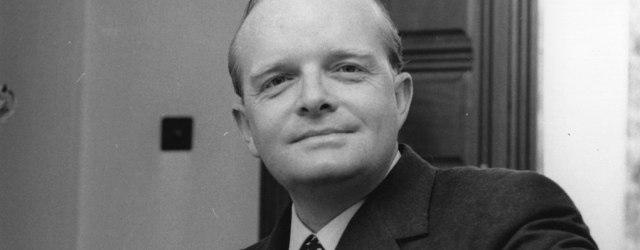
Truman Capote was already a literary star in 1959, when he read about the Clutter killings in the quiet town of Holcomb. Capote was famous for writing Breakfast at Tiffany’s but he wanted to try something new – the first ‘non-fiction novel’ – and this felt like the ideal subject.

Herbert Clutter and his family were brutally murdered when two men broke into their farm one night, looking for money they thought was locked in a safe that did not in fact exist. Enraged, they resolved to leave no witnesses. Herbert’s throat was cut then he was blasted with a shotgun; his wife Bonnie, their fifteen-year-old son Kenyon and sixteen-year-old daughter Nancy were all gunned down before their killers fled.

Truman Capote left New York for the scene of the murders, travelling with none other than Harper Lee, his best friend since childhood and author of the recently completed, To Kill A Mockingbird, which would soon become a huge sensation. Capote and Lee arrived at a small town still reeling from the shock of the murders. The eccentric, effeminate, outspoken Capote must have stood out a mile in rural Kansas but he charmed the inhabitants of Holcomb and even the special investigator, Alvin Dewey, to get the inside information he was looking for. The one thing Capote lacked was any trace of the killers. It seemed the police trail had run cold.

Six weeks later, a former cell mate who knew of their plan to rob the safe, identified Perry Smith and Richard ‘Dick’ Hickock as the Holcomb murderers. They were arrested, tried and sentenced to death by hanging, admitting their guilt along the way.

This is where the story of In Cold Blood takes a highly unusual turn. Despite the savage and brutal nature of the crimes, Capote decided it was necessary to get the killer’s version of events, because it would humanise them and make his book more vivid. He arranged to visit the convicted men and struck up an unlikely friendship with them, bonding with Perry Smith in particular, thanks in part to the murderer’s interest in art, music and books. He kept up a correspondence with Smith for five long years, while the death sentences were repeatedly appealed and his novel remained tantalisingly incomplete.

Capote realised he had placed himself in an impossible position by getting too close to the killers. In a bitter twist worthy of any crime story, he did not want Perry to hang, yet needed the sentences to be carried out if he was ever going to have an ending for his book. The mental torment on Capote began to grow.

“I thought that Mr. Clutter was a very nice gentleman. I thought so right up to the moment that I cut his throat.” – Perry Smith by Truman Capote in In Cold Blood.

As one of ten crime authors asked to appear in CBS Reality’s new true crime series Written In Blood, which began on 3 September, I prefer to keep my distance from real-life killers. Mark Billingham, Peter James, Simon Kernick, Angela Clarke, Marnie Riches, RC Bridgestock, Luke Delaney, Elly Griffiths, Alex Marwood and myself have all written books influenced, in part or whole, by true crimes, ranging from the callous, so-called honour killing of Banaz Mahmod to the horrific James Bulger murder.

My episode covers the infamous Moors murderer, Ian Brady, who, with Myra Hindley, killed five children in the early sixties. My novel The Search features a fictional character, loosely based on Brady and in no way sympathetic to him. When young Susan Verity disappears, suspicion falls on Adrian Wicklow, who shares Brady’s sadistic desire to torment the police. My research on Brady was disturbing enough without actually having to sit down with the real killer, who ironically died, after 51 years in prison, just one week after The Search was published.

Even if I had been writing about the Moors murderers themselves, I could never imagine visiting Brady – let alone striking up a friendship with him – to gain insight into his awful crimes. Rightly or wrongly, Capote put himself through that very process to complete his novel, but it took a terrible toll on him.

Perry Smith and Richard Hickock eventually lost their final appeals and both men went to the gallows on 14 April 1965. They asked Capote to be there when they died and he reluctantly agreed, witnessing Hickock hang but running out of the room just before Perry was executed.

Truman finally had his ending, but the anguish that caused him and the six years it took to finish In Cold Blood drove Capote close to madness. He never finished another book. Instead, he was left with lifelong addictions to drink and drugs that directly contributed to his early demise from liver disease in 1984, aged just 59.

Two Hollywood films have been made about Capote’s obsession with the Clutter family murders and their killers. The late Philip Seymour Hoffman won a best actor Oscar playing him in Capote, while British actor, Toby Jones, earned rave reviews for his equally brilliant portrayal of Truman in Infamous.

The book was finally published in 1966 and was a huge success. In Cold Blood is still in print and considered something of a masterpiece. The first true crime novel has been translated into thirty languages and sold millions of copies. Whether Truman himself considered it all worth it in the end is debatable.

***

Written in Blood airs every Sunday at 10pm since 3 September, exclusively on CBS Reality. Howard Linskey’s episode on the Moors Murderers will be broadcast on 5 November.

Via: https://www.deadgoodbooks.co.uk/in-cold-blood-truman-capote-howard-linskey/amp/
Transgender teddy to girl pirate: Authors tackle gender norms

Transgender-teddy

FRANKFURT

From a transgender teddy bear to a fearless girl pirate, children’s authors are tackling gender norms like never before, as debate rages about what it means to be a boy or girl.

Visitors at this week’s Frankfurt book fair, the world’s largest publishing event, will be faced with a string of books for young readers that defy stereotypes and navigate today’s hot-button issues of transsexuality and gender fluidity.

Stories with transgender lead characters in particular have broken one of the last “taboos” left in children’s writing, said literary expert Nicola Bardola.

“Some are watching this trend nervously, these kinds of books still make critics uncomfortable,” Swiss-born Bardola said, an author himself.

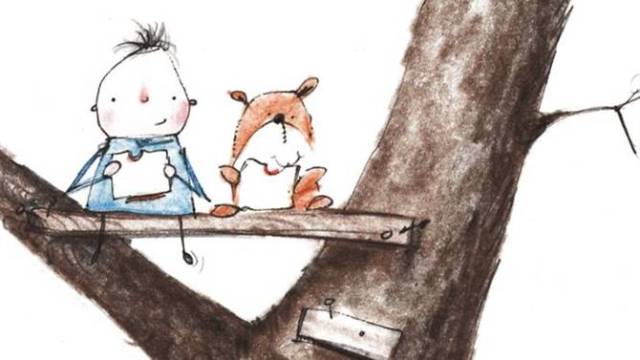
One of the most headline-grabbing recent titles has been “Introducing Tilly”, a tender story about Thomas the teddy bear who tells a friend: “I’ve always known that I’m a girl teddy, not a boy teddy.”

The picture book, aimed at children aged four and older, was written by Australian Jessica Walton who was inspired by her own father’s transition to a woman.

Translated into German last year as “Teddy Tilly”, Bardola called the book “a phenomenon”.

For a slightly older audience, there is US author Alex Gino’s award-winning “George”, which is about a transgender 10-year-old determined to play a female part in the school play.

INAPPROPRIATE

The book has won widespread praise for its warm portrayal of a feisty heroine, but it has also stirred controversy.

A Kansas district last month decided not to purchase “George” for the area’s schools, deeming it inappropriate for young readers.

Gino, a self-described “genderqueer” – someone who refuses to be defined by a gender – promptly started a Twitter fundraising campaign to deliver copies to every school library in the district.

In just half an hour the money poured in.

“Sharing stories of trans people with children is key to trans acceptance. There is no age before which it is appropriate to be compassionate,” Gino told AFP.

In the young adult section, readers can find Meredith Russo’s “If I Was Your Girl”, which chronicles an American teen’s fresh start at a new school, burdened by the secret that she used to be a boy.

Children’s book expert Bardola said the trailblazing tales had triggered much earnest hand-wringing from critics wondering whether it was “appropriate” or “dangerous” to introduce young readers to such complex themes.

He said it reminded him of the stir caused in the 1980s when gay characters started appearing in young adult books.

“The debate is nearly identical. You can tell literary critics are unsure about these (transgender) themes,” he said.

“I think we can be a little more relaxed about it,” he added.

“These books should be judged by their literary quality and children should be given a chance to decide whether or not they want to read these stories.”

German literature critic Ralf Schweikert was more sceptical.

“If you want to talk about what it feels like to live in the wrong body, you are asking for a lot of self-reflection from young readers,” Schweikert told AFP.

For bookworms scouting for a more general take on the gender debate, there’s no shortage of new titles out to smash the patriarchy, reflecting a wider cultural discussion about the traditional roles pushed upon boys and girls.

“There are increasingly books for very young readers out there that deliberately challenge these gender stereotypes,” Schweikert told AFP.

He listed the German early-reading book series “Wild Wilma” as a standout example, about the buccaneering adventures of a girl sailing the high seas as captain of a pirate ship.

‘PONIES AND PRINCESSES’

Bardola said stories that turned gender roles on their head had always been around but that such titles tended to peak every few years depending on the zeitgeist.

“Of course you can still find books for girls about ponies and princesses,” Schweikert said.

“But if you want to get away from those cliches, there’s a lot of good material out there right now.”

And more titles grappling with gender issues are on their way.

Scholastic, which published “George”, will next year be releasing the young adult novel “And She Was” by Jess Verdi, about a teen coming to terms with a parent’s transgender identity.

“And we’ve seen a number of trans or gender non-binary characters in other books we are publishing,” said Scholastic’s editorial director David Levithan.

Books, he added, that “show how gender diverse our real world can be”.

Via: http://www.channelnewsasia.com/news/lifestyle/transgender-teddy-girl-pirate-authors-tackle-gender-norms

Book News: Hodder wins new novels from Angela Clarke

angela-clarke_0A massive congratulations to my friend, Angela Clarke, on her new book deal – I can’t wait to read them. Here is what The Bookseller had to say…


Hodder & Stoughton has acquired two new novels by Angela Clarke, the author behind Follow Me, Watch Me and Trust Me (Avon), in a “hotly contested” auction.

Hodder’s Crime and Thriller publisher Ruth Tross, who acquired world English language rights from Diana Beaumont, Marjacq, said Clarke’s new novel, Inside, had hooked readers at Hodder from the first page and they had “big plans” for Clarke and her writing.

Clarke’s new novel, Inside, tells the story of Jenna Burns: framed for murder, she must prove her innocence from behind bars. When she realises she is pregnant, things take a darker turn – time is running out before she may be forced to give her baby up to the person who has ruined her life…

Wecloming, Clarke, who was previously published by Avon, Tross said: “I have loved Angela’s writing since reading her first novel – she is just amazing at combining a simple hook with page turning plots and intriguing characters.Inside displays that talent perfectly – everyone here was hooked from the first page – and we have big plans for Angela and her writing. I’m so excited to welcome her to Mulholland Books and Hodder & Stoughton.”

Beaumont said: “Angela’s first standalone novel plays to all her strengths: it’s topical, gripping, has a great hook and a strong female protagonist in a truly nightmarish situation. After a hotly contested auction we felt that the team at Hodder were the right people to take Angela to the next level in her career.”

Clarke added: “It’s a dream come true to be joining Ruth and Hodder’s roster, which includes many of my favourite crime and thriller authors writing today. I’m utterly delighted.”

Hodder & Stoughton will publish Inside on its Mullholland imprint in January 2019.

Via: https://www.thebookseller.com/tags-bookseller/angela-clarke

Kazuo Ishiguro Wins the Nobel Prize in Literature | The Guardian

Nobel Prize literature 2017

Fab article from The Guardan about this year’s amazing Nobel Prize in literature winner:

The English author Kazuo Ishiguro has been named winner of the 2017 Nobel prize in literature, praised by the Swedish Academy for his “novels of great emotional force”, which it said had “uncovered the abyss beneath our illusory sense of connection with the world”.

With names including Margaret Atwood, Ngugi Wa Thiong’o and Haruki Murakami leading the odds at the bookmakers, Ishiguro was a surprise choice. But his blue-chip literary credentials return the award to more familiar territory after last year’s controversial selection of the singer-songwriter Bob Dylan. The author of novels including The Remains of the Day and Never Let Me Go, Ishiguro’s writing, said the Academy, is “marked by a carefully restrained mode of expression, independent of whatever events are taking place”.

Speaking to the BBC, he called the award a “magnificent honour, mainly because it means that I’m in the footsteps of the greatest authors that have lived”.

“The world is in a very uncertain moment and I would hope all the Nobel prizes would be a force for something positive in the world as it is at the moment,” he said. “I’ll be deeply moved if I could in some way be part of some sort of climate this year in contributing to some sort of positive atmosphere at a very uncertain time.”

Ishiguro’s fellow Booker winner Salman Rushdie – who is also regularly named as a potential Nobel laureate – was one of the first to congratulate him. “Many congratulations to my old friend Ish, whose work I’ve loved and admired ever since I first read A Pale View of Hills,” Rushdie told the Guardian. “And he plays the guitar and writes sings too! Roll over Bob Dylan.”

According to the former poet laureate Andrew Motion, “Ishiguro’s imaginative world has the great virtue and value of being simultaneously highly individual and deeply familiar – a world of puzzlement, isolation, watchfulness, threat and wonder”.

“How does he do it?” asked Motion. “Among other means, by resting his stories on founding principles which combine a very fastidious kind of reserve with equally vivid indications of emotional intensity. It’s a remarkable and fascinating combination, and wonderful to see it recognised by the Nobel prize-givers.”

Permanent secretary of the academy Sara Danius described Ishiguro’s writing as a mix of the works of Jane Austen and Franz Kafka, “but you have to add a little bit of Marcel Proust into the mix, and then you stir, but not too much, and then you have his writings.

“He’s a writer of great integrity. He doesn’t look to the side, he’s developed an aesthetic universe all his own,” she said. Danius named her favourite of Ishiguro’s novels as The Buried Giant, but called The Remains of the Day “a true masterpiece [which] starts as a PG Wodehouse novel and ends as something Kafkaesque”.

“He is someone who is very interested in understanding the past, but he is not a Proustian writer, he is not out to redeem the past, he is exploring what you have to forget in order to survive in the first place as an individual or as a society,” she said, adding – in the wake of last year’s uproar – that she hoped the choice would “make the world happy”.

“That’s not for me to judge. We’ve just chosen what we think is an absolutely brilliant novelist,” she said.

Ishiguro’s publisher at Faber & Faber, Stephen Page, said the win was “absolutely extraordinary news”.

“He’s just an absolutely singular writer” said Page, who received news of Ishiguro’s win while waiting for a flight at Dublin airport. “He has an emotional force as well as an intellectual curiosity, that always finds enormous numbers of readers. His work is challenging at times, and stretching, but because of that emotional force, it so often resonates with readers. He’s a literary writer who is very widely read around the world.”

Born in Japan, Ishiguro’s family moved to the UK when he was five. He studied creative writing at the University of East Anglia, going on to publish his first novel, A Pale View of the Hills, in 1982. He has been a full time writer ever since. According to the Academy, the themes of “memory, time and self-delusion” weave through his work, particularly in The Remains of the Day, which won Ishiguro the Booker prize in 1989 and was adapted into a film starring Anthony Hopkins as the “duty-obsessed” butler Stevens.

His more recent novels have taken a turn for the fantastical: Never Let Me Go is set in a dystopic version of England, while The Buried Giant, published two years ago, sees an elderly couple on a road trip through a strange and otherworldly English landscape. “This novel explores, in a moving manner, how memory relates to oblivion, history to the present, and fantasy to reality,” said the Swedish Academy. Apart from his eight books, which include the short story collection Nocturnes, Ishiguro has written scripts for film and television.

Awarded since 1901, the 9m Swedish krona (£832,000) Nobel prize is for the writing of an author who, in the words of Alfred Nobel’s bequest, “shall have produced in the field of literature the most outstanding work in an ideal direction”. Ishiguro becomes the 114th winner, following in the footsteps of writers including Seamus Heaney, Toni Morrison, Mo Yan and Pablo Neruda.

The award is judged by the secretive members of the Swedish Academy, who last year plumped for the American musician Dylan “for having created new poetic expressions within the great American song tradition”. He proved an elusive winner and was described as “impolite and arrogant” by academy member Per Wastberg after initially failing to acknowledge the honour.

Some members of the literary community were also less than impressed: “This feels like the lamest Nobel win since they gave it to Obama for not being Bush,” said Hari Kunzru at the time. The choice of a writer who has won awards including the Man Booker prize should pour oil on at least some of the troubled waters ruffled by Dylan’s win, though Will Self reacted to Ishiguro’s win in characteristically lugubrious fashion.

“He’s a fairly good writer,” Self declared, “and surely doesn’t deserve the dread ossification and disregard that garnishes such laurels.”

Via: https://www.theguardian.com/books/2017/oct/05/kazuo-ishiguro-wins-the-nobel-prize-in-literature

The Weird Things Librarians Find In Books

green-librarian-enamel-pin-small

As readers, we have all flipped through books for various reasons. Maybe you like that new book smell, or maybe, you are a librarian and flipping through books is an everyday process. When it comes to collection development, we must constantly assess our library’s collection and make important decisions about properly weeding material to keep our collections current. The last thing you need is to house a book highlighting MS-DOS when most computers are running Windows 10. That’s a disservice to patrons and it just shows a lack of respect for the profession (I have known some of these lazy librarians).

While flipping through thousands of books over the years, librarian’s have found some very weird things hidden in between the pages. Some of the things found have not been shockers but others have been weird. Before you ask: yes, condoms have been found inside books. Don’t people use wallets and purses anymore? Anyway, here are some librarian insights of the weirdest things they have found inside books. They range from the not too weird to complete NSFW moments:

“I once opened a book and found a tin can lid inside. I did not want to cut myself so I walked the book over to the trash can and slid the lid off the book to dispose of it. I thought it was some kind of brujeria (witchcraft)!”

“One time I found $100 in 20s. It was quite a large amount of money to be hidden in a book. I located the patron who last checked out the book and after some questioning, I verified he was indeed the one who left the $100 behind.”

“As I was going through book donations, I noticed one book had a large amount of papers sticking out of it. I pulled the papers out and after reading through some of them, I quickly realized they were either sexual letters written to a woman or someone was working on some serious erotica for a future book. The details were pretty graphic so I had to toss them in the trash pretty quickly.”

“A patron returned some damaged books in our book drop once. The books had been chewed on by a dog and as I was flipping through the pages to verify the extent of the damage, hairs (possibly pubic, possibly from the dog) fell out of the book onto my lap. I just about puked on myself. I ran to the bathroom to wash my hands about 10 times before I felt like I got the nastiness off of me.”

“One time I opened a donated book and there was a letter in there from a woman to a family thanking them for helping her learn to play music. The letter was very old so I decided to research the name of the woman who wrote the letter. It turns out she became a famous musician! I thought it was the coolest thing. I am tempted to reach out to her to let her know I found her letter.”

“A coworker and I were checking in books at the circulation desk when we noticed one book looked odd. The pages were spaced apart in a weird way. Upon further inspection, we noticed there was hair taped to multiple pages throughout the book. It was gross and creepy so we decided to discard that book right then and there.”

“All I can say is I have found unmentionables that include condoms (wrapped and unwrapped), tampons and other nasty things.”

I have to say that finding weird and nasty things inside books is not an every day occurrence for librarians but it does happen. I admit that I have multiple hand sanitizers in my desk drawer and I use them often if handling library books. I mean, I don’t know where some of those books have been! What are some weird things you have found in books?

***

Via: https://bookriot.com/2017/08/15/things-librarians-find-in-books/

Readers prefer authors of their own sex, survey finds | The Guardian

WOMAN-READING-BOOK-facebook

An interesting article – I wonder if it still rings true?

Book review website Goodreads has uncovered a sharp gender divide in reading preferences, with analysis of 40,000 of its members finding that they leaned almost entirely towards selecting books by writers of their own sex.

2014 has been dubbed “the year of reading women” after a campaign by the author Joanna Walsh took off in January, but Goodreads’ data showed that male authors accounted for 90% of men’s 50 most-read titles this year. Before female writers rush to find a new male pseudonym, however, the converse is also true: according to Goodreads, “of the 50 books published in 2014 that were most read by women, 45 are by women, and five are by men”. And one of those men was Robert Galbraith, or JK Rowling.

“Ultimately, when it comes to the most popular 2014 books on Goodreads we are still sticking to our own sex,” says the reading website, as it laid out its investigation into the reading habits of 40,000 of its most active readers in 2014: 20,000 men and 20,000 women.

The analysis also found that in the first year of publication, 80% of a female author’s audience will be women, compared to 50% of a male author’s audience. But while women appear more open to reading books by both male and female authors, they like books by women more – and so do men. “On average, women rated books by women 4 out of 5 and books by men 3.8 out of 5. Surprise! Men like women authors more, too – on average men rated books by women 3.9 out of 5 and books by men 3.8 out of five,” said Goodreads.

Goodreads was prompted to perform its survey after “the #readwomen movement inspired us to take a closer look at where readers fall along gender lines”, it said in a blog laying out the results. #readwomen was kicked off by Walsh at the start of the year, asking readers to expand their literary horizons in the wake of statistics from US women in the arts organisation Vida showing a vast imbalance in the numbers of women reviewed and reviewing in today’s literary press. Walsh said yesterday that, while it was difficult to collect statistics on how many people are reading women writers, “response to #readwomen2014 on Twitter has been enthusiastic, with both men and women, including many ‘professional’ readers (ie reviewers and book bloggers) pledging to expand their reading lists in some self-defined way, whether it’s investigating a new sector of women’s writing (for me, this year, it’s been women in translation), reading 50%, or 100% women writers this year”.

Elizabeth Khuri Chandler, editor-in-chief and co-founder of Goodreads, said that Goodreads’ aim in sharing the data “was to stimulate conversation and self-reflection” and “to create a space for some friendly conversation about the subject”.

“It’s been fascinating to see our members discussing the male author/female author ratio of their own reading. For the most part, people are saying that they don’t set out to read a male author or a female author. It’s all about the book. But when they look at their reading lists, some of them are realising that maybe they might want to deliberately explore some different authors,” she said.

According to Goodreads’ data, men and women read the same number of books in 2014 if books from all publishing years are considered, but women read two times as many books published in 2014 as men.

“There is a caveat to the data we shared,” said Khuri Chandler. “We focused on men and women who are already active readers. So, we can’t say that the data covers all men and women. For our two groups, we learned that the men and women read the same amount of books. We did find, though, that with these active readers, the men did tend to gravitate to reading more male authors. But they did read some female authors too – it wasn’t all male authors. Also, it seems that our group of active male readers read books from a broader range of publishing dates than our group of active female readers. The female readers had more of a preference for the books published in 2014.”

Khuri Chandler added that, looking at the comments from readers about the Goodreads data, “some men said they felt they read more male authors because of the type of books they like to read. They thought that more male authors tended to write in the genres or about the topics that interest them than female authors. We also noticed that most people were unaware of the gender breakdown of the book they were reading. It certainly seems like an untapped area to explore.”

The five most-read books by women that men were reading this year, according to Goodreads, were City of Heavenly Fire by Cassandra Clare, We Were Liars by E Lockhart, Cress by Marissa Meyer, The Storied Life of AJ Fikry by Gabrielle Zevin, and Four by Veronica Roth – a mix of young adult novels, dystopias, and Zevin’s homage to bookshops. The most popular titles by male authors among female readers, meanwhile, were Hollow City by Ransom Riggs and The Blood of Olympus by Rick Riordan, both young adult titles, Anthony Doerr’s historical novel All the Light We Cannot See, Stephen King’s thriller Mr Mercedes – and The Silkworm, by the not-so-male Galbraith.

Walsh repeated a much passed-around quote, in which AM Homes cited another standout woman writer: “As Grace Paley once said to me, ‘Women have always done men the favour of reading their work and men have not returned the favour.”’ This didn’t, at first, seem to be borne out by Goodreads’ infographic, which showed women and men choosing books by their own sex as their favourites, said Walsh.

But she added: “It’s worth bearing in mind that the Vida statistics concentrate on literary fiction, and non-fiction, in which a bias towards books and reviews by men is clear in some publications, whereas the top Goodreads books include many crime, young adult and other titles less likely to be reviewed in the publications Vida covers.”

Via: https://amp.theguardian.com/books/readers-prefer-authors-own-sex

14 Thoughts You Have When Someone Tries To Talk To You While You’re Reading

talk whilst reading

Everyone has a few pet peeves: someone chewing with his or her mouth open, talking on the phone on public transport, letting the dishes pile up in the sink for weeks. But for a book-lover, there’s no greater pet peeve than someone attempting to talk to you while you’re reading. It’s like yanking headphones out of someones ears, or deciding to discuss your drama in the middle of a midnight showing of a brand new movie. In other words: it’s rude.

Sure, someone reading a book may not look like they’re doing all that much. You might think: She’s just sitting there, and she’s just holding a book in her hand — what’s the big deal? What you can’t see is that person’s mind sucked into a completely different world, full of characters and suspenseful plots and so much more. It’s sort of the worst thing to be sucked back out for a conversation that nine times out of ten can wait, at least for a few minutes while I finish up the chapter.

Granted, I understand there are some conversations that can’t wait. I’m a reasonable person, but at the same time, I like my book time. If you take public transport, read while you’re on lunch break, or have a few roommates who don’t grasp the idea of “quiet time”, then you’ve definitely had these 14 thoughts when someone tires to talk to you while in the middle of a really, really good book:

1. “Can you not?”

2. “I wonder if he’ll stop talking to me if I raise the book higher?”

3. “I should’ve put headphones on.”

4. “Did this person forget the whole ‘reading means quiet time’ lesson in Primary School?”

5. “I bet you’re the type of person to talk in a movie theater, too.”

6. “I wonder what would happen if I just respond to this conversation with only the dialogue from this book…?”

7. “Is it rude if I ask him to stop talking? Does this make me a horrible person? Am I the worst listener in the world?” (Technically 3 thoughts, but hey.)

8. “How many shrugs does it take for you to get the hint I’m not interested?”

9. “What did I do to deserve this?”

10. “Pretend to care, pretend to care…”

11. “Nope, I just can’t.”

12. “I’m going to invest in Audio Books from now on.”

13. “I think he’s finally taken the hint — Victory!”

14. “Now I can’t find the sentence where I left off…”

Hopefully this gave you a giggle, and anyone reading it will realise in future not to interrupt – or maybe you can ‘accidentally’ leave it somewhere said person can read this – hint hint!

***

Via: https://www.bustle.com/articles/169329-14-thoughts-you-have-when-someone-tries-to-talk-to-you-while-youre-reading

LGBTQ+ Book Trade Network Launches | Bookseller

Flag

Pride in Publishing (PiP), a brand-new networking group for LGBTQ+ people in the industry, has launched on Friday (25th August 2017) to create a way for queer members of the publishing industry to meet up, connect with others and find peer support.

The professional networking group aims to provide a space where LGBTQ+ employees in publishing can find fellowship and air suggestions for how to create progress for LGBTQ+ people and representation in the industry.

“It will be a members-led group, so various initiatives will be proposed and developed by members,” said Maisie Lawrence, one of the group’s co-founders and editorial assistant at Simon & Schuster. “In this important year, 50 years since the partial decriminalisation of homosexuality, we want to do everything we can to support and promote LGBTQ+ voices and books in the industry.”

PiP is open to professionals working at publishing-related concerns, such as publishing companies (from any department), agencies, bookshops and libraries.

Wei Ming Kam, co-founder of the BAME In Publishing network and sales and marketing executive at Oberon Books, said that the group wants to be as inclusive as possible, stating: “We aim to provide a welcoming space for all on the LGBTQ+ spectrum, including trans, non-binary, asexual and intersex people.”

It is hoped that in time the group willl inspire offshoots specialised in specific areas of publishing and where authors, who are keen on increasing LGBT representation in their books, can also get involved.

The idea for the group sprung from a offhand conversation in which several of the group’s co-founders were surprised that such an organisation wasn’t already in operation.

Louie Stowell, senior editor for non-fiction at Usborne and co-founder of PiP, told The Bookseller: “We were just really surprised that a network didn’t exist already. And lots of people had been having the conversation about why isn’t there a network so we just decided to do it.

“It’s less about benefitting us [as LGBTQ+ employees] as about making our output more inclusive and representative, because I still feel we have a long way to go and I think everyone is on the same page about that.”

Penguin Random House this year put on a Penguin Pride event in partnership with Stonewall to celebrate the importance of literature in the progression of LGBT equality at Proud, Camden, during London Pride fortnight, around which time W H Smith Travel ran a promotion dedicated to gay literature to mark 50 years since the decriminalisation of homosexuality.

Stowell added: “In the past few years I’ve definitely noticed a difference in visibility and representation already and it would be really good if everyone had a place to talk about it in the same room; that’s basically what we are after. Then, across publishers, we will have more impact.”

PiP’s seven co-founders – Maisie Lawrence, Wei Ming Kam, Eishar Brar, Louie Stowell, Kate Davies, Nicky Borasinski and Linas Alsenas – hail from publishers spanning Simon & Schuster, Oberon Books, Scholastic, Usborne Publishing, Thames & Hudson and Puffin & Ladybird.

The group will begin with monthly meet-ups. The first, described as an informal get-together, is scheduled for 27th September and will be held at Faber & Faber offices in London.

To join PiP and RSVP to the event, those interested are invited to email prideinpublishinguk@gmail.com with their name, company and job role.

***

Via: http://www.thebookseller.com/news/pride-publishing-launches-lgbtq-network-book-trade

14 Love Lessons From Jane Austen (who kind of knew what she was talking about)

Jane Austen Article

Even now, centuries after her works were published, Jane Austen’s wisdom remains very much alive, gracing the pages of calendars, postcards, posters, canvas bags… oh, I don’t have to tell you, because you own it all. And some of the best advice Austen ever gave? In the department of love. It makes sense, though, right? Relationships are at the core of Jane Austen’s works, after all: relationships between siblings, fathers and daughters, and friendships. Perhaps the most interesting and memorable relationships in her novels, though, are the romances. There’s simply no author who writes about love quite like Austen does.

Austen’s own love life has always been a bit of an enigma – she never made it to the altar herself, which can often seem at odds with her books. In fact, the writer’s romantic life is a source of fascination, of boundless speculation: numerous works have tried to assign her a romantic history, including the charming movie 2007 Becoming Jane.

Regardless of Austen’s own backstory, we see ourselves in her pages – and her words tell us that she understood deeply the thrills and challenges of falling in love. What is so powerful about the romantic relationships in Austen’s novels is that love is a form of growth and self-knowledge – the experience of falling in love frames her characters’ coming-of-age stories, or prompts their later-in-life reinventions. That’s why the love stories of Darcy and Elizabeth, or Knightley and Emma, continue to feel both so powerful and so relevant. By now, most of Austen’s best romantic couples are household names, and her plot lines have inspired echo after echo of modernized retellings, from Bridget Jones’s Diary to Clueless to the Lizzie Bennet Diaries (PSA: those of you who haven’t yet watched the webseries and its cousin, Emma Approved, do it now. Everything else can wait.)

Even if your copy of Pride and Prejudice is, by now, frayed and over-underlined, it never hurts to revisit Austen’s works – and re-experience the humbling, empowering love stories that drive each of her books. Here are 14 Love Lessons From Jane Austen:

1. Try not to judge at first sight

I’m going to open with the obvious. As any self-respecting Austen fan would know, Pride and Prejudice was initially titled First Impressions, and this is a central theme in the book. We all know how it goes: when Darcy and Elizabeth first meet, they judge one another pretty harshly, but as the novel unfolds, they both come to realise that there’s a lot more to the other — and to themselves — than what first meets the eye. The plot of Pride and Prejudice is, by now, a romantic comedy trope: two people who hate each other realise that they have more in common than they thought and perhaps without really meaning to, fall in head-over-heels in love. Pride and Prejudice follows the internal growth of each of these iconic characters — for Darcy and Elizabeth, the experience of falling in love is humbling and requires a great deal of soul-searching.

2. The right kind of love is the love that makes you want to become a better person

True love does not come easily to Darcy and Elizabeth. Both of them must, in their own way, rise to the challenge. Yes, the book ends in their marriage, but their marriage is only possible because they’ve both grown enough to admire and respect one another, flaws and all.

3. Don’t let a third party meddle in your relationship

Jane and Bingley, I’m looking at you. Even accounting for 19th century social conventions, these two are incredibly gun-shy, and both of them let their flaws get the best of them. Jane allows her shyness and reserve to be interpreted as lack of interest, and Bingley yields to his own insecurities, letting himself be convinced that she doesn’t care for him. (Caroline Bingley: 1, Jane: 0.) Maybe if they had communicated better, this almost-catastrophic misunderstanding could have been avoided — but then again, that would totally ruin the plot of Pride and Prejudice.

4. Don’t marry for money (but having money doesn’t hurt!)

I’ve always loved the passage in Pride and Prejudice in which Elizabeth teases Jane about when she first realised she had feelings for Darcy. “It has been coming on so gradually, that I hardly know when it began,” she says “But I believe I must date it from my first seeing his beautiful grounds at Pemberley.” (Sigh. I can almost see the twinkle in her eye.) While Elizabeth is clearly joking, there is some truth to her flippant response. Seeing the place where someone grew up and meeting people who knew them when they were children can speak volumes about their character — and there’s a special kind of affection that comes from learning about how someone’s past has made them who they are.

5. Love isn’t like it is in the movies

Or the novels of the 18th century. Back when Austen was writing Northanger Abbey, novels were seen much the same way we see bad TV (or actually, probably worse). Intellectuals (specifically male intellectuals), worried about what reading novels might do to women’s oh-so-fanciful minds. Austen both rejects and embraces this sentiment in Northanger Abbey, setting out to prove that just because gothic novels like Anne Radcliffe’s Mysteries of Udolpho are sensationalist and implausible (but still fun!), doesn’t mean that novels can’t represent and examine reality. In fact, as Austen sets out to prove, true emotion can be as painful and scary as getting kidnapped by a crazy, obsessed suitor. The same is true of love. While Henry Tilney and Catherine Morland’s story is hardly sweep-you-off-your-feet romantic (though it is pretty sweet), it’s based on mutual understanding and shared experiences.

6. Do not trust words over actions

This is a lesson for Catherine as much as it is for her brother James. Both of them are taken by the charming, airy Isabella Thorpe — and it takes them a little too long to realise that she’s only in it for the money. (Boy, does Isabella miss the mark.) Don’t make excuses for people’s actions — more often than not, people’s actions tell you a lot more about their true intentions than their eloquently expressed, oh-so-profound emotions. (And yes, that is Carey Mulligan and Felicity Jones.)

7. Be patient and steadfast

You’ve got to give Mansfield Park’s Fanny Price props for all her patience. She stood by Edmund Bertram through his awkward, misguided crush on Mary Crawford (a fascinating character in her own right.) Yes, some might argue that Fanny is a bit too passive, too willing to wait on the sidelines for her cousin (yes, I know) to notice her. Still, there’s something to be said for the way Fanny allows Edmund make his own mistakes and come to the conclusion that she’s the best person for him on his own. (Right?) To be honest, I’ve always admired Fanny. Like many of Austen’s other heroines, she is strong-minded and stands by her convictions — and these are traits any of us can raise a glass to.

8. It’s OK to be impulsive, but keep a good head on your shoulders

Emotions are as powerful as they are important. But as Marianne Dashwood learns in Sense and Sensibility, when people show us who they really are, we need to pay attention, and not allow ourselves to be completely taken over by emotion.

9. Don’t be so scared to say what you feel

It is a truth universally acknowledged that rejection stings. A lot. But Sense and Sensibility’s Elinor Dashwood and Edward Ferrars would have gotten a lot further if they’d just admitted their feelings to each other — hell, even to themselves. I know, I know, it would have violated social conventions and all that (and Elinor is nothing if not a stickler for proper manners), but come on, they would have saved themselves so much unnecessary suffering.

10. Keep an open mind

Marianne is broken-hearted when Willoughby shows his true colors, but she eventually manages to open her heart to Colonel Brandon — who ends up being exactly the kind of husband that she needs. Still, it takes more than Elinor’s levelheaded prodding to get her to give Colonel Brandon a chance. Keep your eyes open — you never know who you might be overlooking.

11. It’s never too late for a second chance at love

Second chances are, in fact, at the core of Persuasion. When Captain Wentworth reappears in Anne Elliot’s life after eight years apart, she is floored. She and Wentworth have a history: a short-lived romance in their early twenties that came to an abrupt and painful ending. Despite being completely in love with him, 19-year-old Anne rejected his marriage proposal based on her trusted friend Lady Russell’s advice, because Wentworth could not provide her with the life that she was used to — and also, due to fear of holding him back in his career. Though it takes these two some time to make their way back to each other, Anne and Wentworth eventually discover that their feelings have not changed through the years — in fact, getting to know each other again as adults only deepens their love and understanding. Wentworth eventually swallows his pride to ask the woman he loves, once again, if she will spend the rest of her life with him — writing the famously impassioned line: “I am half agony, half hope.”

12. Don’t give up on the person you love

Yes, Anne had said no to marrying him, but even Wentworth admits that he was a fool not to try to find her after he’d established himself professionally in the navy and was able to marry. While he did eventually find his way back to her, he could have saved them both a lot of heartache if he’d held fast to his conviction that they belonged together. Life (or, OK, Austen’s pen) gave Anne and Wentworth a second chance at love, but they very well could have done this for themselves.

13. Sometimes the right person has been in front of you all along

Sometimes you fall in love with your best friend. Emma is a wonderful, powerfully-written character study, among other things. Despite thinking herself above love and marriage, Emma Woodhouse eventually comes to understand that there is and always has been only one man for her. As she tries her hand at matchmaking, convinced that she knows what’s best for everyone, Emma realises that she’s a little more vulnerable and a little more (dare I say it) flawed than she’s ever allowed herself to believe. Her good friend Mr. Knightley, however, has always seen her for who she is — and loves her all the more for it.

14. Often the best kind of love isn’t flashy but steady, loyal, and uncompromising

Mr. Knightley does not subscribe to Frank Churchill’s pomp and circumstance, but he is an intelligent, fair-minded man who is capable of loving passionately — even if his always-calm demeanor suggests otherwise. “If I loved you less, I could talk about it more,” is one of my absolute favourite Austen lines. Austen really gets at just how deeply Mr. Knightley feels for Emma — and how, though he may not be one for big romantic gestures, he truly understands and respects her (sounds boring, I know, but it’s rarer than you might think.) In fact, because of this, Mr. Knightley may just be the all-time best Austen hero.

***

Via: https://www.bustle.com/articles/62958-14-love-lessons-from-jane-austen-who-kind-of-knew-what-she-was-talking-about-amirite

9 Things All Historical Fiction Fans Know To Be True

Historical Fiction


Historical fiction novels range from love stories to family sagas to coming of age novels. They include Sir Walter Scott’s Warerly, Leo Tolstoy’s War and Peace, and Hilary Mantel’s Wolf HallThey have drama, mystery, intrigue, love, horror, violence, romance — essentially, they have it all. A great historical fiction book will transport you back to another time and place where you are surrounded by the customs and traditions of a world long gone. And the best part about historical fiction novels is the mix of the true and authentic with the fabricated and the fictional.

If you’re a fan of historical fiction, I don’t need to be telling you any of this. You’ve shared your morning coffee alongside the Boleyn sisters, and your evenings on the battlefields of Normandy. You know how the class system worked in 17th century Britain, and you have lost so many of your favourite characters to war, you’re in a constant state of mourning. But if you’re a historical fiction fan, you must also know:

1. It’s About the Journey, Not the Destination

The beautiful thing about a lot of historical fiction is that you go into it already knowing something about the ending, whether it’s the outcome of the onset war, or the fate of a particular historical figure. Although it might seem like a reason not to like this particular genre, historical fiction readers know this is actually one of the greatest things about it. Because you know the ending, you can focus on the story itself, its characters, the relationships in the book, the dialogue, and the beauty of the writing without being preoccupied with the outcome. That makes the ride so good. And, despite what you may think….

2. Suspense and Mystery Still Exist, Even If You Know How the Story Ends

Historical fiction-haters will try and tell you it’s boring to know how a story ends, but we fanatics know that couldn’t be further from the truth. Just because a novel is about a period you think you know, or people you have studied in the past, doesn’t mean there is no room for mystery and intrigue in its telling. Everyone knows about the death and destruction that came as a result of Sherman’s March to the Sea, but E. L. Doctorow’s The March leads readers down a mysterious path of “who lives and who dies?” scenarios by giving us fictional characters in a historical setting. There is plenty of mystery, even in what is already known.

3. Love Is Timeless

Some people are turned off from historical fiction because the setting is something very unlike the setting in which we currently live, but the truth is there are some basic human conflicts that ring true no matter what time or place they are set in. Searching for true love, fighting an oppressor, exacting revenge, protecting your family — no matter who you are or what time period you’re from, these are all conflicts you can empathise with. Historical fiction-lovers understand that things like love transcend time and place.

4. Life Was So Much More Dramatic Before Mobile Phones

Celebrity Twitter feuds aside, life was a lot more dramatic before a simple phone call could resolve an issue. When you can’t text your fiancé to find out if it was indeed him kissing the handmaid in the stable, but instead you have to wait until the next grand ball to confront him over a formal dance, drama is sure to ensue. Besides, confrontation is so much juicier when it’s done in person.

5. Women Have Always, and Will Always, Kick Ass (No Matter What History Books Leave Out)

The problem with so many of the history books that you grew up learning from is that they are filled with all of the same characters: white, privileged men fighting for their own best interests. Yes, you learned about women’s suffrage and the Daughters of the Revolution, but why is it that women have been written out of many history books? Historical fiction gives a voice to the women of the past, and provides a space to tell the stories that the history books have been missing. Any historical fiction-reader will tell you that girls have always run the world. Boom.

6. There’s Nothing Like a Lengthy Letter and a Long Walk to Clear Your Head

Forget going to piloxing to relieve your stress — the characters in historical fiction have it right. Whether you are about to be sent off to war or your one true love has been promised to another, a long stroll through the countryside or a handwritten letter to your childhood friend is enough to find peace in clarity — at least it would be if you were in a historical fiction novel. Chances are, if you’re a fan of historical fiction, you’d choose to stretch your legs in the park over pounding the punching bag at the gym any day.

7. The Truth Is Stranger Than Fiction

Sure, the idea of aliens taking over the planet is pretty strange, but so is beheading two of your wives so you can marry someone else… and that actually happened. Although historical fiction does contain elements of fiction, often the kernels of truth are what’s most bizarre, and those kinds of strange but true facts stick with you. Avid readers of the genre know this better than anyone else. That’s why we’re so good at Jeopardy.

8. It’s Fun to Time Travel

Halloween only comes once a year, and unless you are in college, your costume party days are limited… and so are your days of pretending to be someone and somewhere else. But historical fiction fans know that if you want to put on a mask and go to a ball, you can always pick up a book. They know if you want to fight alongside the allies in WWII, you can pick up a book. They know if you want to sling guns with the cowboys in the wild west… well, you get the picture.

9. Everyone Has a Secret

It doesn’t matter if you are one of the founding fathers or a farm hand, a French monarch or a lady of the court — chances are, you have a secret. From the Dark Ages to the Civil War, people have been lying about who they are, hiding their pasts, and keeping the truth from one another forever. Though honesty is supposed to be the best policy, it doesn’t make for the best story, so note to authors: keep the secrets coming.

***

Via: https://www.bustle.com/articles/79523-9-things-all-historical-fiction-fans-know-to-be-true