

Tag Archives: Writer’s Life
14 Brilliant Authors Who Didn’t Succeed Until After 30

The art world is always obsessed with writer wunderkinder who bedazzle us with their early life talent. F. Scott Fitzgerald, Zadie Smith, Dylan Thomas, Jonathan Safran Foer, Helen Oyeyemi, John Keats: The list goes on, and the list is filled with the names of hyper-talented writers who were published and celebrated well before they hit 30.
If you are still waiting for your novel to find a buyer or for your short story to appear in the New Yorker, worry not. There is no time limit on achieving your writerly dreams. After all, dozens of famous writers didn’t “make it” until their 30s, 40s, 50s and, in some cases, even later than that.
These superlative authors don’t fall into the 20-something prodigy category. So take your time, revise that draft and write, write, write. These names should inspire.
1. Toni Morrison wrote her first novel at 39.
Toni Morrison may be a Nobel and Pulitzer Prize-winning novelist, but she was also a late bloomer. Her first novel, The Bluest Eye, wasn’t published until she was 40, while she was working at Random House as an editor. The Bluest Eye marked the beginning of a remarkable literary career that has included iconic titles like Beloved and Song of Solomon, all happening in tandem with an academic career as a Princeton professor.
2. Millard Kaufman published his first novel at the age of 90.
Sure, he wrote his first screenplay at 32 (Ragtime Bear, which featured the first appearance of a character named Mr. Magoo), but his first novel, Bowl of Cherries, was published when Kaufman was 90 years old. He also wrote a second novel, Misadventure, which was released posthumously in 2010. Kaufman is proof that it’s never too late to get a publishing deal.
3. Helen DeWitt published ‘The Last Sumarai’ at 41.
DeWitt was 41 when she finally published her first novel, The Last Samurai. In a fascinating interview with the Los Angeles Review of Books, DeWitt discusses her path to publication which includes a suicide attempt, years in academia at Oxford and then a turn toward the literary world. At one point with hundreds of fragments of abandoned and half-begun books on her computer, she quit her job and spent a month writing a new book, which would become The Last Samurai. After finding early interest, she felt pulled in too many directions and took time off from it before finally finishing and publishing the beloved story.
4. Bram Stoker didn’t write ‘Dracula’ until he was 50.
Bram Stoker, famous for Dracula, didn’t pen his opus until he was 50 years old. He left the civil service after many years to help run London’s famous Lyceum Theatre, writing reviews for free on the side. Though Dracula wasn’t his first novel, it is proof that you can write game-changing novels on the side.
5. Richard Adams wasn’t published until his 50s.
Adams served in World War II during his younger years and, like Stoker, became a civil servant, in what would later become the UK Department of the Environment. He wrote fiction in his spare time and told tales of a rabbit to his children on long car rides. The stories grew and became so complicated that he had to write them down. Eventually, when Adams was 54, a publisher picked up the now-beloved and best-selling Watership Down.
6. Anthony Burgess published his first novel at 39.
The man responsible for the controversial A Clockwork Orange came to writing very late. He served in the military, worked as a teacher, organized amateur theater productions of T.S. Eliot and later joined the British Colonial Service to teach in Malaya. It was there, while ill, that he began to write, and at the age of 39, he published his first novel, Time for a Tiger. Burgess went on to write a great deal more, also composing hundreds of musical works, and even wrote a translation of the opera Carmen.
7. Laura Ingalls Wilder was in her mid-60s when she published ‘Little House in the Big Woods.’
If you read the Little House on the Prairie books as a child, then you likely know the story of Wilder’s life. The daughter of a pioneer family in late 19th-century America, she was a teacher, a housewife and a journalist, and worked for the local Farm Loan Association. What you might not know is that Wilder didn’t publish the first book in her series until 1932, when she was 65. She began writing her childhood memoirs at the encouragement of her daughter. Her original biography, Pioneer Girl, which was rejected by publishers, will be released later this year.
8. William S. Burroughs published his first novel at 39.
A tragic incident led to the late-blooming literary career of William S. Burroughs, beat icon and addict novelist. In 1951, while drunk, he shot his wife, Joan Vollmer, in a game of “William Tell” in Mexico City. Witnesses claimed it was an accident, but while awaiting trial, Burroughs began writing his novel, Queer, which he eventually published in 1985.
His first published novel, Junky, was published when he was 39. In the introduction of Queer, Burroughs mentions how Vollmer’s death was pivotal to his writing: “So the death of Joan brought me in contact with the invader, the Ugly Spirit, and maneuvered me into a lifelong struggle, in which I have had no choice except to write my way out.”
9. Raymond Chandler published ‘The Big Sleep’ at 51.
Chandler was inspired to write by the Great Depression: After losing his job in the oil industry, he decided to become a detective novelist and is now remembered as one of the greats. The Big Sleep, his first and one of his best-loved novels, was published at the age of 51, earning admiration from writers as diverse as W.H. Auden, Evelyn Waugh and Ian Fleming of James Bond fame.
10. George Eliot didn’t publish ‘Middlemarch’ until she was 52.
Mary Ann Evans, better known by her pen name George Eliot, is one of Victorian England’s most acclaimed novelists. Her first book, Adam Bede, was published when she was 40, and her seminal Middlemarch didn’t come out for another 12 years. She chose the male pen name so that her novels and words would be taken seriously at a time when female writers were associated with romance.
11. Charles Bukowski published his first novel at 51.
Bukowski released a few short stories in his 20s, but he quickly grew disillusioned with publishing and his lack of success, and so went on what can best be described as a 10-year bender. It wasn’t until publisher John Martin persuaded Bukowski, who had spent most of his life working in a post office, to write his first novel. Post Office came out to widespread acclaim in 1971, when Bukowski was 51.
12. Anna Sewell published ‘Black Beauty’ during the last months of her life.
Sewell’s mother was a children’s author, whom she helped edit many books over the years. Sewell began writing Black Beauty during the last decade of her life to bring attention to the need for kindness to animals, while she was struggling with illness. The novel was published in 1877, when she was 57. She died the next year, but lived long enough to see her book’s huge success.
13. Rev. Wilbert Awdry developed ‘Thomas the Tank Engine’ from bedtime stories for his children.
The Rev. Wilbert Awdry was a lifelong railway enthusiast who made up stories about trains for his son Christopher when he came down with measles. After making Christopher a model of the engine Edward from his stories, Christopher asked for a model of the story’s large blue train Gordon. Unable to mock one up from his usual materials, Awdry made a small tank engine called Thomas, thus inspiring one of the most beloved children’s book series of the 20th century. The first story, The Railway Engines, was published in 1945, when Awdry was 34.
14. The Marquis De Sade wrote his first book in prison, at the age of 42.
When you’re the famous libertine and hedonist Donatien Alphonse François de Sade, many other things must seem more interesting than literature. However, his bacchanalian lifestyle landed him 32 years in prison. His first book, Dialogue Between a Priest and a Dying Man, was written in 1782 while imprisoned in the Chateau de Vincennes. De Sade was 42 at the time of writing, but it wouldn’t be published until 1926. He continued to write salacious and sexual texts all through his prison sentences, including The 120 Days of Sodom and, perhaps his magnum opus, Justine.
Via https://14-brilliant-authors-who-didn-t-succeed-until-after-30
It’s Not What You Think | The First Ten Words by Rich Larson

On Writer’s Blog today, we take a little break from writing – as this is such a good, well written post, and is so relevant to what I was saying in my post earlier in the week on Writing and Depression – that I had to share it. I hope you find it an interesting, thought provoking, and emotional read, as I did.
Chris Cornell died early Thursday morning. His band Soundgarden played a show on Wednesday night at the Fox Theater in Detroit. Two hours after the show ended, he was gone.
For two days, I’ve been working on a piece to pay tribute to him, and it’s been a struggle. Usually when I have a problem like this it’s because I’m staring at a blank screen trying to figure out what I want to say. That’s not the problem this time. The problem is I have way too much to say.
I’m not going to sit here and claim to have been a huge fan of Soundgarden. I didn’t dislike them, I just had to take them in small doses. I was a fan of Cornell. I love “Seasons,” the solo song he had on Cameron Crowe’s movie, Singles. It’s a droning acoustic song about isolation and the meaningless passing of time. Your basic nihilistic statement written at what was probably the peak of rock’s most nihilistic period.
I was a fan of Cornell as a person. Of all the great musicians that were packed into Seattle in the late 80’s and early 90’s, from Mark Arm of Mudhoney to Jeff Ament of Mother Love Bone and Pearl Jam to the Great Tortured Genius himself, Kurt Cobain, Cornell seemed like he rose a little bit above the others. He was the unofficial communicator of the Seattle scene. Like a Pacific Northwest Sinatra, he had a charisma and a calm grace about him. He was thoughtful, even charming, in interviews, unlike his compatriots who disdained fame and accolades (or at least pretended to). Cornell was the guy who seemed most like he could handle all the attention without turning it into an existential crisis.
Now he’s dead because, as it turns out, he had been dealing with an existential crisis most of his life. I was a fan, and I had a ton of respect for him. But it’s taken me a little while to understand why his death has affected me as strongly as it has.
At first I thought it might have something to do with the fact that I was mostly a bystander while the music of my generation was taking over. Just as Nirvana and Pearl Jam were making that gigantic breakthrough in 1992, my fiancé and I discovered we were pregnant. So instead of investigating mosh pits at the 7thStreet Entry, or watching Soundgarden and Pearl Jam rule the stage at Lollapalooza (it was a traveling festival in those days), I was hastily throwing together a wedding and then changing diapers. My wife and I got an early jump on things, so we’ve always told ourselves that we’d make up for lost time in our forties and fifties.
Well here we are, and something like this just makes it feel like we’ve arrived too late. But while that’s a legitimate thing, I don’t really think that’s exactly what is bothering me.
Then I thought maybe it’s a generational thing. Grunge is the gift that Generation X gave to the world of music. We took all that slacker cynicism, mixed it up with our older siblings’ sneering punk attitude, Zeppelin’s low end and, if we’re being honest, a little heroin. The result was the musical version of Beckett’s Waiting for Godot. It was gorgeous art that was absolutely sure that nothing really matters, making it feel immediate and important. It was the sound of a generation telling everybody, including ourselves, to fuck off.
And while we were wallowing in our splendid alienation, our spokespeople, predictably, started dying. First it was Andrew Wood of Mother Love Bone. A lot of us didn’t know about him until Cornell, along with Wood’s erstwhile bandmates (who were about to form Pearl Jam) memorialized him with a one off tribute called Temple of the Dog. Somehow, Wood’s story made death part our music’s romantic foundation.
A couple years later, Cobain killed himself with a shotgun. He was 27. Our Bob Dylan, the voice of our generation, threw it all away because he was afraid he was becoming a cliché. At least, that’s what we told ourselves at the time.
Shortly thereafter, Kristen Pfaff of Hole overdosed and died in a bathtub. And then Shannon Hoon of Blind Melon overdosed and died on a tour bus. It felt like people like D’arcy Wretzky of Smashing Pumpkins, Scott Weiland of Stone Temple Pilots, and, perhaps especially, Courtney Love – Pfaff’s bandmate and Cobain’s widow – were all headed in the same direction.
Alice in Chains’ Layne Staley died of a gruesome overdose. The fact that his body was not discovered for more than a week felt somehow fitting. He was a emblematic of a generation that just wanted to be left alone.
And just when it felt like our music, and maybe our entire generation, would never live to see 30, things turned around. Love and Weiland cleaned their acts up (at least for a while). Bands like Pearl Jam thrived long after the term “Heroin Chic” disappeared. Before we knew it, we were a decade into a new century and a lot of the Poets of Grunge were still standing. Some of them were even in the Rock and Roll Hall of Fame. It felt like our heroes were out of the woods.
When Weiland died of an overdose of cocaine, alcohol and MDA at the end of 2015, it felt like an echo, and not something rooted in the present. He had become the most notorious addict of them all over the years; in and out of rehab so many times we had all lost hope for him. His death was something that had been predicted so often for so long that it might as well have happened in 1997.
But Chris Cornell died of suicide on May 17, 2017, at the age of 52. He was a dad. He was a philanthropist. He was becoming an elder statesman of rock. He was a grown up. Cornell was aging gracefully, even doing that thing where some guys get better looking as they get older. He got Soundgarden back together, and they made a great new album a couple years ago. His voice still had all the power and strength it had displayed in his youth. Much like the rest of us, the world had kicked his ass a couple times, and he survived.
But now he’s gone, and goddammit, his is the death that bothers me the most. As I’ve been thinking about this, I’m realizing that it’s both a personal and a generational thing. Cornell had a long struggle with depression. As have I. As have many of you.
It’s possible that, along with grunge, Generation X’s other great gift to society is depression. I mean, of course it was here long before the Baby Boomers started re-producing, but we talk about it more than those who came before us. We talk about it as a demon or a monster. It’s a dark shadow that shows itself at any point in time without warning. It surrounds us, isolates us, and quiets us. Depression likes to blame things. We feel like shit because of mistakes we have made in life or because of the state of the world or because we aren’t perfect. Without a lot of help and a lot of work, it’s impossible to know that it really is a chemical imbalance in our brains. After twenty-plus years of trying to de-stigmatize depression, some of us still have a hard time recognizing it for what it is. And even then, it doesn’t always matter.
You might think grunge is about anger, but that’s not completely true. Yes, it can sound that way, but it’s really about depression and cynicism. Those two go hand-in-hand, along with their nasty little sister, anxiety. When the three of them get going, they just eat hope as quickly as it can be summoned. That leaves despair and despair is exhausting, not just for those who experience it, but for the people around it as well. So we keep it to ourselves because we don’t want to be a burden. And then it gets to be too much. Doesn’t matter if you’re a student, a mom, an accountant or a rock star. It doesn’t matter if you’ve written about it your entire life as a means of keeping it at bay. It doesn’t matter if the music you made about it brought in fame, respect and millions of dollars. It doesn’t matter if your entire generation has suffered from it. Depression makes you feel totally alone. You hit the breaking point, and then, like Chris Cornell, you die alone in the bathroom.
This was a well-respected member of his community; a beloved musical hero who seemed to have it all together. This could have been any of us. And brothers and sisters, if it’s you, don’t mess around with it. Please find some help.
Cornell is speaking to us all one last time. This isn’t something we left behind with our twenties. This isn’t something cured by age or financial security. This isn’t something you “outgrow.” If it’s allowed to fester, depression is stronger than wisdom. Depression is insidious and tenacious. Depression can get to anybody. It can make you feel like an old man at 27. It can make you feel lost as a child at 52.
Call it a senseless tragedy. Call it a second-act cautionary tale. Call it whatever you want. Just don’t blow it off as meaningless.
Rest in peace, Chris.
Via: It’s Not What You Think | The First Ten Words by Rich Larson
Which Is More Important: Writing or What We Write?

The key thing to remember about writing: It’s about writing! The more we think about what we write, the harder it gets. We can talk and think ourselves out of writing far easier than allowing ourselves just to write. The mind of a writer is filled with objections because most writers are afraid of writing something that doesn’t make sense, or worse, writing something that comes across as idiotic or is considered arbitrary. Your inner voice all too often will put forth resistance, telling you that you don’t make any sense whatsoever and you’d be much better off doing anything, except writing!
Maybe you’ll recognize some of these inner objections:
Am I really a writer? Am I any good?
Will anyone care about what I write about?
Does my story make any sense to anyone else?
Do I constantly repeat myself?
Do I over-edit?
Do my characters seem real? Do they have depth? Should I just go ahead and kill them all off now and give up writing forever?
Do I suck? No, I don’t. Yes, I do.
How bad do I suck? Bad! The Titanic sunk because it knew that I would be born and try to become a writer.
Why Writers Struggle So Much With Rejection
One of the things my inner voice loves to tell me is that my writing is total and complete garbage and beyond any shadow of a doubt will be rejected. My inner voice isn’t alone, as so-called experts tried to convince me of the same things too. Fear of rejection is powerful, because at some point or another we have all been rejected for something, and we never forget the pain. The more times we have been rejected for anything, the more doubt compounds within us. This is an especially complicated issue for writers, because we’ve all heard the stories and watched the movies where writers get rejected. Some will even tell you that if you want to be a writer then you better get used to being rejected. It’s almost as bad as trying to ask someone on a date for the very first time. The possibility of being turned down isn’t just extremely high, it’s 100% going to happen.
Have I made you feel any better about rejection? I didn’t think so. The good news is that the power of rejection holds less threat for writers today. You don’t need an editor’s approval to self-publish and you don’t have to send out thousands of letters to be accepted by any agent or publisher if you don’t want to. So then, what’s to stop you from writing and publishing your writing? Perhaps it’s the internal messaging system we all have that tends to tell us that when doing something, anything, it must be done in a certain way or it won’t be acceptable. Well, that may have been true for a long time, but when it comes to writing and publishing your work, you are now the-end-all-be-all if you want to be.
I think we hold onto memories of rejection because we try to avoid putting ourselves in a position of being rejected again, no matter what type of rejection that might be or from whom. Very few of us, if any, are completely free of this internal fear. All of us have our own way of dealing with it; however, to be truly free of the fear of rejection, one must come to terms with it. One way I have done that is to write for myself, knowing I can publish whatever I write if I choose to. That doesn’t mean I’ll sell a million copies or that it will attract a huge readership, but it’s still a freedom that gives me room to write. Blogging helps too, because it can be done regularly, in increments, and articles can be published privately first and then, when we’re ready, we can publish them publicly. Blogging also takes a while to gain a readership, so our writing is exposed to readers more slowly. As we gain more readers over time, we naturally gain confidence and eventually worry less about being rejected.
How to Conquer the Internal Editor One Word at a Time
At times, if you want to get past the internal resistance of your own mind, you actually have to give in and allow yourself to write whatever you come up with. Even if your writing seems like terrible, useless drivel no one will want to read, the more you write and get your thoughts on paper, or on the screen, or on your blog, the less power the internal nay saying voice has.
Writing rituals also help, which I’ll get to in a moment. Before writing, you might consider looking in the mirror and telling yourself you’re going to write the best gibberish you can come up with, and then challenge yourself to do exactly that! You may find yourself amazed at how much sense your gibberish makes when you read it back.
If you’re like me, then you’d like your first draft to be your only draft, but you probably also know that’s not what actually happens. Writing a first draft is mostly just getting your thoughts out of your head, but there’s a little more to it. A first draft often only makes sense to you, the writer, and it will need to be shaped and formed during the second and, perhaps, third draft. We sometimes heap unnecessary pressure on ourselves to write a perfect first draft. I don’t know of any writer who is ever completely satisfied with his or her first draft. I know I never am. It is the action of writing that matters, not necessarily the content itself.
The Most Important Advice Any Writer Will Ever Hear
I am willing to bet every writer on God’s green earth has been told their first draft is crap. Somehow we come to believe it and even tell ourselves this without ever considering the true mental and emotional impact. I refuse to join the chorus. Allow me to share something very important with you and it took me too long to realise it.
Your first draft is not crap no matter how far from perfect it might be.
I regret the many first drafts I’ve thrown away, because I’ll never be able to get them back. An idea is wonderful, but an idea written down is heaven. As a draft, it becomes a physical, tangible manifestation you can refer to and build on. Throwing away an idea, even symbolically, is painful and wasteful. I think all of us have woken from dreams and wished we had written them down, even if just haphazardly, and even if only to remember them later. How many dreams have you forgotten, but somehow the feeling that they were wonderful still stays with you? What if you had written about a dream while it was still fresh in your mind? What if that became your first draft? What would you refer to it as? I somehow doubt you would call it crap.
Think about it a moment. Consider how the word crap makes you feel (and I am using the “clean” version of the word). What emotional value does it provide? The first draft matters the most and it deserves proper credit. The belief you’re merely writing crap in order to be okay with the fact that it’s not “good” only serves to feed your doubts about your writing.
Every book, every article and every blog post starts off as a first draft. A first draft is when you turn an idea into some coherent form, when you’ve assembled your loose thoughts from notes collected on napkins, scraps of paper, or from your voice recorder. You know how painstaking this process is. Your first draft is perhaps the most important step to completing your project. It’s special. No one’s ever gotten to the end without the beginning. Crap is the last thing in the world that your first draft is!
I’m writing this because too many have come to believe that when they sit down and write their first draft they aren’t doing something crucial to the creative process. I mean, how important can crap be? Don’t throw away another seed before it has the opportunity to grow into something beautiful. Don’t discard the memory of another glorious dream before it can be realised.
Are You Consciously Investing in Your Writing?
I discovered this the hard way. If I don’t think constructively about what I’m writing, I won’t make the necessary mental and emotional investment it takes to see my writing through to fruition. Once I figured this out, I lowered my risk of falling into depths of writer’s doubt and became much more prolific. Your state of mind has a huge influence on your confidence and productivity. Today, when I sit down and write my first draft, I have the greatest respect for it. It won’t be perfect, and it certainly won’t be polished, but without the first draft I wouldn’t have anything!
If you want to feel better about your imperfect draft, then acknowledge that it’s incomplete and know you will shape it later on. It will take time and hard work. It won’t always be fun, but if it was just crap, would you want to put that kind of effort into it? I wouldn’t. What if you stopped calling it crap and started calling it by its true value? Would that change your perspective and increase the emotional value you place in your work?
Let’s be honest here, just for a moment. Between you and me, in the real world, what do you do with crap? You flush it or bin it. You’re too good for that and your first draft is too! No matter how imperfect it might be and no matter how much work must still be done.
With respect and admiration for Ernest Hemingway, I prefer this quote by Michael Lee:
“The first draft reveals the art, revision reveals the artist.”
One Easy Path to Respecting What You Write in Your First Draft
Starting a new writing project is an exciting, mysterious, and sometimes nerve-racking adventure, so try not to limit your process. I have several ways I use to get myself started. One very effective method is talking to myself.
Do you ever talk to yourself? When you’re alone (I think you’ll really want to be alone for this one), go ahead and start talking to yourself. Talk about anything: how the day has been, why you didn’t do something you should have done, a situation at work, or whatever happens to be on your mind.
Here, I’ll help you with a couple of questions: What do you really want to write about? Is there a special story that you want to tell? Talk out loud to yourself about that story, tell yourself openly and honestly why you want to write it.
Now here’s the key to this exercise: while you’re talking, make sure you have a word processor open. Type everything that you say, every single word. Don’t look at the monitor. No, don’t do that! Carry on your conversation with yourself until you’ve said everything you need to. Try not to hold anything back. When you’re finished talking, then, and only then, look at the monitor. There’s your first draft ready to be fashioned into your story. It might not be perfect, it might not be exactly what you wanted to write, but it certainly isn’t crap. It is a start, and it’s your very own personal invitation to continue writing.
Like I said, writing is about writing and sometimes it’s not what we write, but the actual process of writing itself that matters the most.
On Depression and Writing | A Reprise
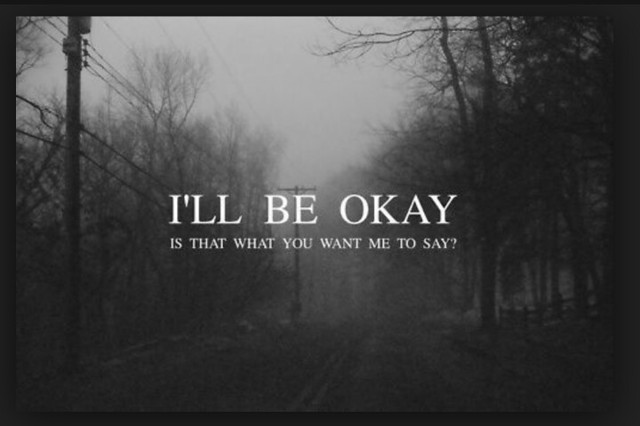
A little while ago, I published the article On Depression and Writing by Derek Haines on Writer’s Blog, as I found it quite an interesting piece and thought others might like it too.
Since publishing it though it has played on my mind – how this writer has found depression so enabling with his writing process – and I have been thinking: lucky him.
Now, before I get in to this I need to say I love talking about writing, and books, stories, the writing process, etc etc, but I do not talk publicly about my own struggles. However, in order to discuss my thoughts on this topic I have to open up about myself – so here goes:
I have struggled with depression for years. I don’t talk about it, most people don’t know about it, in fact, some of my friends and acquaintances reading this will be shocked to find out about it, because when I’m out and about I plaster on a smile and be as helpful and as enthusiastic as I can possibly be. But behind closed doors I am in a lot of pain. I don’t want to burden people with it or bring them down, so I generally keep it all completely to myself. Posting this is therefore the most un-like-me thing to do. But, I want to talk about depression and writing, of which I have an awful amount of experience, so I can hardly discuss it and not mention my own experiences.
For me, depression is completely debilitating. Amongst other things, I have been writing a novel now for some time. The thing that stops me finishing it – apart from the editor living in my head who won’t allow me to just “write a crap first draft” – is depression. It’s not just “feeling a little bit low” and something I can easily “snap out-of”, like turning off a lightbulb, it is a constant everyday battle with myself.
Every writer goes through that “I’m shit and no one will want to read this trollop” stage. But with depression, that stage takes on a whole new life of its own. It becomes “I’m shit, and worthless, and useless, and maybe I should just kill myself” and “no-one is going to want to read this trollop because who am I kidding, I should just give up right now!”.
Depression has been the one biggest obstacle to my writing above anything and everything else. Money is an issue, of course, but you can always do a bit of extra work or beg and borrow it from somewhere. No one else can save you from the games your mind plays on you when you are depressed. I can sit in a room with nothing to do but write, and depression will pop up its head, and I will just sit there and cry, or procrastinate by doing anything else to distract myself from myself that I can – music, TV, social media – you name it, but can I manage to write a single word: no.
And then what happens? I feel even worse because I’ve done nothing, achieved nothing. And so the downward spiral continues. I have endless amounts of both respect and awe for the writer Matt Haig, who has famously and openly suffered with depression for a long time and still been a successful published author. I just wish I knew how he did it. I’m guessing sheer determination and resilience, because I know personally that it takes a massive amount of inner strength to battle depression everyday and still keep writing.
It is my hope that one day I will make it, both as a writer and as a happy individual. But for now, I will keep on struggling forward a day at a time. If any of you reading this are saying – yes, this is me too, she gets it – then I hope this post encourages you to keep writing too, and to know that although it feels like it, you are not alone.
How To: Develop Good Writing Habits

I have this idea, every once in a while, that I need to improve my habits. I need to drink more water, get more fresh air, walk the dog. I don’t even have a dog.
So you can imagine what happens when I read a blog or a book or a helpful message telling me I need to get up earlier to write first thing in the morning.
This is, they assure me, the path to all that is right and good. If you just get up earlier, you can gain a whole hour in your day. I hear, and I start nodding along.
Yes! Great idea, an hour earlier. I will just get up and start writing. Never mind that my brain has not yet switched on at that hour. Never mind that I cannot find three words to string together.
The quiet, the lack of interruption, the feeling that I am absorbing the secrets of the sleeping universe will make it all worthwhile. A bucket of coffee will help.
But while “more writing” gets a big thumbs-up from me, “less sleep” does not. Less sleep is on my list of Things That Lead to Certain Doom.
My best intentions – having shiny good habits, being an early bird, getting all the worms, etc – turn into burning the candle at both ends, and that much fire will turn your life into a disaster zone real quick.
That is not the habit for me.
It always takes me a few days to remember this.
I don’t have to write at the time someone else tells me I should. I can write at my own pace, at the times and places that work best for me.
I don’t have to do what someone else does. I don’t have to write as fast as someone else does. I don’t have to write as much as someone else does. I don’t have to write as often as someone else does.
A writing habit is a gift, but it can become a burden if you’re doing it in a way that doesn’t fit you.
You don’t need to follow someone else’s plan, and you don’t need to go big when you first jump in. You can start small and make it sustainable. You can learn about yourself as you go, and you can make new plans with what you learn.
Know Your Why
The reason you write might not be the same as mine, or as anyone else’s.
Are you writing to preserve memories? To process a trauma? To connect with others? To build a creative habit?
Your why can help you decide what your writing practice should look like, and will keep you motivated as you continue.
Start With Tiny
Once you know why you’re doing this, set a goal so small that you can hardly help but meet it. Starting small makes it easier to continue, and it makes you feel successful.
So: type one new sentence. Or open your journal to a clean sheet, and title the page. Or read the last paragraph you wrote, and add the next sentence. Goal complete. (But feel free to keep going.)
If you want to get up earlier, try ten minutes instead of an hour. If you want to start writing every day, try 100 words before you commit to 500.
Small matters. Small gets you started, and small adds up!
Reclaim Your Minutes
Instead of setting up a whole new daily routine, can you find a few minutes in your day that won’t be missed? Your (non-driving) commute, lunch hour, naptime? While waiting in the car?
Is there a time to think and plan – while you wash dishes, fold laundry, drive, shower?
Repurposing the minutes you have will get you going, and help you figure out what you need to continue.
Adjust As You Go
Maybe you’ll learn that early morning is not your best writing time. (Ahem.) Maybe you’ll discover that you love journaling on a park bench while your kids swing. Maybe you’ll find that you need quiet alone time to get the words flowing.
It’s okay to make adjustments. It’s okay to try something different. It’s okay if the thing you try doesn’t work out. You can make changes, you can try again.
Your writing habit is a gift to you. It doesn’t need to measure up to someone else’s ideal.
I don’t want to get up before the sun. You don’t have to stay up until after midnight. (Although I might.) You can do what works for you.
Start small. Make adjustments. And let this gift be your own.
Via: http://thegiftofwriting.com/2015/02/develop-writing-practice/
Handling Publishing Stress | Janet Kobobel Grant

A new year is a good time to think about what you wish you could change. One item that immediately came to me was how stressful publishing can be.
Stressful occupations
I remember decades ago reading a survey about the most stressful occupations. Right after fire fighting, police work, and some medical professions, publishing was listed. Since I was just dipping my toes into publishing, I gasped in surprise. How could a simple love of books have landed me in the midst of Stressville!?
What causes publishing stresses?
In case you wonder what is measured to determine stress, here are the job qualities that were evaluated for the 2017 list:
• Travel
• Career Growth Potential
• Physical Demands
• Environmental Conditions
• Hazards Encountered
• Meeting the Public
• Competition
• Risk of Death or Grievous Injury
• Immediate Risk of Another’s Life
• Deadlines
• Working in the Public EyeI’m seeing several aspects of publishing here!
Why is publishing more stressful than ever?
Over the years, the trend in publishing has been for greater stress and more work. With the economic downturn in ’08, everyone in publishing (who still had a job) had to do the work of everyone who lost his or her job. The workload grew for individuals. And while that’s been alleviated some, publishing’s growth each year since the recession remains relatively flat, resulting in little job growth.
The stress to make right decisions about which books to publish has grown as well. I’ve talked to decision-makers at publishing houses who have literally groaned as they’ve agonized over whether to take a project to committee. Too many wrong choices, and the results become dire both for the person backing the wrong titles and for the publishing house that must bear the financial loss.
Add to the mix the rate of change in the industry via electronic publishing, self-publishing, and the Amazon effect; the demise or potential demise of formerly stalwart outlets through which to sell books; and the need to figure out how to promote books in the ever-changing online world, the publishing stresses ratchet up another notch or three.
Writers and publishing stresses
Writers, of course, struggle with the limited chances they can maintain a successful career in publishing. It’s the rare author who makes sufficient money not to have to supplement – or completely rely on – other jobs.
Meeting the public and working in the public eye (via social media, book signings, speaking at writers conferences, having your work publicly evaluated via reviews) certainly add to a writer’s stress. That’s especially true when we consider that most writers are introverts by nature.
Competition comprises a significant aspect of publishing, too. Writers compete to get published; to get noticed by readers; for marketing dollars; to make the best-seller list; for awards… Yeah, competition is a constant.
And, of course, deadlines persist in a writer’s life. Not only writing a manuscript on deadline but also meeting production deadlines once the book is given to the publishing house. That’s followed by meeting the marketing and promoting deadlines, some of which are self-imposed while others are imposed by the publisher.
Then we have launching into writing your next book while still promoting your recent release. Yup, writers’ lives are laced with deadlines.
What’s a person caught in this whirlwind to do?
I deal with publishing stresses by setting aside time throughout the week to concentrate on the big picture rather than spending most of my time on the small stuff (which leads to lots of stress since the larger issues never get addressed). Making the big stuff what I dedicate a good portion of my day to helps because I feel like I’m making progress. But if I spend my day responding to emails, while that work is important, it isn’t satisfying–nor is it necessarily the highest priority for me.
Asking oneself, What is the most important part of my job? helps to focus one’s attention on the top-of-the-stack responsibilities.
For me, that’s making sales. If I don’t make sales, I’m not setting everything else in motion that I do–negotiate contracts, intervene when the publishing process goes awry, help to build writing careers, etc.
I also find it helpful to set aside time each month to dream. For with all the changes in the 21st-century version of publishing, opportunities to succeed reside. I want to take time to dream about how to succeed in ways I might not have thought of before. I don’t want to miss out.
Via: http://www.booksandsuch.com/blog/handling-publishing-stresses/
On Depression and Writing | by Derek Haines
A fascinating insight on depression and writing, by Derek Haines:
Is there a connection between depression and writing?
The diagnosis
Some years ago now, I clearly recall my doctor telling me that there was a definitive link between depression and writing. The only problem with his link was that he had no idea at all if writers became depressed through writing, or if depression miraculously manufactured writers.
So why was I at my doctor at that time talking about depression and writing? Well, to cut a long story short, within the space of six short months I had lost my parents, both very suddenly, my very best friend died due to a long-term disease, another friend was killed on a pedestrian crossing, oh, and just add some spice, my business failed, and I was diagnosed with cancer. Yes, it was a very busy six months.
During my regular consultations with my doctor at that time, he also discovered from a blood test that I had suffered from an undiagnosed case of glandular fever, or mononucleosis, during the same six months.
So, all things considered, I had a good solid list of reasons to be feeling a bit under the weather at that time.
I hate the word depression
I dislike the word depression intensely, as, from my experience, when you have this affliction, the symptoms don’t relate at all well with the word. Constant joint pain, muscle cramps, insomnia, headaches, fatigue, waking up feeling exhausted, difficulty with concentration, digestive problems and loss of appetite are some of the symptoms I suffered, but during my illness, I rarely felt sad, blue, morose and never once did I have suicidal feelings. I didn’t feel depressed. I just felt unwell.
When people around you know that you are being treated for this ill-described condition, they always ask the same pathetic question, which by itself can drive one crazy.
“Are you okay?”
The only logical reply becomes an auto-response.
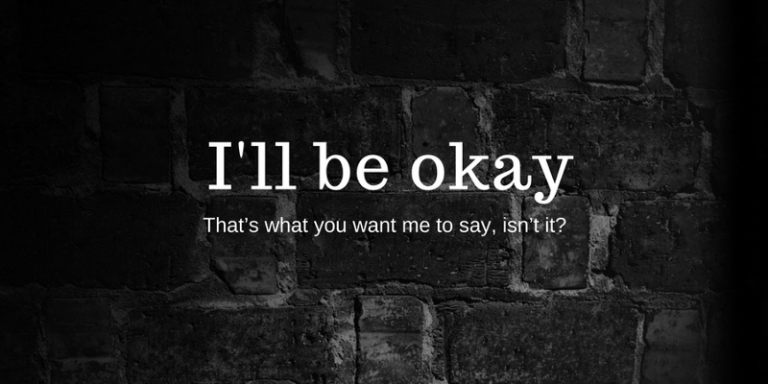
“I’ll be okay.” (That’s what you want me to say, isn’t it?)
Back to the bit about writing
The only reason I mention all of this now is that during that tough time, and then over the following year or more of treatment for, well, let’s call it melancholia for want of a better word, I wrote like a crazy. I think I wrote six novels.
Productive? Well, I didn’t have much else to do, did I?
Except to prove that my doctor’s link between depression and writing was correct.
That was all many years ago now, and I can happily report that I am completely, totally and utterly normal and healthy. Um, ok, normal may be stretching the truth a little, as I have never been good at that, so I guess I should say that I have been back to my abnormal self again for quite a few years.
But …
I am left with one small problem.
In that one year of being treated for the dreaded word, I wrote so damn well. Probably because I had little to do other than write. But now, I have a lot of trouble getting even close to writing as well as I did back then. Of all the books I have written, three that I wrote in that year are still my best sellers.
The only solution I can see to my new problem is to make an appointment with my doctor and ask him to put me back on those bloody pills right now. I want to write another great new book!
No! There’s no link at all between depression and writing, is there?
Via https://www.justpublishingadvice.com/on-depression-and-writing
7 Must Do Tasks When Your Manuscript is Finished

Your manuscript is finished – so now what?
You’ve sent it off to your editor, proofreader or beta readers, so you can kick your shoes off and relax, right?
No way! You’ve got a lot of work to do.
There are 7 very important tasks you can get to work on while your finished manuscript is in the hands of others, and you will be so busy, you won’t have time to worry about how long your beta readers take in getting back to you.
So, let’s get you to work. (You can follow the links in each section for more detailed information.)
1. Research your book title
Your book title is going to be more important than anything else in attracting potential readers, so it is time to do some serious research into it. You might love your working title, but that means nothing until you are certain it is going to work. You need to know how to find a great book title that is unique, and will attract readers’ interest.
Not only that, you (could, should, ought to) have a sub-title. Why? Because your title and sub-title are your most important pieces of metadata, and metadata is what is used by the Internet and Amazon in their search algorithms. A title and sub-title that are highly searchable will attract more people to your book. More on metadata later.
The most important issue when deciding on your book title is to make sure it is as unique as possible. Joining a long list of books with the same or a very similar title is not going to get you many sales.
2. Get a killer cover.
No, don’t even think of creating your book cover yourself unless you are a graphic designer and an expert with Photoshop. Get a cover or a series of covers designed professionally (but stay within your budget). Great book covers are second only to your title in importance, so don’t take cheap shortcuts.
One simple factor that is often overlooked when deciding on a book cover is how it will look as a small thumbnail image. This is what potential book buyers see first, so it is vitally important that your cover is just as appealing as a thumbnail as it is in full size.
Do your research again, and check the top selling books in your genre to see what their covers are like, and again, how appealing and eye catching they look in small sizes. Another factor to check is the colours that are used by popular books in your genre. You may get a surprise here, as many popular genres use a very small range of colours. For example: Think ‘chic-lit’ – Pastel pinks, blues and green.
3. Write your book description.
Yes, I know. Every author hates this task. However, it must be done, and again, it is going to be a vital part of your book’s metadata so it needs to be extremely well written. Writing a great book description is not an easy task, but again, check top selling books in your genre and make a few notes. Unlike your book of thousands of words, your book description needs to hook a reader’s interest inside 15 seconds, or 150 words. It should be longer of course, but those first words and seconds are the most important of all.
4. Research your categories and keywords.
Without these seven elements, your book will be lost, so choose them extremely carefully. These, along with your book title are the most important pieces of metadata, and researched and selected well, they will allow readers to find your book. They are so important that their power to sell books is greater than you can achieve with paid advertising, blogging or social media. You can expect to have an online audience of your own numbering in the hundreds or thousands. But your carefully selected categories and keywords will give you access to millions of online book buyers.
5. Start your book promotion.
Do not wait until your book is finally published to get the word out about your new book. Build some momentum through your blog and social media and give your audience information about why, how, where and when you wrote your book. If you have a selection of cover ideas, why not ask for opinions on which one people like? Involve your online audience and keep them informed of your progress.
6. Plan your book launch.
Will you make your book available by pre-order? Will you purchase paid advertising? Will you make your book exclusive, or will you open publish? Ask your beta readers for their book reviews so you can add them to your book sales page. Plan ahead and ask book bloggers if they would be willing to help you with your book launch. Do you want to do a virtual book tour? Do not press the publish button without planning your launch. You only get once chance to launch your book, so plan it carefully and well in advance.
7. Decide on your price.
Setting the price for your ebook and/or paperback is crucial. Having a clear book pricing strategy is not as simple as it sounds. There are many factors to consider, such as competitiveness in various geographic markets, differential between ebook and paperback, as well as pricing for turnover or pricing for profit. Book prices are never set in concrete, so think about when you might discount, or increase the price. Are you going to offer a free ebook, and on what schedule? Should you increase your price before offering your ebook for free, and then reduce it afterwards? Again, do some research and write a brief pricing plan for your new book.
With all this work to do, you won’t have time to worry about when your manuscript will come back to you for your last read through and edit before publishing. You will be far too busy, won’t you?
Via :https://www.justpublishingadvice.com/7-must-do-manuscript-tasks
Procrastination: Why Writers Do It
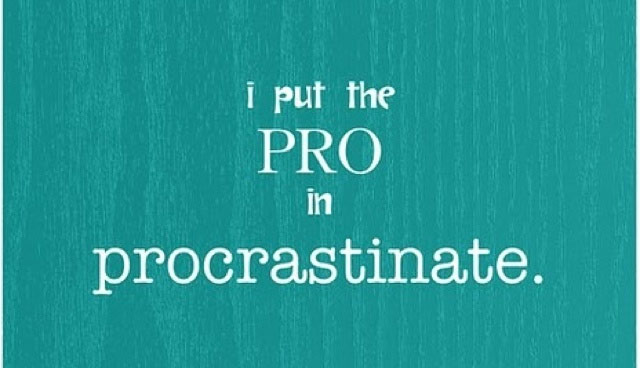
“The thing all writers do best is find ways to avoid writing.” – Alan Dean Foster
For us writers procrastinating can easily become an occupational hazard. It’s very common for us to go out of our way to avoid writing; with procrastination being an enemy of productivity.
When blogger and journalist Megan McArdle researched the topic one of her colleagues told her:
“Well, first, I put it off for two or three weeks. Then I sit down to write. That’s when I get up and go clean the garage. After that, I go upstairs, and then I come back downstairs and complain to my wife for a couple of hours. Finally, but only after a couple more days have passed and I’m really freaking out about missing my deadline, I ultimately sit down and write.”
Sound familiar? Steven Pressfield the author of War of Art believes it’s a form of resistance. In his book he identifies the enemy all of us must face. There is a naysayer within all of us that prevents us from achieving our goals. Whether it be writing a novel, or painting a masterpiece. Pressfield then continues to outline a battle plan to conquer our internal foes.
For many of us this foe can be procrastination. Truthfully there are a million reasons we lack the motivation or inspiration to fill our blank pages and we’re all different, but here are a couple of common ones:
Because we’re afraid
Fear is one of the biggest reasons we procrastinate. Dr. Carol Dweck, a psychologist studying motivation at Stanford University believes that writers are often paralysed by the prospect of writing something that isn’t very good. However, the fear of turning in nothing by a deadline usually outweighs the fear of handing in something terrible. Dr. Dweck believes this is because we regard our failures as growth because when we’re failing, we’re learning. It’s also believed that the “fear of being unmasked as the incompetent you ‘really’ are is so common it actually has a clinical name: Imposter Syndrome“. We spend so much time worrying our writing won’t be good enough, but we need to remember that at the end of the day we’re always our own worst critics and our fears are usually unwarranted. You can find out more on her thoughts in Why writers are the worst procrastinators.
Because we lack inspiration
When we don’t know what to write or we lack inspiration, our motivation can be severely impaired inhibiting our potential to create the art we we’re destined to produce. As mentioned above, sometimes this lack of inspiration stems from our desire to be perfect, but all you need is an idea. Once you have an idea you have the potential to create something amazing.
To overcome a lack of inspiration you need to actively engage with what you’re doing. If you’re writing a book about a prison go interview some inmates or correctional officers, or go visit a prison so you can get the feel for what you’re writing about by submerging yourself in the world of your writing. Sometimes you need a change of scenery, or just a short break. There’s a million different ways to get inspired but we all do this differently, Psychology Today have some good examples in their article ‘Lacking Motivation and Inspiration? 5 Secrets to Get Unstuck’ with everything from finding a muse, to shattering your self doubts, these ideas can help you find some much needed inspiration.
Identifying methods of procrastination
According to author Joanna Penn, procrastinating takes many forms. It isn’t just playing a dozen games of angry birds, it often looks more like this:
- Reading blogs about writing
- Buying more books about writing
- Tidying your desk so that you’ll be ready to write… really soon…!
- Hanging out with other writers (offline or online) and talking about writing.
We spend a lot of time thinking about writing without actually writing, this is a key sign of procrastination and we need to use this knowledge to our advantage.
How to fight it
Being well versed in the art of procrastination is understandable given the culture of constant distraction we live in, but procrastination can be an important part of the writing process.
“It’s folly, what we do, if you think about it – to make something out of nothing, to spin a story or an argument, to ask a reader to give up his or her time and share with us a fantasy, a dream, a conversation, to seize the moment (for a moment) and try to hold it before it slips away”- David Ulin on procrastination as a creative tool.
Procrastination is often used as a defence mechanism, an idea and a blank page is perfect, but once we begin putting that idea into words that perfection can dwindle leaving us raw and exposed. We use it as a strategy for mitigating fear and anxiety.
To overcome this fear we need to follow the advice Annie Dillard provides in her work The Writing Life and understand that we need to write in spite of problems we may encounter. The tension between what we wish for and what we achieve can only be overcome if we work to achieve something. After all Hemmingway himself claimed “The first draft of anything is shit” but as writers we work to overcome this by re-drafting and editing.
If you are stuck in the procrastination bubble, here is some further reading that might help you break free:
 Writer's Blog