

This week, as an extended Bank Holiday Bonus, we will be looking at how to outline your novel:
Taking the time to outline your novel can save you grief in the long run. An outline helps keep your story on-track and progressing past the initial thrill of beginning your work. Maybe you can’t wait to start writing, or maybe you’ve already started but are running into problems. This guide will explain all the techniques you’ll need to craft an effective outline for your novel.
***
Segment Your Outline Into Chapters
The timeline has given you a basic outline, but it needs to be more concrete and detailed. The story can be broken down into sections of four or five parts, or individual chapters or scenes.
This helps flesh out your novel and define roughly how many words or pages to allow for a certain plot point, subplot or character introduction. Otherwise your beginning might accidentally end up longer than the middle!
It’s useful to plan a few goals to achieve in each chapter or segment. These goals may be:
- Character-orientated: “reveal Character B’s low self-confidence”, “introduce character C and their personality”, “show that characters C and D have known each other for years”
- Plot-orientated: “find murder weapon”, “discover object hidden in ancient ruins”
- Setting-orientated: “make the marshes seem scary”, “reveal the clock tower’s history”
The goals may seem obvious, but having them clearly defined and written down can help focus you when writing that section.
“Working with story structure is not about ‘getting it right’. It is about making your story as clear and specific as it can be. Focusing on your characters’ desire or goal will lead you directly to the dilemma at the heart of your story.” – Alan Watt
One of the most common structures is the Three-Act Structure. While it’s not the only way a novel can be arranged, there are important aspects to include in the Beginning, Middle and End section.
***
Essential Components of Your Story’s Beginning
The first few chapters or so have a vital role to play, regardless of when in your story’s timeline the novel starts. The purpose of the beginning includes introducing and establishing character, setting and plot.
Character
From the beginning, the protagonist and antagonist must be introduced and clearly identifiable, even if the details of the latter are hazy. The protagonist needs to own what is, essentially, their story. You want to introduce a proactive protagonist and make the reader care about them.
It’s best to introduce all major characters. If your protagonist has to travel for a while before meeting a certain major character, introduce them with a short scene from their perspective, or through rumours that the protagonist hears.
Setting
Before getting into the juicy Act 2, your reader needs to be grounded in your world. Show your reader where and when your story is set, including indications of the socioeconomic status of the location and characters.
You also need to establish the rules of your fictional world, even if that just means establishing that they are the same rules as on Earth-as-we-know-it. This doesn’t mean all of your settings secrets should be revealed at the start. Keep setting details rich but controlled.
Plot
In the early chapters, give your reader an indication of what life is like for the protagonist before the catalyst that propels them onwards. Typically, life is either peaceful or lacking something.
“Life before” doesn’t mean back story. This should be revealed more slowly, if at all. The protagonist may meet their first obstacle, which in itself can help reveal the protagonist’s “life before”.
Act 1 ends when the protagonist decides (willingly or not) to pursue the main goal of the story, known as Plot Point 1. It’s possible at this stage that the protagonist and reader don’t know the full, final goal, such as Frodo agreeing to take the ring to Rivendale, but ends up going all the way to Mordor. Either way, the journey of the main plot needs to be clearly introduced. You may also choose to introduce, imply or foreshadow one or two subplots.
First Chapter
Unless you have a prologue, the first chapter is a reader’s introduction to everything. A novel can start anywhere – even at the end of the story! Because of this, it’s often best to finish your outline before choosing when to start.
There are a range of key aspects to weave together for your opening. At this year’s Digital Writer’s Festival, Euan Mitchell had this advice for first chapters:
“For me, I’d come… with the protagonist straight up. There’s three trialled and tested techniques that authors use. There’s: show them in a situation of suffering or pain, show them with a sense of humour, or show them as a part of a family. There are others, but those are the three main ones.”
Key aspects to include:
- Introduce protagonist (including a couple of defining physical features)
- Show protagonist goal / an obstacle / both
- Establish setting (but don’t overdo details)
- Define the genre, voice, mood and tone
- Incorporate core message / main themes
- Don’t overload with new characters
- Don’t fill with back story
Advised aspects to include:
- Introduce main antagonist or idea of antagonist
- Treat as a mini story arc
- Have the protagonist make an important decision
- Start the main plot’s action / journey
To pick out more great ideas for the first chapter, grab a dozen books and read their first chapters. Check what is revealed, what is focused on and what is absent. Then do a more focused study with half a dozen or so books with a similar style or genre to your story.
***
If you are enjoying this post and finding it useful, then don’t forget to check back tomorrow for the next instalment…
You can find the previous parts here:
Tag Archives: Writing
How To Outline Your Novel | Part Three

This week, as an extended Bank Holiday Bonus, we will be looking at how to outline your novel:
Taking the time to outline your novel can save you grief in the long run. An outline helps keep your story on-track and progressing past the initial thrill of beginning your work. Maybe you can’t wait to start writing, or maybe you’ve already started but are running into problems. This guide will explain all the techniques you’ll need to craft an effective outline for your novel.
***
Assess Your Plot-in-Progress
While your outline is still in its rough, overview state, it’s good to check that the plot is working. To make sure the plot flows, check for gaps both chronologically and dramatically.
A chronological gap occurs when an underdeveloped story jumps over a period of time. It can be disconcerting for the reader if your character is sweating it out in the middle of summer, and then, in what seems a few days, is at home trying to get closer to the fireplace.
Reassess your plot and check for unaccounted days, months, weeks or years. The significance of missing time is relative. If your story spans a period of a year or more, a few days or weeks won’t matter so much.
To fill the gap, you could think of an event to develop a character or a mini obstacle for your protagonist to overcome. Of course, you always have the option to tell your reader that a few uneventful weeks or a busy month passed with no plot progression. Doing this too often can be distracting, but at the same time you don’t want pages of nothing happening.
“References to time and day (or month or season or year) are necessary to keep readers linked with story events and hold them deep inside the fiction” – Beth Hill
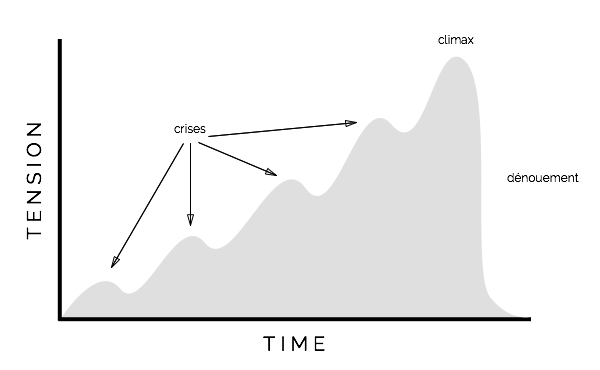
A dramatic gap occurs when the tension of your novel declines when it shouldn’t. The best way to identify these gaps is to draw the story arc as a graph line. Use different colours for subplots to check that the main plot isn’t being overshadowed.
You may encounter lulls in tension shortly after an obstacle is defeated. This is where dramatic lulls are okay as long as they don’t last too long. Overall, the main plot should be increasing in tension as it heads towards the climax.
If you’ve decided to use 1st person perspective, or are considering it, draw the arc from both a generalised view and then from the 1st person narrator’s perspective. From here you can see whether the delay or lack of knowledge from the narrator’s perspective creates a better dramatic arc. To fill dramatic gaps, build more plot points in strategic places and work on increasing tension.
If it seems that your story isn’t working, trust your instincts. Readers can tell when something is a bit off and, as a writer, you’re a reader too. Be honest if something isn’t working – it’s easier to fix now than later.
If you can’t identify the root of the problem, take a break or ask some trusted writing buddies to look over it. Also research the genre’s conventions. If you’re writing genre fiction, look into a tried and tested outline such as the hero’s journey or the eight-point arc.
***
Identify the Core Message (Theme)
Novels have a core message, whether it’s clear or not. You could successfully write your novel none the wiser of its deeper meanings. Yet, by knowing the core, you can write a stronger novel.
Identifying your core helps when you need to decide between two possibilities, and keeps the novel feeling as one whole piece of work.
“Novelists, just like filmmakers, need to truly understand the story they are trying to tell and what impact or take-home feeling or message they want to leave with their readers” – C. S. Lakin
Your core message and themes emerge naturally with your story and can be a phrase, a word or a question. You’ll instinctively know when you’ve hit on your novel’s core or when you’re getting close to it. Here are a few ways to help identify your core message if you don’t already know it:
- Identify 1 – 4 central or important themes
- Look at your protagonist’s goal / desire or main obstacle
- Sum up your story in one sentence (i.e. “pitch”) keeping note of the above two points
- Make a list of published novels you think are similar. Can you identify their core messages?
- Share your story premise with others
Once you’ve identified your core, it’s helpful to go back and tweak plot points or characters to align with this. Be careful to not undermine your story by making the core too obvious or preachy.
Consider if there is a motif or style that is appropriate for your core. There’s a chance that you may not like the core message you identify. At this point you have the option to run with what the story says, or rework the aspects of your story that portray the undesired core message.
***
If you are enjoying this post and finding it useful, then don’t forget to check back tomorrow for the next instalment…
You can find the previous parts here:
Via: http://writersedit.com/how-to-outline-your-novel-11-easy-steps/
How To Outline Your Novel | Part Two

This week, as an extended Bank Holiday Bonus, we will be looking at how to outline your novel:
Taking the time to outline your novel can save you grief in the long run. An outline helps keep your story on-track and progressing past the initial thrill of beginning your work. Maybe you can’t wait to start writing, or maybe you’ve already started but are running into problems. This guide will explain all the techniques you’ll need to craft an effective outline for your novel.
***
Establish Your Settings
Setting is vital to every story. It helps a reader fall into your fiction world, even if your story is set in Earth-as-we-know-it. It can also be critical to the plot: imagine if Grandma’s house wasn’t deep in the woods. Little Red Riding Hood may never have met the Wolf.
The setting also tells the reader about your characters. If Little Red lived in a castle, she may have been more aware of dangerous people, and the Wolf’s motives may have been more than hunger.
Setting can become vague in writing when the writer doesn’t know their setting well. The same way you have character profiles, settings need profiles too. The process of planning your setting is slightly different if your story is set in a real place, though it follows the same general steps.
Before you get to know your setting, you need to choose your setting. If you’re stumped for ideas, the best place to look is in your plot. Setting is tightly linked to plot, primarily affecting what is possible. Does a character need to be or feel trapped? Go for a fort, boarding school, or a safe house in the middle of nowhere.
Usually your story will take place in more than one setting, so go through your plot and make note of the best setting for each scene.
When you start working on details of your setting, you may already have an idea in your mind – Victorian mansion, sea cliffs, military base, Sydney Opera House. Even if you feel familiar with the setting, go around with a camera or search images online.
Make note of what aspects you notice first: is the colour gaudy, do the edges look harsh, are there hundreds of trees? To mix elements of more than one setting, you can put the images in a document and make notes such as “this roof, but that balcony and a bluer colour”. Create a collage or bring out the sketchbook.
“Tear images out of home magazines or catalogs and put them on your vision board. You can also draw floorplans, which can help when you’re trying to navigate your character” – Charlotte Dixon
As mentioned by Charlotte Dixon, maps and floor plans are also a handy tool. If a character spends a lot of time in a building, you need to know the layout so they don’t come from the kitchen into the dining room one time and from the ballroom another.
Likewise, if they travel a lot or go outside to a certain place frequently, maps will help keep you orientated. Draw the street of your character’s favourite coffee shop; what will they see as they sip on their routine morning hot beverage?
Maps and floorplans can be drawn by hand on plain, lined or grid paper, or done in excel by changing the cell sizes to square. Grid is particularly useful for smaller buildings. It may not matter if your castle is 100 or 110 metres long, but there’s a big difference if a house is 10 or 20 metres.
For smaller buildings, also make sure that it is reasonable to fit all the furniture you describe in a single room. If you want to go the extra mile, there are also free 3D modelling programs such as Sketch Up, but generally simple 2D maps are enough.
You may also want to create a setting arc if it undergoes a serious change in the story. This would likely be either physical damage or a change in emotion or meaning. For the former, make notes of what is damaged, how it is damaged and the differences (such as being able to see through a hole in a wall).
Conversely, perhaps a damaged place was fixed or renovated. If the emotions connected to a place change, pick out the details. A sagging roof that once may have seemed a sign of degradation could simply add character.
***
Choose the Shape and Style of Narration
There are three narration shapes your plot can take: linear, non-linear and circular.
Linear narration is when the novel progresses in the typical chronological order. For example, Little Red leaves her house, meets the Wolf in the forest and then again in Grandma’s house.
Non-linear narration shakes things up a bit. In the case of Little Red Riding Hood, for example, Little Red meets the Wolf at Grandma’s, recalls meeting him earlier, is saved by the woodsman, recalls her mum telling her to be careful, and so on, backwards and forwards. Two well-known non-linear novels to have a look at are Catch-22 by Joseph Heller and The Time Traveler’s Wife by Audrey Niffenegger.
Circular narration starts and ends with the characters in the same place. This “place” can refer to a number of things such as a geographical location, an emotional or mental state, or a hierarchical position.
Whatever “place” means for the beginning and end, it should also be important in the middle. The novel The Chrysalids by John Wyndham starts with telepathic mutants being shunned by normal society. They attempt to create a safe place for themselves. However, when they find a whole town of telepaths, they’re looked down on again because of the weakness of their mutation.
If your novel is to be in a nonlinear or circular shape, it’s best to first craft your outline in a linear form. This makes it easier for you as the author to keep track of the story and helps prevent the plot from becoming confused and lost within itself.
“If you’re timebending or rewinding or flashbacking or Groundhog-daying or getting surreal or showing a series of vignettes that add up to a whole or chopping around like the film Memento, you the writer need to know what the simple order is” – Roz Morris
***
If you are enjoying this post and finding it useful, then don’t forget to check back tomorrow for the next instalment…
You can find the previous part here:
Via: http://writersedit.com/how-to-outline-your-novel-11-easy-steps/
How To Outline Your Novel | Part One

This week, as an extended Bank Holiday Bonus, we will be looking at how to outline your novel:
Taking the time to outline your novel can save you grief in the long run. An outline helps keep your story on-track and progressing past the initial thrill of beginning your work. Maybe you can’t wait to start writing, or maybe you’ve already started but are running into problems. This guide will explain all the techniques you’ll need to craft an effective outline for your novel.
***
Constructing a Timeline
The first step is to create a timeline or plot skeleton with your plot ideas. Be sure to include back story elements, both before the novel’s events and at the point they are revealed to the reader. Don’t worry if you have little to start with, it’ll quickly build up. Make sure to leave space for more details.
There are many ways to construct your story outline. Try a few techniques and see what works for you. You could start by writing out key events, or by writing a short paragraph for each narrative arc within your novel. Either way, you’ll eventually need to look at your novel as a compilation of separate events and as a whole.
If you’re stuck with what to do in the middle, or even at the beginning, try starting with what you want to happen at the end and then reverse engineer a path to reach that result. I call this method ‘The Stephen King” because he famously writes that he begins a new novel by writing the last scene, and then works backwards.
This works within minor plot points as well. For instance, if you know you want character B to disappear and the other characters to end up in a boat before moving onto the next scene, brainstorm with that ending in mind.
Depending on your story and how you like to work, the timeline could take on several forms. A dot-point list, an actual timeline or a mind-map are the most common, though there are other forms you can use. Often in the planning stage, it’s easier to use pen and paper so you can draw arrows and cross things out. This leaves a reminder of what you’ve tried and what hasn’t worked.
Technique: Write a List
If your story is relatively simple and short, the list-form is often the best way to start your outline. Focus on the core points of the story and jot down any additional ideas as you go. If you were writing “Little Red Riding Hood”, your list-form timeline may look something like this:
- Grandma makes a red coat for her granddaughter
– The granddaughter is called Little Red because she always wears red- Little Red goes to visit Grandma, who’s sick (novel opening)
– Her mum asked Little Red to deliver food (or medicine?)- On the way, she meets Wolf and tells him what she’s doing
– Wolf runs ahead, eats Grandma and disguises himself as her- Little Red is distracted by flowers along the way
– Wolf wears Grandma’s nightcap and glasses, then hides the rest of himself under the covers- Little Red arrives, but notices that Grandma looks different
– Wolf imitates Grandma’s voice- Little Red notices unusually big: ears, eyes, teeth
- The Wolf reveals himself, Little Red screams and a nearby woodsman runs to her aid and kills Wolf
Currently, this is a basic outline and needs a lot more work if it wants to be novel-length. Writing prompts can often help you flesh out your story. Use your imagination and check out Part Four (coming on Thursday) for notes on characters, setting and plot.
Technique: Map the Events on a Line
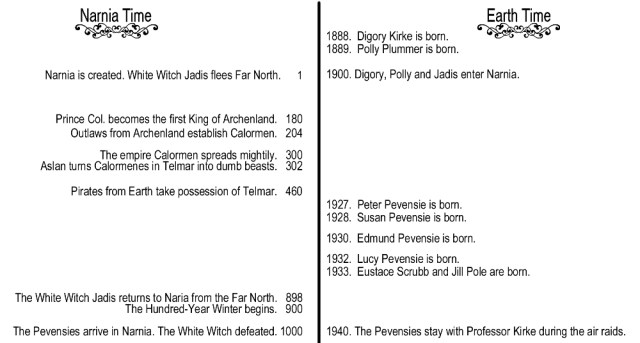
For stories that span several weeks, months or years, time becomes a big consideration when placing events. Simply writing the same points you’d write on a list along a line can help create a realistic sense of time.
When deciding the duration between events, remember realistic limitations of time. For example, there is time lost when travelling, and there are only so many meals a person can eat or disasters a person can prevent realistically in one day. Many other factors change with time, such as characters’ ages and the seasons.
Line-form can also help when comparing two separate time streams, such as in The Lion, The Witch and The Wardrobe.
Lines are more difficult to edit than lists, but a good trick to keep your line flexible is to use index cards or sticky notes that can be easily shuffled and switched around – This is a personal favourite trick of author Julie Cohen (to whom I refer as “The PostIt Queen”). If you are limited for space, Scrivener and Aeon Timeline are two programs popular with writers for this and other purposes.
Technique: Master the Mind-Map
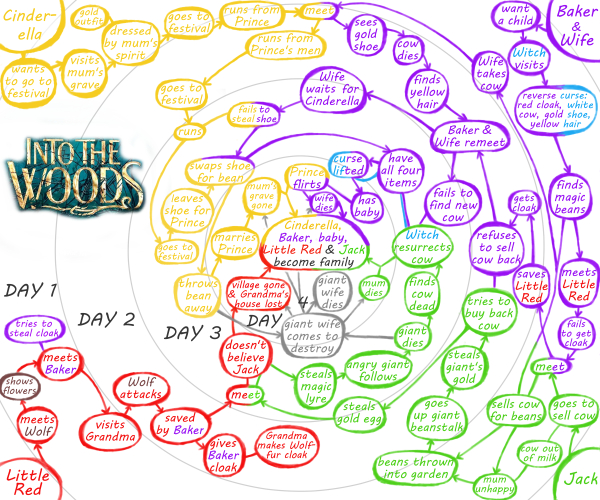
Mind-maps work well for stories that start with a single point and then diverge into several threads, often alternating between characters. Alternately, the story could be several threads converging to one point, like the musical Into The Woods.
To depict the passage of time in a mind-map and be able to easily compare one thread’s time state with another’s, put the point of convergence at the centre, and then draw circles going out. Just like tree rings, each circle you draw can represent another segment of time. When you expand your mind-map, the points in each thread can be placed in its ring-like time “zone”.
***
Explore Your Character Arcs
Character profiles are useful in the initial planning stage. However, when outlining your novel, you need to go beyond this static document. Character arcs show the change or growth a character goes through, and the stages required to get there. The changes could be greater or smaller self-esteem, mastering that ninja technique or realising that money doesn’t solve all your problems.
“Change, transformation, is a constant in our lives and if you can impel some kind of emotional change within your character, it creates an arc of behaviours and adds another dimension to who he or she is” – Syd Field, The Screenwriter’s Workbook
First, determine exactly what part of the story is reflected by the character profile. Often this is the start of the novel. Make a list of any changes you want the character to go through, or changes they need to go through to achieve their profile. Then, check the plot and make another list of possible changes that story events could cause in your character, making note of which changes you want.
If the two lists are contradictory, you may need to reassess your character or plot, or be prepared to work hard and write a character that is believably contradictory. From here, you can continue with the list form, or use a line, mind-map or paragraph to detail out your character arc.
For characters that go through significant change, or for stories that look closely at the human psyche, you may want to do several mini-character profiles. Consider dropping aspects that won’t change, such as physical appearance, unless your character becomes severely ill or can shape-shift.
Another way to use character arcs is to compare them to each other. Firstly, make sure all your characters don’t share the same arc, unless you’re purposefully trying to make a point. If a few characters have similar arcs, try to use one as a comment or opposite reflection on the other, or demonstrate the difference a decision can make.
Also check if any character arcs can assist or become an obstacle for another character’s arc. This can add a new depth to characters’ relationships, and maybe spark off a subplot.
Character arcs can then be used to flesh out your plot. Once you’ve done the arc, make sure the plot supports every small change the character undergoes. If it doesn’t, use this guide to inspire several new plot points.
***
If you are enjoying this post and finding it useful, then don’t forget to check back tomorrow for the next instalment…
Via: http://writersedit.com/how-to-outline-your-novel-11-easy-steps/
On Depression and Writing | by Derek Haines
A fascinating insight on depression and writing, by Derek Haines:
Is there a connection between depression and writing?
The diagnosis
Some years ago now, I clearly recall my doctor telling me that there was a definitive link between depression and writing. The only problem with his link was that he had no idea at all if writers became depressed through writing, or if depression miraculously manufactured writers.
So why was I at my doctor at that time talking about depression and writing? Well, to cut a long story short, within the space of six short months I had lost my parents, both very suddenly, my very best friend died due to a long-term disease, another friend was killed on a pedestrian crossing, oh, and just add some spice, my business failed, and I was diagnosed with cancer. Yes, it was a very busy six months.
During my regular consultations with my doctor at that time, he also discovered from a blood test that I had suffered from an undiagnosed case of glandular fever, or mononucleosis, during the same six months.
So, all things considered, I had a good solid list of reasons to be feeling a bit under the weather at that time.
I hate the word depression
I dislike the word depression intensely, as, from my experience, when you have this affliction, the symptoms don’t relate at all well with the word. Constant joint pain, muscle cramps, insomnia, headaches, fatigue, waking up feeling exhausted, difficulty with concentration, digestive problems and loss of appetite are some of the symptoms I suffered, but during my illness, I rarely felt sad, blue, morose and never once did I have suicidal feelings. I didn’t feel depressed. I just felt unwell.
When people around you know that you are being treated for this ill-described condition, they always ask the same pathetic question, which by itself can drive one crazy.
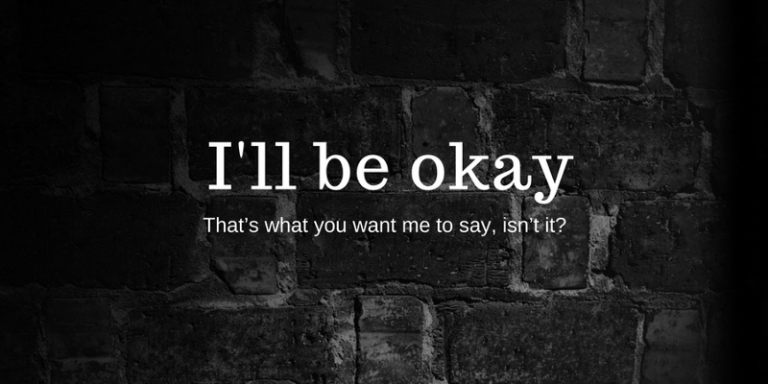
“Are you okay?”
The only logical reply becomes an auto-response.
“I’ll be okay.” (That’s what you want me to say, isn’t it?)
Back to the bit about writing
The only reason I mention all of this now is that during that tough time, and then over the following year or more of treatment for, well, let’s call it melancholia for want of a better word, I wrote like a crazy. I think I wrote six novels.
Productive? Well, I didn’t have much else to do, did I?
Except to prove that my doctor’s link between depression and writing was correct.
That was all many years ago now, and I can happily report that I am completely, totally and utterly normal and healthy. Um, ok, normal may be stretching the truth a little, as I have never been good at that, so I guess I should say that I have been back to my abnormal self again for quite a few years.
But …
I am left with one small problem.
In that one year of being treated for the dreaded word, I wrote so damn well. Probably because I had little to do other than write. But now, I have a lot of trouble getting even close to writing as well as I did back then. Of all the books I have written, three that I wrote in that year are still my best sellers.
The only solution I can see to my new problem is to make an appointment with my doctor and ask him to put me back on those bloody pills right now. I want to write another great new book!
No! There’s no link at all between depression and writing, is there?
Via https://www.justpublishingadvice.com/on-depression-and-writing
7 Must Do Tasks When Your Manuscript is Finished

Your manuscript is finished – so now what?
You’ve sent it off to your editor, proofreader or beta readers, so you can kick your shoes off and relax, right?
No way! You’ve got a lot of work to do.
There are 7 very important tasks you can get to work on while your finished manuscript is in the hands of others, and you will be so busy, you won’t have time to worry about how long your beta readers take in getting back to you.
So, let’s get you to work. (You can follow the links in each section for more detailed information.)
1. Research your book title
Your book title is going to be more important than anything else in attracting potential readers, so it is time to do some serious research into it. You might love your working title, but that means nothing until you are certain it is going to work. You need to know how to find a great book title that is unique, and will attract readers’ interest.
Not only that, you (could, should, ought to) have a sub-title. Why? Because your title and sub-title are your most important pieces of metadata, and metadata is what is used by the Internet and Amazon in their search algorithms. A title and sub-title that are highly searchable will attract more people to your book. More on metadata later.
The most important issue when deciding on your book title is to make sure it is as unique as possible. Joining a long list of books with the same or a very similar title is not going to get you many sales.
2. Get a killer cover.
No, don’t even think of creating your book cover yourself unless you are a graphic designer and an expert with Photoshop. Get a cover or a series of covers designed professionally (but stay within your budget). Great book covers are second only to your title in importance, so don’t take cheap shortcuts.
One simple factor that is often overlooked when deciding on a book cover is how it will look as a small thumbnail image. This is what potential book buyers see first, so it is vitally important that your cover is just as appealing as a thumbnail as it is in full size.
Do your research again, and check the top selling books in your genre to see what their covers are like, and again, how appealing and eye catching they look in small sizes. Another factor to check is the colours that are used by popular books in your genre. You may get a surprise here, as many popular genres use a very small range of colours. For example: Think ‘chic-lit’ – Pastel pinks, blues and green.
3. Write your book description.
Yes, I know. Every author hates this task. However, it must be done, and again, it is going to be a vital part of your book’s metadata so it needs to be extremely well written. Writing a great book description is not an easy task, but again, check top selling books in your genre and make a few notes. Unlike your book of thousands of words, your book description needs to hook a reader’s interest inside 15 seconds, or 150 words. It should be longer of course, but those first words and seconds are the most important of all.
4. Research your categories and keywords.
Without these seven elements, your book will be lost, so choose them extremely carefully. These, along with your book title are the most important pieces of metadata, and researched and selected well, they will allow readers to find your book. They are so important that their power to sell books is greater than you can achieve with paid advertising, blogging or social media. You can expect to have an online audience of your own numbering in the hundreds or thousands. But your carefully selected categories and keywords will give you access to millions of online book buyers.
5. Start your book promotion.
Do not wait until your book is finally published to get the word out about your new book. Build some momentum through your blog and social media and give your audience information about why, how, where and when you wrote your book. If you have a selection of cover ideas, why not ask for opinions on which one people like? Involve your online audience and keep them informed of your progress.
6. Plan your book launch.
Will you make your book available by pre-order? Will you purchase paid advertising? Will you make your book exclusive, or will you open publish? Ask your beta readers for their book reviews so you can add them to your book sales page. Plan ahead and ask book bloggers if they would be willing to help you with your book launch. Do you want to do a virtual book tour? Do not press the publish button without planning your launch. You only get once chance to launch your book, so plan it carefully and well in advance.
7. Decide on your price.
Setting the price for your ebook and/or paperback is crucial. Having a clear book pricing strategy is not as simple as it sounds. There are many factors to consider, such as competitiveness in various geographic markets, differential between ebook and paperback, as well as pricing for turnover or pricing for profit. Book prices are never set in concrete, so think about when you might discount, or increase the price. Are you going to offer a free ebook, and on what schedule? Should you increase your price before offering your ebook for free, and then reduce it afterwards? Again, do some research and write a brief pricing plan for your new book.
With all this work to do, you won’t have time to worry about when your manuscript will come back to you for your last read through and edit before publishing. You will be far too busy, won’t you?
Via :https://www.justpublishingadvice.com/7-must-do-manuscript-tasks
Procrastination: Why Writers Do It
“The thing all writers do best is find ways to avoid writing.” – Alan Dean Foster
For us writers procrastinating can easily become an occupational hazard. It’s very common for us to go out of our way to avoid writing; with procrastination being an enemy of productivity.
When blogger and journalist Megan McArdle researched the topic one of her colleagues told her:
“Well, first, I put it off for two or three weeks. Then I sit down to write. That’s when I get up and go clean the garage. After that, I go upstairs, and then I come back downstairs and complain to my wife for a couple of hours. Finally, but only after a couple more days have passed and I’m really freaking out about missing my deadline, I ultimately sit down and write.”
Sound familiar? Steven Pressfield the author of War of Art believes it’s a form of resistance. In his book he identifies the enemy all of us must face. There is a naysayer within all of us that prevents us from achieving our goals. Whether it be writing a novel, or painting a masterpiece. Pressfield then continues to outline a battle plan to conquer our internal foes.
For many of us this foe can be procrastination. Truthfully there are a million reasons we lack the motivation or inspiration to fill our blank pages and we’re all different, but here are a couple of common ones:
Because we’re afraid
Fear is one of the biggest reasons we procrastinate. Dr. Carol Dweck, a psychologist studying motivation at Stanford University believes that writers are often paralysed by the prospect of writing something that isn’t very good. However, the fear of turning in nothing by a deadline usually outweighs the fear of handing in something terrible. Dr. Dweck believes this is because we regard our failures as growth because when we’re failing, we’re learning. It’s also believed that the “fear of being unmasked as the incompetent you ‘really’ are is so common it actually has a clinical name: Imposter Syndrome“. We spend so much time worrying our writing won’t be good enough, but we need to remember that at the end of the day we’re always our own worst critics and our fears are usually unwarranted. You can find out more on her thoughts in Why writers are the worst procrastinators.
Because we lack inspiration
When we don’t know what to write or we lack inspiration, our motivation can be severely impaired inhibiting our potential to create the art we we’re destined to produce. As mentioned above, sometimes this lack of inspiration stems from our desire to be perfect, but all you need is an idea. Once you have an idea you have the potential to create something amazing.
To overcome a lack of inspiration you need to actively engage with what you’re doing. If you’re writing a book about a prison go interview some inmates or correctional officers, or go visit a prison so you can get the feel for what you’re writing about by submerging yourself in the world of your writing. Sometimes you need a change of scenery, or just a short break. There’s a million different ways to get inspired but we all do this differently, Psychology Today have some good examples in their article ‘Lacking Motivation and Inspiration? 5 Secrets to Get Unstuck’ with everything from finding a muse, to shattering your self doubts, these ideas can help you find some much needed inspiration.
Identifying methods of procrastination
According to author Joanna Penn, procrastinating takes many forms. It isn’t just playing a dozen games of angry birds, it often looks more like this:
- Reading blogs about writing
- Buying more books about writing
- Tidying your desk so that you’ll be ready to write… really soon…!
- Hanging out with other writers (offline or online) and talking about writing.
We spend a lot of time thinking about writing without actually writing, this is a key sign of procrastination and we need to use this knowledge to our advantage.
How to fight it
Being well versed in the art of procrastination is understandable given the culture of constant distraction we live in, but procrastination can be an important part of the writing process.
“It’s folly, what we do, if you think about it – to make something out of nothing, to spin a story or an argument, to ask a reader to give up his or her time and share with us a fantasy, a dream, a conversation, to seize the moment (for a moment) and try to hold it before it slips away”- David Ulin on procrastination as a creative tool.
Procrastination is often used as a defence mechanism, an idea and a blank page is perfect, but once we begin putting that idea into words that perfection can dwindle leaving us raw and exposed. We use it as a strategy for mitigating fear and anxiety.
To overcome this fear we need to follow the advice Annie Dillard provides in her work The Writing Life and understand that we need to write in spite of problems we may encounter. The tension between what we wish for and what we achieve can only be overcome if we work to achieve something. After all Hemmingway himself claimed “The first draft of anything is shit” but as writers we work to overcome this by re-drafting and editing.
If you are stuck in the procrastination bubble, here is some further reading that might help you break free:
Literary Devices: How To Master Flashback

This week Writer’s Blog will be exploring literary devices to help you along with your writing. Literary devices are techniques and structures writers employ to convey their message and story. When done well, the use of literary devices can alter, manipulate and challenge the way a reader perceives any work. Used masterfully, literary devices influence how a story or essay can be interpreted and analysed, as well as how much the reader enjoys the work. Today’s device is Flashback:
How To Master Flashback
A flashback involves (as the name describes) a scene that moves from the present to the past to reveal something about a character or event within the narrative. Generally in fiction, the use of a flashback constitutes using white space to separate the past from the present, to signal to the reader that there has been a change in time and/or place. In some cases, a writer may choose to use italics (usually if the scene is more of a memory snippet than an actual fully-developed scene, as lots of italicized text irritates some readers and editors).
The best flashbacks are set up by the previous paragraph. In the lead up to the flashback, there is generally a ‘trigger’ – something that causes the protagonist/narrator to recall a particular event or detail of the past. The trigger is explored/explained in the flashback itself which then also reveals new information to the reader.
Flashbacks are an opportunity for the author to provide insight into situations that would otherwise be left unexplained…
Used in short stories, poems, novels, plays and movies, it is one of the most common and most recognisable writing techniques, and when executed well, one of the most effective.
Examples:
- The Road (film): The director has used flashbacks throughout the whole film to reveal to the viewer how in a post-apocalyptic world, a father and son came to be on the road, homeless and unprotected.
- Breaking Bad (television series): This series is renowned for doing things differently, and the use of flashback here is no exception. In Breaking Bad, the flashbacks often come first and are then later explained and explored in the next few episodes, setting up a sense of intrigue within its viewers.
- Harry Potter (book series): Yes, even the Harry Potter novels use flashback. Remember the Pensieve that Dumbledore uses? The reader (and Harry) are transported back in time to relive the memories of Dumbledore and others.
***
Tips for Using Flashbacks:
- Use a trigger to justify taking the reader back into the past. This is the most natural way to introduce scenes from the past as this is actually how we recall memories in real life – we see something that reminds us of an event, person or detail that occurred in the past.
- Also ensure that you use another trigger or event to bring your character (and reader) back to the present. This gives your reader clear signals as to when you are changing from past to present and present to past, in order to keep them immersed in the story, but not disorientated and confused.
- Think of these triggers as ‘bookends’ to your flashback – they need to be there to keep this scene neat and tidy, but also shouldn’t stand out like a sore thumb (excuse the cliche).
- Don’t overdo it. Don’t litter your narrative with multiple flashbacks, this becomes irritating and confusing for the reader, but also questions the validity of you setting your story in the present when more is actually happening in the past… If you find you are doing this often, you might want to have a think about changing when you set your story.
- Ensure that each flashback contributes to your story in someway or another, whether it reveals something about a particular event, builds upon your characterization of the protagonist or sets up something for further down the track in the narrative – it has to propel the story forward, even though you’re looking back.
For some fantastic tips for writing successful flashbacks, check out this article at Writer’s Digest.
Literary Devices: How To Master Dialogue

This week Writer’s Blog will be exploring literary devices to help you along with your writing. Literary devices are techniques and structures writers employ to convey their message and story. When done well, the use of literary devices can alter, manipulate and challenge the way a reader perceives any work. Used masterfully, literary devices influence how a story or essay can be interpreted and analysed, as well as how much the reader enjoys the work. Today’s device is Dialogue:
How To Master Dialogue
What is dialogue?
“Dialogue is not just quotation. It is grimaces, pauses, adjustments of blouse buttons, doodles on a napkin, and crossings of legs.” – Jerome Stern, Making Shapely Fiction
Not all of the following are used together, however, dialogue consists of four main elements:
- Spoken words – the direct speech or the words within the quote marks.
- Speech tags – the words that tell the reader who is speaking and how they are speaking.
- Actions of the speaker – a description of the speaking character’s actions before, during and after speech.
- Thoughts or emotional state of the speaker – a description of the speaking character’s emotional state before, during and after speech.
When characters start talking to each other, the story comes to life. A reader can gain a far deeper understanding of a character through their words and actions than they can from the narrative text. A couple of sentences of dialogue can reveal much about the background of a particular character. Are they wealthy or poor? What is their country of origin? Have they been well-educated? Are they feeling happy or sad? All of these questions can be answered with effective dialogue.
***
What should dialogue do?
- Reveal emotions
- Draw the reader into the characters’ lives
- Show the reader how the character reacts to different situations, such as pressure, intimacy, hate, love or fear
- Move the story forward – every piece of dialogue should have a purpose
- Hint at or tell of coming events
- Give balance to a story after a long section of narrative
- Increase the pace of the story
- Contribute humour
- Reflect the changes in emotions and lifestyle of your characters
What should dialogue not do?
- Summarise action that could otherwise be exciting
- Force-feed information to the reader – tell a character something they would already know, purely to fill in background to the reader
- Act as padding to achieve a word count
- Ramble on without the characters learning anything knew or achieving something
- Sound exactly like real speech, with interruptions, rambling, repetitions and stutters, although these have their place
***
Tips for Writing Dialogue
Remember, most people speak quite simply. If you dress up a character’s speech too much it will sound unrealistic.
“If you are using dialogue, say it aloud as you write it. Only then will it have the sound of speech.” – John Steinbeck
Better yet, grab a few friends and act it out, taking note of the speech tags and the actions of the speaker. This can be very entertaining and you’ll be able to see very quickly where your dialogue falls down.
Now over to you.
Literary Devices: How To Master Prologue
This week Writer’s Blog will be exploring literary devices to help you along with your writing. Literary devices are techniques and structures writers employ to convey their message and story. When done well, the use of literary devices can alter, manipulate and challenge the way a reader perceives any work. Used masterfully, literary devices influence how a story or essay can be interpreted and analysed, as well as how much the reader enjoys the work. Today’s device is Prologue:
How To Master Prologue
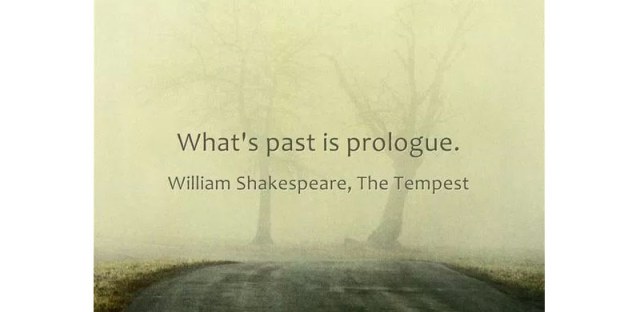
“What’s past is prologue” – William Shakespeare
This comes from Shakespeare’s play, The Tempest, spoken by the character Antonio who suggests that the events of the past set the stage for the present. The quote is engraved on the National Archives Building in Washington, DC, which houses the most important of the United States’ historical documents. But in a literary work, while the prologue itself precedes the beginning of the story, it can contain events of the past or the future.
What is a prologue?
The prologue serves as an introduction, giving readers important information from the past or the future about the text that follows. It may establish the setting, introduce the characters or indicate a theme or moral in the story. Generally, the prologue is short and will only cover one or two pages. Most prologues are written by the author of the work.
A prologue can foreshadow events and conflict in a way that beginning in the middle of the action can’t. It is used when material that you want to include in the opening is out of time sequence with the rest of the story, giving readers information that is otherwise unobtainable within the normal structure of the novel. A prologue must also be a vital part of the whole text, not just added on before the opening chapter for no reason.
The Redwall Series
Popular children’s author Brian Jacques used both a prologue and an epilogue to frame each story in his Redwall series. Jacques uses the prologue effectively to establish the setting and introduce readers to minor characters with a meaningful story to tell. In these opening scenes, the dialogue between the characters is intended to draw the reader in, as much as it does to the characters who are listening in the story.
The Noon Lady of Towitta
In Patricia Sumerling’s mystery, The Noon Lady of Towitta, the unusually long prologue describes the events leading to the arrival of the police on the farm at Towitta, an isolated town in the Flinders Ranges of South Australia. The prologue is straight-forward and written in third person. The story that follows is told from the first person perspective of Mary Schippan, the lady suspected of murdering her younger sister. Mary Schippan could not have given readers a clear picture of the events preceding the police investigation as she was not present, so the author chooses to employ a prologue. Without it, readers don’t have the necessary background required to understand the story and so obtain it outside of the first person structure of Mary’s narrative.
The Da Vinci Code
In Dan Brown’s The Da Vinci Code, the prologue is employed firstly to establish the plot and setting of the book. Opening at the Louvre Museum in Paris, readers are presented with an event at a specific time and place around which the entire novel is plotted. Jacques Sauniere, the curator of the museum, is shot by a mysterious man and must use his dying breaths to keep his secret alive.
“A collection of the world’s most famous paintings seemed to smile down on him like old friends.” – Dan Brown, The Da Vinci Code
The prologue also establishes a significant theme throughout the novel – the importance of art. As he bleeds to death, Sauniere is surrounded by many famous artworks, one of which, we can assume, is Da Vinci’s Mona Lisa, a painting that plays a critical role in the author’s plot.
***
Writing an effective prologue
The most important feature of a prologue, like any literary device, is that it serves a purpose. Check to see if your prologue is doing a job. Does it establish the setting? Does it introduce characters, or a theme, or a moral? What does it add to the whole work? If it doesn’t have a clear purpose, you don’t need it.
Tip: Read prologues written by your favourite authors
Search for prologues written by the authors on your bookshelf. They’ve been published, so you can assume that the prologue is well written and employed. Look at the length and the style of the writing. The more prologues you read, the better you will understand when and how to use them effectively, if at all.
Tip: Practice writing first lines
Essentially, if you’re using a prologue, you are starting your book twice so you’ll need two great opening lines. It can be useful to practise writing clever opening lines, enticing the reader to continue. If you’re already working on something, ask yourself if the first line is the best it can be. Shuffle the words around. Try a selection of synonyms. Work with it and keep practising.
Tip: Write a prologue for a book that doesn’t have one
Choose a novel without a prologue and consider how one could be used. Try to find something in the text to link with your prologue – a theme, the setting, or even some additional background information. Be creative! You could give a character a secret that affects how they respond to events in the story. Don’t feel discouraged if you find that your new prologue doesn’t work – this just means that you are improving your ability to detect ineffective use of the device.
 Writer's Blog